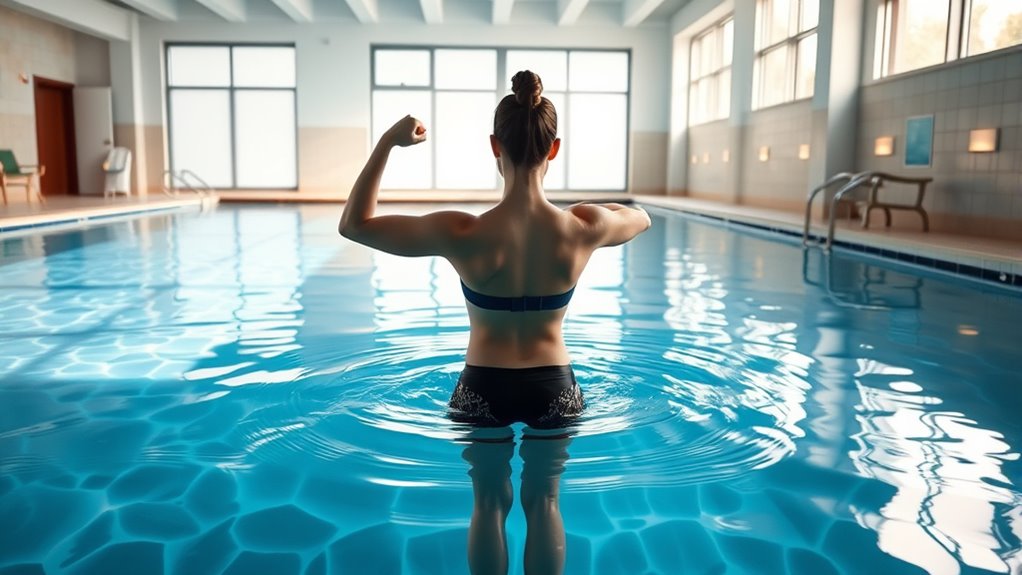
To relieve shoulder impingement, try water exercises that use gentle resistance to strengthen your shoulder muscles and improve mobility. Move slowly through exercises like arm raises, cross-body reaches, and shoulder circles in chest-high water, which supports your joints and eases pain. The water’s buoyancy reduces strain, while resistance builds endurance steadily. Keep practicing these controlled movements, and you’ll discover effective ways to support your recovery and regain shoulder function.
Key Takeaways
- Use water resistance to gently strengthen shoulder muscles while minimizing joint strain.
- Perform controlled arm lifts and cross-body reaches to improve mobility safely.
- Incorporate “Y” shape arm raises and shoulder circles to promote joint flexibility.
- Utilize cool, buoyant water to reduce inflammation and ease pain during exercises.
- Engage in gradual, low-impact movements that build endurance and support shoulder stability.
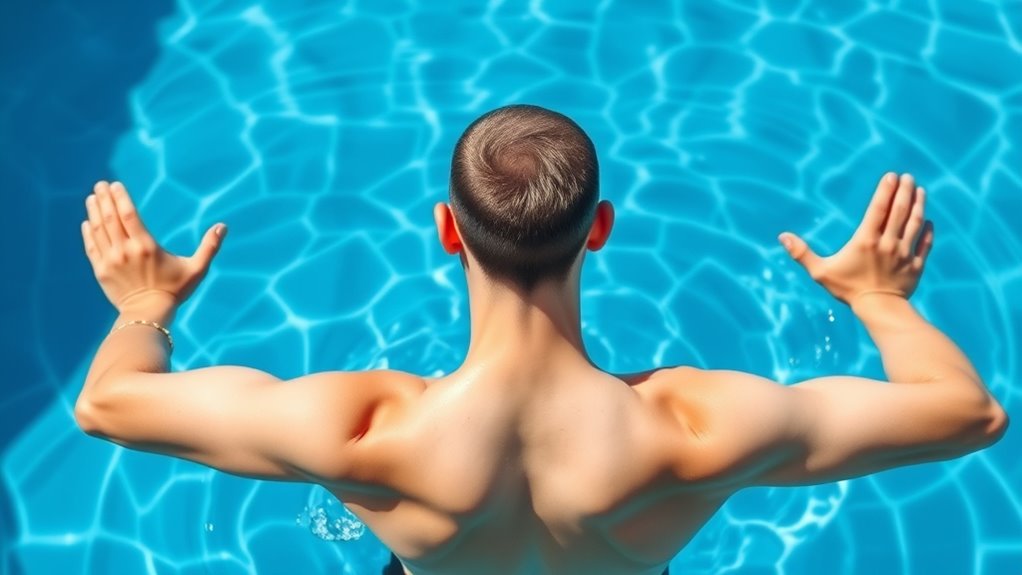
If you’re dealing with shoulder impingement, incorporating pool exercises into your recovery plan can make a significant difference. The buoyant environment of the pool provides water resistance that’s gentle yet effective, helping you strengthen shoulder muscles without putting excessive strain on your joints. This resistance is ideal for gradually rebuilding joint mobility, which is often limited when you have shoulder impingement. As you move through different exercises, you’ll notice how water’s natural resistance challenges your muscles in a controlled way, promoting strength without risking further injury.
Water resistance works in your favor because it offers uniform resistance as you perform each movement. Unlike weights or resistance bands, water slows your motion naturally, giving you better control and reducing the risk of overextending. When you perform shoulder circles, arm lifts, or cross-body stretches in water, you’re engaging your rotator cuff and surrounding muscles in a low-impact manner. This controlled resistance helps improve joint mobility, which is *essential* for restoring full shoulder function. Enhanced mobility means you can move your arm freely and with less pain, which accelerates your recovery process.
Water’s uniform resistance enhances mobility and control during shoulder exercises, promoting recovery and reducing injury risk.
Start with gentle warm-up exercises in chest-high water. For instance, raise your arms forward and overhead, then lower them slowly. The water’s buoyancy supports your arms, making it easier to move without pain. As your strength and mobility improve, you can increase the range of motion by performing side lifts or cross-body reaches. The water’s resistance will help you build muscle endurance, *integral* for keeping your shoulder stable and preventing future impingement episodes. Additionally, utilizing water’s unique properties can optimize your exercise routine by further reducing joint stress and improving recovery outcomes.
Another effective exercise involves standing with your arms at your sides and slowly raising them in a “Y” shape, then lowering in a controlled manner. The water’s resistance demands muscle engagement, especially in your shoulders and upper back, fostering joint stability. Consistent practice with these movements gradually improves joint mobility, allowing your shoulder to function more normally. Plus, the cool water helps reduce inflammation and eases discomfort, making each session both therapeutic and soothing.
Incorporating pool exercises that utilize water resistance and focus on improving joint mobility offers a safe, low-impact way to address shoulder impingement. By moving within the water, you can push your limits gradually, strengthening muscles and restoring movement without aggravating your condition. This approach not only speeds up recovery but also helps prevent future issues by promoting healthy, mobile shoulder joints.
Frequently Asked Questions
How Soon Can I Start Pool Exercises After Shoulder Injury?
You can usually start pool exercises a few days after your shoulder injury, but it’s best to wait until your doctor gives the go-ahead. When you do begin, focus on gentle swimming techniques in warm water, as it helps relax muscles and reduce pain. Make sure the water temperature is comfortable—around 82-86°F—to avoid overstressing your shoulder. Start slow and listen to your body’s signals.
Are Pool Exercises Suitable for Severe Shoulder Impingement Cases?
Pool exercises can be suitable even for severe shoulder impingement cases, especially when guided by a healthcare professional. Aquatic therapy provides low-impact resistance, helping you strengthen muscles without stressing your shoulder. It often serves as an effective dry land alternative during recovery. However, you should consult your doctor or physical therapist first, as they can tailor exercises to your condition and ensure safe, gradual progress in your rehabilitation.
Can Pool Exercises Replace Physical Therapy for Shoulder Impingement?
Pool exercises can’t fully replace physical therapy, but they’re a powerful supplement. Aquatic therapy offers low-impact, safe exercise options that help manage shoulder impingement effectively. You’ll benefit from reduced joint strain and enhanced mobility, making your recovery smoother. However, always make certain exercise safety and follow your healthcare provider’s guidance. Combining both approaches maximizes healing, so don’t rely solely on pool workouts—use them as part of a thorough treatment plan.
What Equipment Is Needed for Shoulder Exercises in the Pool?
You’ll need minimal equipment for pool shoulder exercises, mainly water resistance and pool accessories. Resistance gloves or ankle weights enhance water resistance, making exercises more effective. Using pool noodles or paddles can help with stability and support. These accessories improve your workout by providing added resistance and buoyancy, allowing you to target shoulder muscles safely. Just confirm your pool has comfortable, accessible entry points and enough space for your exercises.
How Often Should I Perform Pool Exercises for Optimal Relief?
You should perform pool exercises for shoulder impingement relief about 3 to 4 times a week, following the recommended frequency guidelines. Aim for sessions lasting around 20 to 30 minutes, ensuring you don’t overexert yourself. Consistency is key, so stick to this routine, gradually increasing exercise duration as your shoulder improves. Always listen to your body and consult your therapist for personalized advice.
Conclusion
Immerse yourself in these delightful pool exercises to diminish discomfort and deliver your shoulder from strain. By blending beneficial movements with buoyant benefits, you’ll boost your healing hustle and help shoulder impingement fade away. Remember, consistent effort creates lasting relief, so stay steady, stay strong, and sink into success. With patience and persistence, you’ll soon see your shoulder soar free of soreness, smiling brighter with each buoyant burst of balance and bravery.