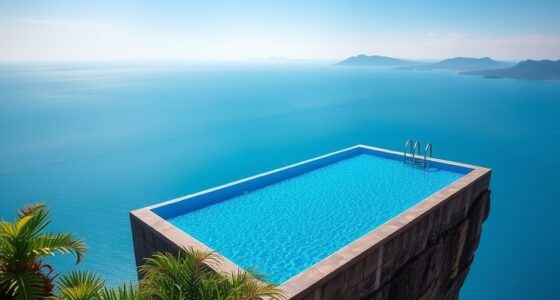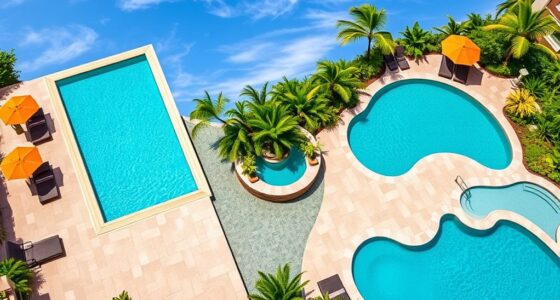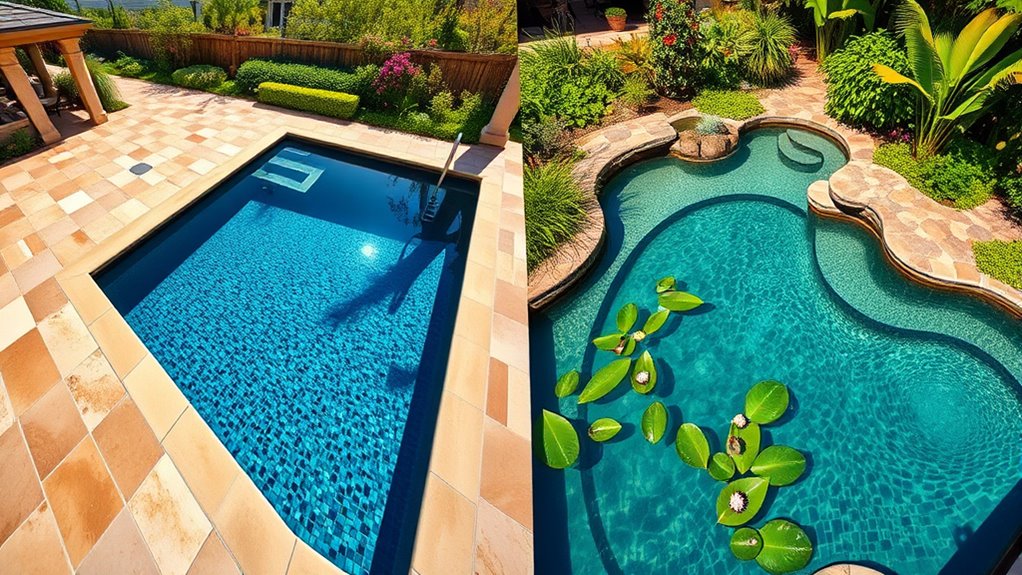

Choosing between geometric and freeform pools depends on your yard’s landscape, your style preference, and how much maintenance you’re willing to handle. Geometric pools offer a sleek, modern look with clean lines and easier upkeep, making them perfect for structured landscapes. Freeform pools blend seamlessly into natural environments with curves and flowing shapes, ideal for lush gardens or uneven terrain. To find out which style best suits your yard and lifestyle, keep exploring the options.
Key Takeaways
- Geometric pools suit modern, structured yards with clean lines and minimal landscaping for a sleek appearance.
- Freeform pools blend seamlessly into lush gardens or uneven terrain, creating a natural, organic look.
- Geometric pools are easier to maintain due to their straight edges and simple shapes.
- Freeform pools require more upkeep around curves and irregular edges but enhance a relaxed, natural ambiance.
- Choose based on your yard’s landscape, desired aesthetic, and maintenance preferences for the best fit.

When choosing a pool design, understanding the differences between geometric and freeform pools can help you make the right decision for your backyard. Geometric pools feature clean lines, sharp angles, and symmetrical shapes like rectangles, squares, or circles. They’re ideal if you prefer a modern, structured look that complements contemporary landscaping. Because of their precise shapes, maintaining these pools can be straightforward, especially when it comes to pool maintenance. The straight edges and defined corners make cleaning easier, and their uniform surfaces help water circulation stay even. Additionally, geometric pools lend themselves well to strategic pool lighting, allowing you to highlight their sharp lines and create dramatic effects at night. Proper lighting can accentuate the pool’s symmetry, making your backyard a striking visual statement after sunset. Design versatility is also a key advantage, as geometric pools can be customized with various finishes and features to suit your aesthetic preferences.
On the other hand, freeform pools offer a more organic, natural appearance. They mimic the shapes you’d find in nature—curves, irregular edges, and flowing lines that blend seamlessly into your landscape. If you have a lush garden or a yard with uneven terrain, a freeform pool can integrate beautifully, enhancing the natural aesthetic. These pools tend to be more versatile in design, allowing you to customize features like waterfalls or rock features that complement the irregular shape. However, because of their complex contours, pool maintenance can be slightly more involved. Cleaning around curves and corners requires more attention, and ensuring even water circulation might need additional planning. Proper pool lighting becomes even more essential here, as well-placed lights can accentuate the natural flow of the pool, creating inviting reflections and emphasizing its organic form.
Choosing between these styles depends on your personal taste and how you envision your backyard. If you want a sleek, minimalist look that’s easy to maintain and enhances modern landscaping, a geometric pool might be your best choice. It’s easier to keep clean and offers excellent opportunities for installing pool lighting that highlights its symmetry. Conversely, if you prefer a more relaxed, natural vibe and have a landscape that can support irregular shapes, a freeform pool could be the perfect fit, providing a beautiful centerpiece that appears to emerge from its surroundings. Both styles can be equipped with effective lighting systems, but the design will influence how you light and maintain your pool. Ultimately, understanding these differences will help you select a pool that complements your lifestyle, yard, and aesthetic preferences while making pool maintenance manageable and ensuring your lighting enhances the overall ambiance.

In The Swim Pool Deluxe Opening Chemical Start Up Kit – Above Ground and In-Ground Swimming Pools – Up to 15,000 White
Save time and take the guesswork out of measuring chemicals when opening your pool with our pre-measured pool…
As an affiliate, we earn on qualifying purchases.
As an affiliate, we earn on qualifying purchases.
Frequently Asked Questions
Which Pool Type Adds More Value to My Property?
A geometric pool often adds more value to your property because of its clean lines and modern look, appealing to a broader range of buyers. It complements various landscaping options and can fit different yard sizes. However, consider your budget, as freeform pools may be more cost-effective and blend naturally with your landscape. Ultimately, choose a style that enhances your yard’s aesthetic and aligns with your long-term investment goals.
How Do Maintenance Costs Compare Between Geometric and Freeform Pools?
Maintenance expenses for geometric and freeform pools are generally similar, but long-term costs can vary. You might find that geometric pools require more frequent cleaning due to their intricate shapes, while freeform pools may need extra attention around irregular edges. Both demand regular upkeep, including chemical balancing and equipment checks. Ultimately, the differences in maintenance costs are minimal, and your choice should focus on aesthetics and functionality rather than long-term expenses.
Are There Specific Yard Sizes Better Suited for Each Pool Style?
You’ll find that smaller yards often suit geometric pools, as their clean lines maximize space and enhance yard landscaping. Larger yards can comfortably accommodate freeform pools, creating a natural, relaxed environment with pool privacy. If maintaining a sleek, structured look is your goal, geometric designs work best. For a more organic, private retreat, a freeform pool blends seamlessly into your yard, offering versatility and a sense of tranquility.
Can I Customize the Shape of a Geometric or Freeform Pool?
Did you know that about 60% of pool owners opt for custom shapes? You can definitely tailor the shape of either a geometric or freeform pool, enhancing your yard’s design flexibility. Pool shape customization allows you to match your pool to your style and space. Whether you prefer sharp angles or flowing curves, working with a professional ensures your pool’s shape aligns perfectly with your vision, maximizing your outdoor enjoyment.
Which Pool Style Is More Suitable for Families With Children?
A freeform pool is more suitable for families with children because it offers safety concerns like shallow areas and rounded edges, reducing injury risks. Plus, it adds aesthetic appeal with a natural, relaxed look that blends well with your yard’s landscape. You can customize the shape to fit your space, creating a safe, inviting environment where kids can play freely and you can enjoy a beautiful backyard.

In The Swim Pool Super Opening Chemical Start Up Kit – Above Ground and In-Ground Swimming Pools – Up to 35,000 Gallons
Save time and take the guesswork out of measuring chemicals when opening your pool with our pre-measured pool…
As an affiliate, we earn on qualifying purchases.
As an affiliate, we earn on qualifying purchases.
Conclusion
Ultimately, choosing between a geometric and freeform pool is about finding the perfect harmony for your yard’s personality. While one may offer crisp lines and tidy symmetry, the other invites a more relaxed, whimsical vibe. Whichever style you lean toward, remember it’s about creating a space that brings you joy and comfort. Your dream oasis is just waiting to be gently uncovered, ready to reflect your unique essence and turn your backyard into a treasured retreat.

HQUA PN01DC LED Inground Pool Lighting System RGBW Color Change 10 Inch 50W, Remote/App Control, 120V AC, 100 Feet Cord
【 RGBW Color Control 】 – With the LC01 system, PN01DC offers 10+ dynamic modes, including flashing, jumping…
As an affiliate, we earn on qualifying purchases.
As an affiliate, we earn on qualifying purchases.

TidyMister Small Pool Brush Head for Cleaning Narrow Corners Steps, Stiff Wavy Bristles Round Brush Scrubber for Above Ground & Inground Pools, Cobweb Brush
Round Head Design: Effortlessly clean tight corners, edges, and hard-to-reach areas of pools, spas, or tiles with the…
As an affiliate, we earn on qualifying purchases.
As an affiliate, we earn on qualifying purchases.