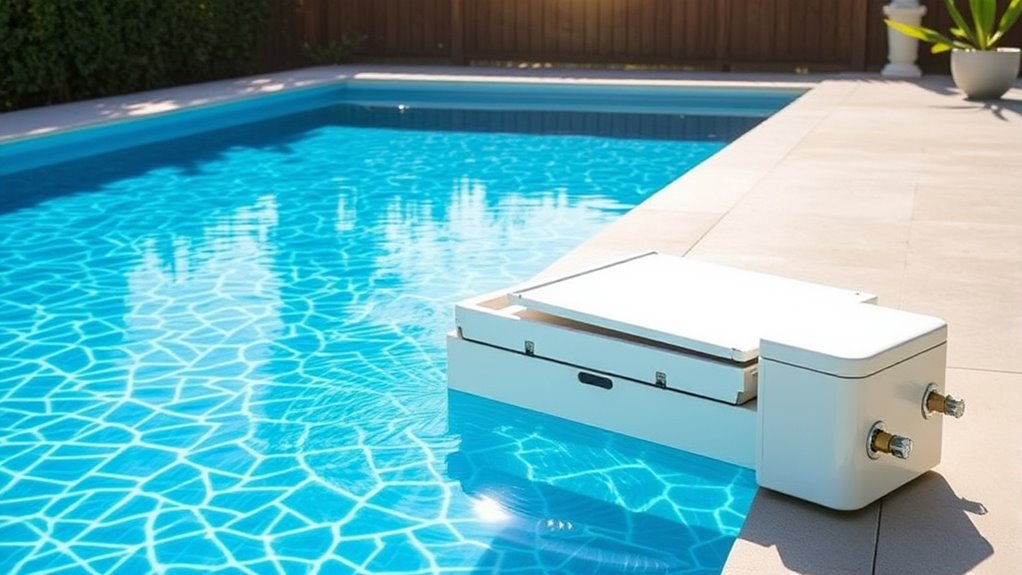
To save on pool costs, focus on choosing durable, cost-effective materials like stamped concrete and simple, geometric designs that ease construction. Opt for energy-efficient LED lighting and basic accessories to cut ongoing expenses. Simplify features such as waterfalls or intricate tiles to reduce complexity and labor. Using modular components and smart technology can boost long-term savings. Keep these strategies in mind to maximize value, and discover more ways to cut costs while maintaining quality.
Key Takeaways
- Choose cost-effective, durable materials like stamped concrete or composite liners to reduce long-term maintenance costs.
- Simplify design with geometric shapes and modular components to lower construction time and labor expenses.
- Opt for energy-efficient LED lighting and basic accessories to minimize operational costs and allow future upgrades.
- Use affordable foundational materials like gravel or compacted sand for stability without overspending.
- Incorporate smart automation systems gradually for long-term savings on pool maintenance and energy use.
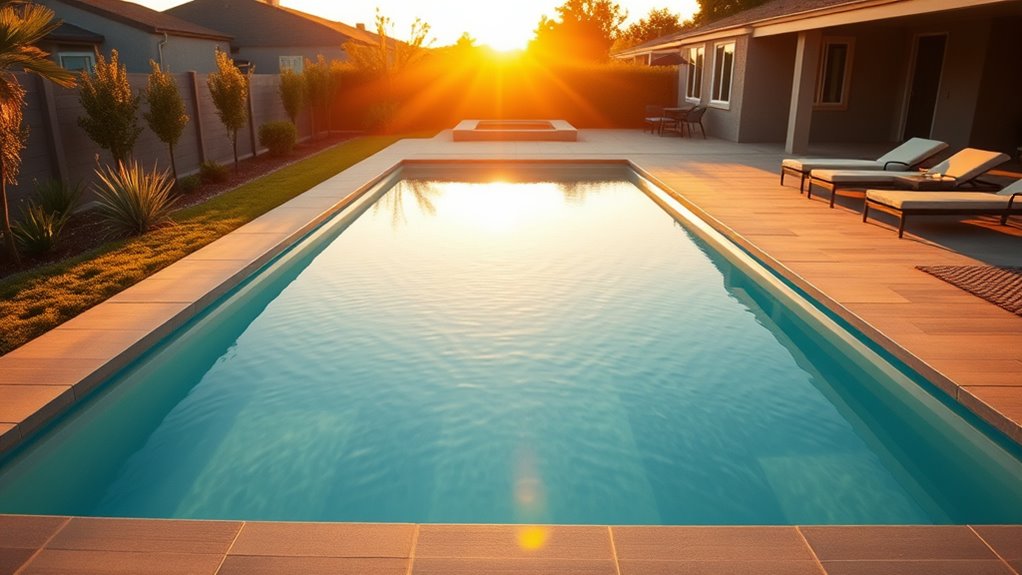
Are you looking to build a pool that balances quality and cost? If so, understanding where to cut costs without sacrificing durability or style is key. One of the most effective ways to do this is by selecting cost effective materials. Instead of opting for high-end, expensive finishes, consider alternatives like stamped concrete or durable composite liners that offer long-lasting appeal at a fraction of the price. These materials can withstand the elements and daily wear, reducing maintenance costs over time. Additionally, choosing the right base materials, such as gravel or compacted sand, can provide a stable foundation without inflating your budget. This approach ensures your pool remains structurally sound while saving money upfront.
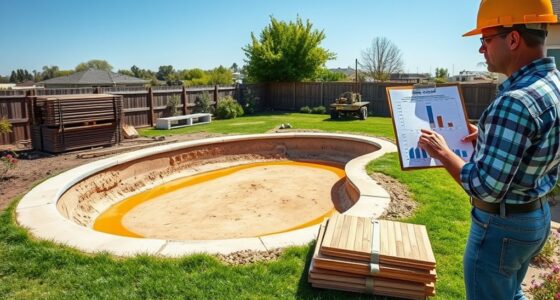
Another smart move is to incorporate an innovative design that simplifies construction and reduces labor costs. For example, opting for a rectangular or geometric shape can streamline excavation and formwork, decreasing overall project time and expenses. Modular or pre-fabricated pool components are also excellent options—they can be assembled quickly and often come with cost savings due to mass production. These designs not only cut costs but also make future modifications or repairs more manageable. When planning your pool, think about minimizing features that add complexity, like elaborate waterfalls or intricate tile work, especially if they’re not essential to your enjoyment. Focusing on a clean, functional design allows you to allocate your budget toward quality materials and features that truly enhance your experience.
Simplify your pool design with geometric shapes and modular components to save on costs and ease future upgrades.
Lighting and accessories are other areas where value engineering can make a difference. Instead of opting for expensive, high-end lighting fixtures, choose energy-efficient LED options that provide excellent illumination at a lower cost. Similarly, selecting versatile, affordable accessories like standard pool covers or simple decking materials can save money without compromising safety or aesthetics. It’s also wise to plan for future upgrades. For instance, installing basic equipment now with the option to add advanced features later gives you flexibility and spreads out costs over time.
Furthermore, leveraging AI in Business technologies like automation can optimize your pool maintenance and management, saving time and reducing operational costs in the long run. Ultimately, the key to smart value engineering is balancing initial investment with long-term benefits. Focus on cost effective materials that deliver durability and style, and lean toward innovative design choices that simplify construction and maintenance. By making thoughtful decisions early in the planning process, you’ll enjoy a beautiful, functional pool that doesn’t break the bank. This approach ensures you get the best possible value, combining quality, efficiency, and affordability in your backyard oasis.
As an affiliate, we earn on qualifying purchases.
Frequently Asked Questions
How Long Does the Value Engineering Process Typically Take?
The value engineering process usually takes anywhere from a few days to several weeks, depending on your project’s size. You’ll start with a budget analysis to identify cost-saving opportunities and then move into timeline planning to keep everything on track. Staying involved and providing clear input helps speed things up. On average, plan for about 2-4 weeks to complete the process efficiently without sacrificing quality.
Can Value Engineering Affect the Durability of the Pool?
Yes, value engineering can affect your pool’s durability if not carefully managed. You might sacrifice some materials or features to save costs, which could compromise pool safety and reduce aesthetic appeal over time. To avoid this, work with professionals who prioritize quality and longevity, ensuring that cost savings don’t undermine your pool’s safety standards or its visual appeal, keeping your investment safe and attractive for years to come.
Are There Specific Materials Recommended for Cost Savings?
A penny saved is a penny earned, so choosing the right materials matters. For cost savings, consider pool surface options like vinyl liners or textured concrete, which are more affordable yet durable. Also, opt for energy-efficient equipment to cut long-term costs. These choices help you stay within budget without sacrificing quality, ensuring your pool remains a smart investment and a source of enjoyment for years to come.
How Does Value Engineering Impact Pool Maintenance Costs?
Value engineering lowers your pool maintenance costs by optimizing pool design and material selection. When you choose durable, low-maintenance materials, you reduce the need for frequent repairs and cleaning. Smart pool design also minimizes hard-to-reach areas, making maintenance easier and less expensive. Overall, this approach helps you save money over time, ensuring your investment stays attractive and functional with less effort and expense.
Is Value Engineering Suitable for Custom or Luxury Pools?
Like a tailor fitting a suit to your unique style, value engineering suits custom or luxury pools perfectly. It allows you to incorporate luxury features and custom designs while controlling costs. By carefully selecting materials and innovative solutions, you can achieve stunning results without compromising quality. This approach ensures your dream pool remains both exclusive and practical, making your backyard a true oasis that reflects your taste and lifestyle.
Conclusion
By focusing on smart savings, by prioritizing essential features, and by choosing cost-effective materials, you can create a beautiful, functional pool without overspending. Embrace value engineering to reduce costs, to maximize quality, and to enhance your outdoor space. Remember, smart planning leads to smart spending, and with careful consideration, you’ll enjoy a stunning pool that fits your budget and elevates your backyard. Make wise choices today for a more affordable, enjoyable pool tomorrow.