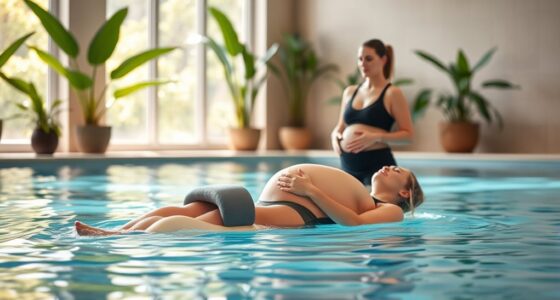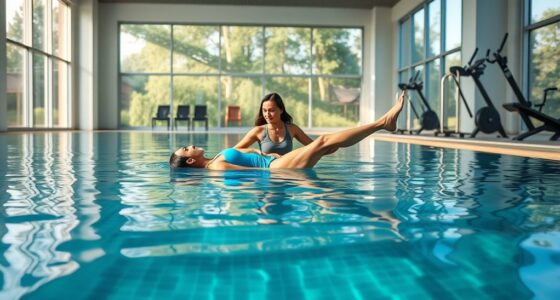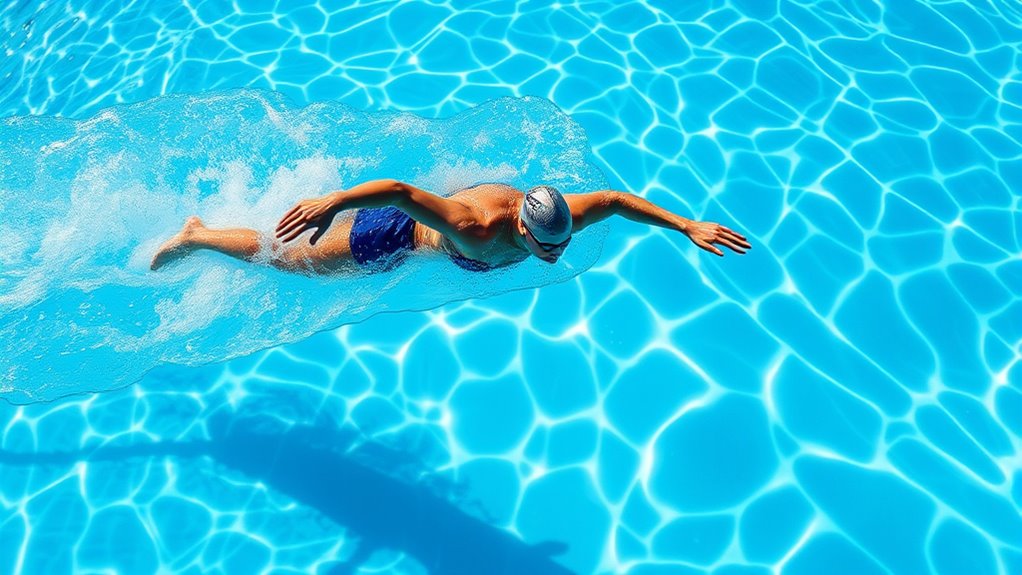

Yes, pool training can improve your VO₂ max because water resistance challenges your muscles and cardiovascular system. Activities like swimming, aqua jogging, and water aerobics require sustained effort, helping your body adapt by increasing blood flow and oxygen use. The resistance offers a low-impact way to push your aerobic capacity higher, especially if you stay consistent. Keep exploring how water-based workouts can boost your fitness and reveal new benefits.

Get pool and patio gear delivered free — and shop member deals
- Fast, free delivery on millions of items
- Access to Prime Big Deal Days deals on October 6–7
- Prime Video, Amazon Music and more included
Key Takeaways
- Water resistance provides continuous, multidirectional challenge, stimulating cardiovascular and muscular adaptations that can enhance VO₂ max.
- Pool training allows high-intensity, low-impact aerobic exercises like swimming and aqua jogging, promoting improved oxygen uptake.
- Regular water-based endurance workouts can increase heart efficiency and lung capacity, leading to higher VO₂ max over time.
- The resistance in water encourages sustained effort, which supports adaptations in the respiratory and circulatory systems.
- Individual factors and genetics influence how much VO₂ max can improve through pool training, but benefits are generally achievable.

Have you ever wondered how your aerobic capacity is measured when you’re exercising in water? It’s a common question among fitness enthusiasts, especially since water-based workouts are gaining popularity. When you train in water, your VO₂ max—the maximum amount of oxygen your body can utilize during intense activity—is influenced by several unique factors. One of the most significant is water resistance. Unlike land exercises, where gravity is the primary challenge, water provides a natural, multidirectional resistance that forces your muscles to work harder. This resistance isn’t just about strength; it also impacts your cardiovascular system, pushing your heart and lungs to adapt and become more efficient. As you move through water, your aquatic endurance improves because your body learns to sustain effort against this resistance, which can, over time, enhance your VO₂ max.
Water resistance plays a crucial role in your training because it offers a low-impact yet highly effective way to boost aerobic capacity. When you perform activities like swimming laps, aqua jogging, or water aerobics, the resistance from the water means your muscles have to work harder to move through it. This increased effort stimulates your cardiovascular system, encouraging your heart to pump more blood and your lungs to supply more oxygen. Over time, this adaptation can raise your VO₂ max, making your body more efficient at oxygen uptake and utilization during all kinds of physical activity. Because water provides constant, uniform resistance regardless of your speed, you’re continuously challenged, which is ideal for building aquatic endurance—a key factor in improving aerobic capacity.
Furthermore, training in water allows you to push yourself without the harsh impact associated with land-based workouts. This means you can often work at higher intensities for longer periods, further promoting cardiovascular improvements. Your aquatic endurance, or your ability to sustain prolonged effort in water, directly correlates with increases in VO₂ max. As your body adapts to the demands of moving against water resistance, your heart becomes more efficient at delivering oxygen to your muscles, and your lungs become better at extracting oxygen from the air you breathe. These adaptations make your overall aerobic capacity stronger, which benefits not just your water workouts but your land-based activities as well. Additionally, the unique genetic variation in water-based exercise can influence how quickly you see improvements in your VO₂ max.
water resistance swimming gloves
As an affiliate, we earn on qualifying purchases.
As an affiliate, we earn on qualifying purchases.
Frequently Asked Questions
How Does Water Resistance Compare to Running for Improving Vo₂ Max?
Water resistance offers a different challenge than running for improving your VO₂ max. Swimming improves efficiency and builds aerobic capacity through constant resistance, while water buoyancy reduces joint impact, allowing longer sessions with less fatigue. This resistance challenges your cardiovascular system effectively, often leading to comparable or even superior improvements in VO₂ max, especially when you focus on consistent, high-intensity swimming workouts.
Are There Specific Pool Exercises Proven to Boost Vo₂ Max Effectively?
Imagine battling a stubborn octopus underwater—resistance swimming and aqua intervals are your best tools. These specific pool exercises, like high-intensity resistance swimming, have proven to boost VO₂ max effectively. You push your limits with quick sprints and sustained efforts, making use of water’s unique resistance. Plunge into these workouts, and you’ll see your aerobic capacity improve faster than trying to outrun a sea monster.
How Often Should One Train in the Pool to See Vo₂ Max Improvements?
You should aim to train in the pool at least three to four times a week, similar to your cycling frequency. Incorporate interval training and strength exercises to challenge your cardiovascular system. Consistency is key, so stick to this schedule for several weeks. By combining pool workouts with strength training, you’ll notice improvements in your VO₂ max, enhancing your overall endurance and fitness.
Can Pool Training Replace Outdoor Cardio Workouts for Vo₂ Max Gains?
Pool training can’t fully replace outdoor running for improving your VO₂ max, but it’s a valuable supplement. While water workouts boost your land-based endurance, outdoor cardio offers the varied terrain and fresh air that enhance VO₂ max more effectively. Incorporating both into your routine gives you a balanced approach, maximizing endurance gains while reducing impact and injury risk. So, diversify your training for the best results.
What Are the Limitations of Water-Based Training for Vo₂ Max Enhancement?
Water’s wellness wonders come with weighty woes. You might meet aquatic limitations like water restrictions, which limit intensity and duration, reducing VO₂ max gains. The resistance in water is less effective than outdoor air, making it challenging to push your pace. Additionally, water’s buoyancy can blunt the benefits of weight-bearing exercises, meaning your efforts may not translate fully to land-based endurance. So, while water workouts are wonderful, they aren’t without their weaknesses.
Conclusion
So, diving into pool training might just be your secret key to boosting VO₂ max. Think of your fitness journey as sailing across open waters—you need the right wind to propel you forward. Water workouts offer resistance and low-impact benefits, helping you build endurance without hitting rough seas. With consistent effort, you’ll find yourself charting new heights in your cardiovascular health, turning the pool into your own personal ocean of progress.
Halloween Picks
halloween
As an affiliate, we earn on qualifying purchases.