
To effectively waterproof edges, you should use membranes, properly seal joints, and pay attention to details like slopes and drainage. Make sure the materials you choose are compatible with your surface, such as concrete or wood, and install them carefully to prevent leaks. Regular maintenance helps catch cracks or gaps early. If you keep exploring, you’ll discover essential tips to enhance your waterproofing system and ensure long-lasting protection.

Get pool and patio gear delivered free with Prime
- Fast, free delivery on millions of items
- Prime Video, Amazon Music and more included
- Member-only deals all year
Key Takeaways
- Use compatible waterproof membranes and primers to ensure strong adhesion at edges and joints.
- Properly seal and reinforce joints with flexible sealants to accommodate movement and prevent leaks.
- Incorporate drainage solutions like channels or weep holes to direct water away from edges.
- Ensure surfaces are clean, dry, and properly prepared before applying waterproofing materials.
- Regularly inspect and maintain edge details to identify and repair cracks, gaps, or damage early.
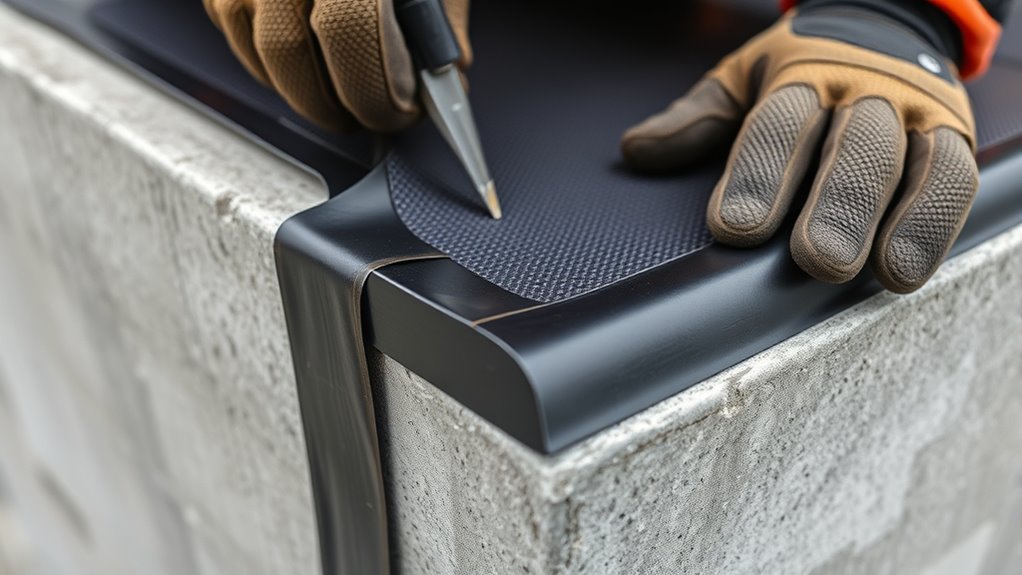
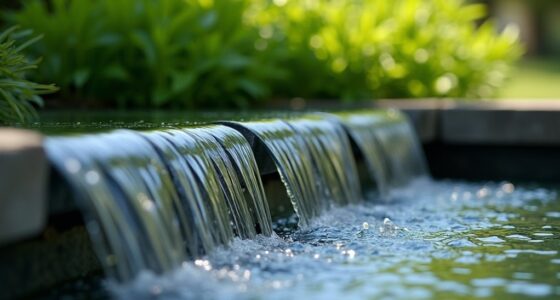
Waterproofing edges is a vital step in protecting your surfaces from water damage and preventing costly repairs. When you properly seal the edges of a surface, you’re creating a barrier that keeps water from seeping into vulnerable areas. This process involves careful attention to details like membranes, joints, and edges, ensuring they’re well-sealed and durable over time. One of the most important considerations during this process is selecting appropriate drainage solutions. Effective drainage helps direct water away from critical spots, reducing the likelihood of pooling or infiltration. It’s essential to incorporate drainage solutions that complement your waterproofing system, such as channels, slopes, or weep holes, especially in areas prone to heavy water exposure. By integrating these solutions, you guarantee that any water that does manage to breach the surface doesn’t linger and cause damage.
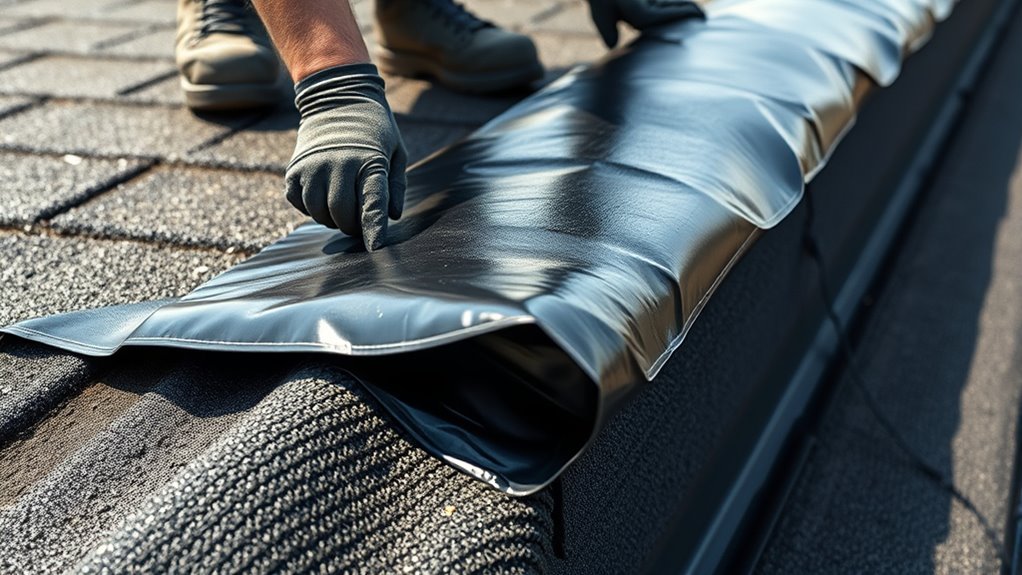
Material compatibility is another crucial factor when waterproofing edges. Different surfaces and waterproofing materials react differently, so you must choose options that work well together. For example, some membranes adhere better to concrete than to wood, while others may require specific primers or adhesives. Failing to consider material compatibility can lead to weak bonds, leaks, or premature failure of the waterproofing system. Before you start sealing, always verify that the membrane or sealant you select is compatible with the substrate material. This step guarantees a long-lasting, effective barrier that resists weathering, UV exposure, and physical wear. You should also pay attention to how different materials expand and contract with temperature changes, which can cause cracks or gaps if incompatible materials are used together. Properly matching materials minimizes these risks, maintaining a continuous, waterproof edge. Additionally, understanding the importance of proper installation techniques ensures the longevity and effectiveness of your waterproofing system.
When sealing joints, corners, or edges, make sure all surfaces are clean and dry before applying any membranes or sealants. This preparation helps improve adhesion and prevents future leaks. Use compatible sealants at transitions or movement joints to accommodate any shifting or expansion, avoiding cracks that could compromise the waterproofing. Remember, edge waterproofing isn’t a one-time task; it requires ongoing maintenance and inspection to catch potential issues early. Regular checks for cracks, peeling, or gaps allow you to address problems before water penetrates and causes damage. By paying close attention to drainage solutions and material compatibility, you’re setting up a resilient waterproofing system that protects your surfaces for years to come. Properly sealed edges will not only prevent water intrusion but also extend the lifespan of your structures, saving you time and money on repairs in the long run.
As an affiliate, we earn on qualifying purchases.
Frequently Asked Questions
How Do Weather Conditions Affect Edge Waterproofing Installation?
Weather impact can considerably affect your edge waterproofing installation. Rain, snow, or high humidity create installation challenges by preventing proper adhesion and curing of membranes. Extreme cold or heat can cause materials to become brittle or overly flexible, compromising their effectiveness. To guarantee a successful installation, you should monitor weather conditions closely, plan for suitable drying times, and postpone work during adverse weather to avoid future waterproofing failures.
What Are Common Mistakes in Sealing Membrane Joints at Edges?
You might think sealing membrane joints is straightforward, but overlooking proper joint preparation can lead to failures. Common mistakes include rushing the cleaning process, which leaves debris behind, or choosing the wrong adhesive that doesn’t bond well. These errors create weak spots, risking leaks. Always guarantee thorough joint preparation and select an adhesive suited for your specific membrane. Skipping these steps might seem minor, but they’re vital to a durable, waterproof seal.
How to Repair Damaged Waterproofing at the Edge Without Full Replacement?
You can repair damaged waterproofing at the edge by applying a patch repair over the affected area. Clean and dry the surface thoroughly, then cut a patch slightly larger than the damage. Use a compatible waterproof sealant or adhesive to secure the patch. To guarantee durability, reinforce the edge with an additional layer or edge reinforcement tape, sealing all edges well to prevent future leaks.
Which Materials Are Best for Edge Waterproofing in Extreme Climates?
In the face of nature’s fury, you need armor that’s both tough and true. For extreme climates, opt for high-performance EPDM or PVC membranes, known for their exceptional durability against temperature swings and UV rays. Guarantee material compatibility with your existing setup to prevent leaks. These materials act like a fortress, flexing and resisting, giving you peace of mind where others falter. Your edge stays sealed, no matter the storm.
How Long Does Edge Waterproofing Typically Last Before Maintenance Is Needed?
Edge waterproofing typically lasts between 10 to 20 years before you need to perform maintenance, depending on the materials used and environmental conditions. It is crucial to follow a regular maintenance schedule to guarantee longevity. By inspecting the edges periodically and addressing minor issues early, you can extend the lifespan estimation of your waterproofing system, preventing costly repairs and ensuring continuous protection against water intrusion.
Conclusion
Think of waterproofing the edge as planting a shield around your structure’s heart. The membranes, joints, and details are like the armor that guards against unseen threats, standing firm like a fortress against water’s persistent march. When you master these details, you’re weaving a durable fabric of protection—each layer a stitch in the tapestry of your building’s longevity. Ultimately, your careful attention creates a sanctuary, where water’s reach is forever held at bay, symbolizing strength and resilience.
Halloween Picks
halloween
As an affiliate, we earn on qualifying purchases.