To meet pool safety codes, you need fencing and barriers that are at least four feet high with no gaps or openings. Gates should be self-closing and self-latching, with latches out of children’s reach, and automatic gates must have reliable mechanisms. Use durable materials like aluminum, vinyl, or coated steel to withstand outdoor elements. Proper installation is key to safety compliance. Keep exploring to discover more about creating a safe and secure pool environment.
Key Takeaways
- Ensure fences are at least four feet high with no gaps or openings to prevent unauthorized access.
- Install self-closing, self-latching gates with latches positioned out of children’s reach.
- Use durable materials like aluminum, vinyl, or coated steel to withstand outdoor elements and maintain safety.
- Incorporate safety sensors and automatic gate controls for enhanced security and compliance with safety standards.
- Follow local building codes and standards for construction, installation, and maintenance of pool fencing and barriers.
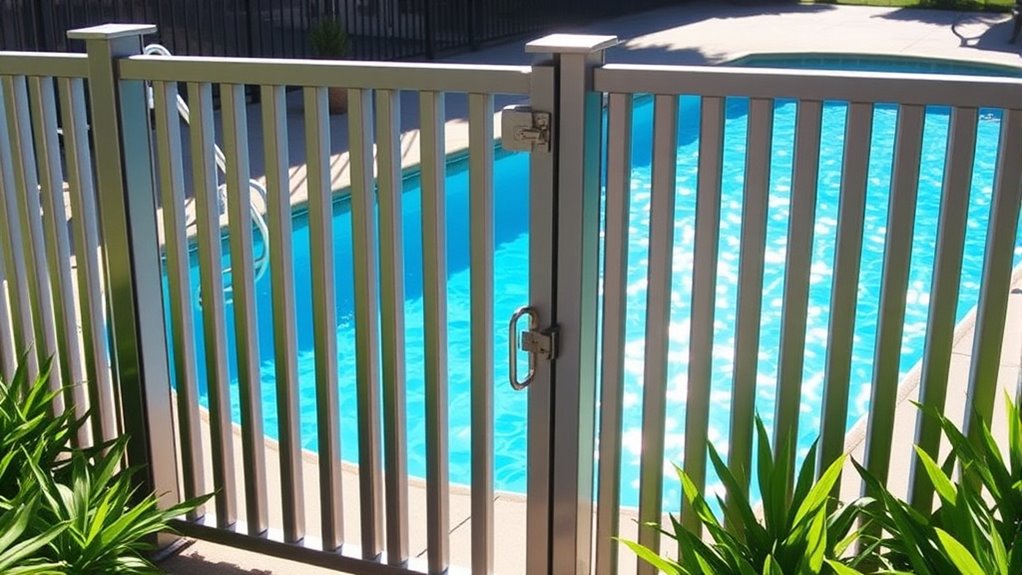
Fencing and barriers play an essential role in defining property boundaries, enhancing security, and providing privacy. When it comes to pool safety, these barriers are especially important, as they help prevent accidental drownings and unauthorized access. One key feature to consider is an automatic gate, which offers convenience and controlled access. An automatic gate can be equipped with safety sensors that automatically stop or reverse movement if something or someone is in its path, reducing the risk of injury. This makes it easier to secure your pool area while still allowing quick access for authorized users. Additionally, automatic gates can be programmed with keypads, remote controls, or smartphone apps, giving you flexible control over who enters the pool area and when. This added layer of security aligns with pool safety codes, guaranteeing that only approved individuals can access the space.
Material durability is another critical aspect to consider when installing fencing and barriers for your pool. The materials you choose must withstand the elements, resist corrosion, and maintain their structural integrity over time. Common options like aluminum, vinyl, and coated steel are popular because they’re highly durable, requiring less maintenance and lasting longer than wood or less resilient materials. Aluminum fences, in particular, resist rust and corrosion, making them ideal for outdoor environments near pools. Vinyl fences are also durable, providing a smooth, maintenance-free surface that won’t warp or splinter. Steel fences with protective coatings can be strong and long-lasting, but they may require periodic maintenance to prevent rust. Choosing high-quality materials not only guarantees safety but also saves you money and effort in the long run, as the fencing remains effective and attractive for years.
Furthermore, recent advances in automation technologies, such as smart gate controls, can enhance safety by providing real-time monitoring and alerts, ensuring your pool area remains secure at all times.
In addition to material durability, the construction quality of your fence and gates is essential to meeting pool safety codes. Properly installed fencing should be at least four feet high, with no gaps or openings that a child could slip through. Gates must be self-closing and self-latching, with latches positioned out of a child’s reach. An automatic gate with a reliable opening and closing mechanism, combined with sturdy, durable materials, ensures your barrier remains secure and functional. When you prioritize these features, you create a safer environment compliant with local regulations and peace of mind for yourself and your loved ones. Ultimately, investing in a well-designed, durable fence with an automatic gate is fundamental for meeting pool safety standards and protecting everyone around your pool area.
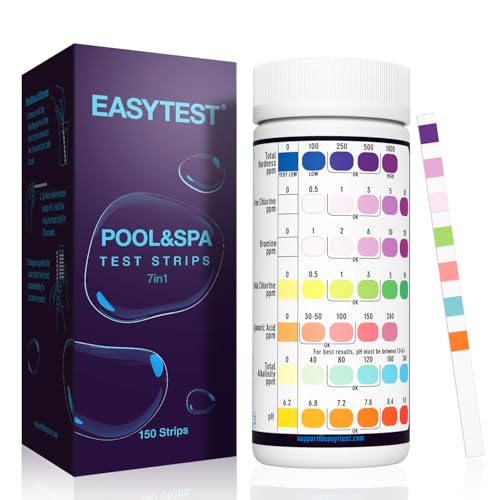
EASYTEST 7-Way Pool Test Strips, 150 Strips Water Test for Hot tub and Spa
- 150 Test Strips Included: Enough for multiple water tests
- Fast and Accurate Results: Soak for 1 second, read in 15 seconds
- 7-in-1 Water Testing: Tests Bromine, pH, Chlorine, Alkalinity, Hardness, Cyanuric Acid
As an affiliate, we earn on qualifying purchases.
Frequently Asked Questions
Are There Specific Fencing Height Requirements for Different Pool Types?
Yes, fencing height requirements vary by pool type. For residential pools, you typically need a fence at least 4 feet tall, with specific fencing design features to prevent climbing. Commercial pools often require fences of 5 feet or higher. Confirm your pool gate locks are self-closing and self-latching to enhance safety. Meeting these height requirements and using secure gate locks helps prevent unauthorized access and keeps swimmers safe.
How Often Should Pool Barriers Be Inspected for Safety Compliance?
Imagine a homeowner inspecting their pool barrier after a storm, realizing it’s been a year since the last check. You should inspect your pool barriers at least once a year and after any severe weather to make certain child supervision and emergency access remain secure. Regular inspections help identify damages or breaches, preventing accidents. Staying vigilant ensures your barrier complies with safety codes, keeping everyone safe and secure around your pool.
Can I Use Retractable Fences to Meet Safety Standards?
Yes, you can use retractable fences to meet safety codes, but you must guarantee they comply with all local regulations. Safety codes require barriers to be secure, non-climbable, and self-closing, so check that your retractable fence meets these standards when extended. Always verify with your local authorities before installation to ensure your retractable fence provides adequate safety and aligns with current pool safety requirements.
What Materials Are Recommended for Durable, Compliant Pool Fencing?
Your pool fencing should be built with materials that are as resilient as a fortress, ensuring long-lasting safety and compliance. Opt for galvanized steel or aluminum, known for their exceptional material durability and resistance to rust and corrosion. Vinyl fencing offers a sleek, low-maintenance option that enhances fence aesthetics while standing up to the elements. These materials guarantee your fencing remains effective, attractive, and compliant for years to come.
Are There Regional Variations in Fencing Regulations for Pools?
Yes, regional standards and local enforcement influence fencing regulations for pools. You should check your area’s specific rules, as some regions have stricter height, spacing, or gate requirements. Local authorities enforce these standards to ensure safety. By staying informed about your region’s regulations, you guarantee your pool fencing adheres to, reducing risks and avoiding potential fines. Always consult your local building department for the most accurate, up-to-date information.
Conclusion
By ensuring your fencing and barriers meet safety codes, you protect your loved ones, prevent accidents, and promote peace of mind. By choosing sturdy materials, maintaining proper height, and securing gates, you create a safe environment. By staying informed, adhering to regulations, and regularly inspecting your barriers, you uphold safety standards. Ultimately, by taking these steps, you foster safety, security, and confidence—because a well-fenced pool is a well-protected pool.