Pool filter pressure measures how hard your water flows through the filter system, helping you assess its efficiency. The ideal pressure ranges from 10 to 20 PSI, but it varies based on your pool and filter type. Too high or low pressure signals potential issues like clogs or leaks, so monitoring is essential. Maintaining the right pressure keeps your pool clean and systems running smoothly—if you want to know how to keep it in check, keep going.

Get pool and patio gear delivered free — and shop member deals
- Fast, free delivery on millions of items
- Access to Prime Big Deal Days deals on October 6–7
- Prime Video, Amazon Music and more included
Key Takeaways
- The ideal pool filter pressure typically ranges from 10-20 PSI, depending on your filter type and pool size.
- The “clean” PSI number is the baseline pressure reading when the filter is clean and functioning optimally.
- An increase of 8-10 PSI above the clean baseline indicates it’s time to clean or backwash the filter.
- Consistently monitoring and recording your filter’s PSI helps detect clogs or flow issues early.
- Maintaining the correct pressure ensures efficient filtration, clear water, and prevents system damage.
As an affiliate, we earn on qualifying purchases.
What Is Pool Filter Pressure and Why Is It Important?

Pool filter pressure measures the force of water moving through your filter system. Monitoring this pressure is essential for proper filter maintenance because it indicates how effectively your filter is working. When pressure readings are too high, it means your filter is clogged and needs cleaning; if too low, it might suggest a problem with water flow. Using pressure reading techniques helps you identify when to backwash or clean the filter, preventing issues like poor water quality or pump strain. Regularly checking your filter pressure allows you to maintain an efficient system, saving energy and prolonging equipment lifespan. Understanding what the pressure numbers mean guarantees you can act promptly, keeping your pool water clear, safe, and inviting. Proper filter maintenance ensures your filter system continues to operate efficiently and effectively, and recognizing the significance of pressure fluctuations can help you catch issues early. Being familiar with pressure gauge readings can help prevent costly repairs and ensure your pool remains in optimal condition. Additionally, understanding these pressure dynamics promotes energy efficiency by reducing unnecessary strain on your pump and filtration system.
What Is the Ideal Filter Pressure Range for Your Pool?

Maintaining the correct filter pressure guarantees your pool stays clean and your equipment runs efficiently. Typically, the ideal filter pressure ranges between 10 and 20 PSI, but it can vary based on your pool and filter type. Keep an eye on the pressure gauge; if it rises 8-10 PSI above your normal reading, it signals a need for cleaning or backwashing. Proper chemical balance also plays a role in filter performance, preventing debris buildup and ensuring effective filtration. Staying within the recommended pressure range helps maintain pool safety by reducing equipment strain and avoiding potential malfunctions. Regularly monitoring your filter pressure allows you to spot issues early, keeping your water clear, safe, and hygienic for swimmers. Incorporating proper ventilation considerations can further enhance equipment longevity and safety, especially in enclosed spaces where heat and humidity can impact filter media performance. Additionally, understanding how hydraulics influence flow and pressure can help optimize your filter operation and extend equipment lifespan. Proper system design ensures consistent flow rates and minimizes pressure fluctuations, contributing to overall pool health.
How Can You Read Your Pool’s Pressure Gauge Accurately?
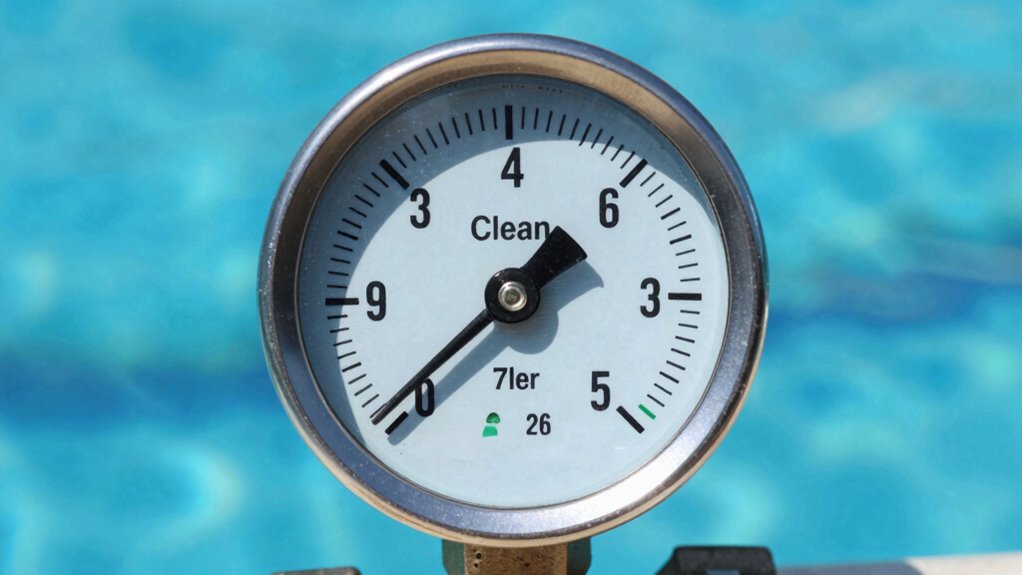
To read your pool’s pressure gauge accurately, start by verifying the pump and filter system are running at normal operating conditions. This helps you get a reliable reading aligned with your filter’s ideal pressure range. Check that the gauge is properly calibrated; if it’s not, it may give false readings. Make sure the pressure units are clear—whether PSI, bar, or kPa—so you interpret the numbers correctly. Before taking a reading, wipe off any dirt or debris on the gauge face to improve visibility. Note the current pressure reading, then compare it to your baseline or the manufacturer’s recommended range. Regular calibration checks and attention to pressure units ensure you’re accurately monitoring your pool’s filtration system. Additionally, understanding electric power generation with bike generators can be useful if you need an alternative power source for pool equipment during maintenance. Connecting your equipment with smart monitoring and apps can help track and maintain optimal pressure levels over time. Using precise measurement techniques can further enhance your ability to keep the system running efficiently.
How Do You Know If Your Filter Pressure Is Too High or Too Low?

How can you tell if your filter pressure is too high or too low? If the pressure gauge reads markedly above the recommended PSI, your filter might be clogged, causing poor circulation and potential chemical imbalance. This can lead to algae growth, as clean water isn’t circulating properly to distribute sanitizers. Conversely, if the pressure is too low, it may indicate a leak or insufficient water flow, which can also affect chemical balance and reduce filtration efficiency. Keep an eye on sudden fluctuations; a spike usually signals a filter clog, while a drop suggests a flow issue. Regularly monitoring your gauge helps prevent issues like algae buildup and maintains proper chemical levels, ensuring your pool stays clean and safe.
How to Adjust and Maintain Your Pool’s Filter Pressure for Best Performance
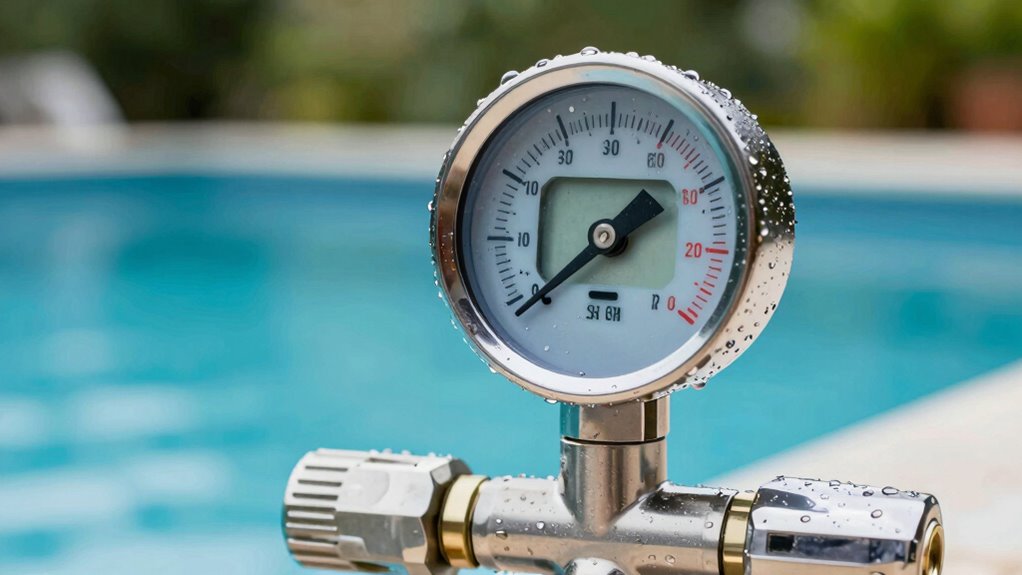
Keeping your pool’s filter pressure within the ideal range guarantees your filtration system runs smoothly and efficiently. To maintain maximum pressure, regularly check the pressure gauge and perform filter backwash when needed. If you notice pressure rising above the recommended level, it’s time to backwash your filter to remove debris and restore flow. Calibration of the pressure gauge is essential; if it’s inaccurate, you might misjudge when to backwash or clean the filter. To calibrate, compare the gauge reading with a known pressure source or replace it if faulty. Regular monitoring and proper adjustments ensure your filter operates at peak performance, prolonging its lifespan and keeping your pool crystal clear. Regular maintenance and understanding your filter’s pressure are key to building a reliable home fitness routine that lasts. Additionally, integrating smart monitoring devices can help automate the tracking process and alert you when adjustments are needed. For example, some modern systems use automated sensors that continuously track pressure levels and notify you via smartphone alerts, reducing the guesswork and ensuring optimal operation. Properly adjusting filter pressure levels is also crucial for energy efficiency and preventing unnecessary wear on your filtration system. Incorporating proper system setup can further enhance overall performance and longevity.
Common Pool Filter Pressure Problems and How to Fix Them
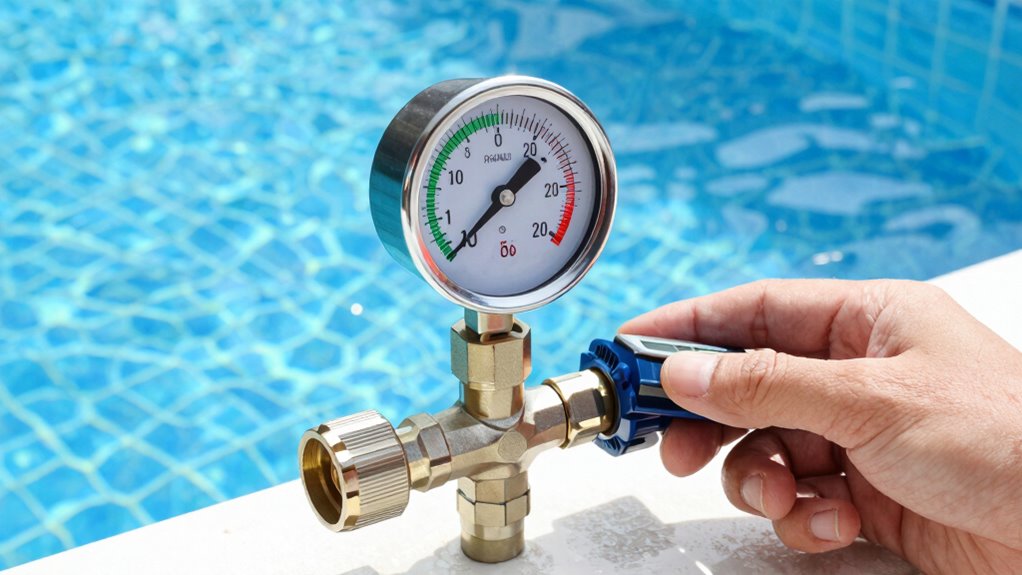
Encountering fluctuating or consistently high or low pool filter pressure is a common issue that can hinder your filtration system’s performance. Poor water chemistry can cause debris buildup or algae growth, leading to clogged filters and pressure problems. Conversely, low pressure might indicate a leak or an underperforming pump. Dirty or neglected filters reduce water flow, impacting water quality and clarity. To fix these issues, regularly test and balance your chemistry, including pH and sanitizer levels, to prevent excessive debris. Clean or backwash your filter frequently to remove dirt and keep water flowing smoothly. Inspect for leaks or damage in the system, and replace worn parts as needed. Maintaining proper chemistry and filter cleanliness ensures ideal pressure and water quality. Additionally, understanding essential oils for pool health can help support your pool’s overall condition and prevent issues related to algae or bacteria growth. Regularly monitoring pressure and understanding filter pressure dynamics are key to preventing and resolving common problems efficiently. Ensuring proper pool system maintenance can also extend the lifespan of your equipment and improve overall pool performance. Incorporating nanotechnology-based filtration solutions may further enhance your filtration system’s efficiency and longevity, especially when combined with advanced cleaning techniques.
Tips for Keeping Your Pool Filter Pressure in Check
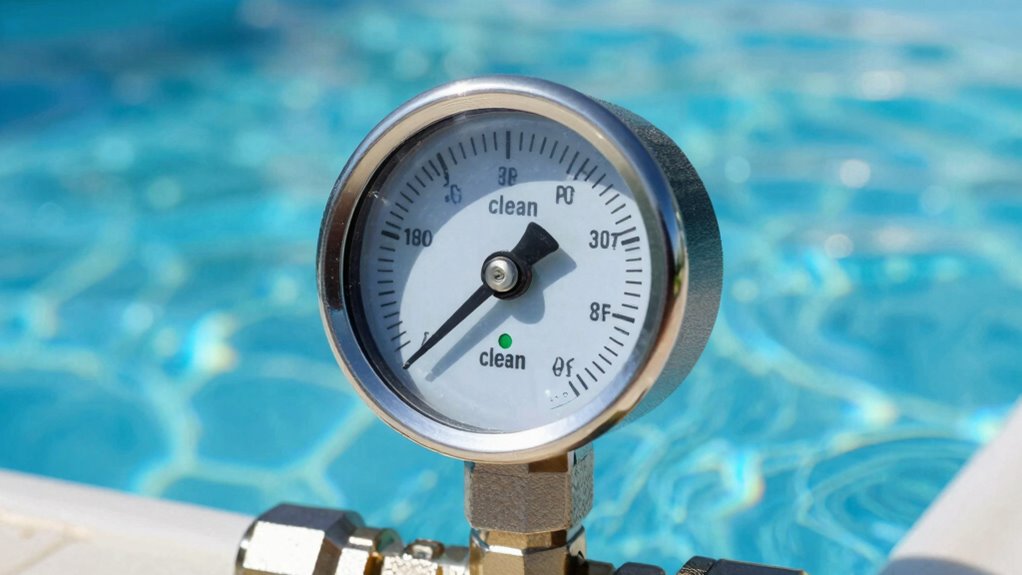
To keep your pool filter pressure in check, you should regularly monitor the gauge to catch issues early. Make sure to clean or replace your filter when needed to avoid clogs that increase pressure. You can also adjust valve settings to optimize flow and maintain consistent pressure levels. Additionally, understanding filter pressure ratings can help you determine the ideal operating pressure for your specific system.
Regular Pressure Monitoring
Regularly monitoring your pool filter pressure is essential to make certain it operates efficiently and to catch potential issues early. Consistent checks help you spot pressure fluctuations that could signal clogged filters or other problems. Maintaining proper pressure supports skimmer maintenance by preventing debris buildup that hampers water flow. It also boosts heater efficiency, as a clean filter allows better water circulation, reducing strain on the system. To stay on top, routinely record pressure readings and compare them to the baseline. This proactive approach helps you identify when filters need cleaning or replacement before problems escalate. Proper pressure management keeps your pool running smoothly, saves energy, and prolongs equipment lifespan.
- Understand your ideal PSI range for perfect operation
- Recognize pressure spikes indicating filter clogging
- Keep an eye on fluctuations affecting skimmer and heater performance
Clean or Replace Filter
Wondering how to keep your pool filter pressure in check? Regular filter cleaning is essential to maintain proper flow and prevent unnecessary strain on your pump. If your filter remains dirty despite cleaning, it might be time for a filter replacement. A new filter ensures your system runs efficiently and keeps your water crystal clear. Before replacing, try thorough filter cleaning—removing debris and rinsing the filter media. If pressure stays high after cleaning, replacing the filter is the best move. Avoid neglecting this step, as a clogged or worn-out filter can cause increased pressure, reduced circulation, and potential damage. Staying proactive with filter cleaning and timely replacement helps keep your pool’s pressure within the ideal range and prolongs the life of your entire filtration system.
Adjust Valve Settings
Adjusting your valve settings is a straightforward way to control pool filter pressure effectively. Proper valve adjustment helps regulate pressure, preventing strain on your filter and maintaining clear water. To enhance pressure regulation, regularly check your pressure gauge and make small adjustments to your valve settings. This can improve flow rates and extend the life of your filter system.
- Fine-tune the diverter valve to balance flow between the skimmer and main drain, reducing unnecessary pressure buildup.
- Ensure your multi-port valve is set correctly for your desired filtration cycle, avoiding excessive pressure.
- Regularly inspect valve seals for leaks, which can disrupt pressure regulation and decrease efficiency.
Consistent valve adjustments keep your pool running smoothly and help maintain the optimal PSI for your filter.
Frequently Asked Questions
How Often Should I Check My Pool Filter Pressure?
You should check your pool filter pressure at least once a week to ensure ideal filter maintenance. Regular pressure monitoring helps you catch early signs of clogging or buildup before it affects circulation. If you notice a pressure increase of 8-10 PSI above the normal, clean or backwash your filter. Consistent checks keep your pool clean and equipment running smoothly, saving you time and costly repairs.
What Causes Sudden Spikes in Filter Pressure?
Sudden spikes in your pool filter pressure often happen because of filter clogging, which blocks water flow and increases pressure. Sometimes, a gauge malfunction can give false readings, making it seem like there’s a spike when there isn’t. Regularly check your filter and gauge to catch clogs early, and replace or repair the gauge if it’s faulty, keeping your pool running smoothly.
Can a Dirty Filter Impact Water Chemistry?
A dirty filter can definitely impact your water chemistry by allowing debris and algae to accumulate, which promotes algae growth. When your filter isn’t working properly, it can cause water imbalances, making it harder to maintain proper pH and sanitizer levels. This disruption can lead to cloudy water and increased algae, so it’s vital to keep your filter clean to guarantee balanced water chemistry and a healthy swimming environment.
How Does Filter Pressure Affect Pool Equipment Lifespan?
You impact your pool equipment lifespan by maintaining proper filter pressure. When pressure is too high, your pump works harder, reducing its efficiency and risking damage over time. Conversely, low pressure might indicate a filter issue, also stressing the system. Regularly monitoring and adjusting your filter pressure helps extend your filter’s lifespan and keeps your pump running smoothly, saving you money and preventing costly repairs.
What Are Signs of a Broken or Faulty Pressure Gauge?
You notice your pressure gauge acting up—needle stuck or wildly fluctuating—indicating a pressure gauge malfunction. These faulty reading issues can mislead you about your filter’s condition, risking equipment damage. Look for signs like persistent needle readings when the pump is off, or no movement at all. Such signs signal a broken or faulty pressure gauge, so substitute it promptly to ensure accurate readings and protect your pool system.
Conclusion
Think of your pool filter pressure like the heartbeat of your pool’s health. When you keep it within the ideal range, your pool runs smoothly, just like a well-tuned engine. I once adjusted my filter pressure, and suddenly, my pool’s water was crystal clear—proof that proper maintenance keeps everything flowing perfectly. Stay vigilant, and your pool will be a invigorating oasis all season long.
Fall Picks
fall essentials
As an affiliate, we earn on qualifying purchases.