TL;DR
Homes across London are experiencing cracking and structural issues linked to shrinking clay soil. Experts warn this could lead to costly repairs and safety risks. Authorities are investigating the extent and causes.
Multiple homes across London are developing significant cracks and structural issues, confirmed by local authorities and homeowners, as the underlying clay soil shrinks due to recent environmental changes. This phenomenon raises safety concerns and questions about the long-term stability of properties built on such ground.
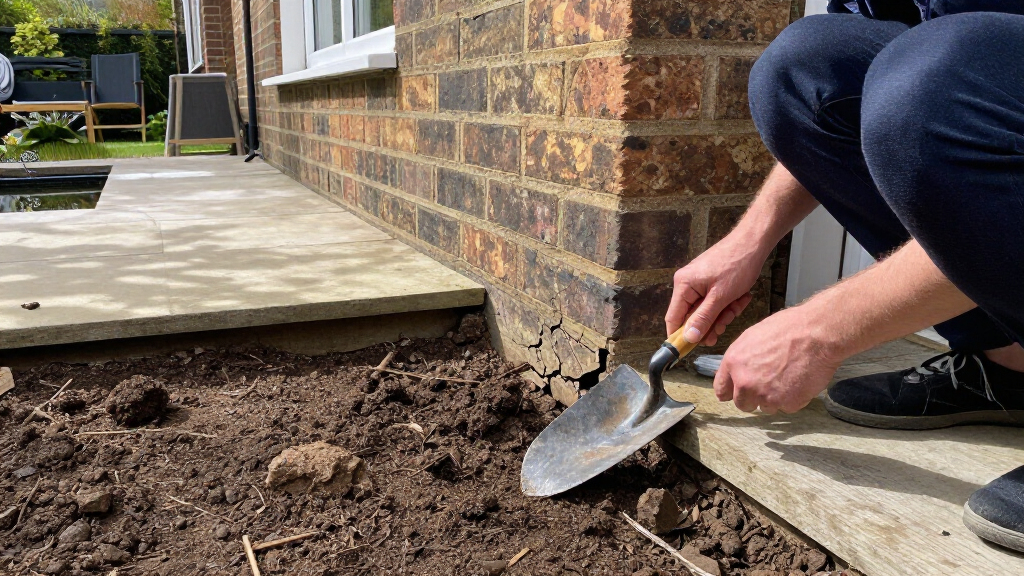
According to reports from London local authorities and homeowners, a pattern of cracking has been observed in residential buildings, particularly in areas with high clay content in the soil. Experts attribute this to the shrinking of clay, which expands when wet and contracts when dry, causing ground movement that affects foundations. The issue has become more pronounced during recent dry spells and heatwaves, which have accelerated soil drying.
Structural engineers and geotechnical specialists have confirmed that the shrinking clay leads to differential ground movement, resulting in cracks in walls, floors, and even foundations. Some homes are experiencing cracks large enough to compromise structural integrity, prompting urgent inspections and repairs. Authorities are currently assessing the extent of the problem, which appears to be widespread but varies in severity across different neighborhoods.
Local councils have issued statements urging homeowners to monitor their properties and report any signs of damage. While some repairs are underway, there is concern that continued soil shrinkage could lead to further deterioration, especially if environmental conditions persist or worsen.
Implications for London Homeowners and Urban Planning
This development is significant because it highlights a potential safety risk for thousands of London residents living on clay-rich soil. The cracks and ground movement threaten the structural stability of homes, which could lead to costly repairs and decreased property values. The situation underscores the importance of understanding soil behavior in urban construction and may influence future building regulations and land use planning in clay-rich areas.
Additionally, the issue raises broader questions about the impact of climate change, including increased drought periods and heatwaves, on ground stability. If such environmental factors continue, similar problems could emerge in other regions with clay soils, prompting a reevaluation of construction practices and infrastructure resilience.
As an affiliate, we earn on qualifying purchases.
Background on Soil Conditions and Past Issues in London
London’s geology is characterized by extensive clay deposits, which are known to undergo significant volume changes with moisture fluctuations. Historically, this has caused minor ground movement, but recent climate patterns have intensified these effects. Over the past decade, there have been sporadic reports of ground settlement and minor cracking, but the current widespread cracking marks a notable escalation.
Previous studies and reports have linked soil shrinkage to drought conditions and heatwaves, which have become more frequent due to climate change. Urban development on clay soils has long posed challenges for foundations, but the current level of damage appears to be accelerating, prompting renewed concern among engineers and policymakers.
In 2022, some London neighborhoods experienced localized ground subsidence, but the recent surge in cracking and structural issues is more widespread and severe, indicating a possible shift in soil behavior patterns.
“The shrinking of clay soil due to prolonged dry conditions causes ground movement that can severely impact building foundations, especially if not properly accounted for during construction.”
— Dr. Emily Carter, Geotechnical Engineer
Extent and Future Severity of Soil Shrinkage Unclear
It is not yet clear how widespread the damage will become or whether the current soil shrinkage will stabilize or worsen with ongoing environmental changes. Experts warn that if dry conditions persist, further ground movement and structural damage could occur, but precise predictions remain uncertain.
Ongoing Investigations and Potential Mitigation Measures
Authorities and engineers are conducting detailed assessments of affected areas to determine the full scope of damage. Possible mitigation strategies include soil stabilization, foundation reinforcement, and changes to building regulations in clay-rich zones. Further updates are expected as investigations progress and new data emerges.
Key Questions
What causes the cracking in London homes?
The cracking is primarily caused by the shrinking of clay soil due to dry and hot weather conditions, which leads to ground movement affecting building foundations.
Are all homes at risk?
No, the risk varies depending on soil composition, construction methods, and local environmental conditions. Homes built directly on clay-rich soil are more vulnerable.
What can homeowners do about this?
Homeowners should monitor their properties for signs of cracking or ground movement and consult structural engineers for assessment and potential reinforcement options.
Will this problem get worse?
It is possible if dry conditions continue or worsen, but the exact future progression remains uncertain until further investigations are completed.
What measures are authorities considering?
Authorities are exploring soil stabilization techniques, stricter building regulations, and targeted repairs to prevent further damage.
Source: local