TL;DR
Waterproof floating pool lights sit on the water’s surface and add decorative or supplemental light; they usually do not replace built-in pool lighting or safety equipment. Check the product’s water-use rating and instructions, compare power and runtime, and inspect and care for the light as directed. Keep children supervised around water: a glowing pool is still a drowning risk.
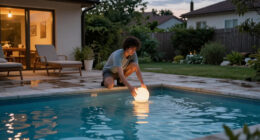
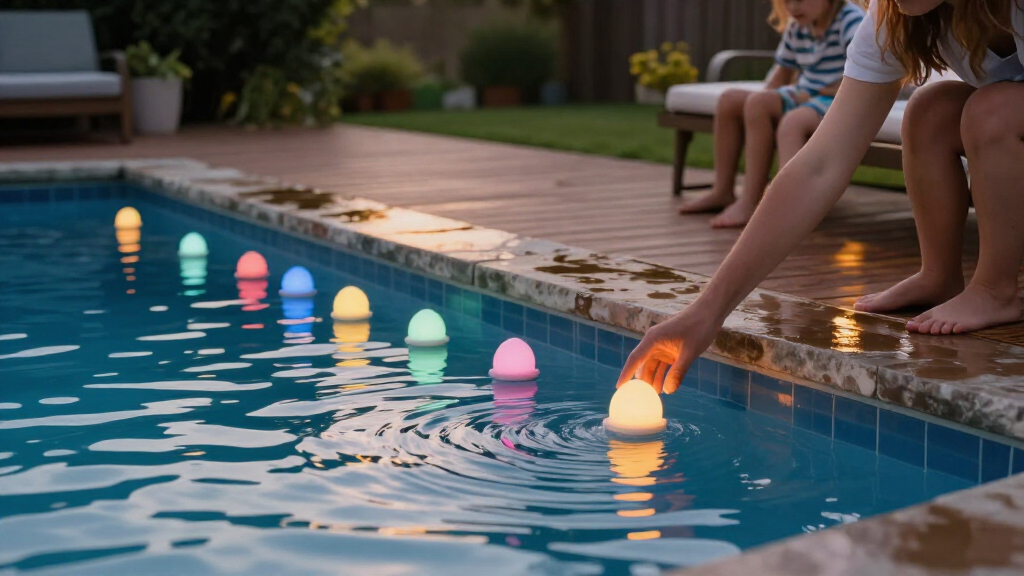
After sunset, a few glowing lights can turn a dark pool into a sheet of color, with reflections rippling across the water and the patio wall. But a light that floats beautifully may still be the wrong choice if its rating, battery, or care instructions do not match your pool.

Get pool and patio gear delivered free with Prime
- Fast, free delivery on millions of items
- Prime Video, Amazon Music and more included
- Member-only deals all year
This guide explains what to check before you buy, how to use floating lights with care, and why they should add atmosphere rather than take the place of pool lighting or adult supervision.
Treat floating pool lights as decorative or supplemental lighting, not as a replacement for built-in pool lighting or safety equipment.
Check the product’s rating and instructions for your intended use; IPX7 alone does not show suitability for every depth, duration, or chemical environment.
Compare power options and runtime claims against how often you will use the light and which brightness or effects you plan to run.
Inspect the casing, seals, and charging ports, follow care instructions, and stop using a damaged light.
Keep children actively supervised around the pool; a glowing surface does not make swimming safe.
What Floating Pool Lights Can—and Can’t—Do
Waterproof floating pool lights are portable lights made to sit on the water’s surface and create decorative or supplemental illumination. They can add a gentle glow for a backyard gathering, but most are not substitutes for built-in pool lighting or safety equipment. [1]
Think of them as moving accents: one blue orb can make a small plunge pool feel calm, while several color-changing lights can brighten a birthday party. How much light you see depends on the pool’s size, water clarity, surrounding lights, and where the lights drift.
More glow does not mean safer swimming. Floating lights do not prevent drowning or make a pool safe by themselves. If children are present, keep an attentive adult supervising at all times, and use appropriate barriers and other established water-safety measures.
Before buying, ask what you want the light to do. A decorative sparkle for a dinner party calls for something different from dependable illumination across a large pool.
Products Worth Considering

Blueair Blue Signature SP4i Air Purifier for Large Rooms

Dyson V8 Cyclone Cordless Vacuum

Ring Alarm 14-Piece Kit
As an affiliate, we earn on qualifying purchases.
Read the Waterproof Rating Before You Let One Float
Waterproof floating pool lights need a rating and instructions that match their intended use; the word “waterproof” alone does not tell you how long or how deeply a product can be submerged. Check the exact rating, operating directions, and any limits for your pool type before putting a light in the water. [1]
IPX7 means temporary immersion testing under specified conditions. It does not promise suitability for every depth, duration, or pool chemical environment. A floating light usually spends its time at the surface, but splashes, tipping, and handling can still expose it to water in ways the manufacturer’s directions address.
For example, if you want to use a light in a saltwater pool, do not assume an immersion rating means salt cannot affect its casing or seals. Look for explicit guidance for that setting, and follow any limits on use and cleaning.
A water rating tells you about tested conditions. The product instructions tell you how the maker says to use the light.
Use lights designed to float in pools, and keep charging equipment and any mains-powered accessories away from water as the instructions direct. If the casing, seal, or charging port looks damaged, stop using the unit.
Pick a Power Source That Fits Your Evenings
Waterproof floating pool lights commonly run on replaceable batteries, rechargeable batteries, or solar charging, and each option suits a different routine. Compare the charging method and likely runtime for the mode you will use, rather than relying on a single advertised figure. [1]
A rechargeable light can suit a household that uses its pool lights every weekend and has an easy place to charge them between swims. Replaceable batteries can be handy when charging is inconvenient, provided replacement batteries remain available and the battery compartment is kept dry when opened.
Solar models appeal when the pool gets plenty of direct sunlight, but shade and cloudy weather can reduce charging and runtime. A light that glows through dinner on a sunny afternoon might fade sooner after several overcast days.
Battery life changes with brightness, color effects, temperature, and battery age. Treat runtime claims as estimates, and check which setting the figure describes. If you plan to run changing colors all evening, expect a different result from a steady, dim setting.
Recent designs may offer USB charging, efficient LEDs, solar-assisted charging, app controls, or synchronized effects. Features and quality vary, so check current product specifications and availability directly; prices, models, and performance claims change over time. [1]
Compare Features Without Paying for Ones You Won’t Use
Waterproof floating pool lights vary in brightness, controls, shape, and special effects, so choose features that match the pool and the way you use it. A simple steady light can suit quiet evenings, while remote control or color patterns may help when you are hosting a party.
| Feature | What it offers | What to check |
|---|---|---|
| Steady white light | A simple, consistent glow | Brightness and how it looks in your pool |
| Color modes | Changing hues or patterns | Whether effects shorten battery runtime |
| Remote or app controls | Adjustments from nearby | Range, setup, and compatibility claims |
| Fountain or synchronized effects | Moving water or coordinated light | Added power needs and care directions |
Imagine a narrow pool surrounded by bright patio lights: a very small, dim lamp may disappear in the reflections. For a compact, darker courtyard pool, that same lamp could cast just the soft, scattered color you want.
Shape and weight affect how steadily a light sits and how easily wind or splashing moves it. Check whether it could drift toward a skimmer, steps, or an edge. If the light keeps collecting by the skimmer, choose a more stable design or reposition it away from pool equipment.
Some products combine floating lights with fountains or synchronized effects. These can make a lively centerpiece, but extra features bring extra care and performance claims to check. Buy for the way you will use the light, not for a feature list you will rarely touch.
Use and Care for Your Light in Four Simple Steps
Waterproof floating pool lights last longer when you follow the instructions, keep damaged units out of the water, and care for their seals and charging points. A quick routine after a pool party can help you catch grime or wear before the next evening swim.
- Check the label and instructions. Confirm that the light is intended for your pool setting and note any limits for use, immersion, charging, or storage.
- Inspect it before use. Look for cracks, loose parts, worn seals, and damage around ports or the casing. Do not use a damaged unit.
- Place it where it can float freely. Keep it away from skimmers and equipment, and do not attach it to a person or use a tether that could entangle a swimmer.
- Follow the care and charging directions. Rinse chemicals off after use if the instructions recommend it, and dry the light before opening its battery compartment. Keep charging equipment out of the water.
Chlorine, salt, sunscreen, heat, and long stretches in direct sun can wear down finishes and seals. If you apply sunscreen before swimming, avoid handling charging contacts with slick, oily fingers; clean the product as its maker directs afterward.
Whether you leave a light in overnight depends on the manufacturer’s instructions. Remove it when told to, and bring it indoors during storms or pool servicing if the directions call for that. For winter storage, clean and dry it, store it indoors, and follow the battery guidance.
Know When a Floating Light Isn’t Enough
Waterproof floating pool lights are usually best for decorative or supplemental light, not even illumination across the whole pool or compliance with a pool-lighting requirement. A bright spot on the surface can still leave steps or the far end of the pool hard to see.
For instance, a light that makes a small pool sparkle during a barbecue may not light the deep end well enough for your intended use. Check local requirements and rely on suitable pool lighting where needed; a floating product is decorative unless specifically certified and installed for a required lighting purpose. [1]
Think about the people around the water, too. If children are swimming, keep them within close adult supervision, even when the pool looks bright and inviting. Lights add visibility and atmosphere, but they are not a barrier, a lifeguard, or a drowning-prevention measure.
Before choosing a hot tub or pond as an alternate setting, check the product instructions. Those environments can have different temperatures, water chemistry, and operating conditions, and a pool label does not automatically cover them.
Frequently Asked Questions
Are floating pool lights safe to use?
They can be used when the product is made for pool use and you follow its instructions. Inspect for damage, keep charging equipment out of the water as directed, and remember that a light does not prevent drowning. Children need active adult supervision around water.
Can I leave a floating pool light in overnight?
Only if the manufacturer’s instructions permit it. Remove it when directed, and bring it indoors during storms or pool servicing if the instructions say to do so.
How long do rechargeable or battery-powered pool lights stay lit?
Runtime depends on battery capacity and age, brightness, effects, and temperature. Check whether the advertised figure applies to a specific mode; a steady low setting may last longer than bright, changing colors.
Do solar floating pool lights work well in a shaded yard?
Solar charging depends on sunlight and placement, so shade or cloudy weather may reduce charge and runtime. If your yard gets little direct sun, compare rechargeable or replaceable-battery options as well.
Can floating lights replace built-in pool lighting?
Usually not. Floating lights are generally decorative or supplemental products, and they do not necessarily provide even illumination or meet local pool-lighting requirements. Check local rules and use lighting made and installed for any required purpose.
Conclusion
Choose a floating pool light for the job you want it to do: a soft, colorful accent, not dependable whole-pool illumination. Check its instructions, power source, and care needs before it touches the water.
Then let the reflections dance across the tiles while an attentive adult keeps watch.