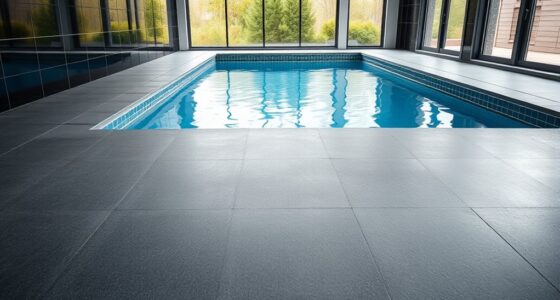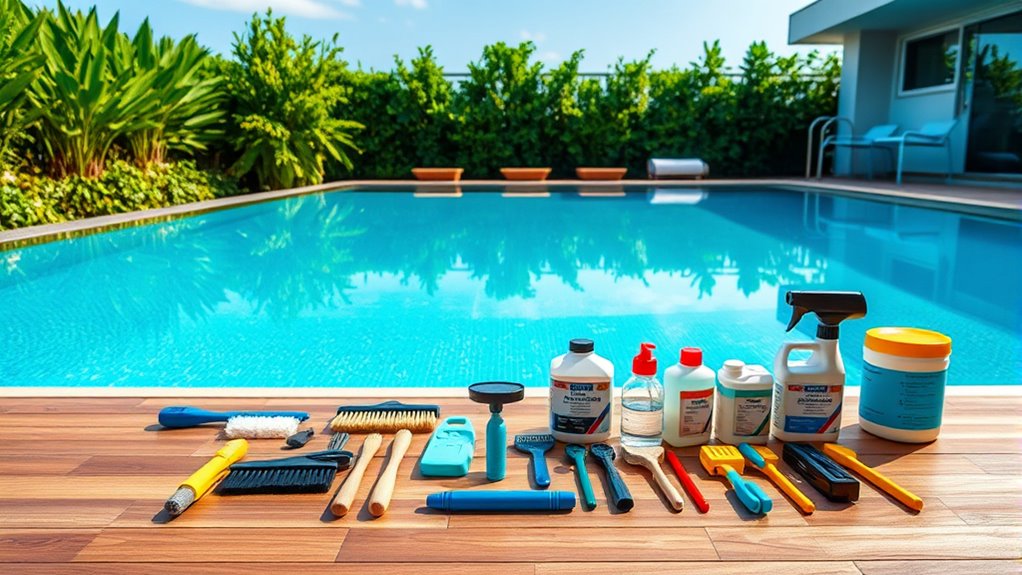

To keep your endless pool in top shape, test water weekly to maintain proper pH and chlorine levels, clean skimmer baskets, and backwash filters. Monthly, inspect equipment, brush the pool, and check alkalinity and calcium hardness. Seasonally, perform deep cleanings, adjust chemicals for seasonal changes, and prepare your pool for opening or closing. Following this routine helps guarantee clarity and safety year-round—continue exploring for detailed tips to optimize your pool care schedule.

Get pool and patio gear delivered free — and shop member deals
- Fast, free delivery on millions of items
- Access to Prime Big Deal Days deals on October 6–7
- Prime Video, Amazon Music and more included
Key Takeaways
- Conduct weekly water tests, adjust chlorine and pH levels, and clean skimmer baskets.
- Perform monthly inspections, brush pool surfaces, and calibrate chemical and equipment settings.
- Prepare for seasonal changes with deep cleanings, equipment checks, and chemical adjustments.
- Regularly inspect and maintain pool equipment, including filters, pumps, and heaters.
- Balance water chemistry to prevent algae and bacteria, ensuring clear, safe swimming conditions year-round.

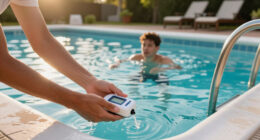
Maintaining a clean and healthy pool requires a well-organized care schedule that keeps your water clear and safe to swim in. One of the most important aspects is consistent chemical balancing. You need to regularly test your water, ideally weekly, to ensure the pH level stays between 7.2 and 7.6. Proper chemical balancing prevents algae growth, bacteria buildup, and cloudy water, making your pool inviting and safe. To achieve this, keep a reliable testing kit on hand and adjust chemicals like chlorine, pH increaser or decreaser, and algaecides as needed. Remember, maintaining accurate chemical levels not only protects swimmers but also extends the lifespan of your pool equipment.
Regularly test and balance your pool water to keep it safe and inviting.
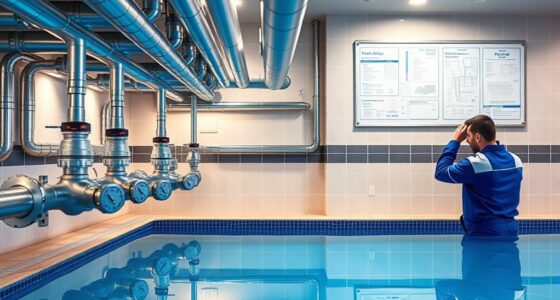
Alongside chemical balancing, equipment maintenance plays a vital role in your weekly pool care. Check your pump, filter, and skimmer regularly to ensure they’re functioning correctly. Clear out debris from the skimmer basket and clean or backwash your filter to prevent clogs and maintain optimal water flow. A well-maintained filtration system keeps the water circulating properly, removing contaminants and reducing the need for excessive chemical use. Don’t forget to inspect your pool pump and heater for leaks or unusual noises—address issues promptly to avoid costly repairs and ensure everything operates smoothly. Regularly reviewing your water quality and system performance supports a healthy swimming environment.
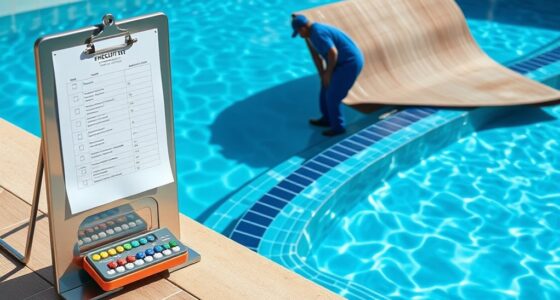
In addition to weekly tasks, you should develop a monthly routine. This includes more thorough inspections of your pool’s equipment, such as checking for worn-out parts, lubricating moving components, or replacing worn filters. Use this time to brush the pool walls and floor to remove algae or dirt buildup that can’t be eliminated through filtration alone. Test your water more comprehensively, checking for calcium hardness and total alkalinity, ensuring these levels are within recommended ranges. Proper calibration of your equipment and chemical levels monthly helps prevent long-term issues and keeps your pool in top shape.
Seasonally, you’ll need to perform deeper cleanings and adjustments. Before winterizing or opening your pool, drain and clean your equipment, cover or uncover your pool, and adjust chemical levels to match seasonal conditions. During peak swimming season, stay vigilant about ongoing chemical balancing and equipment checks to prevent problems from developing. Consistent attention to these details ensures your pool remains crystal clear, safe, and ready for enjoyment all year round. By sticking to a structured schedule, you’ll save time, avoid surprises, and extend the life of your pool and its equipment.
As an affiliate, we earn on qualifying purchases.
Frequently Asked Questions
How Often Should I Replace the Pool Filter?
You should replace your pool filter every 1 to 2 years, depending on usage and water quality. To maximize your pool filter lifespan, follow filter replacement tips like cleaning it regularly and avoiding backwashing too often. Keep an eye on your filter’s performance; if you notice reduced flow or cloudy water, it’s probably time for a replacement. Proper maintenance ensures your pool stays clean and filters last longer.
What Are the Signs of Algae Growth?
Algae growth is like weeds in a garden—quick to take over if you’re not vigilant. You’ll notice a green, cloudy film on the water’s surface or walls, slimy patches, or a musty smell. To prevent algae, focus on proper chemical balancing and regular algae prevention measures. Keep your filtration system clean, and be proactive with shocking treatments. Staying on top of these steps keeps your pool crystal-clear and algae-free.
Can I Use Household Cleaning Products in My Pool?
You shouldn’t use household cleaning products in your pool because they can damage the equipment and upset the water balance. Instead, opt for non-chemical cleaning methods like scrubbing surfaces and using natural disinfectants such as hydrogen peroxide or vinegar. These options help keep your pool clean without introducing harsh chemicals, ensuring safe, clear water and protecting your pool’s longevity. Always follow manufacturer guidelines for cleaning and disinfecting your pool.
How Do I Winterize My Endless Pool Properly?
Think of winterizing your endless pool as tucking a sleeping dragon into its winter den. Start with winterizing tips like lowering the water level, adding non-toxic antifreeze, and draining pumps. Don’t forget pool cover maintenance—clean and secure your cover to keep debris out and prevent damage. These steps protect your investment, ensuring your pool stays safe and ready for a warm splash when spring awakens.
What Is the Ideal Ph Level for My Pool Water?
You should aim to keep your pool’s pH level between 7.2 and 7.6 for ideal water balance. Regular chemical testing helps you monitor and adjust the pH through proper pH balancing. Test your water weekly, especially during seasonal changes, to prevent issues like corrosion or algae growth. Maintaining this perfect pH ensures comfortable, safe swimming and reduces the need for costly repairs or chemical overuse.
Conclusion
Keeping your endless pool in top shape isn’t just about cleanliness; it extends its lifespan and guarantees safe swimming. Did you know that regular maintenance can increase your pool’s life by up to 50%? Stick to the weekly, monthly, and seasonal schedule, and you’ll enjoy crystal-clear water all year round. With just a little effort, you’ll maximize your pool’s performance and create a relaxing oasis right in your backyard. Immerse yourself and maintain with confidence!
Halloween Picks
halloween
As an affiliate, we earn on qualifying purchases.