In an endless pool, you can boost your fitness with powerful exercises like water jogging for cardio, resistance walking with water weights, aqua lunges for lower body strength, pool push-ups for upper body power, water bicycle sprints for HIIT, and various swimming strokes for full-body conditioning. Treading water enhances balance and endurance, while water-based burpees and resistance band moves provide total-body burns. Keep exploring to discover more ways to maximize your workout in this versatile environment.
Key Takeaways
- Perform water jogging or running at adjustable depths to boost cardiovascular endurance with low joint impact.
- Incorporate resistance walking with water weights to enhance muscle strength and improve circulation.
- Execute Aqua lunges and resistance band exercises for targeted lower and upper body muscle development.
- Engage in swimming strokes like freestyle, backstroke, or butterfly to build full-body endurance and technique.
- Incorporate core exercises such as aquatic planks and water bicycle sprints to strengthen stability and core muscles.
Water Jogging for Cardio and Endurance
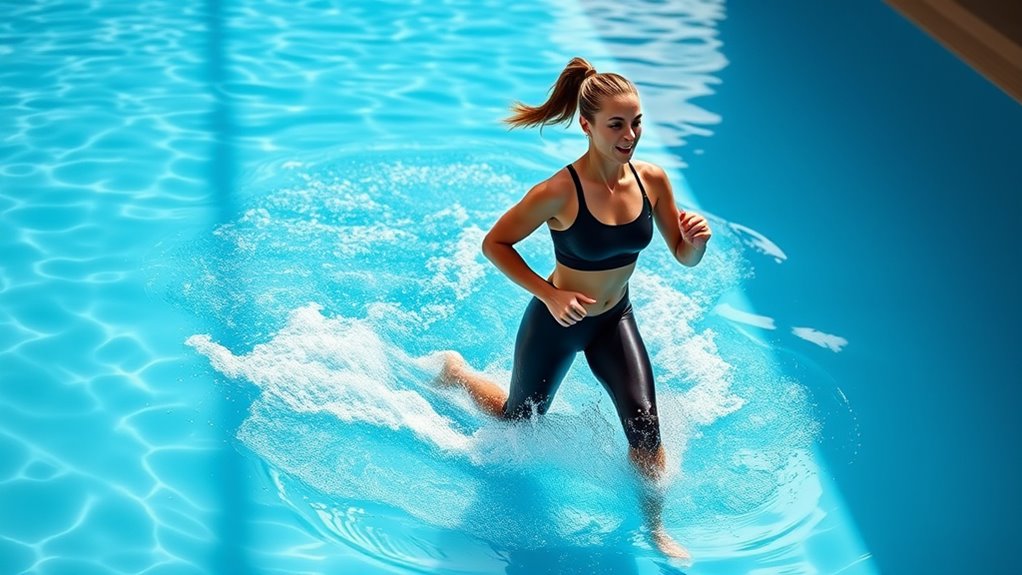
Have you ever considered water jogging as an effective way to boost your cardio and endurance? It’s a low-impact exercise that challenges your heart and lungs while reducing joint stress. In an Endless Pool, you can jog in place or move forward, mimicking outdoor running without the impact. The water’s resistance forces your muscles to work harder, increasing stamina over time. Since water supports your body, you can sustain longer sessions without fatigue or injury. This makes water jogging ideal for recovery or those with joint issues. Plus, the adjustable water level allows you to modify intensity, making it suitable for all fitness levels. Regular water jogging improves cardiovascular health, enhances lung capacity, and builds muscular endurance—all in a safe, controlled environment. Exploring best exercise routines can help you maximize your workout benefits and prevent plateaus.
Resistance Walking With Water Weights
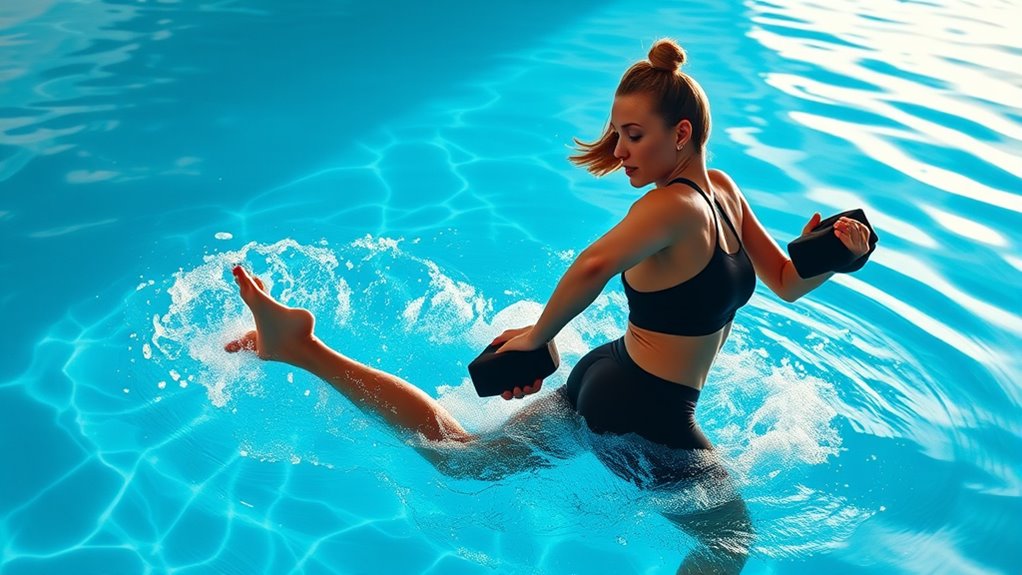
Resistance walking with water weights boosts your muscle engagement, helping you build strength more effectively. It also elevates your heart rate, supporting better cardiovascular health. Adding water weights makes your workout more challenging and efficient. Incorporating regulatory clarity can further enhance your workout environment by ensuring safe and standardized exercise practices.
Enhances Muscle Engagement
Using water weights while walking in an endless pool markedly boosts muscle engagement by providing additional resistance. This added challenge compels your muscles to work harder, especially in your legs, core, and arms. As you lift and move against the water’s resistance, you activate more muscle fibers, leading to increased strength and endurance over time. The water’s natural resistance guarantees that your muscles are constantly engaged, even during steady-paced walking. This heightened engagement helps improve muscle tone and stability, making your workout more effective. Plus, because water reduces impact, you can push yourself harder without risking joint strain. Incorporating water weights into your endless pool walk is a simple yet powerful way to maximize muscle activation with low-impact, high-efficiency exercise. Mindfulness practices like focused breathing can also enhance your awareness and performance during water workouts.
Improves Cardiovascular Health
Walking with water weights in an endless pool actively boosts your cardiovascular health by elevating your heart rate and improving circulation. As you move through the water, resistance from the weights challenges your heart to work harder, increasing your endurance over time. The buoyancy reduces joint stress, allowing you to sustain longer sessions comfortably. Consistent resistance walking enhances your cardiovascular system’s efficiency, helping lower blood pressure and reduce the risk of heart disease. Plus, the rhythmic nature of walking in water promotes better blood flow throughout your body. This exercise is accessible, low-impact, and highly effective for strengthening your heart and lungs while providing a full-body workout. Incorporating resistance walking into your routine supports long-term heart health with minimal strain. Ensuring proper technique and form maximizes the benefits and minimizes the risk of injury during your workout.
Aqua Lunges for Lower Body Strength

Aqua lunges are an effective way to build lower body strength while taking advantage of the water’s natural resistance. As you step into the pool, position yourself with one foot forward and the other back, lowering into a lunge position. The water’s resistance makes each movement more challenging, engaging your glutes, quads, hamstrings, and calves more intensely than on land. Keep your core tight and maintain balance as you lunge, ensuring proper form to prevent injury. Switch legs and repeat, focusing on controlled, steady movements. The buoyancy reduces joint impact, making lunges safer and more comfortable, especially if you’re recovering from injury or want to avoid joint strain. Incorporating water resistance into your routine enhances muscle engagement and boosts overall effectiveness. Use aqua lunges to strengthen and tone your lower body effectively.
Pool Push-Ups for Upper Body Power
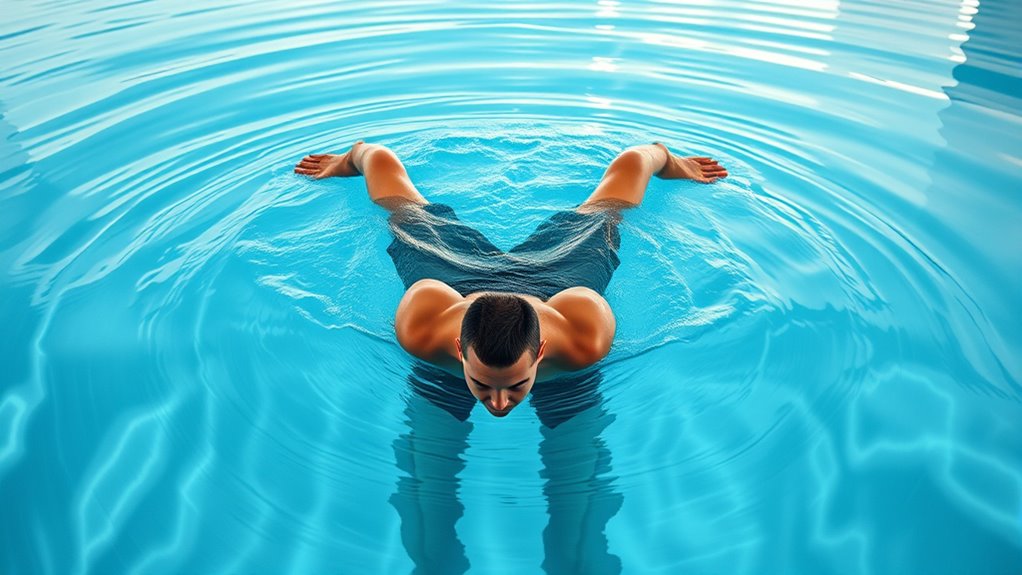
To get the most out of pool push-ups, focus on maintaining proper form, like keeping your body straight and hands aligned with your shoulders. As you build strength, gradually increase resistance by adjusting your distance from the pool wall or adding water weights. This way, you’ll effectively challenge your upper body and prevent plateaus. Additionally, scheduling your workouts during support hours ensures you receive assistance if needed and helps you plan your exercise sessions efficiently.
Proper Push-Up Form
Performing pool push-ups with proper form is essential to maximize upper body strength and prevent injury. Start by positioning your hands slightly wider than shoulder-width apart on the pool edge or bottom. Keep your body straight from head to heels, engaging your core to avoid sagging or arching your back. As you lower yourself, bend your elbows at about a 45-degree angle, ensuring they stay close to your sides. Maintain a steady, controlled movement, avoiding any jerking or rapid motions. Push through your palms to straighten your arms, exhaling as you rise. Focus on keeping your neck aligned with your spine and your movements smooth. Proper form enhances muscle engagement, reduces strain, and guarantees you get the most out of your pool push-up workout. Being mindful of current news can also help you stay motivated and aware of any health advisories related to exercise.
Increasing Resistance Levels
Once you’ve mastered proper push-up form in the pool, increasing resistance can help build upper body strength more effectively. To do this, add resistance by wearing waterproof resistance bands or placing a weighted vest designed for aquatic use. These tools challenge your muscles more during each push-up, forcing them to work harder. You can also increase the difficulty by adjusting your body angle, such as elevating your feet against the pool wall. Focus on slow, controlled movements to maximize muscle engagement. Incorporating safety precautions when adding resistance ensures a safer workout and helps prevent injuries. Consistently increasing resistance levels ensures continuous strength gains and prevents plateaus. Remember, proper form remains essential even as resistance increases, so maintain good technique to avoid injury and maximize benefits. Incorporate these methods gradually for steady progress.
Water Bicycle Sprints for High-Intensity Interval Training

Water bicycle sprints offer an effective way to elevate your heart rate and build strength without putting stress on your joints. To do this, pedal as fast as you can against the resistance of the water for about 20 to 30 seconds. Then, slow down and recover for 40 to 60 seconds. Repeat this cycle for 8 to 10 rounds. The water’s resistance makes each sprint more challenging, boosting your cardiovascular fitness and muscular endurance. This form of high-intensity interval training (HIIT) burns calories efficiently and improves overall stamina. Plus, the buoyancy of the water reduces impact on your knees and hips, making it suitable for all fitness levels. Incorporate water bicycle sprints into your routine to maximize results while minimizing joint stress.
Aquatic Planks to Enhance Core Stability
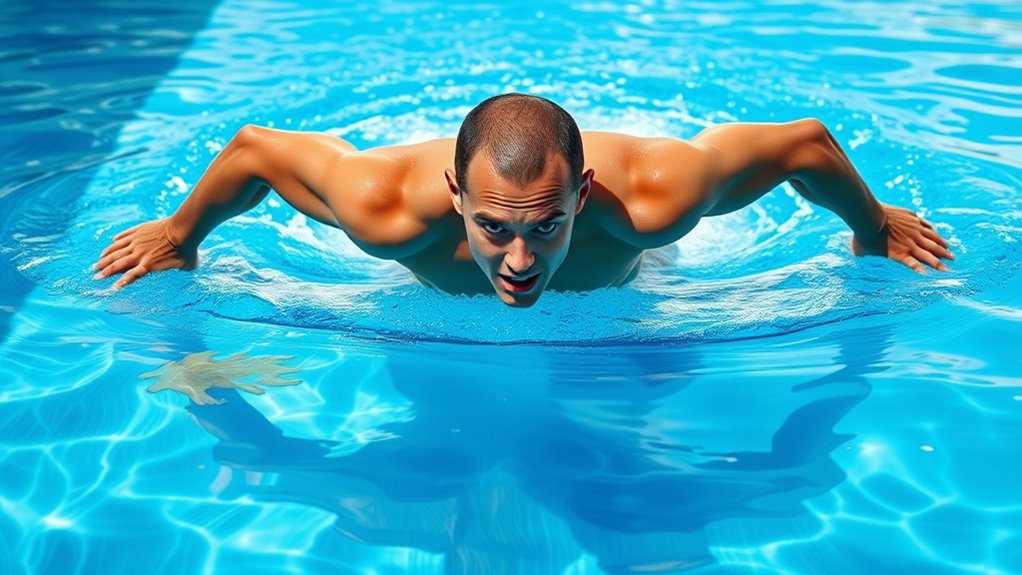
Aquatic planks are an effective way to strengthen your core while minimizing impact on your joints. By holding a plank position in the water, you engage your abs, obliques, and lower back muscles, improving stability and posture. To do this exercise, position yourself with your forearms on the pool floor and your body straight, keeping your core tight. The water’s resistance makes holding this position more challenging, activating your muscles more effectively. Maintain a steady breath and avoid sagging or arching your back. Start with 20-30 seconds, gradually increasing as your strength improves. Aquatic planks not only build core endurance but also reduce strain on your spine and joints, making them ideal for rehabilitation or low-impact training. Proper technique is essential to maximize benefits and prevent injury during this exercise.
Swimming Strokes for Full-Body Conditioning
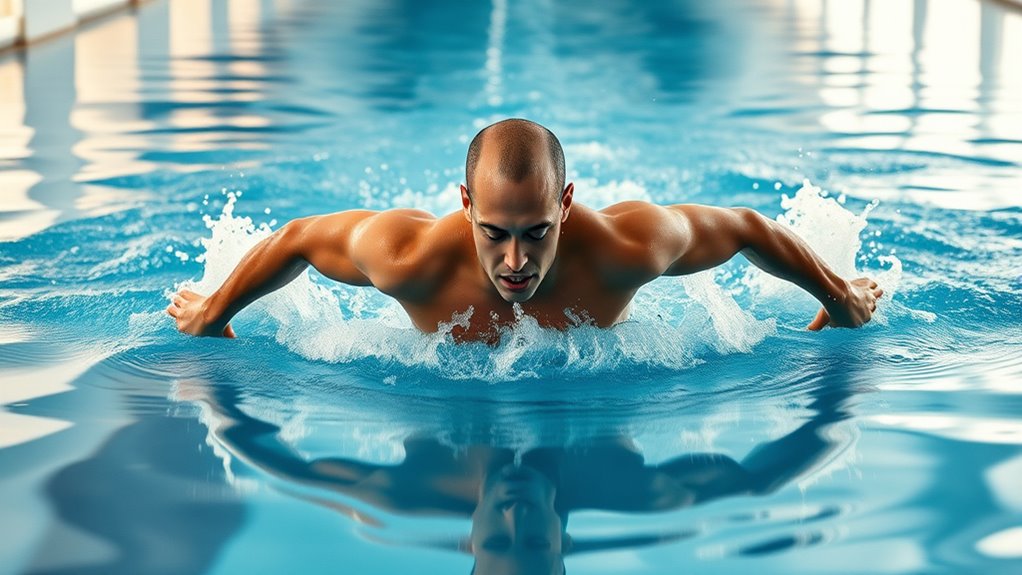
Mastering your freestyle technique helps you build endurance and coordination across your entire body. Incorporating butterfly power moves boosts strength and explosiveness, pushing your limits further. Focusing on backstroke body alignment guarantees efficient movement and reduces strain, maximizing your workout benefits.
Freestyle Technique Focus
Focusing on your freestyle technique can substantially enhance your full-body conditioning in an endless pool. Proper form guarantees you engage multiple muscle groups efficiently, maximizing workout benefits. Keep your body streamlined with a horizontal position, reducing drag. Use a steady, rhythmic breathing pattern to maintain stamina and avoid fatigue. Focus on a strong, continuous arm pull, extending fully underwater, and rotate your hips to generate power. Maintain a slight bend in your knees and a relaxed kick to conserve energy while supporting propulsion. Engage your core to stabilize your body and improve coordination. Regularly refining your technique boosts efficiency, allowing you to swim longer without exhaustion. Incorporating swimming biomechanics can help identify and correct inefficiencies in your stroke. By emphasizing proper form, you’ll optimize your full-body workout and see faster progress in strength and endurance.
Butterfly Power Moves
Building on your freestyle technique, incorporating butterfly power moves can considerably boost your full-body conditioning in an endless pool. Butterfly emphasizes core strength, hip drive, and upper-body power, making it an efficient full-body workout. Focus on explosive dolphin kicks and synchronized arm pulls to maximize muscle engagement. To keep your training dynamic, try alternating between butterfly sprints and recovery strokes. Here’s a quick overview:
| Move Type | Focus Area |
|---|---|
| Dolphin Kicks | Core, hips, legs |
| Butterfly Sprinting | Power, speed, endurance |
| Arm Pull Drills | Upper body, shoulders |
Adding these moves regularly enhances stamina, improves coordination, and builds muscle across your entire body, elevating your pool workouts to new levels.
Backstroke Body Alignment
Ever wondered how proper backstroke body alignment can enhance your full-body workout? When you keep your body straight and streamlined, you reduce drag and maximize efficiency. Focus on maintaining a neutral head position, looking straight up or slightly back, so your hips stay aligned with your shoulders. Engage your core to stabilize your spine and prevent sagging hips. Keep your hips high in the water to avoid unnecessary resistance, and ensure your arms enter the water smoothly with a relaxed, wide pull. Proper alignment allows your muscles to work in harmony, improving your endurance and strength across your entire body. With consistent practice, this technique enhances your stroke efficiency, making every movement in the pool more effective and helping you achieve a balanced, full-body workout.
Treading Water for Balance and Cardio
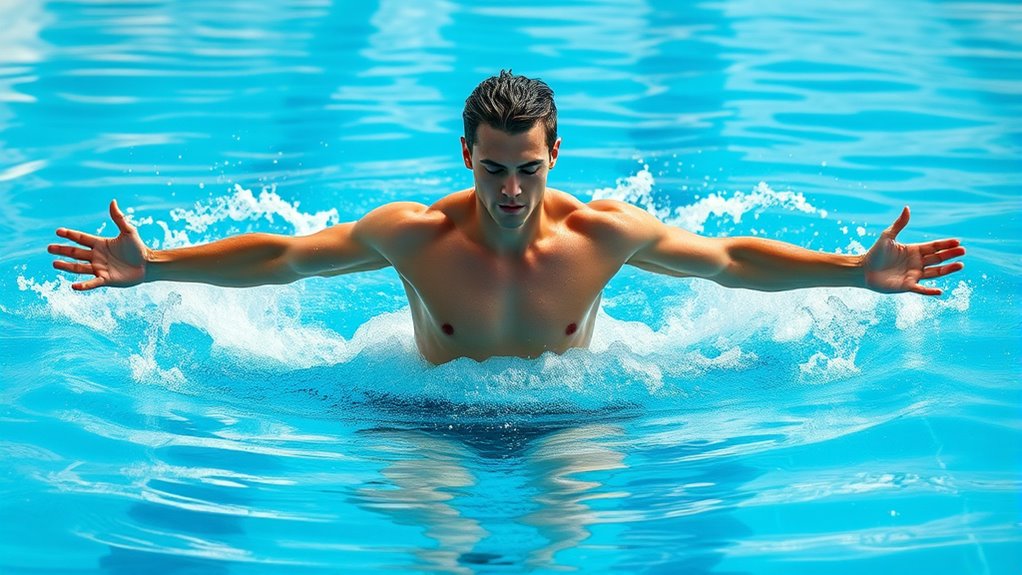
Have you ever considered how treading water can boost both your balance and cardiovascular health? This exercise challenges your core and stabilizer muscles while elevating your heart rate. By maintaining a steady, controlled pace, you improve your overall stability and endurance. To vary intensity, incorporate different leg and arm movements, making it more engaging and effective. Here’s a quick guide:
| Exercise Focus | Benefits | Tips |
|---|---|---|
| Steady Treading | Enhances balance and stamina | Keep your head above water, stay relaxed |
| Jump Treading | Boosts cardio and strength | Add small jumps for higher intensity |
| Arm-Only Treading | Improves upper-body stability | Use arm movements to assist or challenge |
Engage in these variations regularly to maximize your balance and cardiovascular gains.
Water-Based Burpees for Total-Body Burn
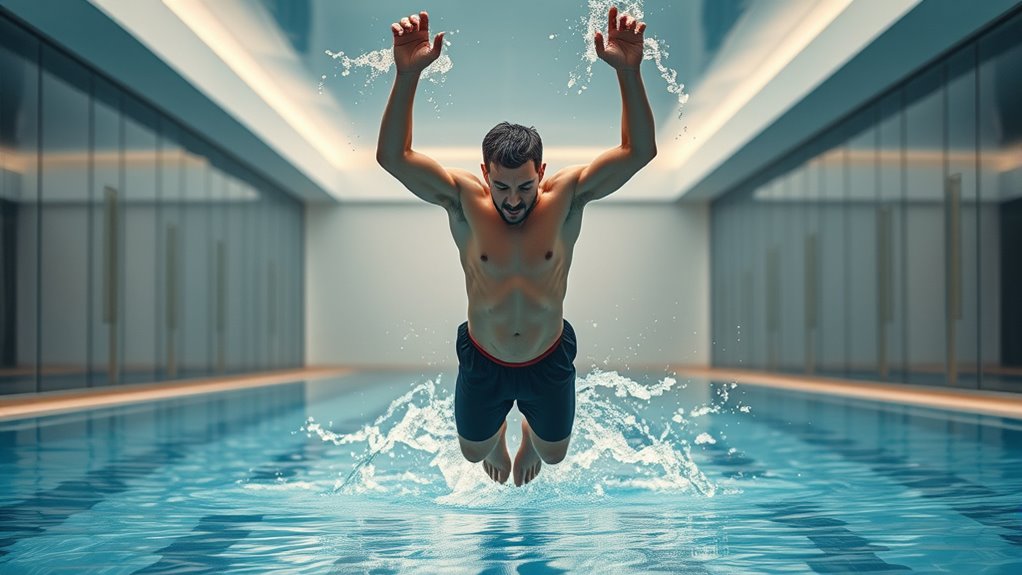
Water-based burpees are an effective way to engage your entire body while minimizing impact on your joints. In the pool, you can perform a traditional burpee by standing upright, dropping into a squat, placing your hands on the pool floor, and jumping your feet back into a plank position. From there, do a push-up, then jump your feet forward to your hands and stand up quickly. The water’s resistance makes each move more challenging, helping build strength and endurance. Plus, the buoyancy reduces strain on your knees and ankles, making it suitable for all fitness levels. Incorporate water-based burpees into your routine to boost cardiovascular health, enhance muscle tone, and enjoy a low-impact, high-intensity workout.
Resistance Band Exercises in the Pool
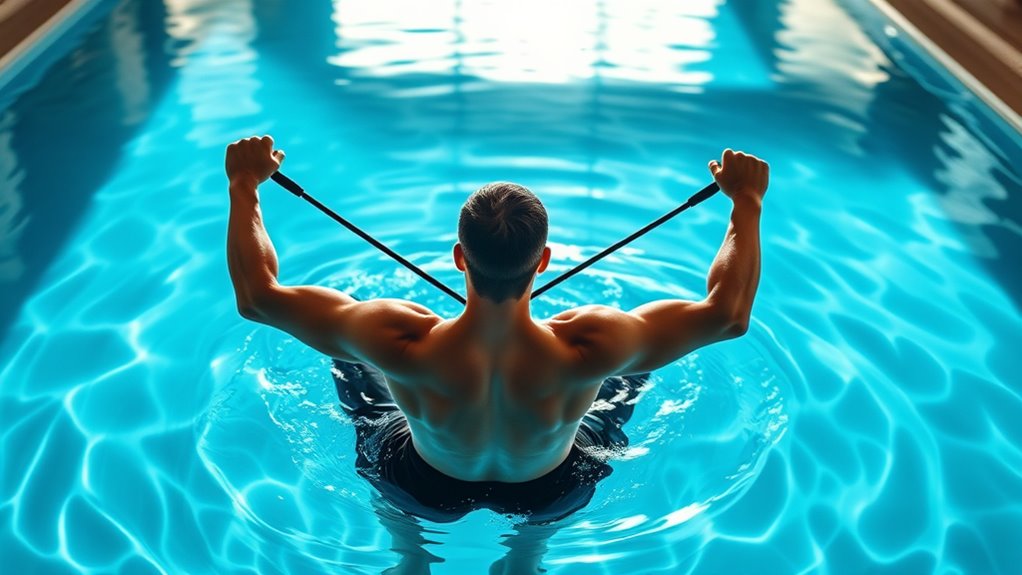
Using resistance bands in the pool allows you to add targeted strength training to your aquatic routine. You can anchor the band to the pool wall or hold it securely during exercises. For a full upper-body workout, try resistance band rows: pull the band towards your chest, squeezing your shoulder blades together. To work your shoulders, perform lateral raises by lifting the band out to your sides. For your core, do seated or standing twists, resisting the band’s tension. Resistance bands increase the challenge without stressing your joints, making exercises safer and more effective. Incorporate these moves into your pool session to build strength, improve stability, and enhance muscle tone—all while enjoying the soothing water environment.
Frequently Asked Questions
Can Beginners Safely Perform These Pool Exercises Without Prior Experience?
Yes, beginners can safely perform these pool exercises, but you should start slowly and pay attention to your form. Always consult with a healthcare professional before beginning any new workout routine. Begin with simple movements and gradually increase intensity as you gain confidence and strength. Keep a close eye on your technique, and don’t hesitate to ask for guidance from a trainer or instructor to guarantee safety.
How Often Should I Incorporate Pool Workouts Into My Fitness Routine?
You should aim to incorporate pool workouts into your routine at least two to three times a week. This frequency allows you to enjoy the benefits of low-impact exercise while giving your muscles time to recover. Consistency is key, so find a schedule that fits your lifestyle and preferences. By sticking to this plan, you’ll improve your strength, endurance, and overall fitness with less strain on your joints.
Are These Exercises Suitable for People With Joint Issues or Arthritis?
You might be surprised to learn that many pool exercises are gentle enough for people with joint issues or arthritis. The buoyancy reduces impact, easing stress on your joints. However, you should always consult your healthcare provider before starting any new workout. Start slow, focus on low-impact movements, and listen to your body. With proper guidance, water exercises can be a safe, effective way to stay active and improve joint flexibility.
What Equipment Is Necessary to Maximize Workout Variety in an Endless Pool?
To maximize workout variety in your endless pool, you’ll want some basic equipment like waterproof dumbbells, resistance bands, and aquatic gloves. Consider a floating mat for core exercises and a kickboard for leg work. You can also add a waterproof treadmill or resistance jets for different intensities. With this gear, you’ll keep your routines fresh, challenging, and engaging, helping you achieve your fitness goals more effectively.
Can These Exercises Help in Rehabilitation or Injury Recovery?
Are you wondering if these exercises can aid your rehab or injury recovery? Yes, they can, especially since water’s low-impact nature reduces strain on joints and muscles. You can perform gentle resistance and range-of-motion activities that promote healing and rebuild strength. Just guarantee you follow your healthcare provider’s advice and start slowly. Isn’t it great to recover while staying active in a supportive, weightless environment?
Conclusion
Imagine improving your fitness without leaving the pool—whether you’re doing water jogging or aqua lunges, the possibilities are endless. For example, Sarah added pool push-ups and resistance band exercises to her routine and noticed increased strength and endurance in just a few weeks. With these powerful exercises, you can stay motivated, safe, and effective. Plunge into and transform your workout—your body will thank you for it!