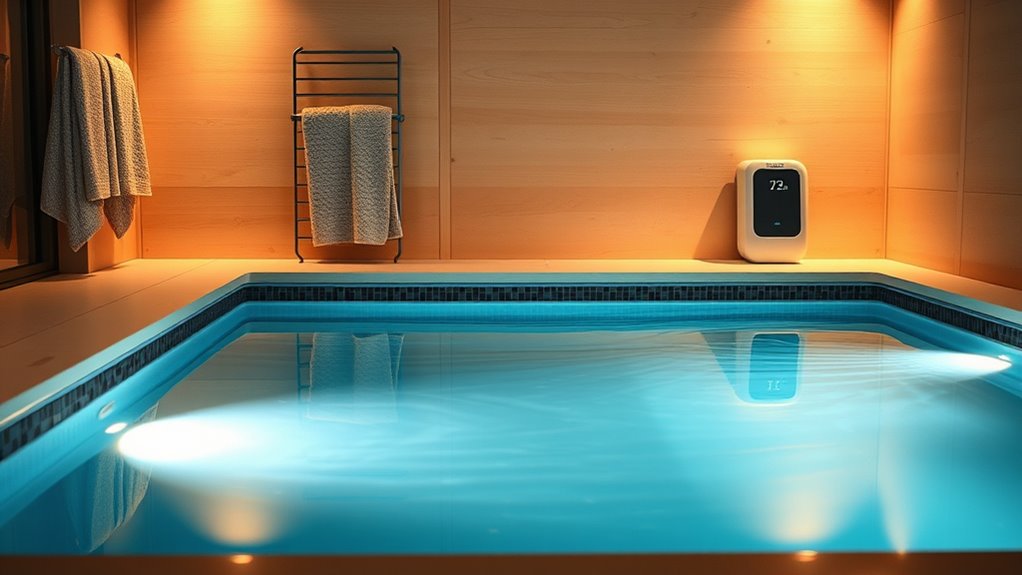

To warm your endless pool cheaply, focus on insulation, like foam panels or bubble wrap, to keep heat in. Use a snug cover when not in use to reduce evaporation and heat loss. Maximize solar gain by positioning your pool to face the sun and adding black surfaces or plastic sheets to absorb heat. DIY solutions such as black hoses or solar covers can also boost warmth without breaking the bank. Keep exploring for more effective tips.

Get pool and patio gear delivered free — and shop member deals
- Fast, free delivery on millions of items
- Access to Prime Big Deal Days deals on October 6–7
- Prime Video, Amazon Music and more included
Key Takeaways
- Use high-quality, snug-fitting pool covers to reduce evaporation and retain heat during off-hours.
- Insulate pool sides, bottom, and edges with foam or reflective materials to minimize heat loss.
- Maximize solar gain by positioning the pool to face south and using black surfaces or plastic covers on sunny days.
- Create DIY solar heaters with black hoses or plastic sheets, and install inexpensive windbreaks to reduce heat escape.
- Combine passive methods like insulation and solar covers with simple DIY projects for cost-effective, year-round warmth.
insulated pool cover for endless pool
As an affiliate, we earn on qualifying purchases.
As an affiliate, we earn on qualifying purchases.
Insulating Your Pool for Maximum Efficiency

Insulating your pool is one of the most cost-effective ways to retain heat and reduce energy bills. Proper insulation keeps warm water from escaping, so your heater doesn’t have to work as hard. Start by installing foam or bubble wrap panels on the sides and bottom of your pool. These materials create a barrier that traps heat and minimizes heat loss. Covering the pool with an insulating pool cover when not in use also makes a significant difference. Verify your pool’s edges and any exposed plumbing are well-insulated to prevent heat from escaping through these areas. Regularly checking and maintaining your insulation prevents gaps and improves efficiency. Additionally, understanding your total-cost clarity can help you identify the most affordable insulation options and plan your upgrades effectively. By insulating effectively, you’ll enjoy warmer water while spending less on energy, making your pool more cost-efficient year-round.
Utilizing Solar Heating Solutions
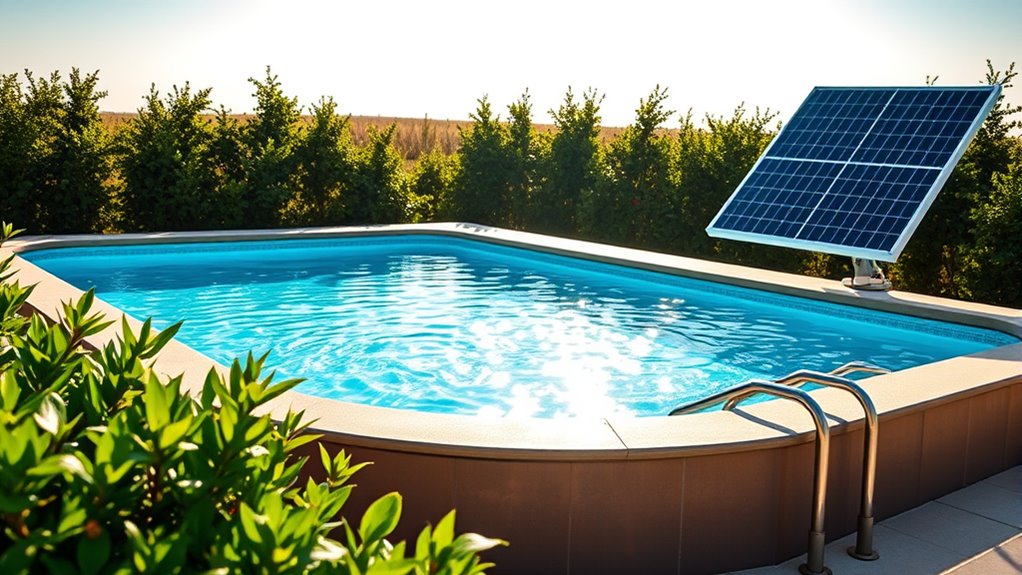
After insulating your pool to trap heat effectively, harnessing the power of the sun becomes an excellent next step. Solar heating solutions are eco-friendly and cost-effective, helping you warm your pool without rising energy bills. Solar panels or collectors can be installed on your roof or nearby structures, capturing sunlight and converting it into heat. This renewable approach not only reduces your carbon footprint but also offers long-term savings. Imagine swimming comfortably year-round, knowing you’re using free, sustainable energy. The emotional appeal of a greener, more economical solution makes solar heating a compelling choice. Proper installation techniques ensure maximum efficiency and durability of your solar heating system.
Investing in a Pool Cover to Minimize Heat Loss
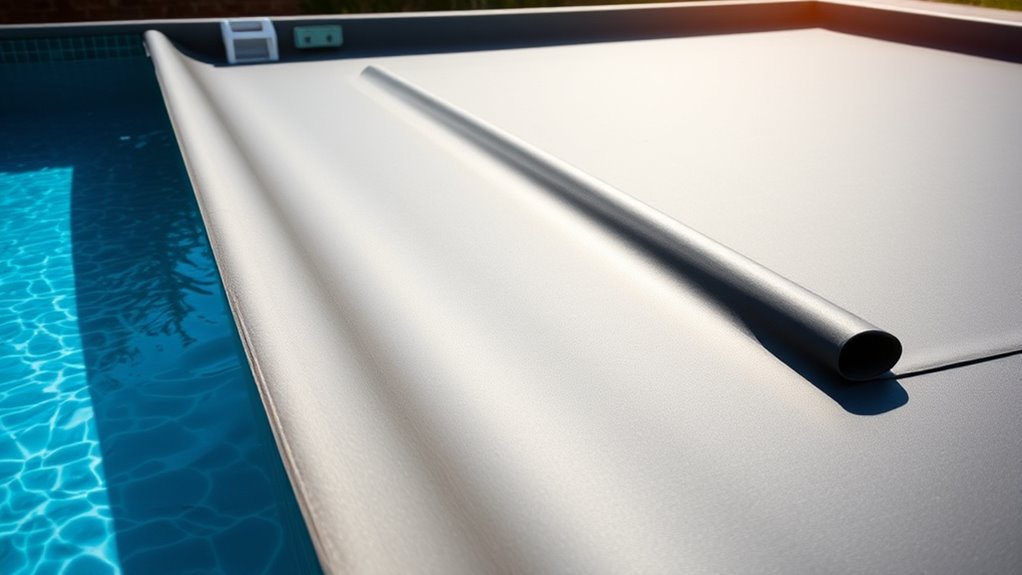
Investing in a pool cover is one of the most effective ways to reduce heat loss and keep your Endless Pool warm. A good cover traps heat and prevents it from escaping into the air, saving you energy and money. When the pool isn’t in use, covering it minimizes evaporation, which is a major source of heat loss. Lightweight, insulated covers are affordable and easy to handle, offering a quick way to maintain temperature. Make sure the cover fits snugly to prevent warm air from escaping around the edges. Regularly using a cover during off-hours can markedly lower your heating costs and keep your pool warmer for longer periods. It’s a simple, cost-effective investment that pays off by preserving heat and reducing energy consumption.
Maximizing Passive Solar Heating Techniques
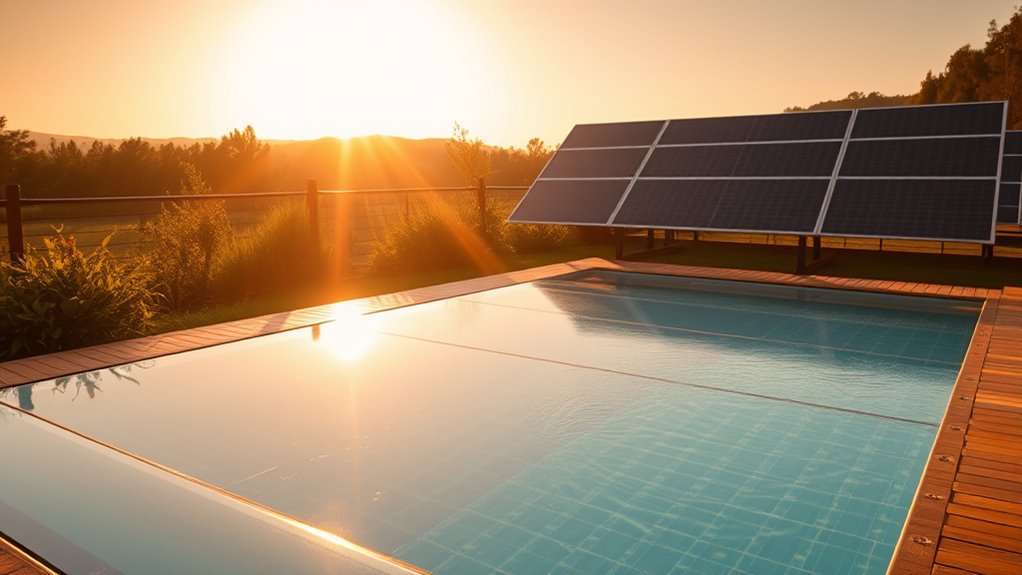
Maximizing passive solar heating starts with using your pool cover effectively to trap heat. You can also position your pool to catch maximum sunlight and add insulation or barriers to prevent heat loss. These simple steps can make a big difference in keeping your pool warmer naturally. Additionally, ensuring proper soil insulation around the pool area can help retain heat and improve overall efficiency.
Proper Pool Cover Use
Using a proper pool cover is one of the simplest and most effective ways to harness passive solar heating for your endless pool. A high-quality cover traps heat and prevents heat loss during the night or cooler days. When the sun shines, the cover allows sunlight to penetrate and warm the water, maximizing solar gain. Guarantee your cover fits tightly to minimize evaporation and heat escape. Clear or dark-colored covers can influence heat absorption, so choose one suited to your climate. Regularly removing debris and cleaning the cover keeps it effective. Using a cover consistently, especially when the pool isn’t in use, considerably reduces heat loss and prolongs the warmth gained from passive solar energy. Regional legal resources can help you understand local regulations regarding pool covers and safety standards. This low-cost method offers substantial savings and efficient temperature maintenance.
Strategic Pool Positioning
Positioning your pool thoughtfully can considerably boost passive solar heating. Choose a location with maximum sun exposure throughout the day, ideally facing south if you’re in the Northern Hemisphere. Keep nearby structures or tall trees away that could cast shade during peak sunlight hours. Elevate your pool slightly above ground level to reduce heat loss and allow sunlight to reach more of the surface. Use a dark-colored surface or surround the pool with dark materials to absorb and retain heat more effectively. Guarantee the area is unobstructed by objects that could block sunlight. Additionally, ensuring proper solar gain can optimize heat absorption and efficiency. By optimizing your pool’s placement, you harness natural warmth, reducing reliance on energy-intensive heating methods and lowering your overall costs. Proper positioning makes passive solar heating a practical, cost-effective option.
Insulation and Barrier Methods
To enhance passive solar heating, focus on insulating your pool and installing barriers that trap heat and reduce heat loss. Use foam or reflective insulation around the pool’s sides and bottom to minimize thermal conduction. Cover your pool with a high-quality, insulating pool cover when not in use to prevent heat escape overnight or during cold days. Installing windbreaks, such as fences or shrubs, can block cold air from blowing across the surface, reducing evaporation and heat loss. You can also place reflective barriers behind the pool to bounce sunlight directly onto the water. These simple, cost-effective methods work together to keep your pool warmer naturally, lowering the need for active heating and saving you money over time.
Choosing Energy-Efficient Pool Heaters
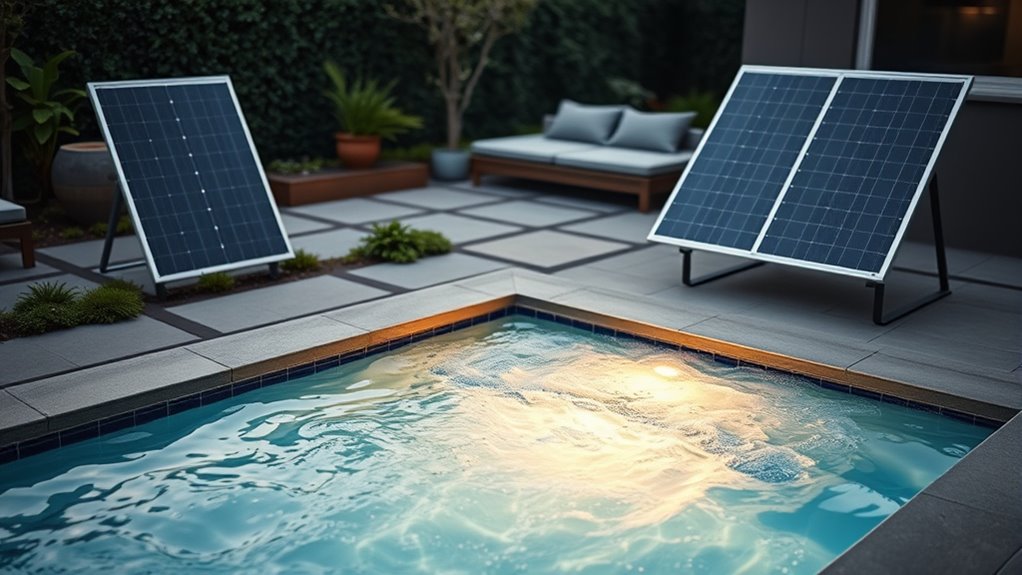
Choosing an energy-efficient pool heater can markedly reduce your long-term costs and environmental impact. When selecting a heater, prioritize models designed to deliver reliable warmth without wasting energy. Look for units with high efficiency ratings and smart features that adjust heat output based on your pool’s needs. Investing in an eco-friendly heater not only saves you money but also helps protect the planet. Imagine enjoying warm waters without guilt, knowing you’re reducing your carbon footprint. Feel confident knowing your choice supports sustainable living. Decoding modern slang can help you stay connected with the latest youth trends and online culture. Here are some ways to feel empowered with your decision: – Experience cozy, inviting water year-round – Save money on energy bills each month – Contribute to a healthier planet – Enjoy peace of mind with durable, long-lasting equipment – Feel proud of making environmentally conscious choices
Implementing DIY Heating Hacks
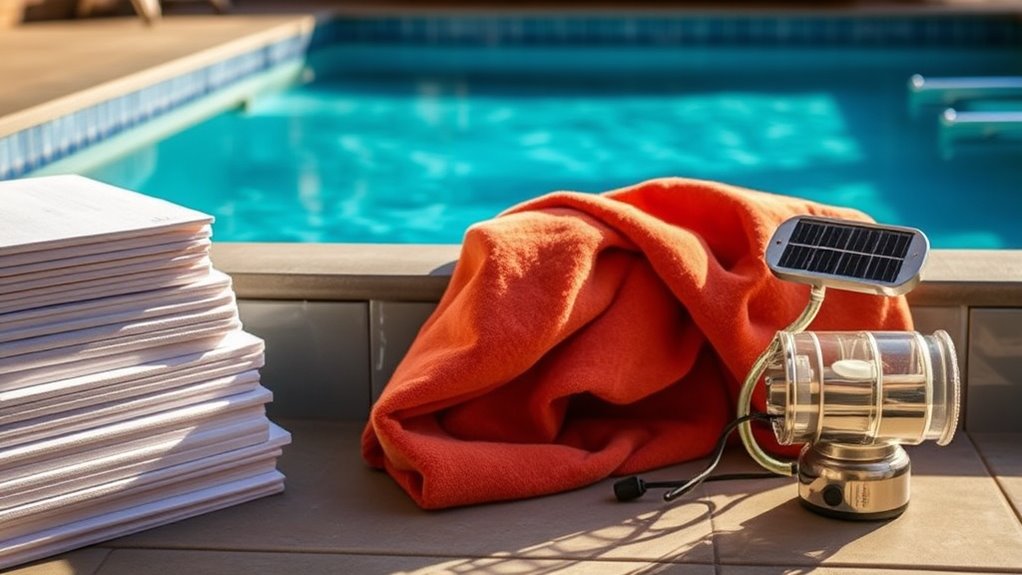
You can boost your pool’s warmth by improving insulation and trying simple DIY heating projects. Small upgrades, like adding pool covers or insulating pipes, make a big difference in retaining heat. Ready to explore creative hacks that keep your pool cozy without breaking the bank?
Insulation Enhancements for Efficiency
Enhancing your pool’s insulation can substantially cut heating costs by trapping more warmth and reducing heat loss. By improving insulation, you keep the heat you generate where it belongs—inside your pool—saving money and energy. Simple DIY upgrades can make a big difference. Wrap your pool with reflective bubble wrap to reflect heat back into the water. Use foam boards or pool noodles along the edges for added insulation. Cover your pool whenever it’s not in use with a sturdy, insulated cover to prevent heat escape. Seal any gaps or leaks around the pool’s structure. These small changes can turn your pool into a cozy oasis, making every swim more comfortable and affordable.
- Feel the warmth of a well-insulated pool after a chilly day
- Enjoy longer swimming seasons without extra costs
- Reduce your carbon footprint effortlessly
- Experience the satisfaction of DIY improvements
- Save money while making your pool more inviting
Creative Heating DIY Projects
Creative DIY heating projects can add significant warmth to your endless pool without breaking the bank. You might try repurposing materials like old solar covers or plastic bottles filled with water and black paint to absorb sunlight and transfer heat. Installing a simple solar heater made from black hoses or tubing wrapped around a pool pump can boost water temperature efficiently. Another option is creating a windbreak using inexpensive materials like tarps or pallets to reduce heat loss caused by wind. For a quick boost, you can also place black plastic sheets over the pool during sunny days to absorb more heat. These projects are easy to implement, cost-effective, and customizable, helping you enjoy warmer water without spending a fortune. Additionally, utilizing performance cookies can help monitor and optimize the efficiency of your DIY heating solutions.
Combining Multiple Methods for Optimal Results
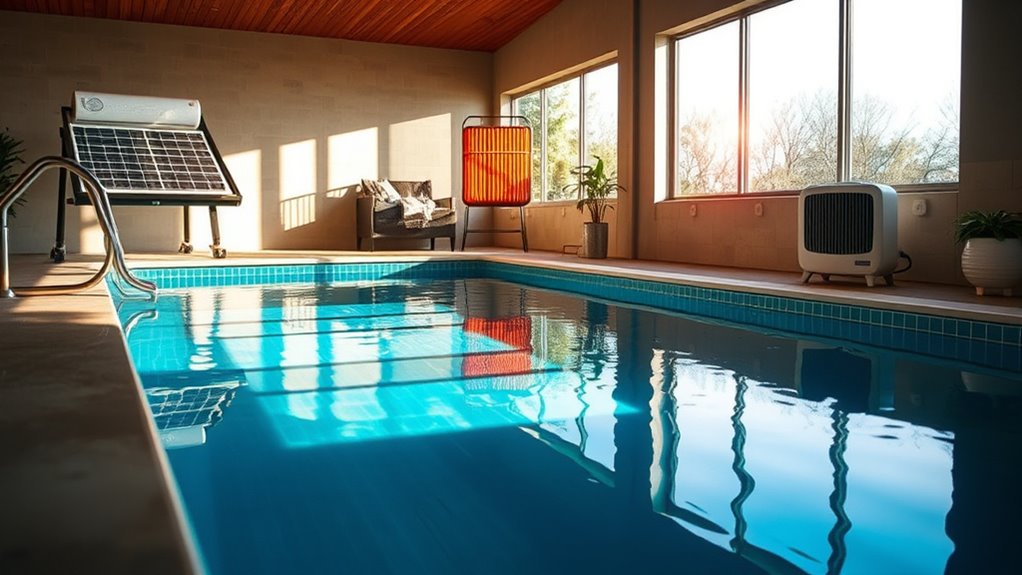
Combining multiple heating methods can substantially improve efficiency and reduce overall costs when warming your endless pool. By strategically blending approaches, you harness the strengths of each, ensuring consistent warmth without breaking the bank. For example, use solar covers to retain heat, supplemented by a small electric heater during colder days. Layering natural and mechanical methods creates a more sustainable, budget-friendly solution. Incorporating energy-efficient techniques further enhances cost savings and environmental benefits.
Imagine how it feels to enjoy a comfortably warm pool year-round, knowing you’re saving money and energy. The sense of control and satisfaction grows as you optimize your setup. This approach not only cuts costs but also empowers you to tailor your heating system to your needs.
- Feel the joy of lower bills each month
- Experience the comfort of a consistently warm pool
- Enjoy peace of mind with eco-friendly solutions
- Revel in the freedom of customized heating setups
- Savor the satisfaction of smarter, cost-effective choices
Frequently Asked Questions
How Often Should I Maintain My Pool’s Heating System for Efficiency?
You should maintain your pool’s heating system at least once a year, ideally before the peak swimming season. Regularly check for leaks, clean filters, and inspect the thermostat to guarantee efficiency. If you notice temperature inconsistencies or increased energy bills, perform maintenance sooner. Proper upkeep keeps your system running smoothly, saves energy, and prolongs its lifespan, ensuring you enjoy warm water without unnecessary costs.
What Are the Environmental Impacts of Different Pool Heating Options?
Different pool heating options have varying environmental impacts. Electric heat pumps are energy-efficient and produce fewer emissions, making them eco-friendly. Gas heaters emit greenhouse gases and consume more energy, contributing to pollution. Solar heaters use renewable energy, offering the smallest environmental footprint, but depend on sunlight. By choosing energy-efficient and renewable options, you help reduce your pool’s carbon footprint and support a healthier environment.
Can I Upgrade My Current Heater to a More Energy-Efficient Model?
Absolutely, you can upgrade your current heater to a more energy-efficient model. Think of it as swapping out a vintage radio for a sleek, modern gadget—you’re improving performance while saving energy. Check your system’s specifications and consult a professional to guarantee compatibility. Upgrading not only reduces your energy bills but also minimizes environmental impact, making your pool more eco-friendly and cost-effective over time.
Are There Any Safety Concerns With DIY Pool Heating Hacks?
Yes, there are safety concerns with DIY pool heating hacks. You might risk electrical hazards, leaks, or damage to your pool if you don’t follow proper procedures. Using untested methods can also create fire risks or cause injury. Always prioritize safety by researching thoroughly, using appropriate equipment, and consulting professionals if you’re unsure. Avoid shortcuts that could compromise your safety or the integrity of your pool system.
How Do Weather Changes Affect the Efficiency of Solar Pool Heating?
Weather changes markedly impact the efficiency of solar pool heating. When it’s sunny and warm, your system works at peak performance, quickly warming your pool. However, on cloudy or rainy days, solar panels absorb less sunlight, reducing heat transfer and slowing down warming. Cold weather or strong winds can also lower water temperatures, making your solar heater less effective. Planning for seasonal variations helps you maximize energy and cost savings.
Conclusion
By combining smart insulation, solar solutions, and energy-efficient heaters, you can cut your heating costs by up to 80%. Using a pool cover alone can save you hundreds annually by reducing heat loss. Remember, implementing just a few DIY hacks can make a noticeable difference. With these strategies, you’ll enjoy a warmer pool without breaking the bank—proving that heating smarter truly pays off in the long run.
Fall Picks
fall essentials
As an affiliate, we earn on qualifying purchases.