
If you’re choosing between an endless pool and a lap pool, consider your space, budget, and fitness goals. Endless pools are compact, fitting into smaller areas, and cost less upfront, making them great for hydrotherapy and low-impact workouts. Lap pools require more space and higher investment but are ideal for long-distance swimming and endurance training. To discover which option suits your lifestyle best, explore the key differences that follow.
Open a free Amazon Business account
Business pricing, bulk buying and tax-exempt orders.
As an affiliate, we earn on qualifying purchases.
Key Takeaways
- Endless pools are compact, ideal for small spaces, while lap pools require larger dedicated areas.
- Endlessly pools generally have lower initial costs but may incur higher maintenance over time.
- Endless pools support low-impact, interval training and hydrotherapy; lap pools are better for long-distance endurance swimming.
- Space constraints and budget influence the choice, with endless pools suited for limited spaces and lower upfront investment.
- Training flexibility varies: endless pools excel for targeted, low-impact workouts, whereas lap pools facilitate sustained, cardiovascular training.

When choosing between an endless pool and a lap pool, understanding the key differences can help you make an informed decision. Both options serve different needs, so considering factors like space, cost, and training goals is essential. If you’re interested in hydrotherapy benefits, an endless pool might be more appealing. Its compact design allows you to perform gentle exercises and recovery routines, making it ideal for low-impact therapy, especially if you have joint issues or are rehabilitating from injury. The adjustable current in an endless pool provides a controlled environment for gentle resistance training, which can help improve flexibility and circulation. On the other hand, a lap pool is better suited for those focused on cardiovascular fitness and structured workouts. Its longer, straight design encourages sustained swimming, which is excellent for endurance training.
Choosing between an endless pool and a lap pool depends on space, fitness goals, and therapy needs.
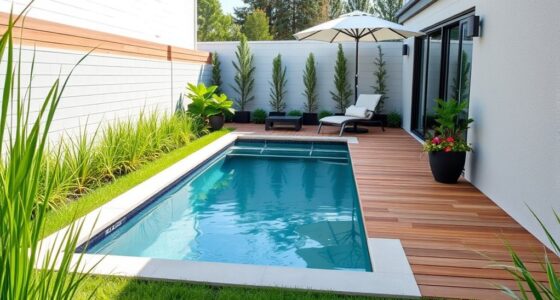
When evaluating space requirements, keep in mind that endless pools are considerably smaller, often fitting into garages, basements, or small backyards, making them a good choice if space is limited. Conversely, lap pools are larger and require a dedicated area, which might demand more planning and investment in your property. In terms of cost, endless pools generally come with a lower initial price and installation cost, but they can incur higher maintenance expenses over time. Pool maintenance tips for endless pools include regularly checking the filtration system, cleaning the water, and monitoring the heater and pump to keep everything running smoothly. Proper maintenance ensures you maximize hydrotherapy benefits and avoid costly repairs. Additionally, their smaller size makes them easier to maintain and operate, especially for homeowners unfamiliar with larger pool systems.
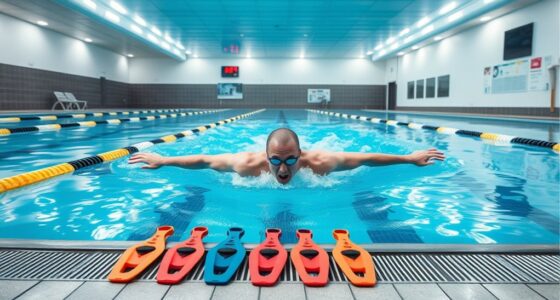
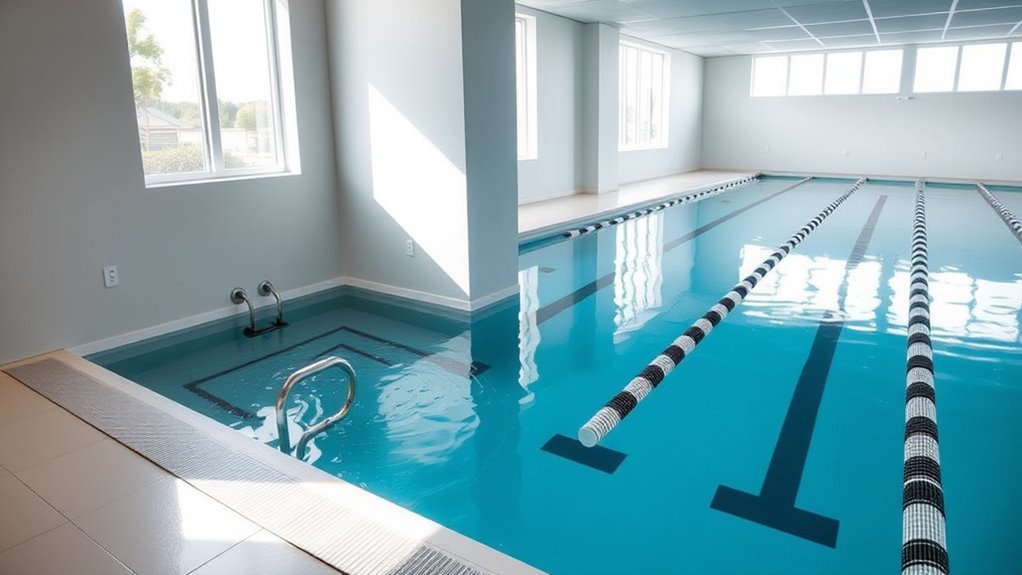
Lap pools tend to be more expensive upfront, especially if you opt for a custom installation, and they usually consume more energy due to their size. However, their larger volume of water can mean less frequent maintenance in certain aspects, though keeping the water clean and balanced is still essential. When considering training, an endless pool offers flexibility for quick, low-impact sessions, which is convenient for daily routines. Its smaller size means you can easily set up interval workouts and focus on specific strokes or resistance exercises. Meanwhile, a lap pool is ideal for more dedicated swimmers or athletes who want to maintain or improve their endurance without the restrictions of space.
Ultimately, choosing between an endless pool and a lap pool depends on your space, budget, and fitness goals. If you prioritize hydrotherapy benefits and a compact design, an endless pool might suit you best. If you’re training for long-distance swims and can accommodate a larger setup, a lap pool could be the better fit. Both options offer unique advantages tailored to different lifestyles and needs.
compact endless pool for small spaces
As an affiliate, we earn on qualifying purchases.
As an affiliate, we earn on qualifying purchases.
Frequently Asked Questions
Which Pool Type Offers Better Resistance Training Options?
The endless pool offers better resistance training options because it has adjustable current settings that allow you to customize your resistance levels. This enhances training versatility, letting you target different muscle groups and intensities easily. You can incorporate various strokes and drills, making your workouts more dynamic. In contrast, lap pools have limited resistance options, mainly relying on water resistance, which reduces the variety of resistance training you can do.
How Long Does Installation Typically Take for Each Pool Type?
Installation is like planting a seed—quick and steady growth depends on the process. For an Endless Pool, expect a shorter construction process, typically taking 4 to 6 weeks, since it’s more compact and easier to install. A lap pool, however, often requires 8 to 12 weeks, due to its larger size and more involved construction timeline. Your choice influences how quickly you can plunge into your new aquatic oasis.
Are There Maintenance Differences Between Endless and Lap Pools?
You’ll find that maintenance differs between endless pools and lap pools. With endless pools, cleaning routines tend to be simpler because they’re smaller and often integrated with self-cleaning features. Chemical maintenance is usually less intensive, but you still need to regularly balance the water. Lap pools, being larger, require more frequent cleaning and more precise chemical balancing to keep the water clear and safe.
Can Both Pools Be Customized for Specific Fitness Needs?
Yes, both pools can be customized for your specific fitness needs. You can choose pool size customization to fit your space and workout goals, ensuring ideal comfort and functionality. Additionally, branding options allow you to personalize your pool with logos or designs, making it uniquely yours. These customization features help you create a tailored swimming experience, whether for training, relaxation, or branding purposes.
What Safety Features Are Available for Each Pool Type?
Think of your pool as a fortress; safety features keep it secure. Both pools offer safety features like non-slip surfaces, pool alarms, and safety covers. Endless pools often include built-in safety accessories, such as handrails and child locks. Lap pools may require additional safety accessories like fencing or alarms. Comparing safety features helps you choose the right setup to protect your loved ones and enjoy worry-free swimming.
Conclusion
Choosing between an endless pool and a lap pool depends on your space, budget, and training goals. An endless pool offers compact convenience and year-round usage, but may lack the length for serious laps. On the other hand, a lap pool provides ample space for extensive training, yet demands more room and investment. Ultimately, it’s about balancing your priorities—whether you crave the endless convenience or the expansive swim experience. The right choice makes every swim feel like a victory.
Flea & tick season Picks
flea and tick prevention
As an affiliate, we earn on qualifying purchases.