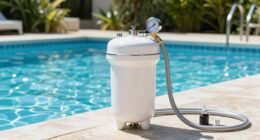
To enjoy your endless pool year-round, start by thoroughly cleaning and inspecting all equipment, then drain water from pipes and equipment to prevent freezing. Insulate the sides and bottom with foam or bubble wrap, and cover it with a high-quality, insulated cover to trap heat. Choose an efficient heating system like a heat pump or gas heater suitable for your climate. Maintaining water quality and ensuring safety protocols help make winter swimming comfortable. Keep exploring for more tips to optimize your cold-weather pool experience.
Key Takeaways
- Clean and drain pool equipment, then insulate and securely cover the pool to prevent heat loss during winter.
- Choose an energy-efficient heating system like a heat pump or electric heater to maintain comfortable water temperatures.
- Regularly test water chemistry and run filtration systems to keep water safe and clear throughout the colder months.
- Gradually lower water temperature before shutdown or keep the pool partially open with proper insulation for year-round use.
- Use thermal swimwear and warm-up routines to ensure safe, comfortable swimming in cold water conditions.
Preparing Your Endless Pool for Winter

As winter approaches, preparing your Endless Pool to withstand the colder months is vital. Start by cleaning the pool thoroughly to remove dirt and debris that can cause damage during the winter. Check the filtration system and make sure it’s functioning properly; this helps prevent freezing issues. Lower the water temperature gradually if you plan to keep the pool partially open or shut it down completely before the coldest weather hits. Drain all water from the pump, heater, and pipes to prevent freezing and cracking. Consider removing accessories like ladders or steps that could be damaged by ice. Finally, inspect your pool’s equipment and seals for any wear or damage, fixing issues early to avoid costly repairs later. Proper preparation keeps your pool safe and ready for winter. Understanding contrast ratio can also help you choose the right equipment for optimal performance during the warmer months.
Insulating and Covering Your Pool
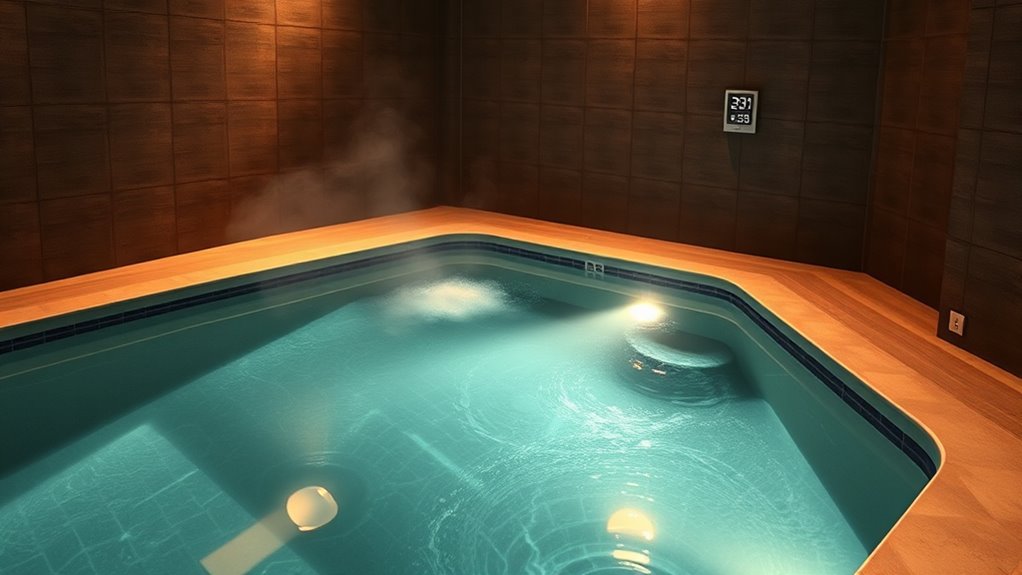
Insulating your Endless Pool is essential to maintain warmth and prevent heat loss during the colder months. Proper insulation keeps the water warmer longer and reduces energy costs. To effectively insulate, consider these steps:
Insulating your Endless Pool helps retain warmth, reduces heat loss, and lowers energy costs during colder months.
- Install foam board or bubble wrap insulation around the sides and bottom of your pool to minimize heat transfer.
- Use a high-quality, insulated cover to trap heat and block cold air from entering the water.
- Seal any gaps or leaks around the edges and skimmer to prevent drafts that can lower water temperature.
- Incorporating wealth protection strategies such as proper insulation and covering methods can further improve your pool’s energy efficiency and longevity.
These measures work together to create a thermal barrier, ensuring your pool stays warm and energy-efficient through winter. Covering your pool properly is just as important as insulating it, helping you enjoy year-round swimming with less hassle.
Choosing the Right Heating System
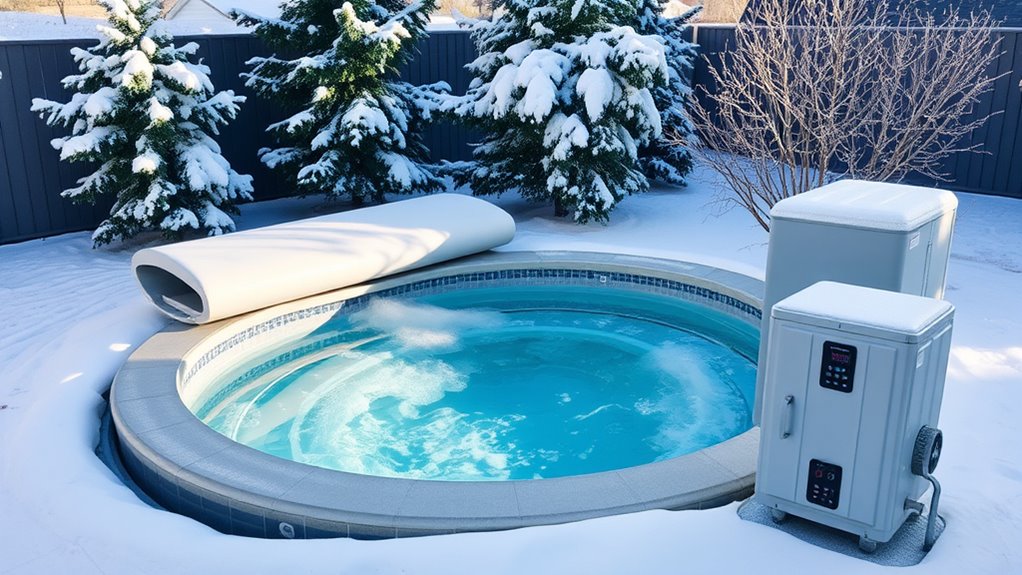
Selecting the right heating system is essential for maintaining a comfortable swimming environment year-round. Your choice depends on factors like energy efficiency, installation costs, and your climate. Electric heaters are quick and easy but can be costly to run long-term. Gas heaters heat faster and are suitable for larger pools, but they require proper ventilation. Heat pumps are energy-efficient and ideal for moderate climates, while solar options are eco-friendly but depend on sunlight. Here’s a quick comparison:
| Heating System | Pros | Cons |
|---|---|---|
| Electric | Fast, easy | Higher operating costs |
| Gas | Powerful, quick | Ventilation needed |
| Heat Pump | Energy-efficient | Less effective in cold weather |
| Solar | Eco-friendly | Weather dependent |
Choose based on your budget, climate, and energy preferences. Understanding different heating options can help you make an informed decision for year-round swimming comfort.
Maintaining Water Quality During Cold Months

Maintaining water quality during cold months requires proactive measures to prevent issues like algae growth, bacteria buildup, and chemical imbalances. To do this effectively, focus on these key steps:
Prevent water issues in winter with regular testing, circulation, and proper sanitization.
- Regular Testing: Check pH, chlorine, and alkalinity levels weekly to keep water balanced.
- Consistent Circulation: Run your pump daily to prevent stagnation and ensure proper filtration.
- Proper Sanitization: Adjust chlorine or bromine levels as needed, even if usage drops, to inhibit bacteria and algae growth.
- Monitoring Angel Numbers: Pay attention to recurring angel numbers related to love and spiritual growth, as they can serve as spiritual guidance during your maintenance routine.
These actions help maintain clear, safe water and protect your equipment from damage caused by imbalanced chemicals. Staying vigilant ensures your pool remains inviting and hygienic, even during the coldest months. Proper maintenance is essential for year-round swimming enjoyment.
Tips for Safe and Comfortable Winter Swimming
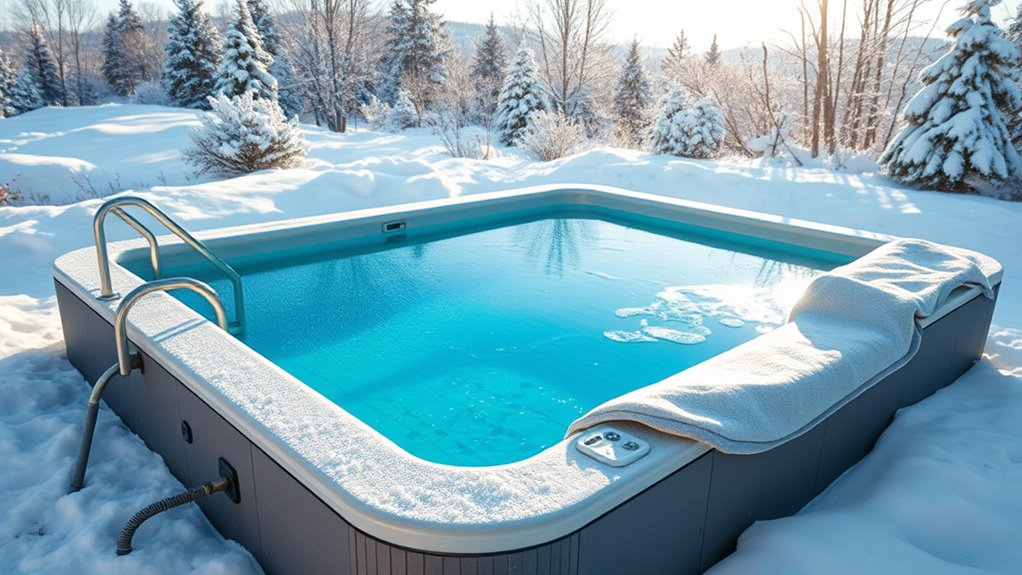
Swimming in cold weather can be invigorating, but it’s essential to prioritize safety and comfort to enjoy your experience fully. Always start with a warm-up to gradually raise your body temperature before entering the water. Limit your swimming sessions to prevent hypothermia, and listen to your body—if you feel numbness, dizziness, or shivering, get out immediately. Wear a thermal swim cap and a wetsuit or thermal swimwear for extra warmth. Keep your pool environment safe by maintaining proper water temperature and ensuring good ventilation. Stay visible with bright accessories if swimming outdoors. Afterward, dry off quickly and change into warm, dry clothing. Staying mindful of your body’s signals helps you enjoy winter swimming safely and comfortably. Using essential oils for respiratory health, such as eucalyptus or peppermint, can also support easier breathing during colder months, enhancing your winter swimming experience.
Frequently Asked Questions
How Much Does It Cost to Run a Heated Endless Pool Year-Round?
It costs about $300 to $600 annually to run your heated Endless Pool year-round, depending on several factors. Your energy costs, local climate, and pool size influence this amount. To save money, you can use a high-efficiency heater, insulate your pool well, and maintain a consistent temperature. Regularly checking your equipment helps guarantee efficient operation, keeping your swimming experience comfortable without breaking the bank.
Can I Install Solar Heating for My Pool?
Yes, you can install solar heating for your pool. It’s an eco-friendly and cost-effective way to warm your water, especially if you have ample sunlight. You’ll need solar collectors, a controller, and a pump to circulate the water through the collectors. While initial installation costs vary, ongoing savings on energy bills make solar heating a smart investment for year-round swimming comfort.
What Safety Measures Are Recommended for Winter Swimming?
You should always wear a wetsuit or thermal swimwear to stay warm, and limit your time in cold water to prevent hypothermia. Always swim with a buddy for safety, and make certain someone knows your plans. Keep an eye on weather conditions and avoid swimming during storms or when temperatures drop dangerously low. Use a safety float or buoy, and get out immediately if you start feeling numb or uncomfortable.
How Often Should I Test Water Chemistry in Winter?
You should test your water chemistry at least twice a week during winter. Cold temperatures can affect chemical balance, so regular testing helps you maintain safe, clear water. Check pH, chlorine, and alkalinity levels frequently, especially after heavy use or storms. Use reliable test strips or a kit, and adjust chemicals as needed to prevent issues like algae growth or corrosion. Consistent testing guarantees a safe swimming environment year-round.
Are There Specific Clothing or Gear for Cold-Weather Swimming?
Yes, there are specific clothing and gear for cold-weather swimming. You should wear a thermal swim cap to retain body heat and consider a wetsuit or neoprene gloves and booties for extra warmth. A waterproof, insulating swim jacket can also help. These items keep you comfortable and safe in cold water, allowing you to enjoy winter swimming without risking hypothermia. Always choose gear suited to your comfort level and water temperature.
Conclusion
With the right preparations, your endless pool becomes a cozy oasis, even in winter’s chill. Think of it as a warm haven amid frosty days, where your swim feels like a gentle embrace against the cold. When you insulate, cover, and heat with care, you’re not just maintaining water—you’re crafting a private retreat that keeps winter’s grasp at bay. plunge in confidently, knowing your aquatic sanctuary is always ready to welcome you home.