To keep your endless pool in top shape and avoid costly repairs, perform weekly tasks like testing and balancing water chemistry, cleaning surfaces and skimmers, inspecting equipment for any issues, and monitoring water levels and circulation. Regular maintenance guarantees algae, bacteria, and equipment problems stay at bay. Staying consistent with these simple routines helps prevent big problems down the line. If you want to learn more, you’ll find useful tips to streamline your weekly upkeep right here.
Key Takeaways
- Regularly test and balance water chemistry to prevent algae, bacteria, and costly damage.
- Inspect and maintain pumps, filters, and valves to ensure proper operation and avoid leaks or wear.
- Clean the pool surface, skimmer, and water surface debris consistently to prevent buildup and blockages.
- Monitor water levels and adjust before chemical treatment or filtration to optimize equipment performance.
- Schedule routine maintenance tasks with reminders to catch issues early and extend equipment lifespan.
Key Weekly Pool Maintenance Tasks You Need to Know
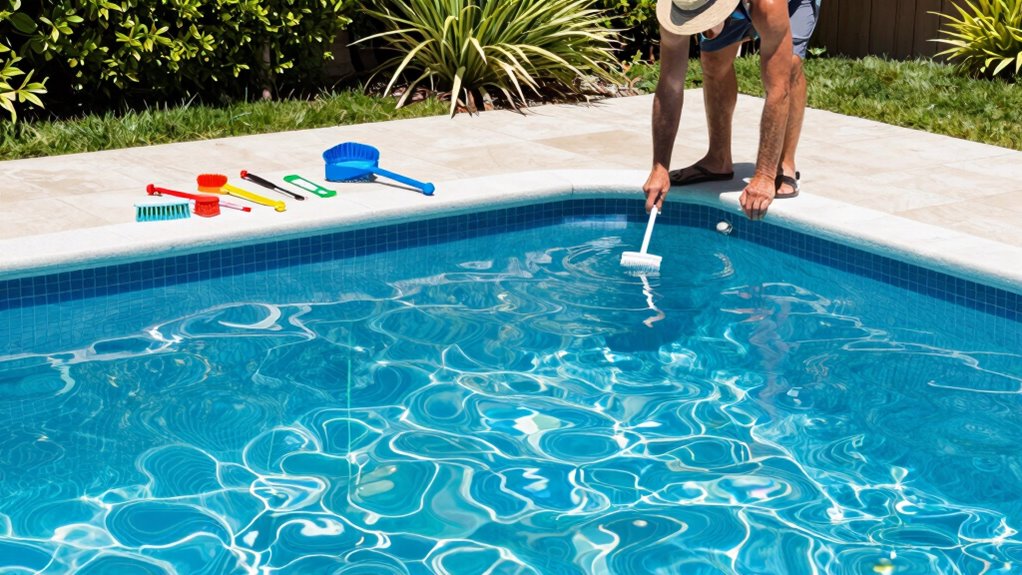
To keep your Endless Pool in top condition, maintaining weekly upkeep tasks is essential. One of the most important tasks is checking the pool chemical balance. Proper chemical levels prevent algae growth, cloudy water, and equipment damage. Start by performing water testing procedures, using test strips or a liquid test kit, to measure pH, sanitizer levels, and alkalinity. Adjust chemicals as needed to keep the water within ideal ranges—pH between 7.2 and 7.6, sanitizer levels according to your pool’s requirements, and alkalinity around 80-120 ppm. Consistent monitoring guarantees your water remains clean, safe, and inviting. Regularly testing and balancing your pool’s chemical levels saves you from costly repairs and keeps your Endless Pool enjoyable year-round. For optimal results, understanding color accuracy and how it affects water clarity can help you better interpret testing outcomes and maintain vibrant, clear water. Additionally, understanding water chemistry fundamentals can improve your ability to troubleshoot issues promptly, ensuring your pool remains in excellent condition. Incorporating proper filtration techniques into your routine further supports water clarity and reduces maintenance efforts over time. Being aware of automated testing devices can also streamline the process, providing quick and accurate chemical readings.
How to Check and Balance Your Pool’s Water Chemistry?

Wondering how to guarantee your Endless Pool’s water stays crystal clear and balanced? The key is regular water testing and proper chemical balancing. Start by testing your water at least once a week using reliable test strips or a testing kit. Focus on key parameters like pH, alkalinity, and sanitizer levels. If your pH is too high or low, adjust it with pH increasers or decreasers. Make certain alkalinity stays within the recommended range to stabilize pH levels. Maintain proper sanitizer levels—chlorine or bromine—to prevent algae and bacteria growth. Always follow manufacturer instructions for adding chemicals, and retest after adjustments to confirm your water chemistry is balanced. Using test strips can make regular testing quicker and easier. Regular testing with accurate testing kits ensures your chemical adjustments are precise. Incorporating water chemistry monitoring tools can help detect imbalances early. Consistent water testing and chemical balancing also help prevent infection risks, which can compromise both health and equipment longevity. Proper water chemistry is essential for maintaining your pool’s longevity and performance.
Cleaning Your Pool Surface, Skimmers, and Filter System
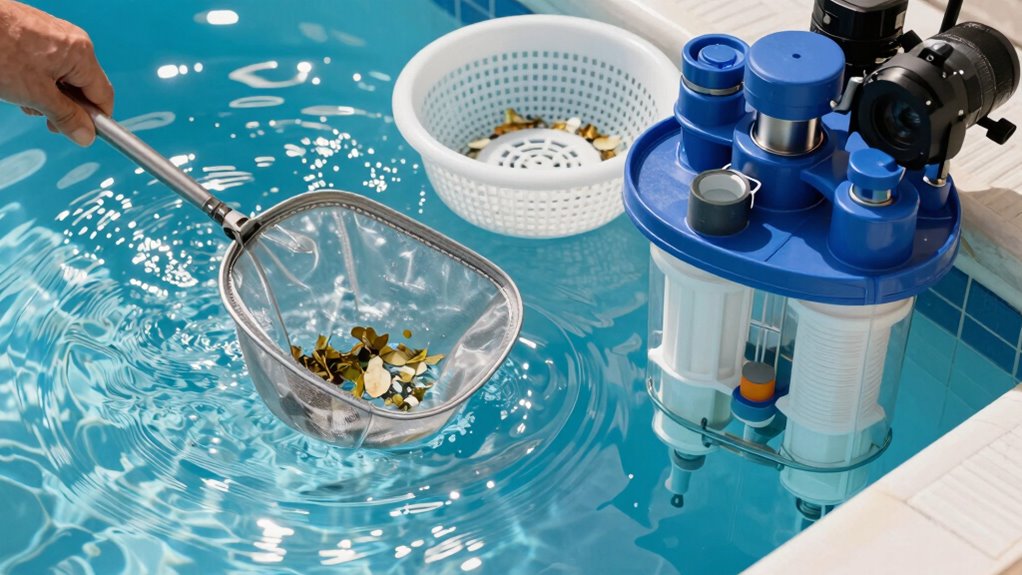
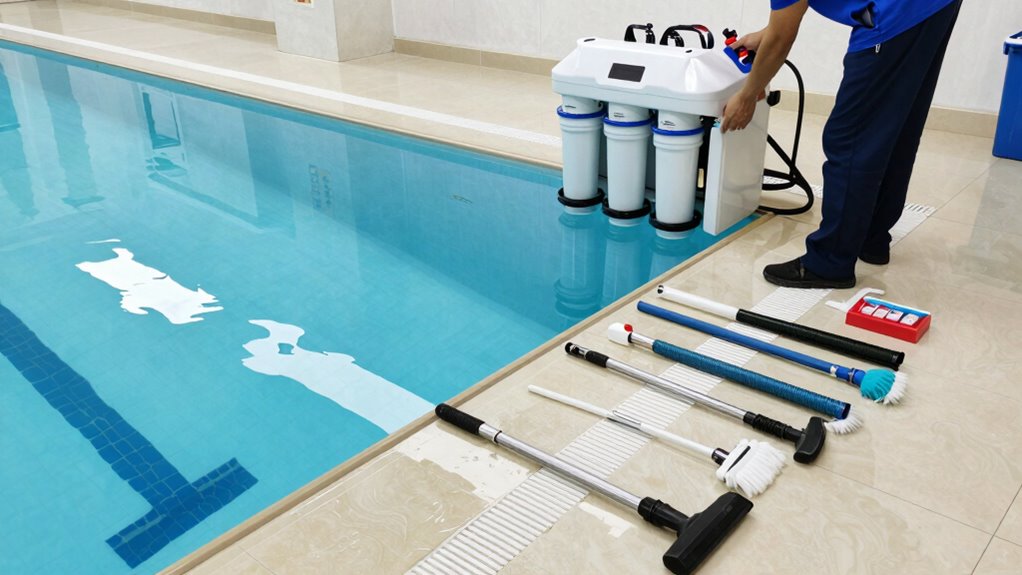
Keeping your pool surface clean helps prevent algae and dirt buildup. Regularly check and empty your skimmers to make certain proper water flow. Don’t forget to clean your filter system often to keep your pool crystal clear and running smoothly. Regular maintenance of your filtration system can extend its lifespan and improve overall water quality. Incorporating a consistent routine maintenance schedule can help catch potential issues early and save you time and money. Additionally, monitoring your outdoor environment can help prevent debris from entering your pool and reduce cleaning frequency. Understanding deep-sky imaging concepts can also help you optimize your pool’s environment by reducing unwanted debris and enhancing water clarity. Paying attention to your water quality can guide you in making adjustments that keep your pool healthier and more inviting.
Surface Cleaning Tips
Regularly cleaning your pool surface, skimmers, and filter system is essential to maintain clear, healthy water. A clean pool surface prevents algae buildup and keeps your water sparkling. Use a pool brush or vacuum to remove dirt and algae from the surface weekly. Skim the water to catch leaves and debris before they settle. Check and clean your skimmers and filter system to guarantee proper water flow and filtration. Proper maintenance also involves understanding media literacy so you can interpret the information about pool care accurately. Regularly testing water chemistry ensures optimal chemical balance and prevents issues before they escalate. Incorporating preventive maintenance routines helps identify potential problems early, saving you time and money. Staying consistent helps avoid bigger, costly repairs down the line. Additionally, understanding natural pool concepts can guide eco-friendly choices that support sustainable backyard environments.
Skimmer and Filter Care
Cleaning your skimmers and filter system regularly keeps your pool water clear and flowing smoothly. Start by removing the skimmer basket, emptying out leaves, debris, and any buildup to prevent blockages. Check the basket for damage and replace it if necessary. Next, inspect your filter media—whether it’s cartridges, sand, or DE—and clean or replace it as recommended by the manufacturer. A clean filter media ensures proper filtration and prevents algae growth. Rinse out filter components thoroughly to remove dirt and debris. Regular maintenance of the skimmer basket and filter media reduces strain on your pool’s pump and helps maintain crystal-clear water. Additionally, understanding the importance of consistent storytelling in your routine can reinforce your pool’s maintenance schedule and ensure long-term performance. Incorporating a professional cleaning service can also help identify issues early and extend the lifespan of your equipment. Performing these tasks with attention to vacuum features, such as suction power and filter type, can enhance your pool’s overall health. Staying vigilant about equipment troubleshooting can prevent minor issues from escalating into costly repairs. Regularly checking the condition of your skimmer and filter components ensures optimal function and prolongs their lifespan. Make this routine part of your weekly pool care to avoid costly repairs and keep your endless pool pristine.
Inspect Pool Equipment and Spot Potential Problems

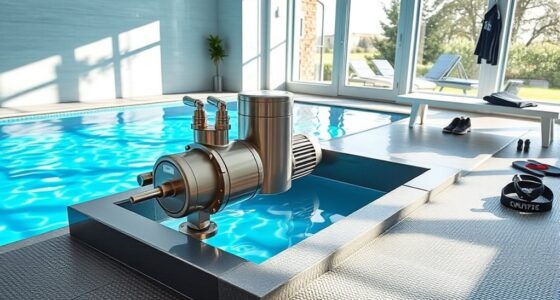
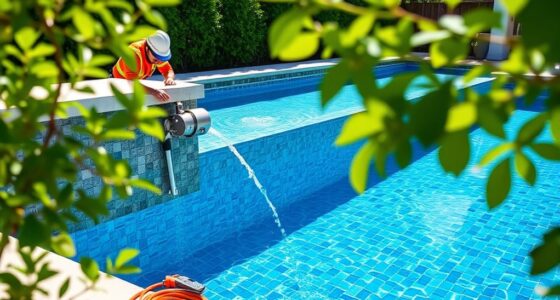
Inspecting your pool equipment is a crucial step in maintaining your endless pool’s performance. Regular checks help you catch issues early and guarantee everything runs smoothly. Look for leaks, strange noises, or signs of wear on pumps and filters. Make sure the pool cover benefits are maximized by inspecting for tears or dirt that could reduce effectiveness. Check that chemical dosage systems are functioning correctly, preventing imbalances. Also, verify that all valves and connections are secure.
Regularly inspect your pool equipment to prevent issues and ensure optimal performance.
Here are some key points to focus on:
- Inspect pump and filter for leaks or blockages
- Check for corrosion or worn-out parts
- Make certain the pool cover is intact and clean
- Test automatic chemical dispensers
- Monitor pressure gauges for abnormal readings
Staying vigilant keeps your pool safe and well-maintained.
Maintain Water Levels and Circulation for Optimal Pool Health
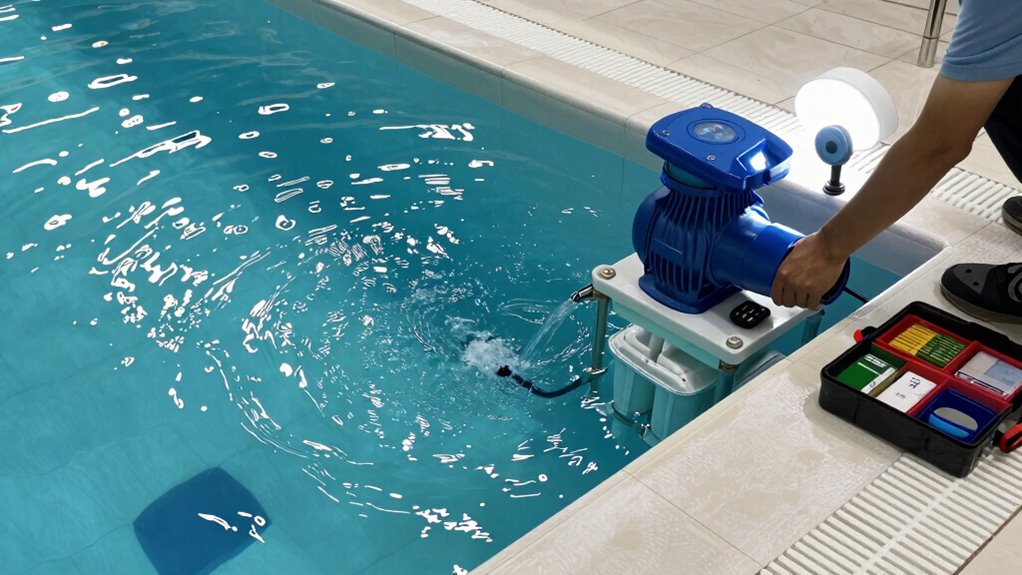
Keeping your pool’s water levels steady is essential for proper operation. You should check the levels regularly and top off as needed to prevent equipment damage. Ensuring good circulation helps keep the water clean and balanced, so make sure your pump is working correctly.
Check Water Levels Regularly
Have you checked your pool’s water levels lately? Keeping an eye on water levels prevents damage and ensures proper circulation. Water evaporation, especially on hot days, can lower levels quickly. Using a pool cover helps minimize evaporation and keeps debris out. Regular checks help you spot issues early, saving you money in the long run. To stay on top of it, consider these tips:
- Use a pool cover when not swimming to reduce water loss
- Top off water levels with a garden hose as needed
- Watch for sudden drops after storms or hot days
- Keep a measurement stick nearby for easy readings
- Adjust water levels before adding chemicals or running the pump
Consistent checks keep your pool balanced, safe, and ready whenever you want to swim.
Ensure Proper Circulation
Maintaining proper water levels is the first step toward ensuring effective circulation in your pool. When water levels are correct, the pump and filter work efficiently, preventing debris buildup and algae growth. Regularly check and top off water as needed, especially after heavy use or hot weather. Proper circulation helps distribute chemicals evenly, supporting chemical safety and keeping water balanced. Make sure your pool cover is well-maintained and fits tightly when not in use; this prevents debris from contaminating the water and aids in maintaining consistent circulation. By keeping water levels stable and your cover in good shape, you enhance water flow, reduce strain on equipment, and promote a healthier, clearer pool. Consistent circulation is key to preventing costly repairs down the line.
Simple Tips to Stay Consistent With Your Weekly Routine

Staying consistent with your weekly pool maintenance can be challenging, but establishing simple routines makes it much easier. To keep your endless pool safe and energy-efficient, try these tips:
- Schedule a specific day and time each week so maintenance becomes a habit.
- Use reminders or alarms to stay on track.
- Keep all your cleaning supplies organized nearby for quick access.
- Incorporate safety checks, like inspecting covers and gates, into your routine.
- Review your water chemistry regularly to prevent costly repairs.
Frequently Asked Questions
How Often Should I Replace My Pool’s Water Entirely?
You should replace your pool’s water every 3 to 5 years, depending on usage and water quality. Regular water testing and chemical balancing help extend its lifespan. If you notice persistent cloudiness, strong odors, or skin irritation, consider a complete water replacement sooner. Keep up with weekly maintenance routines like testing pH, chlorine levels, and alkalinity, to prevent issues that could shorten your pool’s water life.
What Signs Indicate My Pool Needs Professional Repairs?
You’ll notice your pool’s performance slipping—maybe unexplained water loss hints at a leak, or equipment troubleshooting reveals strange noises or inconsistent operation. These signs mean it’s time to call a professional for pool leak detection and repairs. Don’t ignore the small clues; they’re often the first hints of bigger issues. Addressing problems early saves money and prevents your pool from turning into an endless repair saga.
Can I Use Natural or Eco-Friendly Chemicals for Maintenance?
Yes, you can use natural alternatives and eco-friendly options for pool maintenance. Look for mineral-based sanitizers, enzyme treatments, or hydrogen peroxide instead of traditional chemicals. These options help keep your pool clean while reducing harsh chemical use, making your swimming environment safer and more sustainable. Just make certain they’re compatible with your pool’s system and follow the manufacturer’s instructions for ideal results and to prevent any damage.
How Do I Winterize My Pool During Off-Season Months?
Imagine your pool as a sleeping giant, resting through the winter months. To winterize your pool, you’ll perform essential winterizing procedures like balancing water chemistry, lowering the water level, and adding winterizing chemicals. Cover it securely to keep debris out and prevent freezing damage. During off-season pool care, regularly check the cover and make sure chemical levels stay balanced, so your pool stays protected and ready for a quick wake-up when spring arrives.
What Safety Precautions Should I Follow During Weekly Maintenance?
During weekly pool maintenance, you should prioritize pool chemical safety by wearing gloves and goggles when handling chemicals. Always follow instructions for proper chemical levels to prevent accidents. Prevent electrical hazards by turning off power before working on electrical components, and regularly inspect cords and connections for damage. Keep the area dry and organized to avoid slips and falls. Staying vigilant with these safety precautions guarantees your maintenance routine is safe and effective.
Conclusion
Think of your pool as a garden that needs regular tending. Just like watering and weeding keeps plants healthy, your weekly routine prevents big repairs and keeps your pool sparkling. Stick to your routine, and you’ll enjoy endless summer days with pristine water and fewer surprises. With consistent care, your pool becomes a well-tended oasis—an inviting retreat you can relax in anytime. Keep up the effort, and your pool will reward you all season long.