Increasing your pool speed doesn’t automatically mean a better workout. The current in an Endless Pool is created by jets, which vary with water conditions and maintenance, making it unreliable as a measure of your actual pace. To train effectively, you need to calibrate the current based on your personal effort and pace, not just the speed setting. Keep adjusting and monitoring—you’ll discover how to match the current to your fitness goals as you explore further.
Key Takeaways
- Pool speed displays estimate settings, not actual swimming pace; calibration with tools like a current meter is essential.
- Water turbulence and flow variability affect resistance, requiring regular maintenance and water quality management.
- Use external references such as outdoor pace tests to align perceived effort with actual current calibration.
- Gradually adjust current settings based on resistance and swimmer feedback to achieve accurate, consistent training conditions.
- Focus on technique and effort, not maximum speed, for effective workouts within calibrated current parameters.
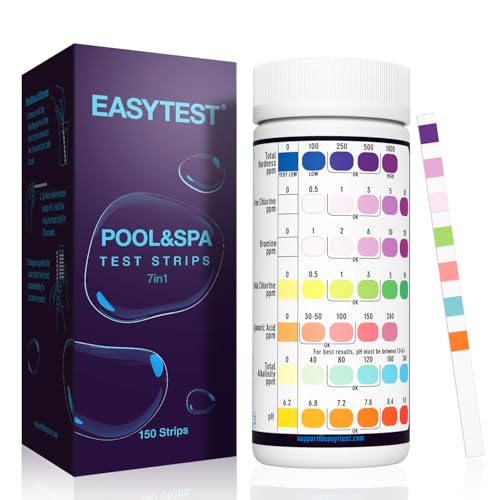
EASYTEST 7-Way Pool Test Strips, 150 Strips Water Test for Hot tub and Spa
- 150 Test Strips Included: Enough for multiple water tests
- Fast and Accurate Results: Soak for 1 second, read in 15 seconds
- 7-in-1 Water Testing: Tests Bromine, pH, Chlorine, Alkalinity, Hardness, Cyanuric Acid
As an affiliate, we earn on qualifying purchases.
Do Faster Speed Settings Mean Better Workouts? Debunking the Myth
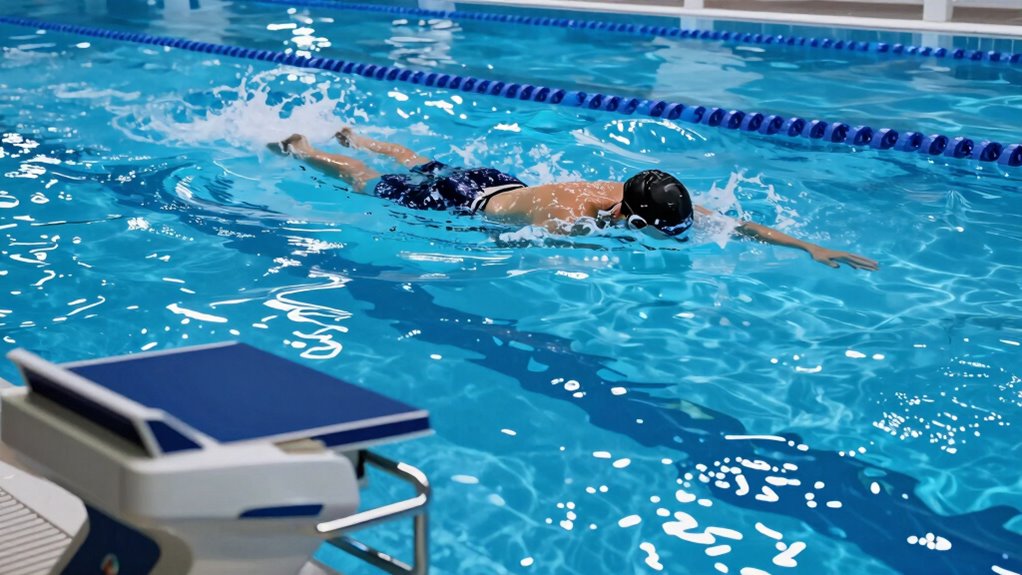
Many assume that increasing the speed on an endless pool automatically leads to a better workout. However, higher speed settings don’t always enhance workout intensity. Proper speed calibration is vital to guarantee you’re challenging yourself without overexerting. Pushing the pool speed too high may feel intense initially but can lead to poor form or fatigue, reducing overall effectiveness. Faster isn’t always better; it’s about matching the speed to your current fitness level and goals. An effective workout depends on maintaining proper technique and consistent effort, not just maximum speed. Focus on calibrating your pool’s current correctly to create the right resistance. This way, you optimize your workout intensity, improve endurance, and avoid injury—proving that speed isn’t the sole factor in effective training. Additionally, understanding water chemistry and how it affects resistance can help you fine-tune your workout environment for optimal results. Proper speed calibration ensures you’re making the most of your training sessions and prevents unnecessary strain. Recognizing how water resistance varies with different conditions can further enhance your ability to tailor workouts precisely.
A well-calibrated speed setting takes into account water resistance variability, ensuring you’re not overestimating your effort and can adapt your workout as conditions change.
How the Endless Pool’s Current Actually Works (And Why It Doesn’t Match Your Speed)
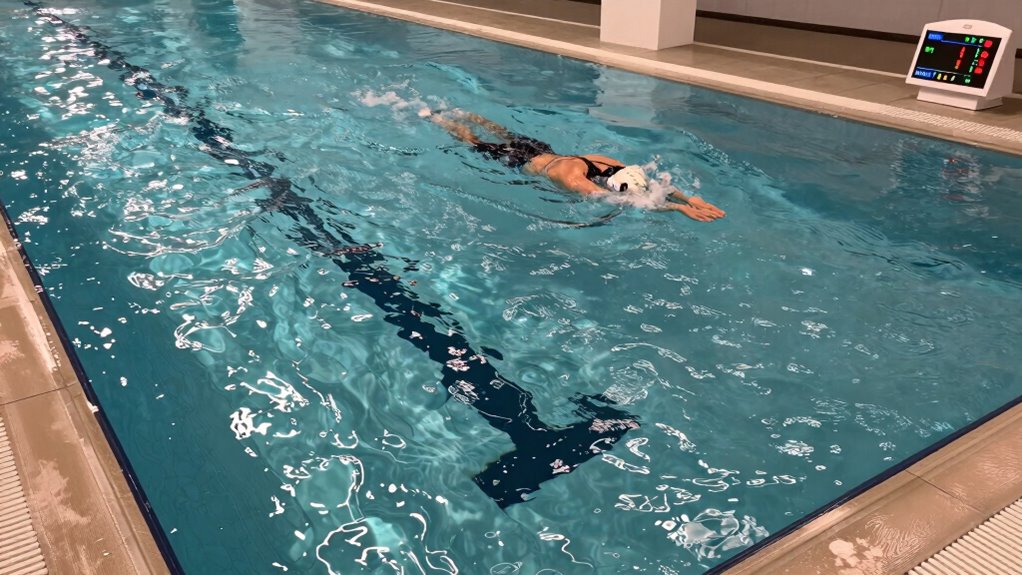
The way the Endless Pool creates current depends on its propulsion system, but that doesn’t always reflect your actual swimming speed. The display can be misleading due to calibration issues and limitations in measuring real speed accurately. Understanding how these systems work helps explain why your perceived pace often doesn’t match the pool’s current. Additionally, high refresh rates in projectors are essential for smooth visuals, just as accurate calibration ensures your swimming metrics are reliable. Proper calibration techniques are crucial because they help ensure your net worth estimates are based on accurate data, preventing misconceptions about your true progress.
How Current Is Generated
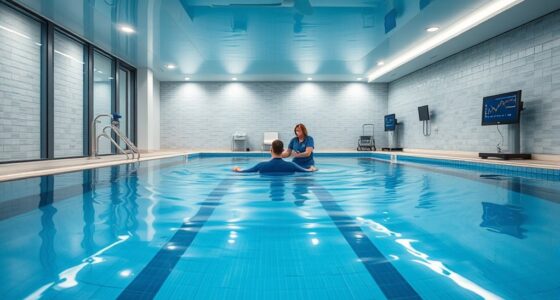
While the Endless Pool generates a current to simulate open-water swimming, it doesn’t produce a consistent, uniform flow like a river. Instead, the current is created by jet nozzles that push water against a fixed wall, creating turbulence and variable flow zones. The effectiveness of this system depends heavily on proper pool maintenance and water chemistry. If your water isn’t balanced—pH, chlorine levels, and circulation—current consistency suffers. Dirty filters or imbalanced water can disrupt flow, causing unpredictable speeds. The pump’s power also influences current strength, but it doesn’t replicate the smooth, steady flow of a natural waterway. Understanding how the system works helps you realize why the current isn’t a perfect reflection of your swimming speed and why calibration is essential. Free Floating techniques can help optimize water movement and improve overall performance.
Speed Display Limitations
Although the Endless Pool’s speed display provides a convenient way to track your workout, it doesn’t directly measure your actual swimming speed. Instead, it estimates speed based on the current’s settings, which can lead to speed inaccuracies. These inaccuracies occur because the display isn’t calibrated to reflect real-world conditions precisely. Variations in water flow, swimmer position, and turbulence can all affect how the display translates current speed into your perceived pace. As a result, your displayed speed may not match your actual swimming speed, making it tricky to gauge progress accurately. Proper display calibration is essential to minimize these discrepancies, but even then, some mismatch remains unavoidable. Relying solely on the display can give a false sense of your true swimming performance. By understanding and adjusting for these factors, you can work toward a more accurate workout measurement.
Calibration Challenges Explained
Endless Pools generate current by propelling water through jets or propellers, creating a steady flow that pushes you forward. However, calibration challenges arise because water resistance varies with your speed and stroke technique. The pool surface plays a significant role, as turbulence and surface disruptions influence flow consistency. When you try to match your actual running or swimming speed, the perceived resistance may not align with the pool’s current. This mismatch occurs because the system’s flow isn’t perfectly uniform; it depends on water turbulence, jet strength, and your position relative to the jets. As a result, accurately calibrating the current to match your real training speed becomes difficult. Understanding these factors helps you recognize why the pool’s current doesn’t always reflect your true pace.
How to Calibrate Your Pool’s Current for Accurate Training
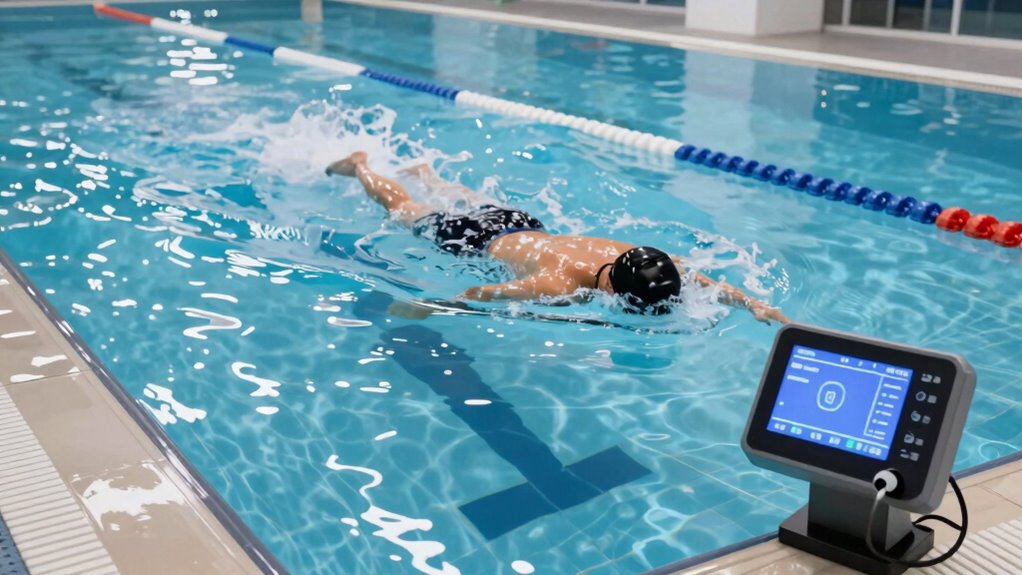
To guarantee your training is accurate, you need to calibrate your pool’s current properly. Start by understanding hydrodynamic resistance, which affects how the water pushes back against you. To measure this, use a reliable current meter or a known reference object, like a swim bench, to assess the actual resistance at different settings. Regular pool maintenance is essential; clean filters and remove debris to ensure consistent flow and prevent fluctuations caused by buildup. Adjust the pool’s current gradually, monitoring the resistance and flow rate closely. Record your settings and measurements to create a baseline. Proper calibration ensures you’re training against a true and consistent current, making your efforts more effective and reliable. Incorporating total‑cost clarity into your calibration process can help you understand the long-term expenses associated with maintaining optimal flow conditions.
Using Your Personal Pace and Effort to Set the Right Current
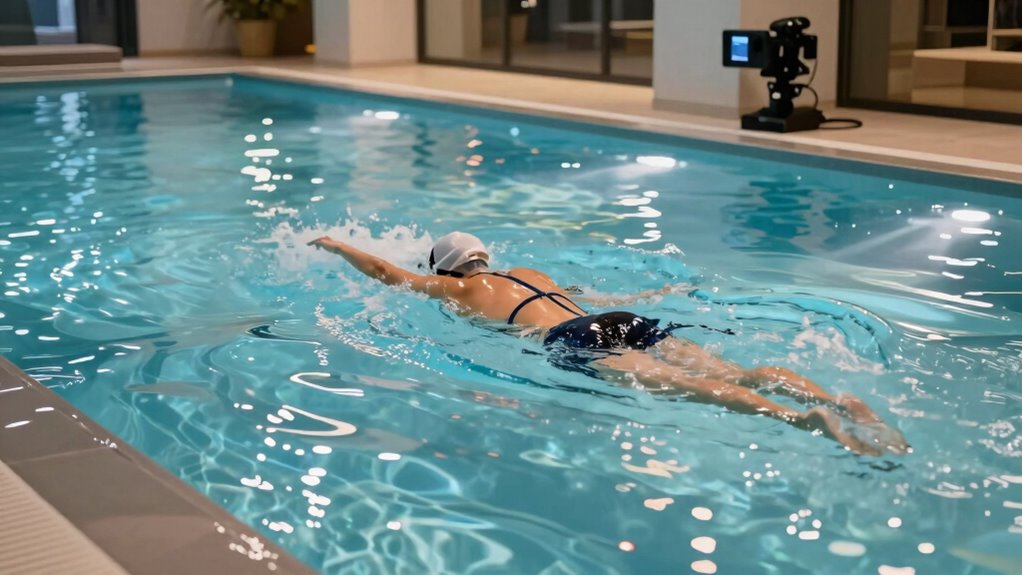
Start by evaluating your running pace to understand your baseline effort. Adjust your effort levels carefully to match your current fitness and training goals. Keep monitoring your performance to guarantee you’re setting the right current for effective, personalized workouts.
Assess Your Running Pace
Understanding your personal running pace and effort level is key to setting the right current in an endless pool. To accurately assess your pace, use simple calibration techniques, such as timing your usual outdoor runs or treadmill sessions. Focus on a pace you can maintain consistently for a few minutes, noting both your speed and perceived effort. This consistent effort helps you establish a reliable baseline for adjusting the current, ensuring it matches your current fitness level. Remember, the goal isn’t to push to full sprint but to find a sustainable rhythm that feels challenging yet manageable. By regularly calibrating your pace, you can fine-tune the current to optimize training without risking overexertion or undertraining. Incorporating accurate pace measurement can also help you stay alert and prepared during your training sessions. Consistent assessment keeps your workouts effective and tailored to your progress, and using a calibrated baseline ensures your efforts are aligned with your true fitness level.
Adjust Effort Levels Properly
When adjusting effort levels in your endless pool, it’s essential to match the current to your personal pace and perceived exertion. This guarantees effort consistency, allowing you to maintain steady training sessions. Start with a moderate current and focus on your pace adjustment; if you find yourself speeding up or slowing down, tweak the current accordingly. Pay attention to how hard you feel you’re working—aim for a level where you’re challenged but not overwhelmed. Avoid making abrupt changes; instead, gradually increase or decrease the current to stay aligned with your effort. By calibrating the current with your natural pace, you’ll create a more effective training environment, helping you build endurance without sacrificing effort consistency. Proper calibration also involves understanding your fitness level, so you can set the optimal current for your specific needs. Additionally, becoming familiar with effort perception can help you better gauge your exertion and make more precise adjustments. Recognizing the importance of effort calibration ensures that your training remains efficient and safe over time. Incorporating consistent effort is key to tracking progress and preventing overtraining, which can hinder your long-term improvements.
Monitor Personal Performance
How can you guarantee you’re maintaining the right effort level during your workouts? The key is monitoring your personal performance closely. Use your perceived exertion and pace to adjust the current dynamically. During interval training, pay attention to how your body responds—if you’re pushing too hard or too easy, tweak the current accordingly. Technique refinement also plays a role; focus on smooth, efficient strokes to conserve energy. To track your progress, consider this performance table:
| Effort Level | Indicators |
|---|---|
| Low | Easy breathing, relaxed form |
| Moderate | Steady breathing, consistent pace |
| High | Heavy breathing, rapid pace |
| Very High | Exhaustion, breakdown in form |
Regularly assess these markers to optimize your training and set the right current. Additionally, understanding the importance of perceived exertion can help you more accurately gauge your effort and make real-time adjustments.
Tips for Monitoring and Adjusting Your Current During Workouts
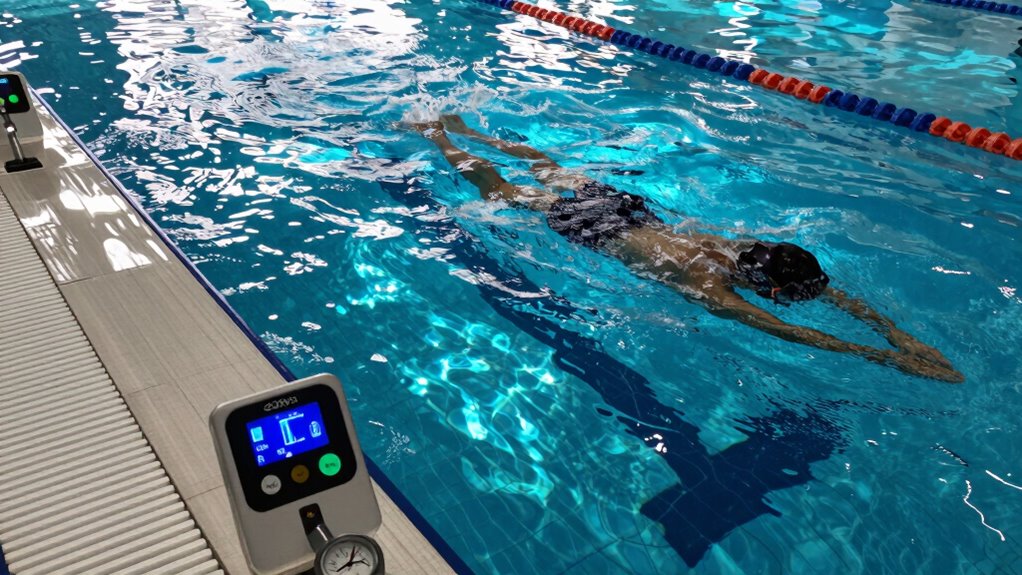
Monitoring and adjusting your current during your workout guarantees you stay within your desired intensity level and maximize your training benefits. To do this effectively, pay attention to hydrodynamic resistance, which directly affects how hard it feels to swim. If the resistance feels too high or too low, tweak the current accordingly. Regular equipment maintenance ensures sensors and controls respond accurately, making adjustments reliable. Use the pool’s display or app to track real-time data, such as speed and resistance levels. If you notice inconsistencies, verify that the equipment is clean and functioning properly. Small adjustments, like increasing or decreasing the current gradually, help you stay on target without overexerting. Consistent monitoring and maintenance ensure your workout remains precise and effective. Proper calibration is essential for maintaining accurate resistance levels and ensuring safe, effective training. Additionally, understanding how lease terms influence the overall cost can help you better plan and optimize your training investments. Regularly reviewing your equipment’s navigation and mapping features can also improve your workout efficiency and safety. Incorporating feedback mechanisms can further enhance your ability to respond to real-time changes during training. Keeping these factors in mind will help you achieve optimal performance and get the most out of your endless pool experience.
Aligning Your Current Settings With Your Swimming Goals
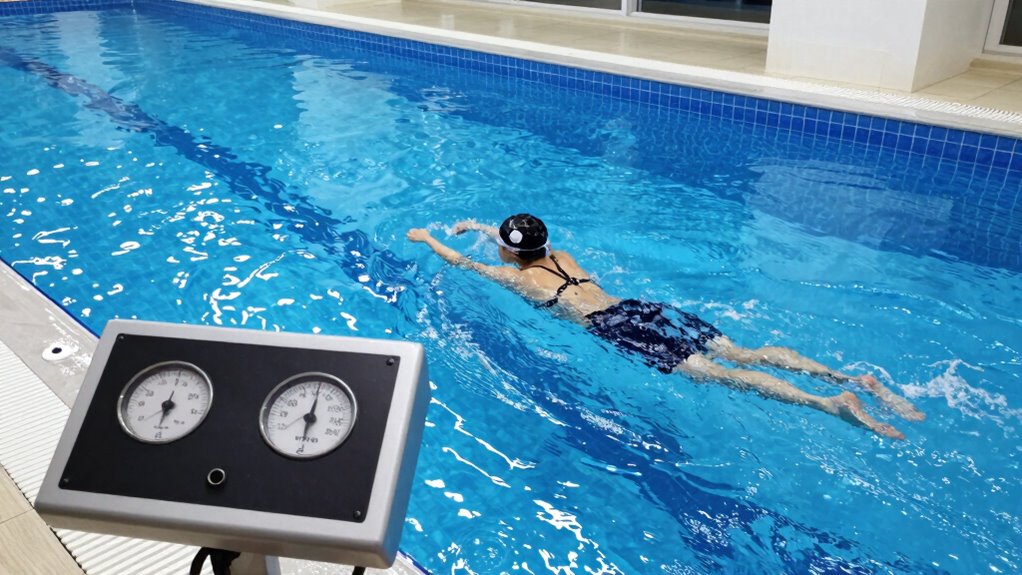
Adjusting your current settings to match your swimming goals guarantees you get the most out of each workout. To do this effectively, consider how water resistance impacts your training and how current variability can influence your pace. If you’re aiming for endurance, set a steady, moderate current that simulates open water conditions. For sprint work, increase water resistance temporarily to build power. Understanding your goals helps you fine-tune the current, avoiding settings that are either too fierce or too gentle. Remember, consistent adjustments based on your progress and desired intensity are key. By aligning your current with your objectives, you optimize water resistance benefits and minimize the effects of current variability, making every session purposeful and more effective in achieving your swimming milestones. Additionally, knowing how the secret ingredient in bread pudding can enhance flavor might inspire you to incorporate different flavors into your training routines for variety. It’s also helpful to monitor the power source of your pool’s system to ensure consistent performance during workouts.
Frequently Asked Questions
Can Multiple Swimmers Use the Pool at Different Speeds Simultaneously?
Yes, multiple swimmers can enjoy multi-user swimming in an Endless Pool at different speeds simultaneously. You can set distinct current levels for each lane or area, allowing for personalized workouts. To guarantee effective training, focus on proper speed synchronization, so each swimmer maintains their desired pace without disrupting others. This setup makes the pool versatile, accommodating various skill levels and training needs all at once.
How Often Should I Recalibrate My Pool’s Current for Optimal Training?
You should recalibrate your pool’s current every few months or if you notice changes in your swim experience. Regular speed calibration ensures consistent resistance, helping you train effectively. Keep up with pool maintenance by checking the equipment and cleaning filters, as these factors influence current accuracy. By staying proactive, you’ll maintain ideal training conditions, prevent discrepancies, and enjoy a smoother swimming experience every time you hit the water.
Does Water Temperature Affect the Pool’s Current and Speed Accuracy?
Water temperature can be a hidden puppeteer, pulling at your pool’s current and speed accuracy. When water’s too warm or cold, it affects current consistency, making readings less reliable. To keep your training on course, maintain a consistent water temperature, ideally around 83°F (28°C). This stability guarantees accurate speed and current calibration, helping you perform at your best without surprises lurking beneath the surface.
Can the Pool’s Current Be Adjusted Remotely or via Smartphone App?
Yes, you can adjust the pool’s current remotely with a smartphone app. Many Endless Pools models come with a dedicated app that lets you control the speed and settings from your device. Simply connect via Wi-Fi or Bluetooth, and you’ll have real-time control at your fingertips. This feature makes it easy to customize your workout without needing to manually adjust controls on the pool itself.
What Safety Precautions Should I Take When Increasing Workout Intensity?
You should play it safe and take precautions when increasing workout intensity. Start with a proper warm-up to prevent injury and get your muscles ready. Listen to your body—if you feel pain or discomfort, back off. Keep hydration levels up and don’t push yourself to the breaking point. Remember, slow and steady wins the race; avoid rushing into high intensity to protect yourself and ensure injury prevention.
Conclusion
Remember, chasing faster speeds in your Endless Pool doesn’t necessarily mean better workouts—understanding how the current truly works is your key. By calibrating your settings and focusing on effort and pace, you take control of your training, turning a myth into mastery. Don’t let the illusion of speed distract you; instead, harness the power of precise calibration—because in swimming, as in life, it’s not how fast you go, but how well you swim that truly matters.