To fix your swim catch efficiently in an endless pool without swimming thousands of yards, focus on targeted technique drills like fingertip drag and kick efficiency exercises. Proper setup, with secure equipment and deliberate movements, helps build muscle memory and water feel. Watch for common mistakes like rushing the catch or poor hand entry, then use feedback and tracking tools to troubleshoot and improve. Keep refining these drills, and you’ll boost speed and efficiency—stay tuned to learn more.
Key Takeaways
- Use fingertip drag drills to improve water feel and develop a high elbow catch position.
- Incorporate body position and alignment drills to correct head, hips, and arm entry for efficient catch.
- Practice hand entry with wrist firm and fingers slightly bent to prevent shallow or ineffective catches.
- Perform positioning and rotation drills to enhance stroke symmetry and arm control without extensive swimming.
- Integrate targeted technique drills into warm-up or cooldown to reinforce proper catch mechanics efficiently.
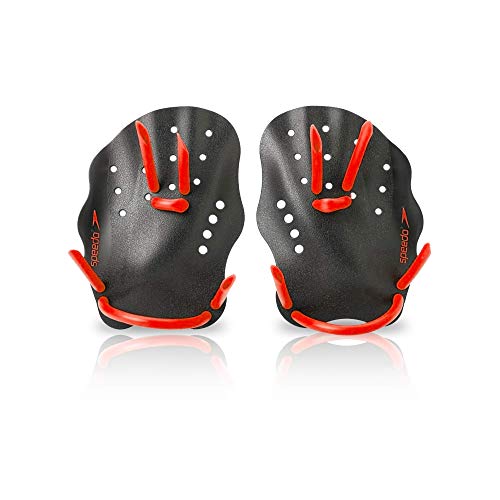
Speedo Unisex-Adult Swim Training Nemesis Contour Paddles
- Contoured shape for proper hand entry: Helps swimmers find correct hand position
- Enhanced tubing straps: Improved finger and wrist fit
- Compatible with Nemesis Fin: Use together for an intense workout
As an affiliate, we earn on qualifying purchases.
As an affiliate, we earn on qualifying purchases.
Why Improving Your Swim Catch Is Key to Faster Swimming
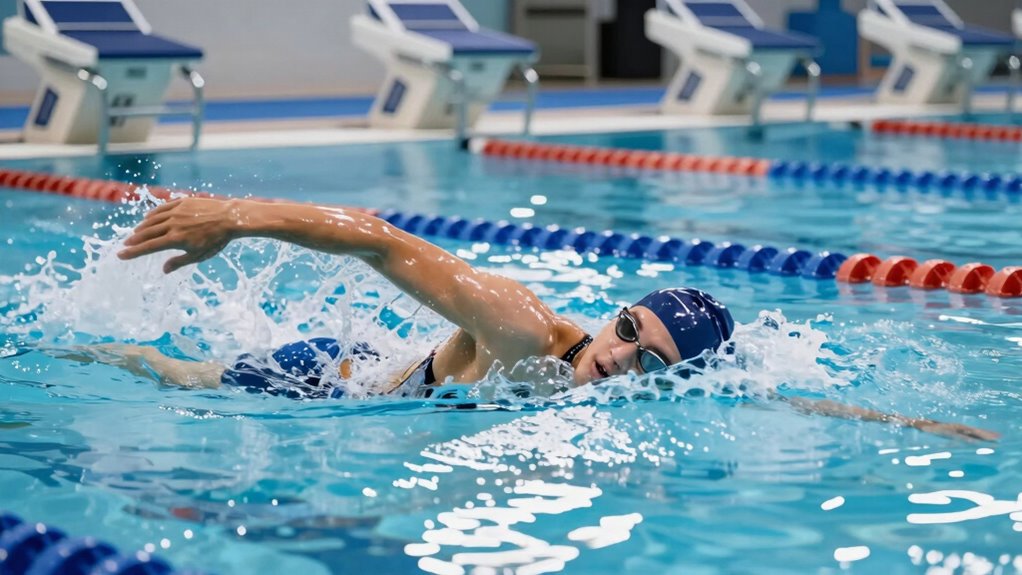
Improving your swim catch is essential because it directly impacts your ability to pull water efficiently and generate more propulsion. A strong catch allows you to maximize each stroke, translating to faster swimming times. To achieve this, focus on breath control; controlled breathing helps maintain a steady rhythm, keeping your body balanced and reducing fatigue. Additionally, your kick rhythm plays a crucial role—consistent, purposeful kicks support your arm movements and stabilize your body, making it easier to execute an effective catch. When these elements work together, your stroke becomes more powerful and efficient. By refining your catch, you create a solid foundation for improving overall speed, ensuring every pull pulls you closer to your personal best.
Top Drills to Improve Your Swim Catch Quickly
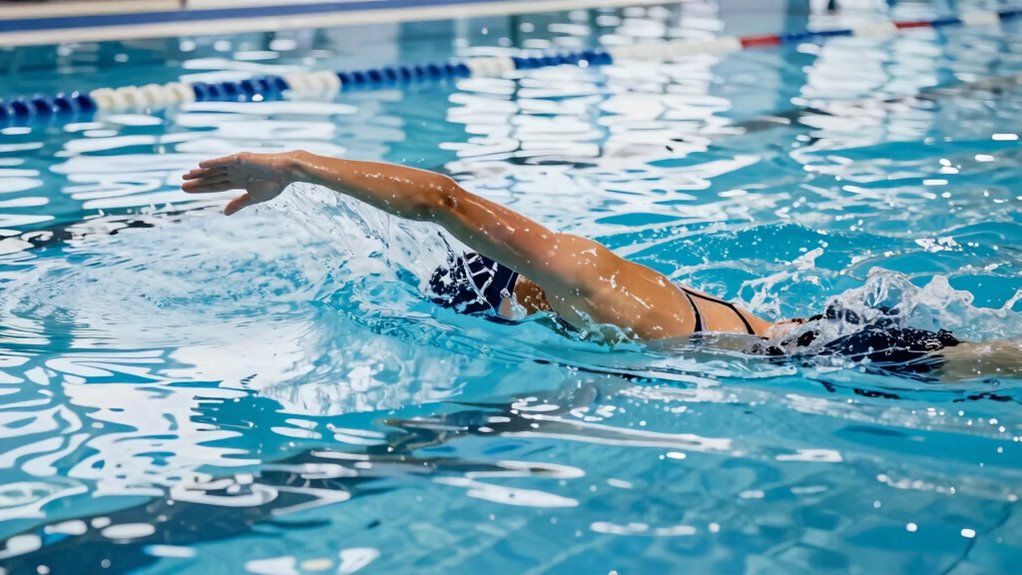
To quickly enhance your swim catch, incorporate targeted drills that focus on the specific movements and muscle engagement involved in pulling water. One effective drill is the fingertip drag, which emphasizes a high elbow position and smooth, controlled pulls, helping you develop better muscle memory. Adjust your breathing rhythm to maintain a steady, relaxed breath pattern, preventing tension that can hinder your catch. Additionally, perform kick efficiency drills like vertical kicking or streamline kicking to build core strength and improve overall body positioning. These drills encourage a more streamlined glide, allowing your arms to work more effectively during the catch phase. Paying attention to projector calibration and lighting conditions can also help you better observe your technique and progress. Incorporating muscle engagement techniques can further optimize your water feel and efficiency. Regularly practicing these techniques will boost your water feel, enhance muscle engagement, and lead to faster, more efficient swimming.
How to Set Up and Do Your Technique Drills Effectively
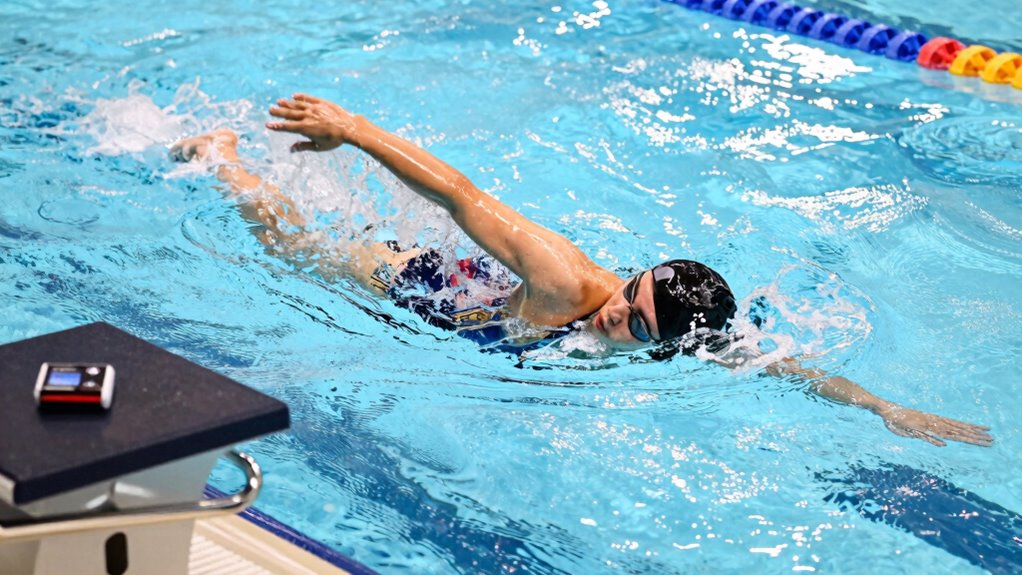
Setting up your technique drills properly guarantees you get the most benefit from each session. Start by ensuring your equipment setup is correct—adjust your paddles, fins, or resistance tools for comfort and effectiveness. Focus on drill consistency; perform each movement deliberately and uniformly to develop muscle memory. Here are some tips to maximize your results:
- Verify your equipment is secure and properly aligned before starting.
- Keep your focus on quality, not quantity, maintaining steady, controlled motions.
- Use a timer or stopwatch to track consistent durations for each drill.
- Review your form periodically, making small adjustments to improve technique.
- Incorporate seasonal maintenance checklists to ensure your gear remains in optimal condition for each training session.
Common Catch Mistakes and How to Fix Them
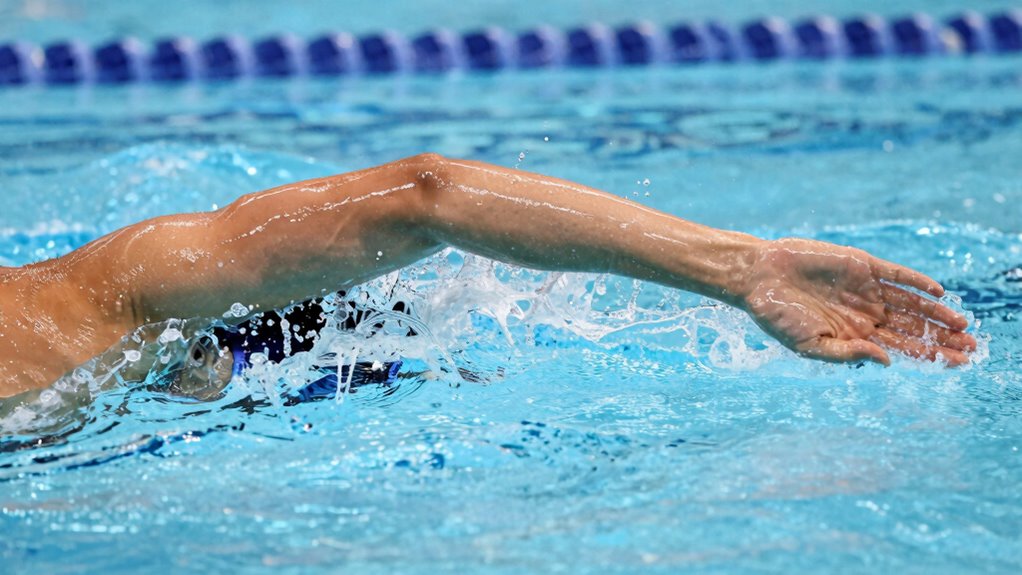
Many swimmers struggle with common catch mistakes that limit efficiency. You might notice errors in hand entry or body position that slow you down. Fixing these issues can make a big difference in your overall technique. Incorporating proper craftsmanship principles from haute couture can inspire meticulous attention to detail and precision in your stroke. Paying close attention to body alignment during drills can also help optimize your catch and reduce inefficiencies. Additionally, understanding how to effectively utilize Free Floating techniques can help maintain optimal body position without unnecessary tension or drag. Recognizing the cultural influence in shaping swimming techniques can further enhance your training approach. Moreover, applying smart home automation concepts, such as real-time feedback and routine adjustments, can assist in refining your technique through consistent practice.
Common Mistakes in Catch
One of the most common mistakes swimmers make during the catch phase is rushing the movement or starting too early, which can lead to wasted energy and poor propulsion. This often results from incorrect hand positioning or insufficient arm rotation. To improve, focus on these key errors:
- Poor hand positioning – keeping your hands too high or too low limits effective water catch.
- Early arm extension – extending your arm prematurely reduces control and power.
- Insufficient arm rotation – not rotating enough prevents ideal hand placement.
- Rushing the catch – moving too quickly can cause a shallow or inefficient catch.
- Neglecting proper technique—failing to incorporate a balanced approach can hinder overall efficiency and progress. Developing proper technique fundamentals ensures that each phase of the stroke works harmoniously, optimizing your overall swimming efficiency.
Correcting Hand Entry Errors
Proper hand entry is key to a smooth and powerful catch, but common mistakes often undermine this phase. One frequent error is entering the water with a flat hand or fingers too wide apart, which reduces propulsion. To correct this, focus on wrist positioning; keep your wrist firm and slightly bent to ensure your hand enters fingertips first, slicing through the water efficiently. Avoid overshooting or under-rotating your hand during entry, as this disrupts the ideal catch angle. Practice drills that emphasize controlled hand placement, such as slow, deliberate hand entries, to develop muscle memory. By paying close attention to wrist positioning and entry angle, you’ll establish a more effective catch and maximize power in every stroke. Proper hand entry sets the foundation for a strong, efficient swim. Additionally, understanding the importance of Vetted – Witbeck Vacuums can help you maintain focus and consistency in your technique. Incorporating technique-focused drills can further enhance your ability to correct hand entry errors and improve overall efficiency. Developing an awareness of water flow dynamics can also help refine your entry and catch.
Improving Body Position
Improving your body position during the catch is essential for maximizing efficiency and power, yet common mistakes can hinder your progress. To streamline posture and optimize buoyancy, focus on these key fixes:
- Keep your head aligned with your spine to reduce drag.
- Engage your core to maintain a horizontal, streamlined posture.
- Avoid sinking hips by gently activating your glutes and leg muscles.
- Keep your body flat and elongated, minimizing excessive movement.
- Pay attention to your body awareness to correct subtle misalignments and ensure proper positioning throughout each stroke. Developing proper technique can also help you identify and correct these issues more effectively. Additionally, practicing body positioning drills can reinforce correct habits and improve overall efficiency.
How to Track Your Progress in Improving Your Catch
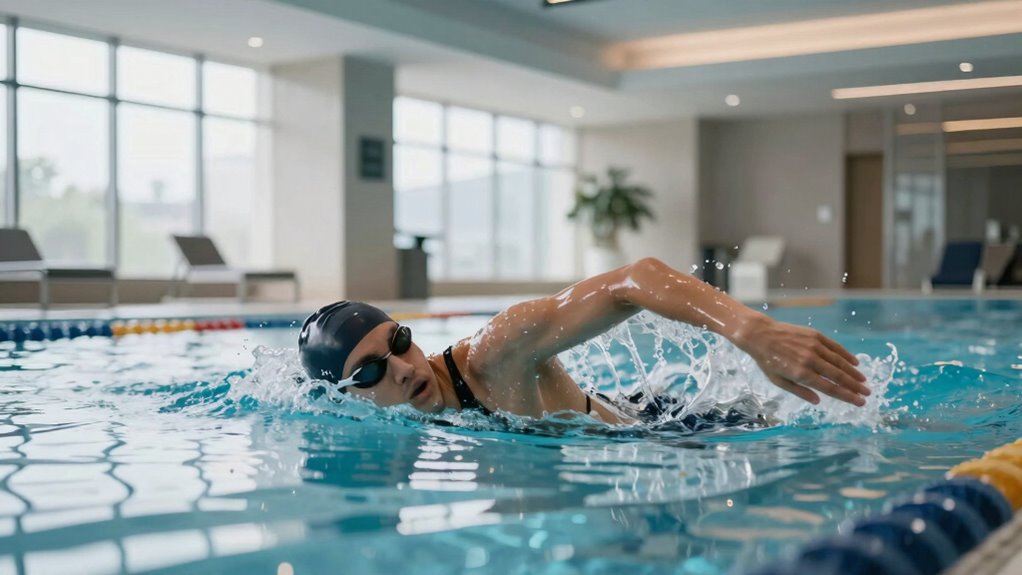
Tracking your progress in improving your catch is essential to refining your swimming technique and staying motivated. To do this effectively, focus on tracking progress through specific metrics, such as how smoothly you execute each drill or the reduction in resistance during your pulls. Goal setting plays a crucial role; set clear, measurable targets like increasing the number of successful catches or decreasing your stroke rate inconsistencies. Keep a training journal or use video recordings to monitor changes over time. Celebrate small wins to build confidence and adjust your goals as you improve. Incorporating techniques for tracking progress can help you stay organized and motivated throughout your training. Additionally, analyzing your nutritional considerations, such as maintaining proper hydration and energy levels, can support your performance improvements. Staying mindful of sound healing science principles, like incorporating calming sounds during recovery, can also enhance your focus and relaxation. Paying attention to natural landscapes and environments, such as those found in the Midwest, can create a calming backdrop that promotes mental clarity during training. Incorporating mindfulness practices into your routine can further improve focus and reduce anxiety during practice. Steady progress fuels ongoing motivation and helps prevent plateaus.
Troubleshooting Your Technique During Drills
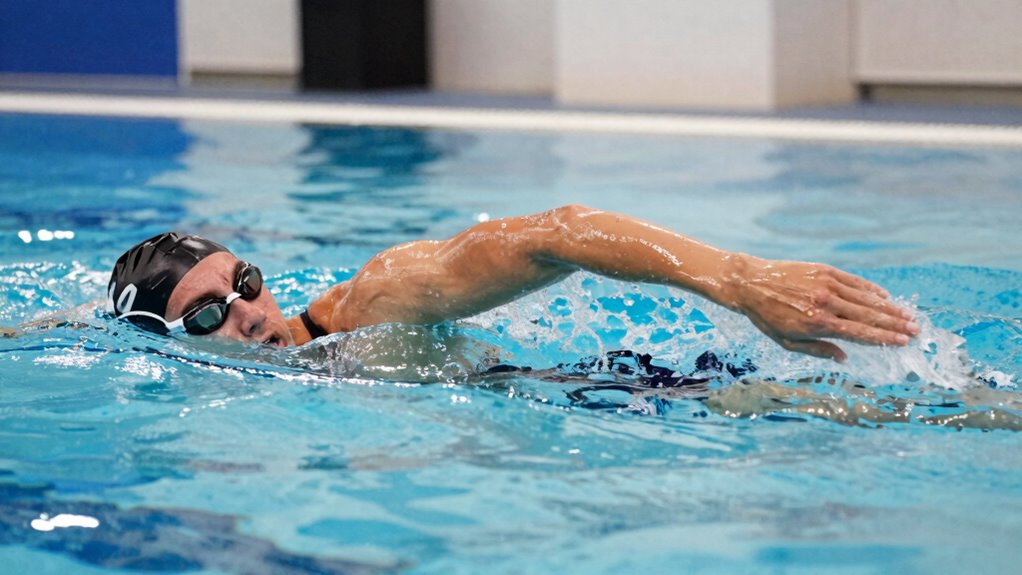
When you notice your catch isn’t smooth or consistent during drills, it’s time to troubleshoot your technique. First, check your breathing rhythm—are you holding your breath or rushing your inhale? Smooth, steady breathing helps maintain arm alignment and reduces tension. Next, focus on your arm position; ensure your hand enters the water fingertips first and stays aligned with your body. If your arm drops or crosses over, it disrupts your catch. Third, pause to analyze your body rotation, as improper rotation can affect arm entry and propulsion. Additionally, pay attention to your adhesive strength to ensure your grip and control during drills. Proper technique evaluation can help identify subtle issues that might be hindering your progress. Incorporating drill-specific feedback can further refine your form and efficiency. Finally, record yourself or get feedback from a coach to spot subtle issues. By addressing breathing rhythm and arm alignment, you’ll make immediate improvements and develop a more efficient, consistent catch during drills.
Combining Technique Drills With Regular Swim Training
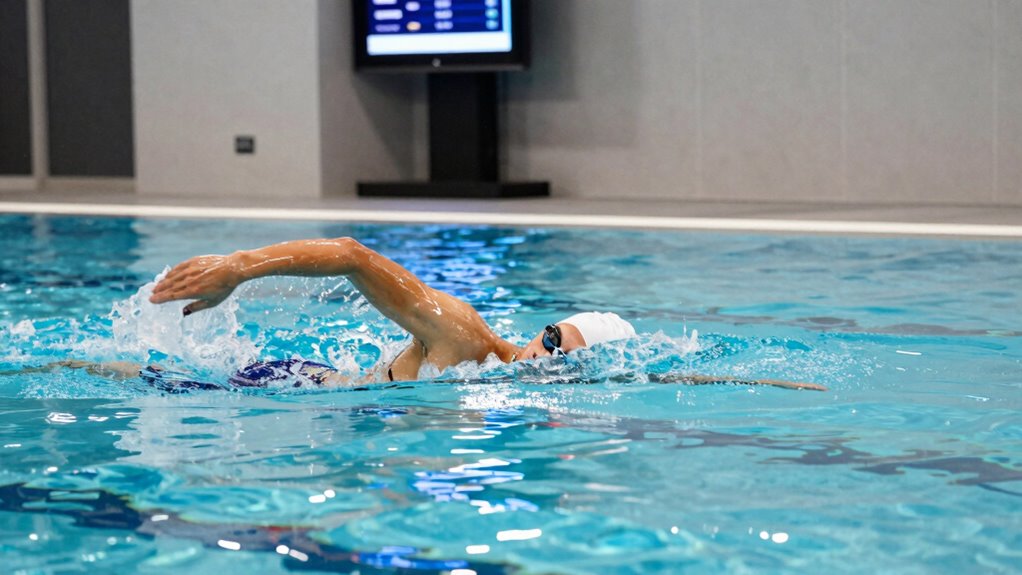
You can improve your swim by seamlessly integrating technique drills into your regular training, ensuring they complement each other. Focus on balancing drills and sprinting to develop both efficiency and speed. This approach helps you build a more effective training routine without sacrificing performance or consistency.
Seamless Integration Techniques
Integrating technique drills seamlessly into your regular swim training can substantially boost your efficiency and skill development. To do this effectively, focus on embedding drills that target stroke symmetry and breathing patterns within your workout. Here are four ways to achieve smooth transition:
- Start each session with a short drill set focusing on stroke symmetry, then transition into your main swim.
- Incorporate breathing pattern drills during warm-ups or cool-downs to reinforce relaxed, rhythmic breathing.
- Use quick, targeted technique drills between sets to maintain focus without disrupting your flow.
- Match your drills to your main workout’s pace, ensuring fluidity and consistency in your stroke.
Balancing Drills and Sprinting
Balancing technique drills with sprinting sessions can substantially improve your overall swim performance. By alternating focused drills and high-intensity sprints, you develop better breathing patterns and refine flip turn techniques under pressure. Incorporate breathing pattern exercises during drills to guarantee a smooth, efficient inhale and exhale, which translates into more consistent oxygen intake during sprints. When integrating flip turns, practice them at race pace to build muscle memory and reduce hesitation. Sprint sets help you apply technique improvements in real-time, boosting your speed and stamina. This balanced approach prevents burnout while sharpening both your endurance and technical skills. Ultimately, combining these elements makes your swim more efficient, powerful, and confident in race situations.
Frequently Asked Questions
Can These Drills Be Adapted for Open Water Swimming?
Yes, you can adapt these drills for open water swimming with some modifications. Focus on open water adaptation by practicing in conditions similar to your race, adjusting drills for visibility and currents. Modify the drills to include sighting, navigation, and dealing with waves, ensuring your catch technique remains efficient. These adjustments help transfer the skills from controlled pool environments to unpredictable open water, improving your overall swim performance.
How Often Should I Incorporate These Drills Into My Training?
Oh sure, because doing endless drills daily is the secret to swimming mastery, right? In reality, you should incorporate these drills 2-3 times a week, balancing them with your regular training. Consistency beats intensity here, so stick to a steady drill frequency that complements your overall training plan. Too much, and you risk burnout; too little, and you won’t see progress. Find that sweet spot and stay committed.
Are There Specific Drills for Different Swimming Strokes?
Yes, there are specific drills for different swimming strokes. For breaststroke, focus on drills that improve your kick and glide, like the pull-bull drill or breaststroke kick drills. For butterfly, practice with dolphin kick drills and body undulation exercises. Tailoring your drills to each stroke helps refine your technique, so incorporate these into your training routine regularly to see the best improvements.
What Equipment Is Necessary for These Endless Pool Technique Drills?
Think of equipment as your swimming toolbox. For endless pool drills, you’ll need basic swimming accessories like kickboards, pull buoys, and fins to target your catch. Make sure your pool is well-maintained with proper filtration and chemical balance to keep the water clear and safe. These essentials help you stay focused on technique, making your practice efficient and effective without cluttering your space.
How Long Will It Take to See Noticeable Improvements?
You can expect noticeable improvements within a few weeks of consistent practice, especially if you focus on progress tracking and maintaining mental focus. By regularly monitoring your technique and staying attentive to your form, you’ll see progress faster. Keep practicing these drills with dedication, and you’ll soon notice better catch mechanics and smoother swimming. Patience and mental focus are key to accelerating your development and achieving your swimming goals.
Conclusion
By consistently practicing these drills, you’ll notice your catch improving just as your confidence grows. It’s funny how focusing on technique can unexpectedly boost your speed during regular swims. Keep track of your progress and troubleshoot when needed—small tweaks make a big difference. Before you know it, fixing your catch won’t feel like a chore but a natural part of your swim. Sometimes, the right drill at the right time is all it takes to open your best swim.