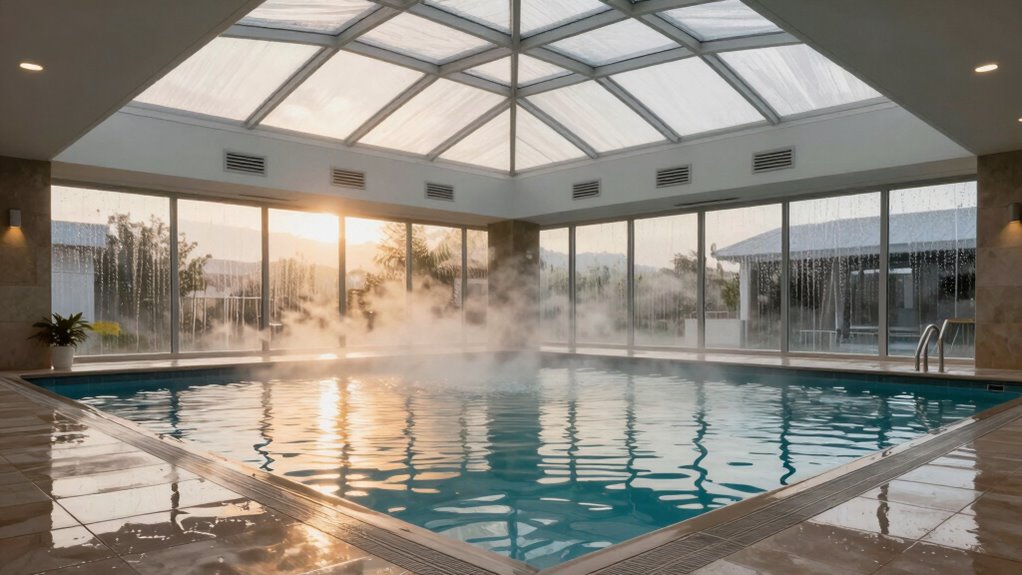
To stop window rain from entering your indoor endless pool, make sure your windows are properly sealed with weatherstripping and waterproof caulk. Use durable, weather-resistant coverings like laminated glass or rainproof seals, and design them to block rain but still promote airflow. Installing adjustable shutters or blinds that close tightly during storms can also help. Keep in mind that effective ventilation and moisture control are essential—continue with this guide to learn more about creating a safe, dry environment.
Key Takeaways
- Seal windows with weather-resistant caulking and weatherstripping to prevent rain entry during ventilation.
- Install rainproof seals and laminated or rainproof glass to enhance water barriers around windows.
- Use adjustable shutters or blinds to block rain while maintaining ventilation during storms.
- Ensure ventilation systems have sealed vents and are positioned away from rain-prone areas to avoid water intrusion.
- Regularly inspect and maintain seals, weatherstripping, and ventilation components to ensure rainproof performance.
How Can You Prevent Window Rain From Entering Your Indoor Pool?

To prevent window rain from entering your indoor pool, start by ensuring your windows are properly sealed and equipped with high-quality, weather-resistant caulking. Installing reliable rainproof seals around window frames creates a tight barrier against water infiltration. Additionally, consider using window coverings such as waterproof blinds or heavy-duty shades that you can quickly deploy during storms. These coverings act as an extra layer of protection, preventing rain from splashing inside. Regularly inspect and maintain the seals and coverings to keep them effective. Proper ventilation also helps prevent moisture buildup and mold growth, ensuring a dry environment for your pool. Implementing weatherproofing techniques can further enhance your window’s resistance to rain penetration. Using appropriate drainage strategies around your windows can help redirect water away from the structure, reducing the likelihood of leaks. Employing proper installation practices during construction or repairs ensures long-term performance against weather elements. Properly sealed windows combined with effective water management measures help maintain a dry indoor environment, preventing water damage and mold issues. When properly sealed and covered, your indoor pool remains dry and protected from unexpected rain, reducing the risk of water damage and maintaining a comfortable environment for your swim.
Why Is Proper Ventilation Critical for Indoor Endless Pools?

Proper ventilation keeps the air you breathe clean and fresh, reducing the buildup of harmful fumes and bacteria around your pool. It also helps control moisture levels, preventing mold and structural damage over time. Without good airflow, your indoor endless pool can cause more problems than you might expect. Ensuring adequate air quality management is essential for maintaining a healthy environment and protecting your investment. Implementing effective ventilation strategies can also mitigate issues related to humidity control, which is crucial for preserving both the pool structure and indoor air quality. Incorporating natural ventilation techniques can enhance air circulation and reduce energy consumption. Additionally, leveraging smart ventilation systems that utilize role of AI in safety systems can contribute to more effective and automated ventilation solutions for indoor pools.
Air Quality Maintenance
Have you ever wondered why maintaining good air quality is essential for indoor endless pools? Proper ventilation guarantees fresh air circulates, removing pollutants and preventing odors. When ventilation efficiency is high, you reduce airborne contaminants like chlorine fumes, bacteria, and humidity that can affect your health and comfort. Imagine this:
| Fresh Air Intake | Circulating Air | Exhaust Outlet |
|---|---|---|
| Clean, oxygen-rich air enters | Air mixes, carrying pollutants away | Contaminated air exits, keeping space fresh |
| Ensures ideal air quality | Maintains a healthy environment | Prevents buildup of harmful gases |
This process keeps your pool area safe, clean, and enjoyable, emphasizing the importance of effective ventilation systems for air quality maintenance. Proper connected equipment can help optimize this airflow to ensure your indoor pool remains a healthy and relaxing space. Additionally, ventilation standards are crucial in designing systems that effectively manage humidity and chemical vapors, ensuring a safe environment for all users. Investing in proper air exchange rates is vital to prevent moisture buildup and maintain comfort. Moreover, implementing smart ventilation controls can enhance system efficiency and responsiveness to changing conditions, further safeguarding indoor air quality.
Preventing Moisture Damage
Maintaining good air quality isn’t just about comfort—it also plays a vital role in preventing moisture-related issues around your indoor endless pool. Proper ventilation helps control humidity levels, reducing the risk of mold, mildew, and structural damage caused by excess moisture. When indoor air quality is poor, moisture can accumulate, leading to costly repairs and health concerns. Ensuring your ventilation system is efficient promotes energy efficiency, as it minimizes unnecessary heating or cooling losses while maintaining ideal humidity. By carefully managing airflow, you prevent moisture buildup and protect your investment. Regularly ventilate and monitor humidity levels to keep your indoor pool area safe, dry, and healthy, avoiding damage and ensuring a more energy-efficient environment. Effective airflow management is crucial for sustaining the longevity and safety of your indoor pool space, as it directly influences moisture control and overall air quality. Properly designed ventilation systems also support indoor air quality standards, helping create a healthier environment for users. Additionally, integrating smart ventilation solutions can optimize airflow based on real-time humidity and temperature data, further enhancing moisture management. Proper ventilation systems can also reduce energy costs by preventing overuse of heating and cooling equipment, making your indoor pool more sustainable in the long run.
What Are the Main Challenges of Humidity and Rain Inside?
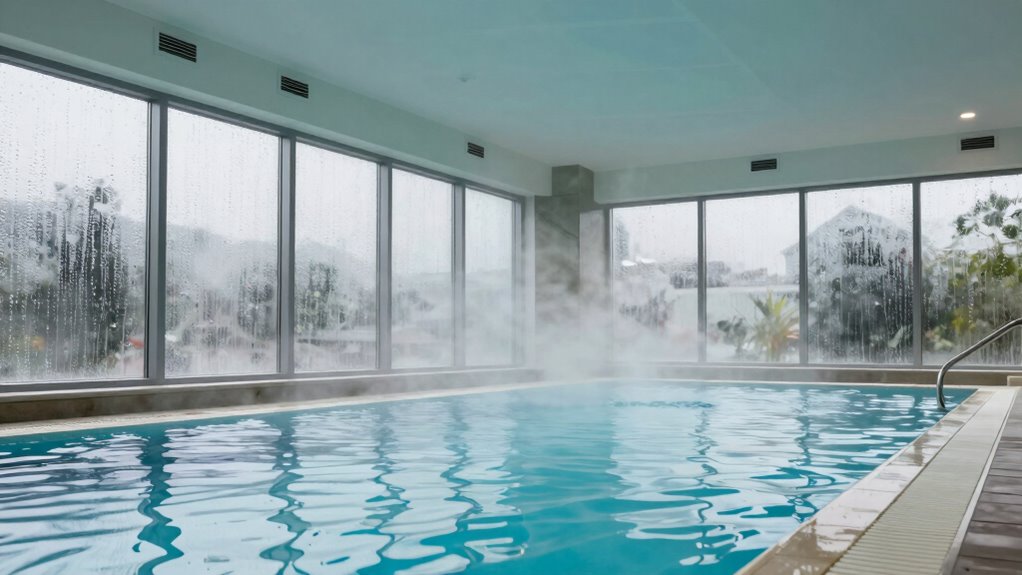
Humidity and rain inside an indoor endless pool can pose significant challenges because excess moisture creates a damp environment that promotes mold, mildew, and corrosion. Humidity buildup occurs quickly, leading to condensation issues on walls, ceilings, and equipment. This can damage surfaces and compromise your pool’s structure. Managing these problems requires effective ventilation and dehumidification strategies. To understand better, consider this: proper ventilation is vital for controlling humidity levels and maintaining a safe, comfortable environment inside your pool area. Adequate air circulation helps prevent moisture from settling and reduces the risk of long-term damage. Additionally, implementing humidity control methods can further protect your space from the effects of persistent dampness.
How Should You Design Windows and Coverings to Block Rain?
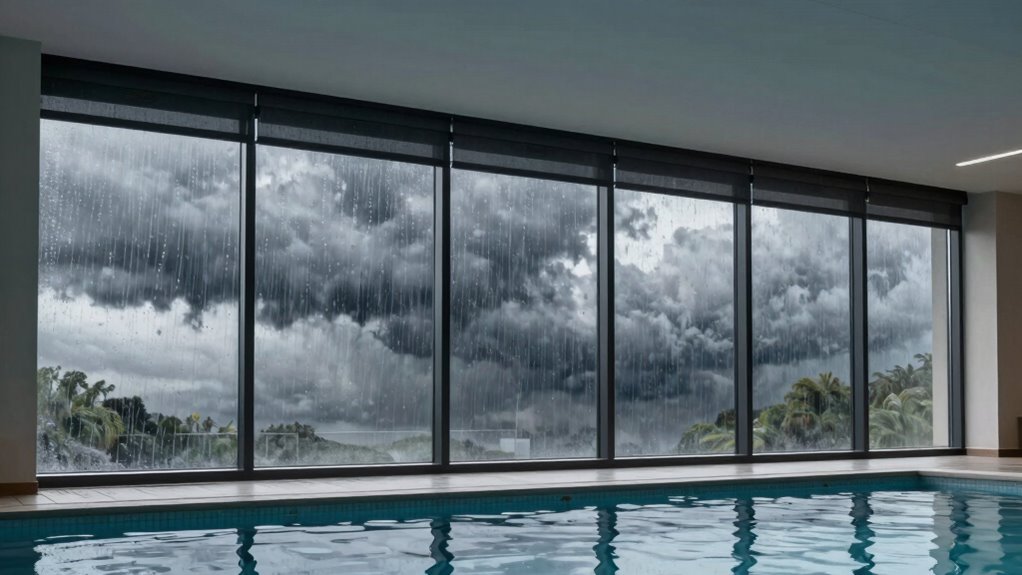
Properly designing windows and coverings is key to preventing rain from entering your indoor endless pool area. To achieve this, consider effective rain barriers and window coverings that block moisture while allowing ventilation. Use durable, weather-resistant materials to enhance protection. Additionally, incorporating UV protection into your window treatments can help reduce heat and glare, improving overall comfort. Some essential strategies include: – Installing window coverings that can be sealed tightly during storms – Using adjustable shutters or blinds to control airflow and rain entry – Incorporating rainproof glass or laminated glass for better barriers – Ensuring windows are properly sealed with weatherstripping
Which Ventilation Systems Are Best for Indoor Pools?
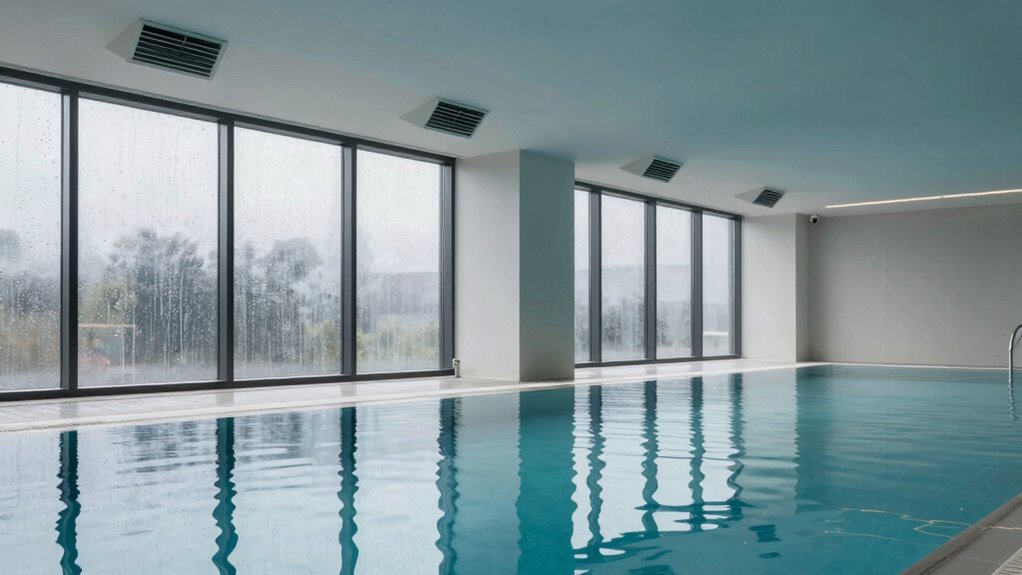
Choosing the right ventilation system is essential to keep your indoor pool area comfortable and safe. Proper options help control humidity and remove odors, ensuring good air quality. Effective moisture control strategies are key to preventing damage and maintaining a healthy environment.
Proper Ventilation Options
Selecting the right ventilation system is essential for maintaining a healthy and comfortable indoor pool environment. Proper options improve air quality, control humidity, and prevent mold growth. Choose systems that focus on effective air filtration to remove contaminants and maintain fresh air. Make certain your setup includes good window insulation to minimize heat loss and prevent drafts that could disrupt ventilation efficiency. Consider these options:
- Dedicated exhaust fans with high-quality filters
- Heat recovery ventilators (HRVs) to conserve energy
- Mechanical ventilation systems with adjustable controls
- Dehumidification units integrated with ventilation
These choices help maintain ideal air quality while preventing window rain from entering during ventilation cycles. Selecting the right system ensures your indoor pool stays comfortable, safe, and energy-efficient without compromising window insulation.
Moisture Control Strategies
To effectively control moisture in your indoor pool environment, it’s crucial to implement ventilation systems that remove humidity quickly and efficiently. Dehumidification techniques like dedicated dehumidifiers are highly effective, especially when paired with humidity sensors that monitor moisture levels in real time. These sensors provide precise data, allowing you to adjust dehumidifier settings proactively and prevent excess humidity buildup. Proper air circulation also helps distribute dry air evenly throughout the space, reducing condensation and mold growth. Regular maintenance of dehumidifiers guarantees peak performance. Combining these strategies creates a balanced environment, minimizes humidity-related issues, and maintains comfortable, safe conditions for pool users. By actively managing moisture with the right systems, you protect your indoor pool and extend its lifespan.
How to Maintain Proper Airflow and Control Moisture?

Maintaining proper airflow and controlling moisture are essential for keeping your indoor endless pool in top condition. To do this effectively, focus on enhancing airflow patterns to ensure fresh air circulates evenly and reduces humidity buildup. Regular ventilation frequency prevents stale air and excess moisture, minimizing mold and mildew risks.
Proper airflow and moisture control keep your indoor endless pool in optimal condition.
Consider these key actions:
- Adjust ventilation settings to match pool usage times
- Use exhaust fans to remove humid air quickly
- Keep air vents unobstructed for consistent airflow
- Monitor humidity levels with a hygrometer to maintain ideal moisture balance
Troubleshooting Common Ventilation Problems That Let Rain In?

Rain infiltration through ventilation issues can cause significant damage and disrupt your indoor pool environment. If you notice window condensation or water leaking around vents, it’s a sign your ventilation system isn’t sealing properly against outdoor exposure. Check for damaged or poorly sealed windows and vents, which can allow rain to seep in during storms. Ensure your ventilation flaps or louvers close tightly when needed, especially during heavy rain or high humidity. Regularly inspect and maintain seals, weather stripping, and gaskets around windows and vents to prevent leaks. Poor ventilation can also cause excess moisture buildup, increasing the risk of mold and damage. Addressing these issues promptly keeps rain out, protects your space, and maintains a safe, comfortable indoor pool environment.
Tips for a Safe, Comfortable Indoor Pool Environment?

Addressing ventilation issues promptly helps create a safer and more comfortable indoor pool environment. Proper lighting and efficient water filtration are key. Good pool lighting ensures visibility and safety, while well-designed water filtration maintains water clarity and hygiene. To enhance safety and comfort, consider these tips:
Prompt ventilation and quality lighting create a safer, more enjoyable indoor pool experience.
- Install adjustable pool lighting for ideal visibility
- Regularly maintain and upgrade water filtration systems
- Use proper ventilation to control humidity and prevent mold
- Monitor air quality and humidity levels consistently
Frequently Asked Questions
How Can I Detect Hidden Leaks Causing Window Rain Intrusion?
You can detect hidden leaks causing window rain intrusion by using moisture sensors around the affected area. These sensors alert you to increased moisture levels that indicate leaks. Conduct regular leak detection inspections, paying close attention to window frames and seals. Additionally, observe for unexplained water stains or mold growth. Combining moisture sensors with visual inspections helps you pinpoint hidden leaks early, preventing further damage and maintaining a dry, healthy indoor environment.
Are There Specific Materials That Prevent Rain Entry Better?
Think of rainproof materials as your first line of defense against water intrusion. You should look for high-quality waterproof barriers like specialized sealants, rubberized coatings, or weather-resistant window films. These materials act like a shield, preventing rain from slipping through. Using durable, tightly sealed rainproof options guarantees your space stays dry, even during heavy downpours. Invest in the right waterproof barriers, and you’ll keep the rain outside where it belongs.
Can Natural Ventilation Be Effective in Rainy Conditions?
Yes, natural ventilation can be effective in rainy conditions if you use rainproof ventilation strategies. You should install vents with dampers or rain guards that allow natural airflow while preventing rain from entering. Proper placement of vents, such as higher on walls or in sheltered areas, helps maximize airflow without letting rain inside. This setup guarantees good indoor air quality while keeping your space dry during wet weather.
What Are the Long-Term Effects of Moisture on Indoor Pool Structures?
Moisture damage can considerably weaken your indoor pool structure over time, with studies showing up to 30% of indoor water damage caused by persistent moisture. If you don’t control humidity, mold, corrosion, and rot can compromise structural integrity. You need proper ventilation and maintenance to prevent long-term issues, ensuring your pool remains safe and durable for years to come. Ignoring moisture risks costly repairs and safety hazards down the line.
How Often Should Ventilation Systems Be Inspected for Rain Protection?
You should inspect your ventilation system at least twice a year, especially in humid climates, to make certain rain protection is effective. Regular ventilation maintenance helps prevent moisture buildup and avoids water intrusion during storms. After heavy rains or storms, check for any signs of leaks or blockage. Staying proactive with inspections guarantees your indoor pool remains dry and well-ventilated, reducing long-term damage caused by excess moisture.
Conclusion
By following these ventilation rules, you’ll create an indoor pool space that stays dry and inviting—like a fortress against rain and humidity. Think of your ventilation system as the lungs of your pool area, breathing fresh air while keeping moisture at bay. With proper design and maintenance, you’ll enjoy a safe, comfortable oasis that feels like a private paradise, no matter what the weather throws at you outside.