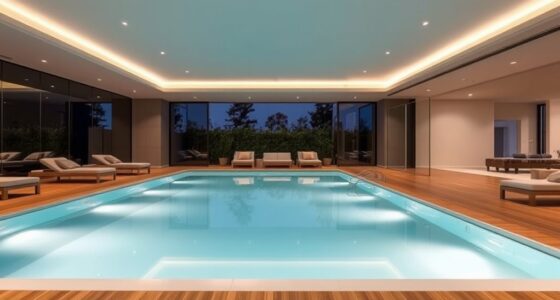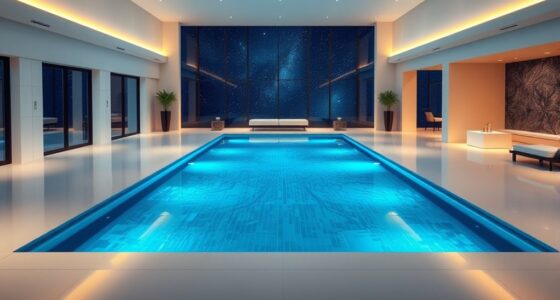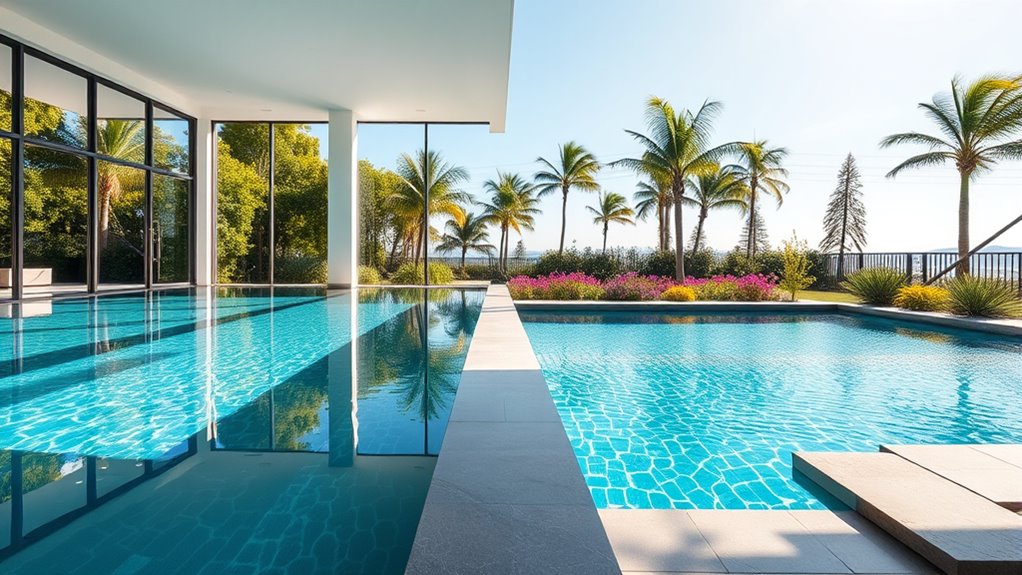
Choosing between an indoor and outdoor endless pool depends on your climate, lifestyle, and maintenance preferences. Indoor pools give you year-round access but require more energy for heating and humidity control, leading to higher ongoing costs. Outdoor pools are more energy-efficient but need regular upkeep due to debris and weather exposure. Consider your budget and how much effort you’re willing to invest, as each option offers distinct benefits and challenges—if you want to explore more, keep going.
Key Takeaways
- Indoor pools provide year-round use but require significant investment in ventilation and humidity control systems.
- Outdoor pools benefit from natural sunlight and lower initial costs but need weather protection and ongoing maintenance.
- Consider energy efficiency: indoor pools consume more energy for climate control, while outdoor pools often have lower energy costs.
- Maintenance for indoor pools involves managing humidity, mold, and chemical balancing; outdoor pools face debris and weather-related issues.
- Match your lifestyle, budget, and climate to choose between a controlled indoor environment and a natural outdoor setting.
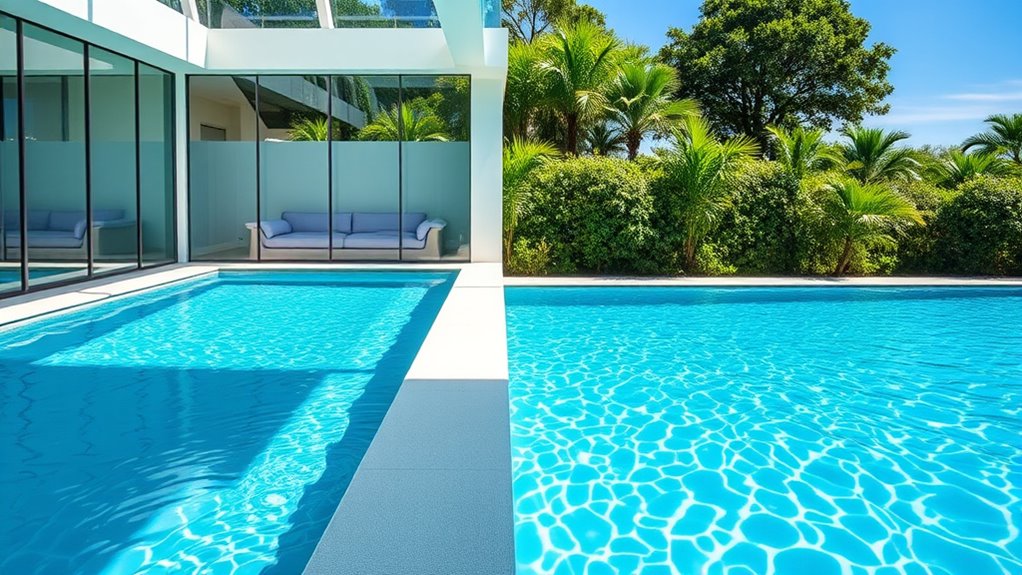
When choosing between an indoor and outdoor pool, your decision often depends on your priorities and lifestyle. If you value year-round swimming regardless of weather, an indoor pool might be the better choice. Conversely, if you enjoy swimming in a natural setting and prefer a more open environment, an outdoor pool could suit you better. One key factor to consider is energy efficiency. Indoor pools tend to require more energy because maintaining a consistent indoor temperature and humidity level demands powerful HVAC systems and dehumidifiers. This added energy use can result in higher utility bills over time. On the other hand, outdoor pools are naturally cooled by the environment, often making them more energy-efficient in terms of heating, especially in warmer climates. However, you should also think about how much sunlight and weather exposure can impact your overall energy costs—shade, wind, and temperature swings can influence heating needs and chemical balance adjustments.
Maintenance costs are another vital aspect to weigh. Indoor pools generally have higher maintenance costs because the enclosed environment can lead to increased humidity and mold issues if not properly managed. Regular cleaning, ventilation system upkeep, and humidity control are necessary to prevent damage and ensure comfort. Additionally, indoor pools often require more frequent chemical balancing, which can add to ongoing expenses. Outdoor pools, while exposed to dirt, debris, and weather elements, usually have simpler maintenance routines. However, they may require more frequent cleaning due to leaves, insects, and dirt, especially if you live in a heavily wooded or windy area. The exposure to sunlight can also cause faster chemical degradation, requiring more frequent chemical adjustments to keep the water safe and clear.
Your choice also impacts your long-term costs and effort. Indoor pools may demand a larger initial investment due to the need for a specialized building, ventilation, and humidity control systems. Outdoor pools often have lower upfront costs but may involve more ongoing maintenance and chemical treatments. Think about how much time and money you’re willing to invest in upkeep. If you prefer a low-maintenance setup, an outdoor pool might be more practical. But if you’re prepared for added costs and want a controlled environment for year-round use, an indoor pool could be worth the investment. Ultimately, understanding how energy efficiency and maintenance costs align with your budget and lifestyle will help you make the most satisfying and cost-effective decision.
Frequently Asked Questions
How Does Climate Affect Indoor and Outdoor Pool Longevity?
Climate impact plays a significant role in your pool’s longevity. Outdoor pools face harsher weather conditions, which can accelerate wear and tear, reducing durability factors. Extreme cold, heat, or humidity can cause equipment issues and material degradation. Indoor pools are shielded from weather, so they generally last longer with proper maintenance. To maximize your pool’s lifespan, consider climate when planning, and invest in durable materials suited for your environment.
What Are the Typical Installation Costs for Indoor Versus Outdoor Pools?
When comparing installation expenses, indoor pools typically cost more due to additional construction like ventilation and climate control systems. Outdoor pools usually have lower initial costs because they don’t require these features. The cost comparison varies based on size, materials, and location. You should consider these factors carefully, as indoor pools might have higher upfront expenses but can offer year-round use, while outdoor pools often have lower installation costs but seasonal limitations.
Are There Specific Safety Considerations Unique to Indoor Pools?
When considering indoor pools, safety is key. You need to guarantee proper pool cover safety to prevent accidents and always maintain adequate ventilation requirements to avoid humidity buildup and mold. Additionally, install safety barriers and alarms around the pool area. Regularly check ventilation systems, especially in enclosed spaces, to keep air quality healthy and prevent slipping hazards caused by excess moisture. Prioritize these safety measures for a secure indoor swimming experience.
How Does Maintenance Differ Between Indoor and Outdoor Pools?
Imagine maintaining your pool, and you notice outdoor pools need more frequent skimming due to leaves and debris. For indoor pools, you’ll focus on managing humidity with proper ventilation systems to prevent mold. You’ll also need to regularly check and replace pool coverings to control evaporation. Overall, outdoor pools demand more cleaning, while indoor pools require vigilant humidity control, making your maintenance routine distinct for each environment.
Can an Outdoor Pool Be Converted to Indoor Later?
You can convert an outdoor pool to indoor later, but it requires careful planning. You’ll need to install a suitable pool cover to protect it and consider environmental control systems like heating and ventilation. These upgrades help maintain water quality and comfort. Keep in mind, the process involves significant modifications, so evaluating costs and long-term benefits will guarantee your pool remains enjoyable year-round, indoors or out.
Conclusion
Ultimately, choosing between an indoor or outdoor endless pool depends on your lifestyle and preferences. Will you enjoy the convenience and year-round comfort of an indoor pool, or do you crave the natural beauty and open air of an outdoor setup? Careful planning now guarantees you’ll create the perfect oasis tailored to your needs. So, which setting will turn your backyard into your ultimate relaxation haven? The choice is yours—make it wisely!