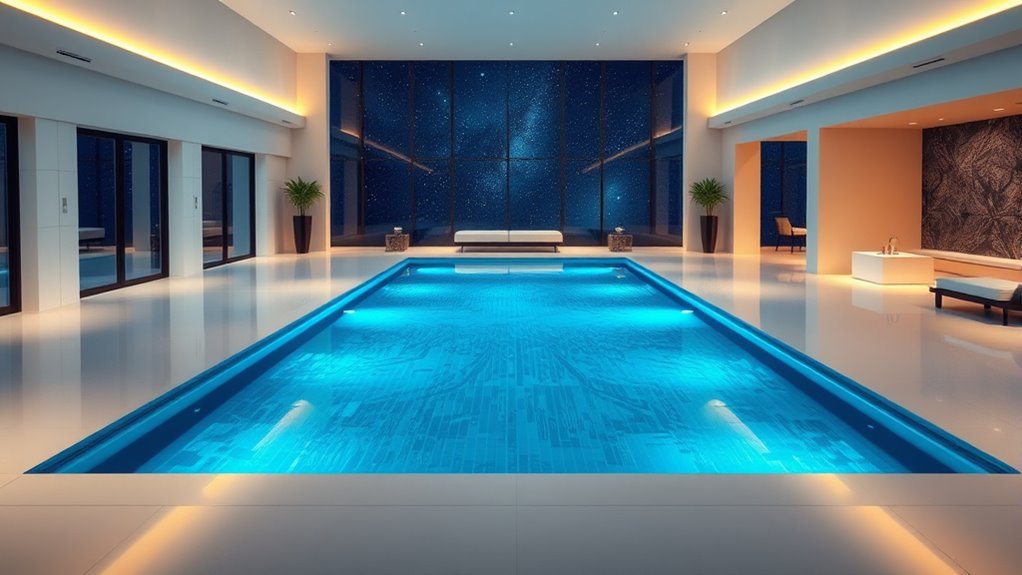

When planning space for your indoor endless pool, guarantee the room is at least 12 feet wide and 20 feet long for safety and comfort. Larger rooms provide more flexibility for features like seating, lighting, and insulation, making maintenance easier and enhancing the environment. Proper room size improves safety and functionality, supporting a better swimming experience. To learn more about optimizing your space and creating the perfect environment, keep exploring these essential design considerations.
Key Takeaways
- A minimum room size of 12 feet wide by 20 feet long ensures safety, accessibility, and ease of maintenance for indoor endless pools.
- Larger rooms provide flexibility for additional features like seating, hot tubs, and enhanced lighting options.
- Adequate ceiling height and room dimensions improve lighting placement and insulation effectiveness, promoting comfort and safety.
- Proper insulation around the pool room depends on its size, with larger spaces requiring more extensive thermal and humidity control measures.
- Well-planned room dimensions facilitate maintenance access, equipment placement, and create a balanced, inviting indoor aquatic environment.

When planning to install an indoor endless pool, choosing the right room dimensions is essential for safety, comfort, and functionality. The size of your space influences not only how enjoyable the pool is but also how easily you can incorporate key features like pool lighting and insulation materials. A well-sized room ensures that you have enough clearance around the pool for movement, maintenance, and accessories, which helps prevent accidents and simplifies upkeep. Typically, you’ll want at least a few feet of space on all sides of the pool to comfortably move around, perform cleaning, and access equipment.
Choosing the right room size ensures safety, comfort, and easy access around your indoor endless pool.
The length and width of the room should accommodate the size of your pool, especially if you plan to use the space for lap swimming or water aerobics. For a standard endless pool, a minimum of 12 feet wide and 20 feet long is recommended, but larger dimensions offer more flexibility and comfort. If you envision adding features like a seating area or a hot tub, you’ll need to factor in additional space. This extra room also benefits the overall ambiance, allowing for the proper installation of pool lighting, which enhances safety and creates a relaxing atmosphere.
Lighting is a crucial element in indoor pool design. Proper pool lighting not only improves visibility but also adds to the aesthetic appeal of your space. When planning your room dimensions, consider the placement of lighting fixtures so they can evenly illuminate the pool area without creating glare or shadows. Larger rooms provide more options for ambient lighting and accent lights, which can highlight architectural features or create a soothing environment. Make sure the ceiling height allows for the installation of sufficient lighting fixtures and allows for adjustable lighting options, giving you control over the mood and functionality.
Insulation materials play a vital role in maintaining a comfortable indoor environment and managing energy costs. The room size directly impacts the type and amount of insulation you’ll need. Larger spaces require more extensive insulation, especially around walls, ceilings, and floors, to prevent heat loss and control humidity. Choosing high-quality insulation materials, like spray foam or insulated panels, can help contain warmth and reduce noise transmission, making your endless pool experience more enjoyable. When planning the room dimensions, think about how the size influences insulation options and the overall thermal efficiency of your indoor aquatic space. Additionally, understanding the importance of quality assessment of insulation ensures you select the most effective materials for energy efficiency and comfort.
Frequently Asked Questions
What Is the Minimum Ceiling Height for Indoor Endless Pools?
For indoor endless pool installation, you should have a minimum ceiling height of 8 feet. This ceiling height provides enough space for comfortable movement and guarantees proper ventilation and lighting. Keep in mind, higher ceilings can enhance the feeling of spaciousness and accommodate equipment or lighting fixtures without crowding the room. Always consider your specific pool size and room layout when planning to ensure a safe, functional, and enjoyable space.
Can I Install an Indoor Pool in a Basement?
Thinking about installing an indoor pool in your basement? Absolutely, you can, but you’ll need to prioritize basement waterproofing to prevent leaks and water damage. Also, make certain your basement has adequate structural support to handle the weight of the pool and water. Have you checked if your space can handle these requirements? With proper planning, you’ll create a stunning, functional indoor pool area right in your home.
Are There Specific Ventilation Requirements for Indoor Pools?
Yes, indoor pools require proper ventilation to maintain good air quality and humidity control. You should install an exhaust and ventilation system that effectively removes humid air and odors, preventing mold and damage. Make certain the system includes dehumidifiers and air exchanges to keep humidity levels balanced. Proper ventilation not only improves air quality but also extends the lifespan of your pool and surrounding areas, making your indoor pool experience safe and enjoyable.
How Much Clearance Is Needed Around the Pool for Maintenance?
You should plan for at least 3 to 4 feet of clearance around your indoor pool for maintenance. This space allows you to remove the pool cover easily and access lighting installation or other equipment without hassle. Adequate clearance guarantees safe, quick access for cleaning, repairs, and routine checks, keeping your pool area functional and enjoyable. Always consider specific equipment sizes and manufacturer recommendations for ideal spacing.
Do Room Dimensions Affect the Water Temperature Regulation?
You might think room size doesn’t matter, but it totally does — especially for water circulation and insulation efficiency. If your room’s too tiny, the water heats unevenly, turning your endless pool into a chilly surprise. Adequate space guarantees proper air flow and better insulation, helping maintain water temperature. So, bigger rooms mean warmer, more enjoyable swims and fewer energy bills—because your pool deserves a cozy, well-ventilated home.
Conclusion
Designing your indoor endless pool is like crafting a symphony—you need the perfect space to let it resonate. Keep in mind the recommended room dimensions to guarantee smooth operation and comfortable swimming. When you allocate enough room, your pool becomes more than just a feature; it transforms into a sanctuary where every stroke plays in harmony. With thoughtful planning, your indoor endless pool will stand as a masterpiece of both function and serenity.