To keep your indoor endless pool safe and comfortable, proper ventilation and dehumidification are essential. They remove stale air, prevent mold, and control humidity levels to protect your space and equipment. Using well-designed mechanical systems with filters and sensors ensures continuous fresh air supply and moisture control. Regular maintenance keeps everything running efficiently. If you want to discover how to optimize your setup for ideal air quality and comfort, you’ll find useful tips ahead.
Key Takeaways
- Proper ventilation removes airborne pollutants, odors, and chlorine fumes, ensuring fresh, safe air quality around indoor endless pools.
- Adequate dehumidification controls moisture levels, preventing mold, corrosion, and structural damage in the pool environment.
- A balanced HVAC system with filters effectively exchanges indoor and outdoor air while maintaining comfort and safety.
- Sensors and automation optimize system performance, adjusting airflow and humidity to sustain ideal indoor conditions.
- Regular maintenance of ventilation and dehumidification units ensures efficiency, prolongs equipment lifespan, and maintains healthy air quality.
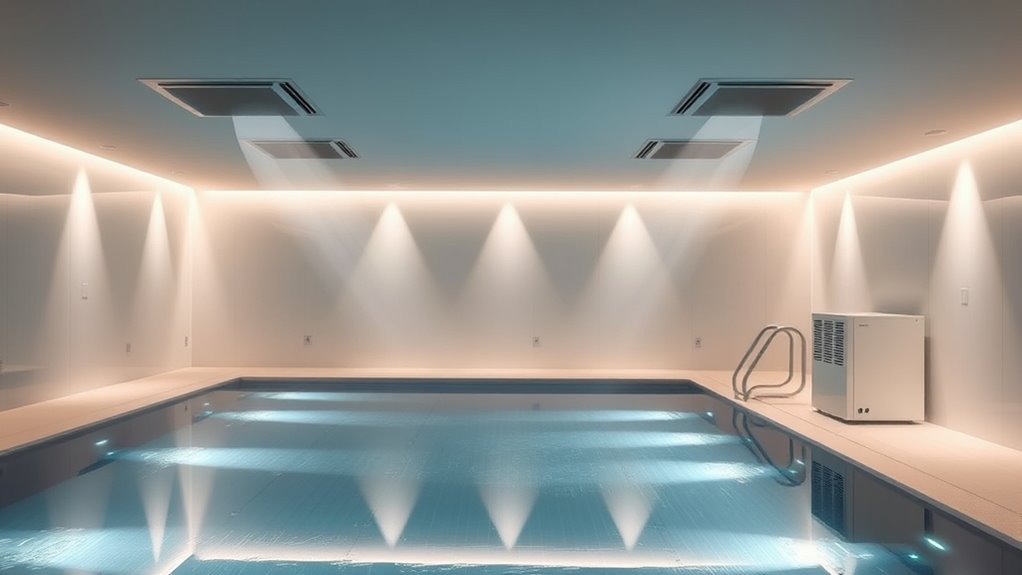
Indoor endless pools offer a convenient way to enjoy swimming year-round, but maintaining a healthy environment requires proper ventilation and dehumidification. The key to creating a comfortable and safe space lies in managing air quality and humidity levels effectively. Without adequate ventilation, the air inside your pool area can become stale and contaminated, leading to unpleasant odors, mold growth, and potential health issues. Proper airflow ensures that airborne contaminants, such as chlorine fumes and organic compounds, are removed efficiently, keeping the environment fresh and safe for everyone.
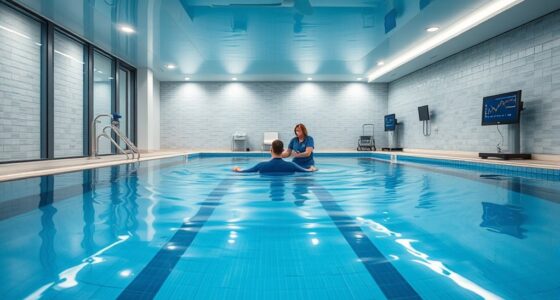
Effective ventilation and dehumidification are essential for a healthy indoor pool environment.
Humidity control is equally vital. When you swim indoors, the evaporation of water increases humidity levels rapidly, creating a damp environment that promotes mold, mildew, and corrosion. Excess moisture can damage the structure and equipment of your pool, leading to costly repairs and maintenance. To prevent this, you need a well-designed dehumidification system that maintains ideal humidity levels—generally between 50-60%. This not only protects your investment but also enhances comfort, as high humidity can make the space feel stuffy and oppressive.
Implementing a good ventilation system involves more than just installing exhaust fans. You should consider a balanced ventilation approach that brings in fresh air while exhausting stale air. Mechanical ventilation systems equipped with air filters can improve air quality by reducing airborne pollutants and controlling odors. Make sure your ventilation system is appropriately sized for your pool area; an undersized system won’t adequately remove humidity and contaminants, while an oversized one can cause drafts and energy inefficiency. Regular maintenance of filters and fans is essential to keep the system operating at peak performance.
Dehumidifiers work hand in hand with ventilation to keep moisture at bay. These units extract excess humidity from the air, preventing condensation on surfaces and reducing the risk of mold growth. Modern dehumidification systems can be integrated with your ventilation setup for seamless control. Sensors placed strategically around your pool area can monitor humidity and air quality, automatically adjusting the dehumidifier and ventilation fans to maintain ideal conditions. This automation not only simplifies management but also ensures consistent comfort and safety.
Additionally, selecting a properly sized ventilation system that matches your pool area’s specific needs is crucial for optimal performance. Ultimately, your goal is to create an indoor environment where air quality is high, and humidity is controlled. Doing so enhances not only the longevity of your pool and equipment but also your overall health and enjoyment. Investing in proper ventilation and dehumidification means you’ll be able to swim comfortably all year long, without worrying about the negative effects of poor air quality or excessive moisture.
Frequently Asked Questions
How Often Should Ventilation Systems Be Inspected and Maintained?
You should inspect and maintain your ventilation system at least twice a year to guarantee ideal indoor air quality and system lifespan. Regular checks help identify issues early, like clogged filters or duct blockages, which can reduce efficiency. Proper maintenance keeps your indoor environment healthy and extends the system’s longevity, preventing costly repairs. Consistent care ensures your indoor endless pool area remains fresh, safe, and comfortable year-round.
What Are the Energy Costs Associated With Dehumidification Systems?
The energy costs for dehumidification systems vary based on size and usage, but a thorough cost analysis helps you understand expenses. These systems can be energy-efficient if properly maintained and selected, reducing overall costs. Expect higher energy bills during peak humidity months. Investing in energy-efficient dehumidifiers can save you money long-term, so evaluate your system’s efficiency regularly to keep costs manageable and guarantee ideal performance.
Can Portable Dehumidifiers Effectively Control Humidity in Large Pools?
Like a lighthouse guiding ships, portable dehumidifiers can help with humidity control, but they’re not a perfect solution for large pools. They might manage small areas well, but for big pools, their capacity is usually too limited. You’ll often need a more robust, integrated system to keep humidity levels steady and prevent issues like mold or corrosion. So, while portable units help, they aren’t the best choice for large indoor pools.
How Do Ventilation Requirements Vary With Pool Size and Usage?
You’ll need to adjust your ventilation capacity based on your pool’s size and usage to guarantee ideal pool air quality. Larger or frequently used pools generate more humidity and contaminants, requiring increased ventilation. Properly sized ventilation systems help remove excess moisture and maintain air quality, preventing mold and odors. Regularly evaluate your ventilation needs to match your pool’s activity level, ensuring a healthy, comfortable environment for everyone.
Are There Eco-Friendly Options for Ventilation and Dehumidification?
Yes, you can choose eco-friendly solutions for your indoor pool’s ventilation and dehumidification. Look for systems that feature sustainable ventilation, such as energy recovery ventilators (ERVs) and heat pumps, which reduce energy consumption. These options not only cut down your carbon footprint but also improve air quality and moisture control. By selecting eco-friendly solutions, you guarantee a healthier environment while saving on long-term energy costs.
Conclusion
So, it’s funny how something as simple as good ventilation and dehumidification can turn your indoor endless pool into a trouble-free oasis. You’d think maintaining perfect humidity and fresh air would be a hassle, right? But in reality, neglecting these systems leads to mold, damage, and constant upkeep. Ironically, the easiest way to enjoy endless hours of swimming bliss is just by investing in the right ventilation and dehumidification—who knew?