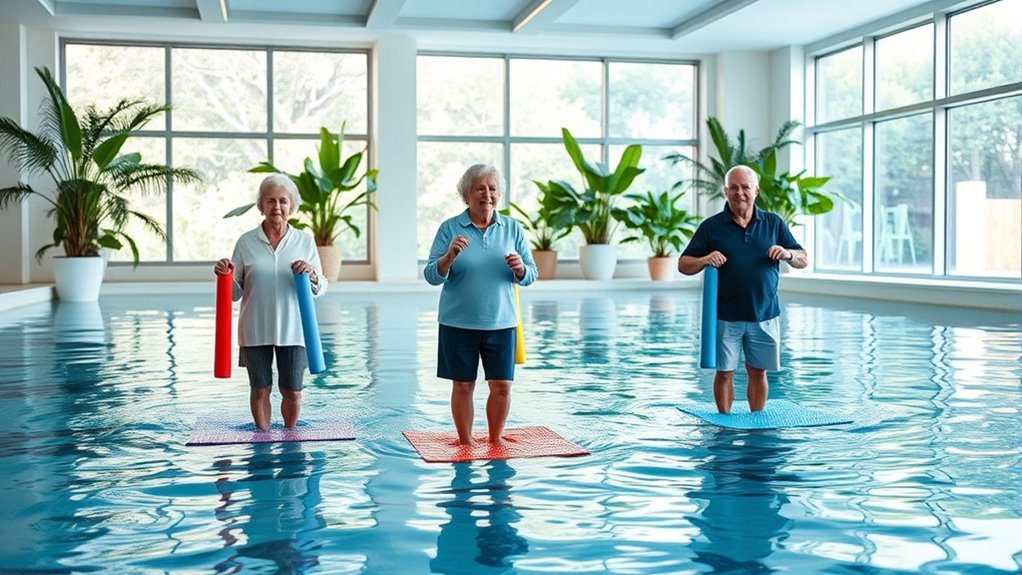

Aquatic training offers a safe way for seniors to improve balance and prevent falls. Water’s resistance promotes muscle strength and coordination, while buoyancy reduces joint stress for easier movement. It also encourages controlled exercises that boost stability and confidence. The water environment engages your mind as you focus on proper movements, enhancing neural pathways related to balance. Keep exploring to discover how this gentle approach can help you stay steady and reduce fall risks effectively.
Key Takeaways
- Aquatic training enhances strength, coordination, and stability, reducing fall risk among seniors.
- Water’s buoyancy minimizes joint stress, allowing safer, pain-free balance exercises.
- Resistance in water promotes controlled movements, improving muscle endurance and postural control.
- Cognitive engagement during aquatic exercises sharpens neural pathways related to balance.
- Regular water-based activities boost confidence and proprioception, supporting long-term fall prevention.
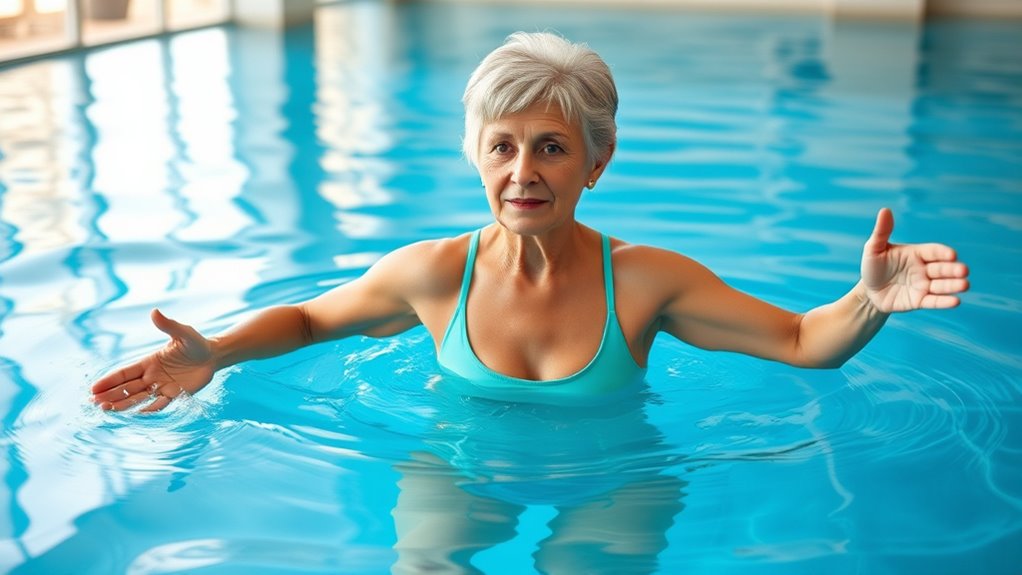
Have you ever wondered why maintaining good balance is essential for preventing falls? It’s because your ability to stay upright and steady directly impacts your safety, especially as you age. One effective way to improve your balance is through aquatic training, which leverages water’s unique properties to help you build strength and coordination. When you exercise in water, water resistance plays a crucial role. It provides gentle yet effective resistance that challenges your muscles without the harsh impact of land-based workouts. This resistance encourages controlled movements, helping you develop stability and muscle endurance essential for maintaining balance in daily life. Additionally, the buoyant nature of water reduces joint stress, allowing you to perform exercises with less pain and discomfort. This environment makes it easier to focus on proper movement patterns, ultimately boosting your confidence in your balance abilities. Practicing mindful stillness during water exercises can amplify their benefits by fostering greater body awareness and mental focus.
But water resistance isn’t the only benefit of aquatic training. It also fosters cognitive engagement, which is vital for balance improvement. When you’re immersed in water, you’re required to focus on controlling your movements, coordinating your limbs, and maintaining body awareness—all of which stimulate your brain. This mental engagement helps reinforce neural pathways related to balance and coordination, making your physical improvements more effective and lasting. Water-based exercises often involve multi-directional movements, requiring you to adapt and respond to changing conditions, further sharpening your cognitive skills. The combination of physical and mental effort creates an environment that not only strengthens your muscles but also enhances your brain’s ability to process sensory information and maintain equilibrium.
Furthermore, the calming nature of water can reduce anxiety related to falling, making you more willing to try new movements and challenge your limits. As you become more confident in the water, you’ll likely transfer that confidence to land-based activities. The supportive, controlled environment of aquatic training allows you to practice balancing exercises safely, which is especially important if you’re recovering from injury or have balance issues. Over time, these exercises can help improve your proprioception—the sense of your body’s position in space—and refine your overall stability. The combination of water resistance and cognitive engagement creates a comprehensive approach to fall prevention, making aquatic training a smart choice for seniors looking to stay active, safe, and independent.
Frequently Asked Questions
Can Aquatic Training Replace Land-Based Fall Prevention Exercises?
Aquatic training can’t fully replace dry land exercises for fall prevention. While water offers low-impact support and improves balance, combining aquatic activities with dry land exercises enhances strength and stability. You should focus on maintaining mental focus during all exercises, whether in water or on land. Using both methods provides extensive benefits, helping you prevent falls more effectively and ensuring your overall safety and confidence.
How Often Should Seniors Engage in Aquatic Balance Training?
You should aim for aquatic balance training about two to three times a week, following general frequency guidelines. Consistency is key to improving your stability and reducing fall risk. Keep your sessions moderate in duration, around 30 minutes, and vary your exercises to target different muscle groups. Regular participation helps maintain progress and guarantees you’re building strength and confidence safely in the water.
Are There Specific Water Temperatures Ideal for Senior Aquatic Exercises?
You might think you need to find the perfect water temperature, but honestly, cooler water around 83-88°F actually enhances exercise safety for seniors. It prevents overheating and keeps joints comfortable. Too warm, and you risk fatigue or dizziness. So, instead of obsessing over the ideal, focus on maintaining a safe, moderate temperature that encourages movement, making exercise both enjoyable and secure for seniors.
What Equipment Is Necessary for Effective Aquatic Fall Prevention Workouts?
You’ll need water resistance tools like hand paddles or foam weights to enhance muscle engagement and stability. Flotation devices, such as belts or noodles, support balance and safety during exercises. These tools help you improve strength, coordination, and confidence in the water, reducing fall risk. Incorporate water resistance and flotation devices into your routine to make your aquatic workouts more effective and enjoyable for fall prevention.
Is Aquatic Training Safe for Seniors With Joint or Mobility Issues?
Aquatic training is generally safe for seniors with joint or mobility issues because water provides joint safety and mobility support, reducing impact and pain. The buoyancy helps ease movements, making exercises more comfortable and less risky. However, it’s crucial to work with a trained instructor who can customize routines to your needs and monitor your form, ensuring you gain benefits without overexertion or injury.
Conclusion
By incorporating aquatic training into your routine, you can markedly improve your balance and reduce fall risk. Did you know that regular aquatic exercise can decrease falls among seniors by up to 50%? Staying active in the water not only boosts strength and stability but also makes everyday movements safer. Don’t wait—dive into aquatic workouts and take a confident step toward maintaining your independence and preventing falls. Your future self will thank you for it.