For effective contrast therapy, start with a sauna session of about 10-15 minutes to relax muscles and boost circulation, then switch quickly to a cold plunge of 1-3 minutes to reduce inflammation. Repeat this cycle 3-5 times for best results. Be sure to listen to your body, maintain proper timing, and gradually adjust based on your fitness level and goals. If you want to optimize your routine, there’s more to learn.
Key Takeaways
- Start with heat (sauna) for 10-15 minutes to relax muscles and boost circulation before transitioning to cold.
- Cold plunge durations of 1-3 minutes effectively reduce inflammation and invigorate without causing shock.
- Allow 1-3 minutes for cooling after sauna before entering the cold plunge to stabilize core temperature.
- Complete 3-5 cycles based on your goals, adjusting durations for comfort and recovery needs.
- Use smart devices to monitor timing and temperature, ensuring safety and optimizing contrast therapy benefits.
What Is Contrast Therapy and Why Is It Popular?
Have you ever wondered why contrast therapy has become so popular? It works by alternating between hot and cold environments to influence your body’s thermal regulation. When you expose yourself to heat, your blood vessels expand, boosting blood circulation and helping deliver oxygen and nutrients more efficiently. Switching to cold causes your vessels to constrict, reducing inflammation and swelling. This cycle stimulates your body’s natural ability to adapt, promoting recovery and overall well-being. The rapid changes in temperature trigger your nervous system, encouraging better blood flow and faster removal of waste products. That’s why many athletes and wellness enthusiasts swear by contrast therapy. It’s a simple yet effective way to enhance circulation, support healing, and improve your body’s resilience.
Should You Start With Heat or Cold? Finding the Best Sequence
When deciding whether to start your contrast therapy session with heat or cold, consider how each approach impacts your body’s response. Starting with heat relaxes your muscles, promotes blood flow, and can boost hydration significance by encouraging sweating. Cold exposure, on the other hand, sharpens mental focus and reduces inflammation, helping you reset quickly. If your goal is to enhance mental clarity, beginning with cold might be best. Conversely, if you want to warm up and loosen muscles first, start with heat. Remember, staying well-hydrated is essential regardless of the sequence, as both heat and cold can dehydrate you. The right order depends on your personal goals—whether it’s mental focus, muscle recovery, or overall relaxation.
How Long Should You Stay in the Sauna and Cold Plunge?

For effective contrast therapy, most people find that spending about 10 to 20 minutes in the sauna followed by 1 to 5 minutes in the cold plunge offers ideal benefits. This timing enhances hydrotherapy benefits and supports your body’s temperature regulation. Keep in mind, staying too long can cause overstress, so listen to your body. Use the table below as a quick guide:
| Sauna Duration | Cold Plunge Duration |
|---|---|
| 10-15 minutes | 1-3 minutes |
| 15-20 minutes | 3-5 minutes |
| Shorter if new | Shorter if sensitive |
| Focus on comfort | Focus on recovery |
| Adjust as needed | Adjust as needed |
Proper timing maximizes benefits without overtaxing your system, helping you achieve ideal temperature regulation. Incorporating energy-efficient solutions can further optimize your contrast therapy experience by ensuring sustainable and secure temperature control. Additionally, understanding contrast ratio helps tailor your sessions for better visual and physical results. It is also important to consider individual responses and personal tolerance to maximize safety and effectiveness. Being aware of safety precautions related to temperature extremes is essential for preventing adverse effects and ensuring a safe experience. Monitoring your body’s signals throughout the process is crucial for adjusting durations and avoiding overstress.
How Many Contrast Cycles Are Best for Your Goals?

The number of contrast cycles you should do depends on your specific goals, whether recovery, performance, or relaxation. Generally, adjusting the cycle count can maximize benefits and suit your schedule. Let’s explore how to find the most suitable number for you. Incorporating art care principles can also enhance your overall experience and results. For example, individual needs vary widely, so listening to your body’s responses is crucial to determine the optimal number of cycles for your unique situation. Paying attention to body signals can help tailor your contrast therapy for better outcomes. Additionally, understanding the thermal response of your body can guide you in customizing the timing and duration of each phase for optimal effectiveness. Recognizing your body’s thermal adaptation can further refine your approach, ensuring safety and efficacy during your contrast sessions.
Optimal Cycle Count
Finding the right number of contrast cycles depends on your goals and experience level. Generally, 3 to 5 cycles are effective for boosting mental clarity and recovery. If you’re new, start with fewer cycles to avoid overstressing your body. For seasoned enthusiasts, more cycles can enhance circulation and resilience. Consider your hydration strategies; staying well-hydrated helps prevent fatigue and supports mental focus. Proper post-contrast recovery is essential to maximize benefits and minimize strain. Incorporating contrast therapy protocols can help you tailor sessions to your individual needs, ensuring safety and effectiveness. Additionally, paying attention to body responses during each cycle can help you avoid overexertion and optimize results. Here’s a simple guide:
| Goal | Cycles Recommended | Notes |
|---|---|---|
| Enhance mental clarity | 3-4 | Focus on controlled breathing and hydration |
| Recovery & circulation | 4-5 | Maintain moderate durations |
| Stress resilience | 5+ | Gradually increase as tolerated |
Adjust based on how you feel, always prioritizing safety and mental sharpness. Incorporating contrast therapy into your routine can further enhance the benefits by promoting circulation and recovery.
Adjusting for Goals
When tailoring contrast therapy to your specific goals, selecting the right number of cycles is key. If you’re aiming for improved hydrotherapy benefits or better temperature regulation, fewer cycles might suffice, typically 3 to 4. Athletes seeking enhanced recovery may benefit from more, around 6 to 8 cycles, to maximize circulation and muscle relaxation. Conversely, if your goal is relaxation or stress relief, a shorter session with fewer cycles could be more effective. Remember, the key is listening to your body—overdoing it can reduce benefits or cause discomfort. Adjust the number of contrast cycles based on how your body responds, ensuring you balance the benefits of hydrotherapy with safety and comfort. Tailoring cycles helps you optimize your contrast therapy experience for your unique goals.
The Science of Timing Sauna and Cold Plunges Effectively

To get the most benefits, you need to pay attention to how long you stay in each environment and how quickly you switch between them. Proper timing of your sauna and cold plunge sessions can enhance circulation, recovery, and overall effectiveness. Understanding the right temperature durations and changeover intervals helps you optimize your contrast therapy routine. Proper timing is essential for maximizing the health benefits of contrast therapy. Additionally, being aware of temperature control can help prevent overexposure and ensure safe practice. Incorporating smart home automation devices can assist in maintaining precise temperature settings and timing schedules for consistent and safe sessions. Using accessible timing reminders can also help you adhere to your routine safely and effectively. Leveraging navigation and mapping features of smart devices can further customize your session durations based on your personal health data.
Optimal Transition Intervals
Timing is essential for maximizing the benefits of contrast therapy, and understanding the ideal transition intervals between sauna sessions and cold plunges can make a significant difference. Proper timing allows your body to manage temperature fluctuations effectively, boosting recovery optimization. If you switch too quickly, you might miss out on some benefits; too slowly, and you risk diminishing the contrast effect. To get it right, consider these key points:
- Allow enough time for your body to cool down naturally after the sauna
- Use a brief pause to reset your core temperature before cold exposure
- Listen to your body’s signals for optimal recovery
- Keep transitions within a window of 1 to 3 minutes for most people
- Adjust based on personal response and comfort levels
- Incorporating connected fitness technology can help monitor your temperature and optimize timing for individual needs
Understanding these intervals helps you harness contrast therapy’s full potential for recovery and performance.
Effects of Temperature Duration
The duration you spend in each temperature phase directly impacts the effectiveness of contrast therapy. Longer exposure in the sauna can enhance your body’s temperature regulation and promote better thermal adaptation, but overdoing it may cause fatigue or stress. Cold plunges, when timed appropriately, stimulate circulation and quicken recovery without overwhelming your system. Short, controlled intervals allow your body to adjust gradually, optimizing benefits without risking shock or discomfort. Properly balancing the time spent in hot and cold environments helps your body adapt efficiently, improving resilience and overall health. Remember, the goal is to challenge your thermal regulation without pushing it too far, ensuring consistent and safe progress over multiple sessions.
How to Adjust Your Routine Based on Fitness Level and Goals
Adjusting your contrast therapy routine depends largely on your current fitness level and specific goals. If you’re focused on exercise recovery, you might prefer shorter, more frequent sessions to reduce soreness and speed up muscle repair. For mental health benefits, longer or more relaxing sessions can help improve relaxation and reduce stress. Beginners should start with milder temperature contrasts and gradually increase intensity as comfort grows. More advanced individuals can incorporate longer cold plunges for enhanced recovery or mental clarity. Consider these factors:
- Your endurance and tolerance to cold or heat
- Specific recovery needs after intense workouts
- Your stress levels and mental health priorities
- Time availability for sessions
- Overall fitness goals and progress tracking
Understanding the benefits of controlled temperature can help tailor your routine more effectively. Additionally, being aware of your body’s response to temperature can help prevent overexposure and ensure safe, effective sessions. Recognizing your temperature tolerance levels is essential for customizing sessions that optimize benefits and safety. Incorporating personalized adjustments based on your individual response can further improve your experience and outcomes.
Common Mistakes in Timing Contrast Therapy and How to Avoid Them
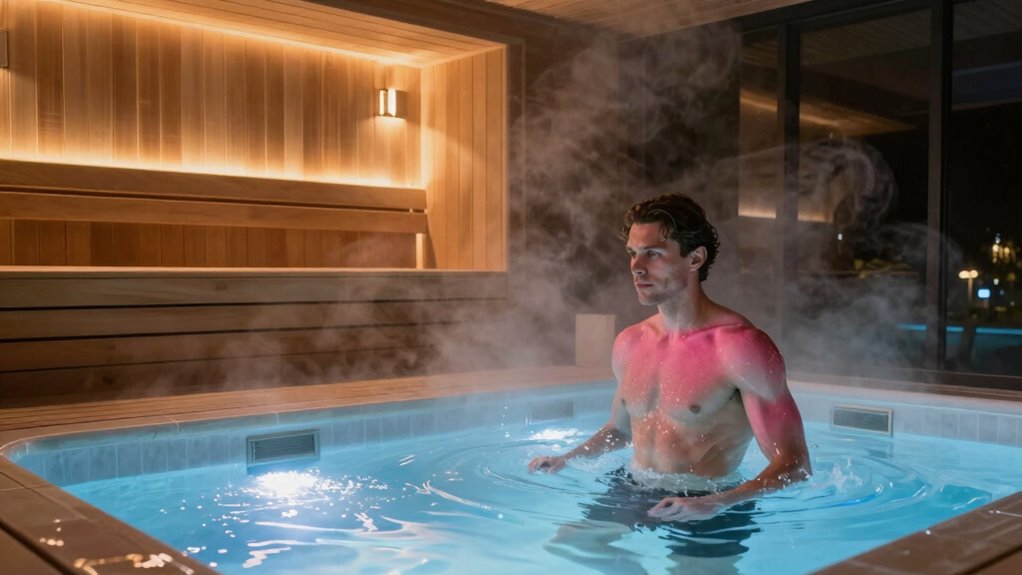
Many people make the mistake of rushing through contrast therapy sessions or overdoing the timing, thinking more is better. This can hinder thermal conductivity, reducing the effectiveness of heat and cold exchanges. Spending too long in the sauna or plunge can also cause discomfort or harm, impeding muscle recovery instead of helping it. To avoid this, stick to recommended durations—usually 10-15 minutes in the sauna and 1-3 minutes in the cold plunge—and give your body time to adapt. Overdoing it won’t necessarily speed up recovery but may increase stress on your cardiovascular system. Proper timing ensures ideal thermal conductivity, maximizing benefits without risking injury. Focus on listening to your body and maintaining a balanced routine for effective muscle recovery and overall wellness.
Tips for a Safe, Effective, and Personalized Contrast Routine

Creating a safe and effective contrast therapy routine starts with personalizing your approach based on your body’s responses and specific needs. Pay attention to how your body reacts, and adjust durations accordingly. Practice mindful breathing to stay relaxed and focused during changes. Hydration importance can’t be overstated—drink water before, during, and after sessions to prevent dehydration. To optimize safety and results, consider these tips:
- Start with shorter exposure times and gradually increase
- Listen to your body and stop if you feel dizzy or uncomfortable
- Incorporate mindful breathing to stay calm and centered
- Stay well-hydrated to support recovery and circulation
- Keep a consistent routine to track progress and adjust as needed
Personalization and mindfulness ensure your contrast therapy is both safe and effective.
Frequently Asked Questions
Can Contrast Therapy Help With Specific Medical Conditions?
Contrast therapy can offer medical benefits like improved circulation, reduced inflammation, and pain relief, which may help with conditions such as muscle soreness or arthritis. However, you should consider safety considerations, especially if you have cardiovascular issues, hypertension, or other health concerns. Always consult your healthcare provider before trying contrast therapy to guarantee it’s safe and appropriate for your specific medical conditions.
Is There an Ideal Time of Day to Perform Contrast Therapy?
You should perform contrast therapy at a time that fits seamlessly into your daily routines, typically in the morning or after workouts. Timing strategies suggest consistency helps your body adapt and maximize benefits. If you prefer mornings, it can boost alertness; post-exercise sessions aid recovery. Listen to your body and choose a time when you’re relaxed and unlikely to be interrupted, ensuring you get the most from each contrast session.
How Does Hydration Impact Contrast Therapy Effectiveness?
Hydration levels considerably impact how effective contrast therapy is for you. When you’re well-hydrated, your fluid intake helps regulate body temperature and flush out toxins, enhancing recovery. If your fluid intake is low, you might experience dizziness or cramping during sauna or cold plunge sessions, reducing benefits. Make sure to drink plenty of water before, during, and after contrast therapy to optimize your results and stay safe.
Are There Age Restrictions for Practicing Contrast Therapy?
Imagine you’re stepping into the future—age restrictions do matter for contrast therapy. Typically, safety considerations suggest that children and seniors should consult a healthcare professional before trying it. While there’s no strict age limit, your health status and tolerance are key. If you’re young and healthy, you might enjoy it safely. Always listen to your body, and seek advice to guarantee contrast therapy suits your age and health needs.
Can Contrast Therapy Be Combined With Other Recovery Methods?
Yes, you can combine contrast therapy with other recovery methods like stretching, massage, or foam rolling. Doing so can enhance temperature regulation and boost mental health by promoting relaxation and reducing stress. Just make certain you listen to your body, stay hydrated, and avoid overdoing it. Combining these methods can optimize your recovery, improve circulation, and support overall well-being effectively.
Conclusion
While it might seem complex at first, mastering the timing of your sauna and cold plunge can profoundly boost recovery and well-being. Don’t worry if it feels overwhelming—start slow, listen to your body, and adjust as needed. Remember, consistency beats intensity. Even if you’re pressed for time, a brief contrast session still offers benefits. With patience and attention to your body’s signals, you’ll find a routine that’s safe, effective, and tailored just for you.