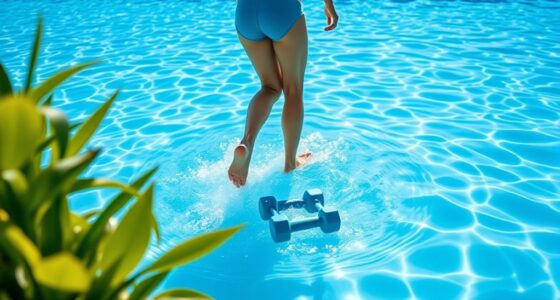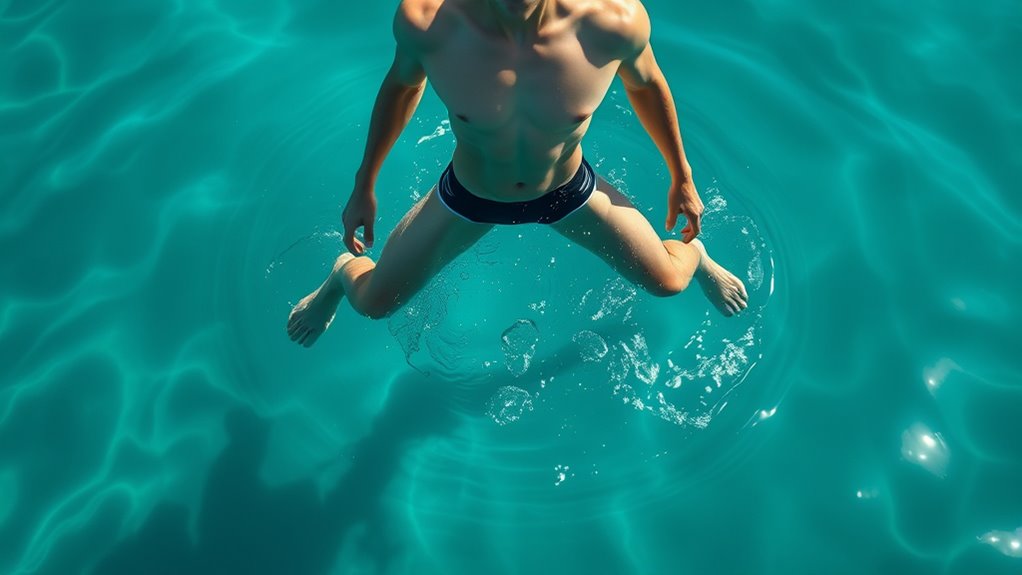

Maintaining proper posture and core stability during deep water running is key to improving your breathing, reducing injury risk, and making your workout more efficient. Focus on keeping your pelvis aligned to support your spine, which encourages better breathing and core activation. Good posture helps you move smoothly and conserves energy, enhancing overall performance. By paying attention to these details, you’ll find your technique improves, making your water runs more comfortable and effective as you explore further.
Key Takeaways
- Maintaining proper pelvic alignment supports spinal stability and enhances overall posture during water running.
- Good posture opens the chest and diaphragm, facilitating deep, controlled breathing for better oxygen intake.
- Engaging core muscles through correct pelvic positioning improves movement efficiency and reduces energy waste.
- Proper posture minimizes strain on the lower back and promotes comfortable, injury-free water running sessions.
- Developing body awareness and making small adjustments can optimize breathing, technique, and workout effectiveness.

Have you ever wondered how your posture affects your daily life? It’s more than just how you look; it influences your breathing, movement, and even your energy levels. When you’re practicing deep water running, paying attention to your posture can make a significant difference in your workout effectiveness and overall comfort. One of the key aspects to focus on is your pelvic alignment. Proper pelvic positioning supports your spine and helps you maintain balance, which is essential in water running where gravity’s effects are altered but stability remains crucial. When your pelvis is aligned correctly, your core engages more naturally, reducing strain on your lower back and improving your overall form. This alignment also influences your breathing techniques, as a well-aligned pelvis opens up your chest and diaphragm, allowing your lungs to expand more fully. This means you can breathe more deeply and efficiently, providing your muscles with the oxygen they need to perform at their best.
In deep water running, your posture directly impacts how effectively you use your core muscles. When your pelvic alignment is proper, you stand tall in the water, minimizing unnecessary movements and energy waste. This alignment encourages you to keep your spine straight and shoulders relaxed, which facilitates better breathing. Good breathing techniques involve deep, diaphragmatic breaths that fill your lungs fully, helping you stay calm and focused during your workout. If your pelvic position is off, you might find yourself unconsciously compensating, which can lead to shallow breathing and muscle fatigue. Maintaining awareness of your pelvic alignment during water running ensures your breathing remains smooth and controlled, maximizing your endurance and reducing the risk of injury. Incorporating core stability exercises can further enhance your posture and overall performance.
Furthermore, paying attention to your posture and pelvic alignment helps you develop a more intuitive connection with your body. As you practice, you’ll notice how slight adjustments in your positioning can improve your breathing and overall movement. This awareness makes your workout more effective and enjoyable. Incorporating specific breathing techniques—like slow, controlled inhales and exhales—can also enhance your core stability, supporting your pelvis and spine. When your core is stable, you’re less likely to experience discomfort or fatigue, and your water running session becomes a more efficient form of cross-training. Ultimately, understanding the interplay between breathing techniques and pelvic alignment empowers you to optimize your deep water running practice, making each session safer, more comfortable, and more productive.

New Aqua Water Fitness Deluxe Flotation Belt – Adult Aquatic Swim Belt for Water Aerobics and Other Pool Exercise – Black/Blue
- Adjustable Waist Fit: Fits 20-60 inch waist with strap
- Neutral Buoyancy Support: Soft foam belt for balance and safety
- Versatile Water Exercise: Ideal for cross-training and rehab
As an affiliate, we earn on qualifying purchases.
As an affiliate, we earn on qualifying purchases.
Frequently Asked Questions
How Often Should I Practice Deep Water Running for Optimal Results?
You should practice deep water running about three to four times a week for ideal results. Keep your training frequency consistent, allowing your body enough time to recover. Each session typically lasts 30 to 45 minutes, which provides a good balance of cardiovascular benefits and muscle engagement. Remember, listening to your body and gradually increasing session duration can help prevent injury and improve your overall performance.
Can Deep Water Running Help Recover From Injury Faster?
Deep water running can speed up your injury rehabilitation and muscle recovery by providing low-impact exercise that reduces stress on your joints. While it may not replace traditional rehab methods, it helps maintain cardiovascular fitness and muscle strength without further injury. You benefit from gentle resistance and controlled movements, making it an excellent tool for recovery. Incorporate deep water running into your plan for a smoother, faster healing process.
What Equipment Is Necessary for Effective Deep Water Running?
To run effectively in deep water, you’ll need water shoes for grip and protection, and a buoyancy belt to keep you afloat. Water shoes prevent slipping, giving you stability, while the buoyancy belt supports your body, reducing impact on joints. These essentials help you maintain proper posture and core engagement during your workout, ensuring you get the most benefits from deep water running while staying safe and comfortable.
Is Deep Water Running Suitable for All Fitness Levels?
Imagine gliding effortlessly through water, feeling its resistance supporting your joints. Deep water running suits all fitness levels because it minimizes joint impact while providing excellent water resistance for a full-body workout. Whether you’re a beginner or an athlete, you can adapt the intensity to match your current fitness. This low-impact exercise helps improve strength and endurance without stressing your joints, making it an inclusive option for everyone.
How Does Deep Water Running Compare to Land-Based Running?
Deep water running offers a different experience from land-based running. Thanks to buoyancy benefits, it reduces joint impact, making it gentler on your knees and hips. You can still get a great workout, but with less stress on your joints. Unlike on land, you won’t face the same pounding, so it’s ideal for recovery or injury prevention while still boosting your cardiovascular fitness.
Conclusion
Mastering your posture and core stability in deep water running isn’t just beneficial—it can transform your entire workout routine. When you keep your body aligned and engage your core, you’ll experience more efficient movement and less fatigue. Think of your core as the foundation of a skyscraper—without it, everything else crumbles. So, stay focused on these basics, and you’ll gain access to a level of fitness so powerful, it might just feel like you’re floating on air!