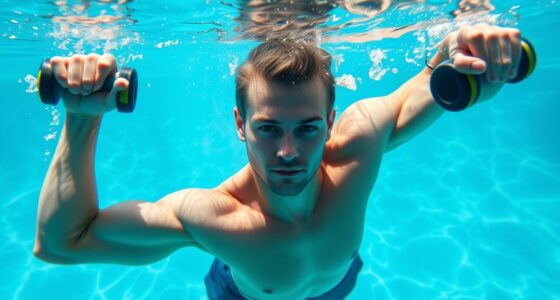
To monitor your heart rate in water, you can use waterproof fitness devices like heart rate monitors designed specifically for aquatic activities. These tools typically use sensors attached to your body or integrated into waterproof accessories, transmitting data via Bluetooth or ANT+ to your smartphone or watch. They help you stay within your target heart rate zones and track hydration levels during water workouts. If you’d like to discover how to optimize your water-based training, there’s more to explore below.
Key Takeaways
- Waterproof heart rate monitors use sensors and wireless transmission to track heart rate accurately during water activities.
- These devices provide real-time feedback on heart rate zones to optimize workout intensity in water.
- Hydration monitoring features assess fluid levels and sweat rate to prevent dehydration during swim sessions.
- Advanced sensor technology ensures seamless data integration with fitness apps for post-activity analysis.
- Suitable targets include maintaining safe heart rate zones and proper hydration for enhanced aquatic performance.
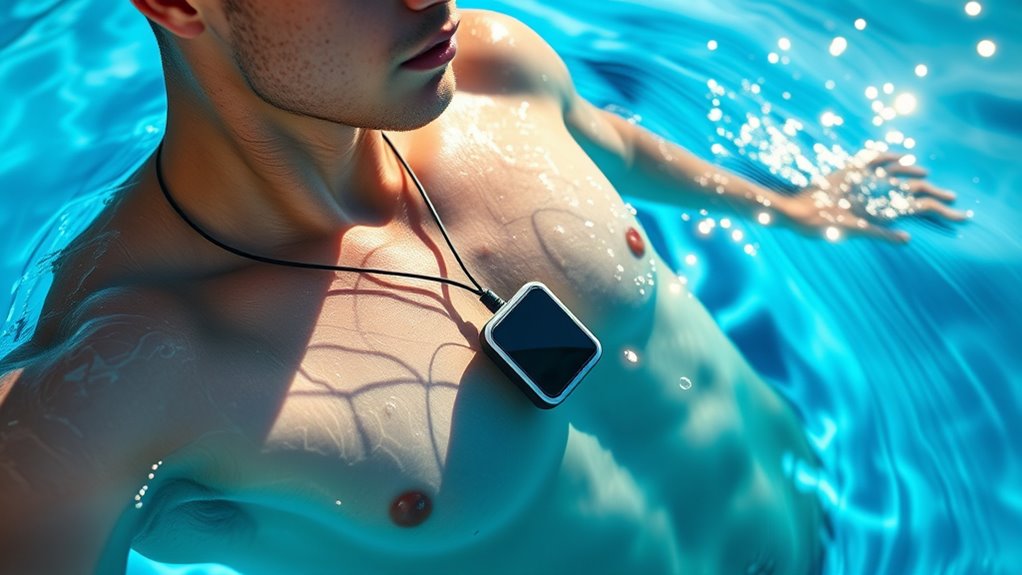
Have you ever wondered how athletes and swimmers track their heart rate accurately while immersed in water? It’s a common challenge, but advancements in waterproof devices have made it much easier to monitor your heart health without breaking a sweat—or getting wet. These specialized gadgets are designed to withstand water immersion, guaranteeing you get real-time data during your workouts or swim sessions. By wearing waterproof heart rate monitors, you can focus on your performance, knowing your essential signs are being tracked precisely, regardless of whether you’re in the pool, ocean, or shower. These devices typically use sensors that are either attached directly to your body or integrated into waterproof accessories. They transmit data via Bluetooth or ANT+ to your smartphone or fitness watch, providing instant feedback on your heart rate zones and overall cardiovascular effort. This continuous monitoring allows you to adjust your intensity on the fly, optimizing your workout and preventing overexertion.
In addition to tracking your heart rate, many waterproof devices now incorporate hydration monitoring features. Staying hydrated is critical when you’re active in water, as dehydration can go unnoticed but considerably impact your performance and recovery. Hydration monitoring tools integrated into these devices give you insights into your fluid levels, helping you make informed decisions about when and how much to hydrate. Some devices analyze sweat rate or use bioelectrical impedance to assess hydration status, giving you a detailed picture of your physiological state. Combining heart rate data with hydration insights enables a more tailored approach to training, guaranteeing you maintain peak performance and recover efficiently. These features are especially valuable during long swim sessions or intense training, where dehydration can impair your stamina and recovery.
Additionally, waterproof devices often include sensor technology that can detect various physiological signals, further enhancing the accuracy and usefulness of the data collected. The convenience of waterproof devices that support hydration monitoring means you don’t have to remove or switch equipment during your workout—saving time and reducing interruptions. They’re designed to be user-friendly, often syncing seamlessly with your existing fitness apps, so you can review your performance metrics afterward. This integration helps you track progress over time and set realistic goals based on your physiological responses. Whether you’re a competitive swimmer, triathlete, or someone who simply enjoys water-based exercise, these tools empower you to take control of your health and performance. They guarantee you stay within safe heart rate zones and maintain proper hydration levels, ultimately helping you achieve your fitness goals while enjoying your water activities. With waterproof devices and hydration monitoring features, you get a reliable and thorough way to stay on top of your cardiovascular health—no matter how deep you go.
Frequently Asked Questions
Can I Track My Heart Rate Underwater Without Any Devices?
You can’t accurately track your heart rate underwater without devices. Waterproof sensors and underwater ECG systems are designed to monitor your heart in water effectively. These tools detect electrical signals from your heart or physical changes, providing real-time data. Without such devices, it’s nearly impossible to gauge your heart rate precisely underwater. So, for reliable monitoring, invest in waterproof sensors or an underwater ECG, and guarantee your safety during water activities.
How Accurate Are Waterproof Heart Rate Monitors Compared to Traditional Ones?
Waterproof heart rate monitors can be quite accurate, but their precision depends on proper device calibration and minimizing signal interference. Like tuning a finely crafted instrument, you need to make certain your device is correctly calibrated to avoid false readings. Signal interference from water and movement can affect accuracy, but modern waterproof monitors are designed to counteract these issues, offering reliable data comparable to traditional monitors when used correctly.
Are There Specific Brands Recommended for Swimming Heart Rate Monitors?
For swimming heart rate monitors, brands like Garmin, Fitbit, and Polar stand out for their reliability and device compatibility. Garmin’s swim-specific models offer accurate tracking underwater, while Fitbit and Polar also provide water-resistant options suitable for swimming. When choosing, consider your device compatibility to guarantee seamless syncing with your smartphone or fitness apps. These brands are highly recommended for their durability and precise heart rate monitoring during water activities.
How Do Water Temperature and Pressure Affect Heart Rate Readings?
Water temperature and pressure can definitely influence your heart rate readings. When water is colder, your body works harder to stay warm, increasing your heart rate. Conversely, warmer water can lower it. Higher water pressure at greater depths might also cause a slight increase in heart rate due to the added physical stress. So, always consider these factors, as they can skew your monitor’s accuracy during water workouts.
Can Heart Rate Data Improve My Swim Training Performance?
Yes, your heart rate data can definitely boost your swim training. By tracking how it fluctuates with your hydration levels and breathing techniques, you’ll identify what works best. Use this info to optimize your effort, improve endurance, and prevent overtraining. Adjust your hydration and breathing strategies accordingly, and you’ll see faster progress and better performance in the water. Consistent monitoring helps you train smarter and stay in top shape.
Conclusion
Now that you know how essential accurate heart rate monitoring is in water, imagine the possibilities—improved performance, safer training, and real-time insights. But what if the right tool could reveal even more secrets about your body’s response beneath the surface? Stay tuned, because the next breakthrough might just change how you swim, train, and understand your heart forever. Are you ready to dive deeper into this exciting frontier? The future of water monitoring is waiting.