
To optimize lymphatic drainage in water, focus on gentle, flowing movements synchronized with deep, controlled breathing. Techniques include slow arm circles, leg lifts, and twists, all performed with steady inhales and exhales to enhance lymph flow. Timing your exercises for gradually longer durations and consistent sessions maximizes benefits. If you keep exploring, you’ll discover more about creating effective routines that support swelling reduction and overall circulation through water-based lymphatic therapy.
Key Takeaways
- Use gentle, flowing movements synchronized with deep, diaphragmatic breathing to promote lymph flow in water-based therapy.
- Timing sessions post-injury or swelling onset for optimal lymphatic drainage benefits.
- Incorporate breath control throughout exercises to enhance lymph circulation and relaxation.
- Begin with simple breathing exercises on land before progressing to water movements for better technique.
- Regularly schedule sessions to maintain consistent lymphatic stimulation and support recovery.

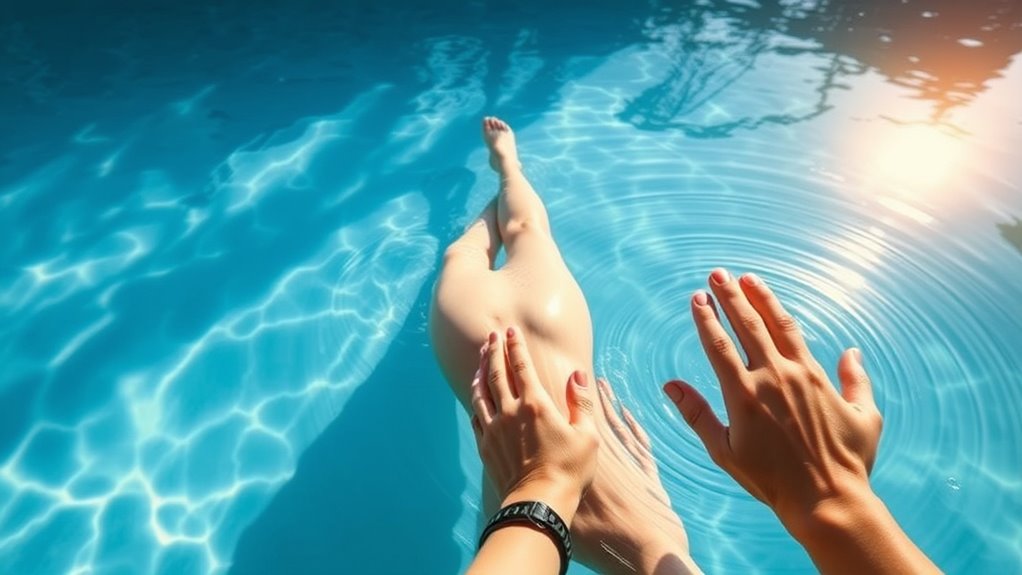
Lymphatic drainage in water offers a unique way to stimulate your lymphatic system through gentle, buoyant movements. When you immerse yourself in water, the natural properties of buoyancy and resistance work together to facilitate lymph flow without straining your muscles or joints. This form of aquatic therapy is especially beneficial if you’re recovering from injury or managing swelling, as it allows you to perform movements that are both effective and comfortable. As you move through the water, focus on engaging your breath control skills. Deep, controlled breathing enhances lymphatic circulation, helping to move lymph fluid more efficiently through your lymph nodes and vessels. By consciously slowing and deepening your breath, you activate the diaphragm, which acts as a pump to promote lymph flow and reduce fluid retention.
In aquatic therapy, your breath control becomes a crucial component. Instead of rapid, shallow breaths, you learn to synchronize your inhalations and exhalations with your movements. This synchronization not only improves your respiratory efficiency but also stimulates the lymphatic system, which relies heavily on muscle activity and diaphragmatic movement to circulate lymph. As you perform gentle, flowing movements in the water, focus on maintaining steady, deep breaths. This deliberate breathing pattern helps to relax your nervous system, reduce stress, and increase the effectiveness of lymphatic drainage. It also makes your movements more deliberate, guaranteeing that each action promotes lymph flow rather than hindering it.
The beauty of aquatic therapy lies in its adaptability; you can modify your movements and breathing patterns based on your comfort and progress. Whether you’re doing slow arm circles, leg lifts, or gentle twists, maintaining breath control ensures that your lymphatic system stays engaged. You might start with simple breathing exercises on land before shifting into water, or incorporate breath awareness directly into your aquatic movements. The key is consistency—regular sessions that emphasize breath control and gentle movement maximize lymphatic drainage benefits over time. Additionally, understanding the importance of local laws and resources can help you find qualified professionals or facilities to guide your practice safely.
Frequently Asked Questions
Is Water Temperature Critical for Effective Lymphatic Drainage?
Yes, water temperature is critical for effective lymphatic drainage. When you use warm water, it helps relax your muscles and enhances lymphatic efficiency, making the drainage more effective. Cold water, on the other hand, can constrict vessels, reducing lymph flow. By maintaining a comfortable, warm temperature, you optimize the process, allowing your lymphatic system to clear toxins and reduce swelling more effectively.
Can Water-Based Lymphatic Drainage Help With Chronic Swelling?
Think of aquatic therapy as a gentle tide that can help with chronic swelling. Water-based lymphatic drainage uses the natural buoyancy and movement to promote swelling reduction, making it effective for ongoing issues. By immersing yourself in controlled water techniques, you stimulate lymph flow and reduce fluid retention. This method offers a soothing, non-invasive approach that supports your body’s natural healing, especially for persistent swelling concerns.
Are There Age Restrictions for Water Lymphatic Drainage Techniques?
Age considerations do apply to water-based lymphatic drainage techniques. Generally, pediatric lymphatics require special attention, so it’s vital to consult a healthcare professional before proceeding with water lymphatic drainage for children. While adults can usually undergo these treatments safely, infants and young children may need modified techniques or alternative therapies. Always prioritize expert guidance to ensure safety and effectiveness for all age groups.
How Does Water Pressure Influence Lymph Flow During Therapy?
Water pressure considerably influences lymph flow during therapy by applying hydrostatic pressure, which helps move lymphatic fluid. As you submerge, water resistance increases, gently compressing tissues and promoting lymphatic drainage. The deeper you go, the greater the hydrostatic pressure, enhancing flow. However, too much pressure can be uncomfortable, so adjusting water depth and movement ensures effective yet safe therapy, supporting ideal lymphatic function.
Can Water Lymphatic Drainage Replace Traditional Manual Methods?
Water therapy can’t fully replace manual techniques for lymphatic drainage. While water provides gentle pressure and support, manual techniques offer precise, targeted stimulation that helps activate lymph flow more effectively. You benefit from the hands-on approach, which can address specific areas and tailor the treatment to your needs. Combining water therapy with manual techniques maximizes lymphatic drainage, making your overall treatment more thorough and effective.
Conclusion
You might find it surprising that water-based lymphatic drainage can boost circulation by up to 30%. By incorporating proper techniques and timing, you can enhance your body’s natural detox process and reduce swelling effectively. Remember, consistency is key—just like any wellness practice, regular sessions yield the best results. So, whether you’re a beginner or experienced, embracing these water techniques can transform your health routine and leave you feeling revitalized.