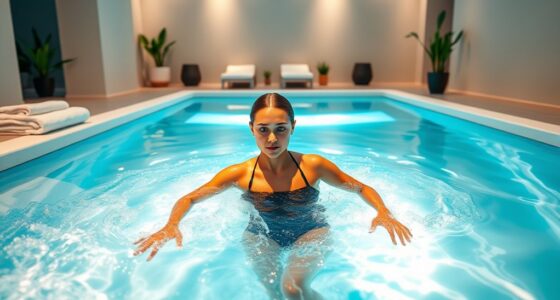
To stay active and cool during pregnancy, opt for gentle pool exercises like water walking, leg lifts, and arm circles in a safe, well-maintained environment. Use supportive swimwear and equipment such as buoyancy belts or water weights to boost stability. Always listen to your body, stay hydrated, and avoid activities that cause strain or loss of balance. Keep safety a priority—continue exploring tips to make your aquatic workouts enjoyable and safe.

Get pool and patio gear delivered free — and shop member deals
- Fast, free delivery on millions of items
- Access to Prime Big Deal Days deals on October 6–7
- Prime Video, Amazon Music and more included
Key Takeaways
- Use supportive equipment like buoyancy belts and resistance gloves to enhance stability and safety during exercises.
- Focus on gentle activities such as water walking, leg lifts, and arm circles to promote circulation and reduce swelling.
- Avoid exercises that cause loss of balance or strain, especially as pregnancy progresses.
- Always stay hydrated, take breaks, and listen to your body to prevent exhaustion.
- Choose a clean, well-maintained pool with proper safety measures and consult a healthcare professional before starting.

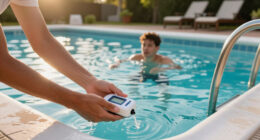
Exercising in the pool is a safe and effective way for pregnant women to stay active and maintain their fitness. The water’s buoyancy reduces joint stress and provides gentle resistance, making it easier to move comfortably. But before diving in, it’s essential to prioritize water safety. Always choose a clean, well-maintained pool with proper filtration and chemical levels. Avoid pools with strong currents or crowded areas that could increase the risk of accidents. Be cautious of slippery surfaces around the pool deck; wear non-slip shoes if possible, and always use handrails when entering or exiting the pool to prevent falls.
Prioritize water safety by choosing a clean pool, avoiding strong currents, and using handrails to prevent falls.
Using the right pool equipment can make your exercise routine safer and more effective. Start with comfortable, supportive swimwear that allows free movement while providing adequate support for your growing belly. Consider using pool noodles or buoyancy belts for added stability during certain exercises, especially if you’re new to water workouts. These tools help you maintain balance and confidence in the water. Resistance gloves or water weights can also add gentle resistance to your movements, helping to strengthen muscles without overexertion. Remember, always inspect your equipment beforehand to ensure it’s in good condition, free of tears or damage, to avoid accidents.
When exercising, keep water safety at the forefront. Never push yourself to the point of exhaustion; instead, listen to your body and take breaks as needed. Staying hydrated is just as important in the water as on land, so keep a water bottle nearby and sip regularly. Be mindful of your core stability and avoid exercises that could cause loss of balance or strain, especially as your pregnancy progresses. Gentle activities like water walking, leg lifts, and arm circles are excellent options. These movements help improve circulation, reduce swelling, and boost overall well-being.
To further enhance your safety, consider familiarizing yourself with water safety tips and emergency procedures specific to aquatic environments. These steps can help you respond quickly and confidently if needed. Finally, always consult your healthcare provider before starting any new exercise routine, including water workouts. They can offer guidance tailored to your pregnancy stage and any specific health considerations. It’s also wise to have a certified aquatic fitness instructor guide your sessions, especially if you’re unfamiliar with pool exercises. By combining water safety precautions with appropriate pool equipment, you can enjoy a safe, invigorating way to stay active throughout your pregnancy. Remember, the goal is to feel good, stay healthy, and keep cool during this special time.
Frequently Asked Questions
Can Pregnant Women Do High-Impact Pool Exercises Safely?
You might wonder if high-impact pool exercises are safe during pregnancy. Generally, it’s better to stick with low-impact alternatives to protect your joints and reduce the risk of falls. Always follow pool safety tips, like avoiding slippery surfaces and staying hydrated. Consult your healthcare provider before trying new exercises. Focus on gentle movements that keep you active and comfortable without overexerting yourself, ensuring a safe, enjoyable experience for both you and your baby.
How Often Should Pregnant Women Swim for Optimal Health Benefits?
You should aim to swim about three to four times a week for ideal health benefits. Focus on water safety and proper swimming techniques to prevent accidents and reduce strain. Be mindful of your energy levels and avoid overexertion. Listening to your body is key, and always consult your healthcare provider before establishing a routine. Regular swimming helps improve circulation, reduce swelling, and keep you cool and comfortable throughout your pregnancy.
Are There Any Water Temperature Guidelines for Pregnant Women?
You might wonder about water temperature when swimming during pregnancy. Safety guidelines suggest keeping the water between 83°F and 89°F to prevent overheating. Avoid hot tubs or very warm pools, as high temperatures can pose risks. Always listen to your body, stay hydrated, and consult your healthcare provider for personalized advice. Maintaining a safe water temperature helps guarantee you stay comfortable and safe throughout your pregnancy.
What Precautions Should Pregnant Women Take to Prevent Slips and Falls?
To prevent slips and falls in the pool, you should follow essential pool safety tips. Be cautious of hydrotherapy risks, such as slippery surfaces and sudden movements. Always wear non-slip shoes, hold onto handrails when entering or exiting, and avoid rushing. Stay close to the pool edge, and don’t overexert yourself. These precautions help keep you safe, ensuring you enjoy the benefits of water exercise without risking injury.
Can Water Exercises Help With Pregnancy-Related Swelling and Discomfort?
Water exercises can greatly help with pregnancy-related swelling and discomfort. The water’s buoyancy reduces pressure on your joints, providing joint relief and easing pain. It also encourages gentle movement, which can improve circulation and reduce swelling. By staying active in the pool, you support your overall comfort and health, making it easier to manage pregnancy symptoms. Always consult your healthcare provider before starting any new exercise routine.
Conclusion
Think of your pregnancy journey as a peaceful swim in a gentle lake. Just as you stay relaxed and cautious to enjoy the water, these safe pool exercises help you glide smoothly through your pregnancy. Keep moving with care, and let the water support you like a trusted friend. By staying active in the pool, you’re steering your ship steadily toward a healthy, happy arrival—calm, strong, and ready for the next adventure.
Halloween Picks
halloween
As an affiliate, we earn on qualifying purchases.