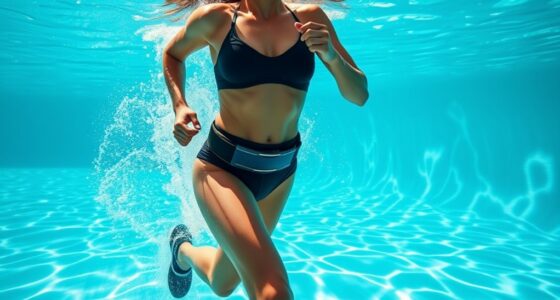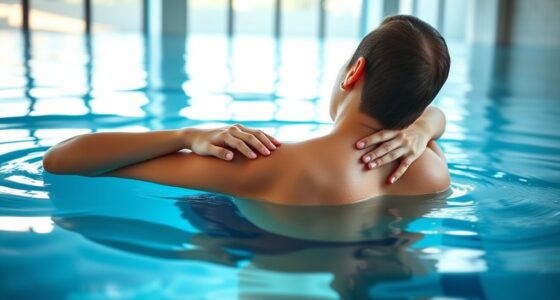

On recovery days, gentle pool mobility and stretching help your muscles repair and reduce fatigue. The water’s buoyancy supports your joints, making slow, controlled movements more comfortable. Focus on deep breathing and mindful stretches to relax your nervous system. This routine boosts circulation, calms your mind, and promotes overall relaxation. Keep exploring these techniques to discover how they can enhance your recovery and prep you for your next workout.
Key Takeaways
- Gentle pool mobility supports joint health and reduces injury risk through controlled, low-impact movements.
- Water buoyancy eases muscle tension and promotes relaxation during recovery exercises.
- Incorporating stretching in the pool enhances flexibility and blood flow with minimal joint stress.
- Deep breathing and mindfulness techniques during recovery boost oxygen flow and mental relaxation.
- A holistic routine combining mobility, stretching, and breathing fosters both physical healing and mental well-being.

Recovery days are vital for maintaining your overall health and optimizing your fitness progress. They give your body the chance to repair muscles, reduce fatigue, and prevent injuries. Instead of hitting the gym hard, you can focus on gentle activities that promote recovery, like pool mobility and stretching. These activities allow you to stay active without overtaxing your muscles, and they’re especially effective when combined with breathing techniques and mindfulness exercises. Incorporating mindful breathing during your recovery routines helps you stay relaxed and centered, making the most of your restorative efforts.
Recovery days support muscle repair, enhance relaxation, and promote overall well-being through gentle activities and mindful breathing.
When you’re doing gentle pool mobility, you benefit from the water’s buoyancy, which supports your body and reduces joint strain. As you move through slow, controlled motions in the water, focus on your breath—inhale deeply through your nose, filling your lungs completely, then exhale slowly through your mouth. This breathing pattern not only enhances oxygen flow but also calms your nervous system, promoting relaxation. Mindfulness exercises, such as paying close attention to how your muscles feel as they stretch or noticing the sensation of water against your skin, deepen your awareness and keep you present in the moment. This mindful approach prevents your mind from wandering to stressors or worries, which can hinder recovery. Additionally, practicing body awareness can enhance the effectiveness of your recovery routine.
Stretching in the pool is gentle yet effective. You can perform simple stretches like leg swings, arm circles, or gentle torso twists. As you stretch, maintain steady, deep breaths, focusing on elongating your muscles with each inhale and relaxing into the stretch with each exhale. This approach helps improve flexibility and blood flow, speeding up recovery. During these stretches, practice mindfulness exercises by observing how your body responds, noting areas of tension or tightness, and intentionally releasing those areas with your breath. This mindful engagement turns your stretching session into a calming, restorative ritual rather than just a physical activity.
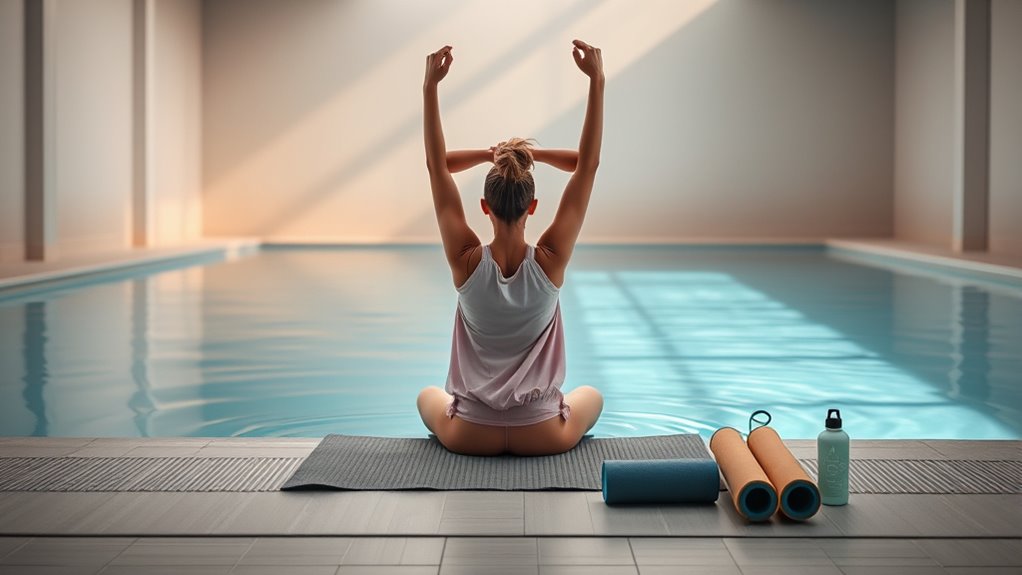
You might also incorporate mindfulness meditation or breathing exercises outside the pool, sitting quietly and focusing on your breath. By paying close attention to your inhale and exhale, you strengthen your mind-body connection, which enhances your overall recovery. These practices reduce stress hormones and promote a sense of calm, which is essential for muscle repair and mental clarity. When you combine gentle pool mobility, stretching, breathing techniques, and mindfulness exercises, you create a holistic recovery routine that benefits both your body and mind. This approach ensures you’re not just physically recovering but also nurturing your mental well-being, setting a solid foundation for your next workout.
Frequently Asked Questions
Can Pool Mobility Help Prevent Future Injuries?
Yes, pool mobility can help prevent future injuries by improving your joint flexibility and reducing muscle tension. When you engage in gentle pool exercises, the water’s buoyancy lessens impact on your joints, allowing you to move more freely and safely. Regularly practicing pool mobility boosts your range of motion, which is essential for injury prevention, especially during high-intensity activities or daily movements.
How Often Should Recovery Pool Sessions Be Scheduled?
You should schedule recovery pool sessions about 1 to 2 times a week, depending on your training intensity and goals. Use frequency planning to determine the best routine, ensuring you allow your muscles adequate rest. Keep each session around 20 to 30 minutes, focusing on gentle mobility and stretching. This approach helps prevent injury, enhances flexibility, and promotes quicker recovery without overtaxing your body.
Are There Specific Stretches Best for Post-Workout Recovery?
Imagine your muscles as elastic bands gently stretching—certain stretches make all the difference. For post-workout recovery, focus on stretching techniques that target major muscle groups, like hamstring and quad stretches, to promote flexibility and aid injury prevention. Incorporate gentle pool mobility and stretching to soothe sore muscles, improve circulation, and prevent injuries. Consistent, mindful stretching helps your body recover faster, keeping you active and resilient.
Is Pool Recovery Suitable for All Fitness Levels?
Pool recovery is suitable for most fitness levels because it offers low-impact exercise and water resistance that reduce joint strain. If you’re a beginner or recovering from an injury, the gentle resistance helps you stay active without overexerting yourself. More advanced individuals can also benefit by using water resistance to enhance flexibility and strength. Overall, pool recovery provides a safe, adaptable option for everyone looking to recover actively.
What Equipment Is Recommended for Gentle Pool Mobility Exercises?
For gentle pool mobility exercises, you’ll want waterproof equipment like aquatic resistance gloves or ankle weights to enhance movement. Imagine someone recovering from injury using aquatic resistance to improve strength without strain. Water temperature should be warm enough to relax muscles, around 82-86°F. This setup helps you enjoy fluid, low-impact movement, making recovery effective and comfortable. Resistance tools and appropriate water temperature are key for safe, soothing workouts.
Conclusion
So, there you have it—your golden ticket to skipping the gym and pretending you’re a graceful dolphin instead. Recovery days aren’t just about avoiding sore muscles; they’re about giving your body a break from your relentless quest for perfection. So, go ahead, indulge in some gentle pool mobility and stretching—your muscles will thank you, and maybe, just maybe, you’ll finally master the art of doing nothing without feeling guilty. Cheers to recovery—because even superheroes need a day off.