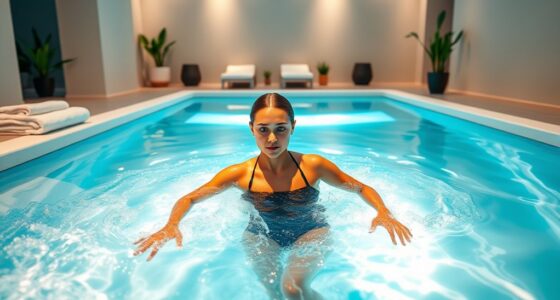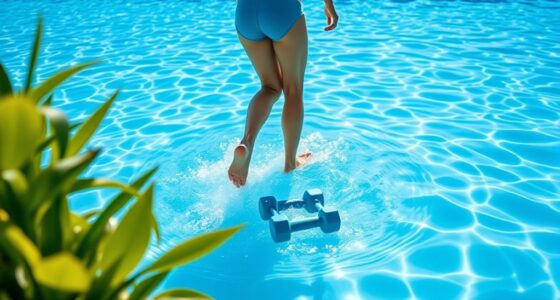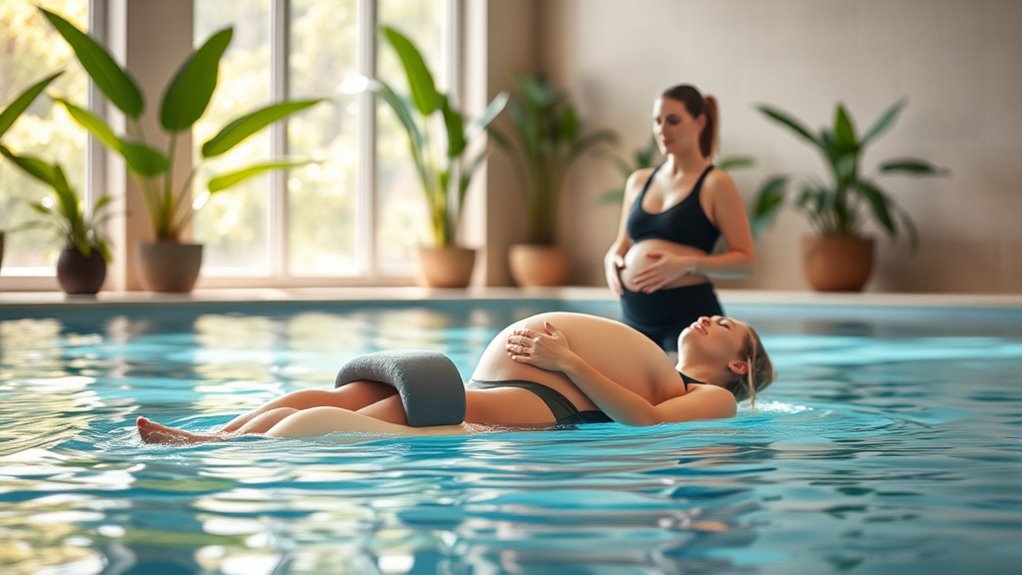

Prenatal water workouts are generally safe when you follow proper safety precautions tailored to each trimester. In your first trimester, focus on gentle, controlled movements and avoid overexertion, while in the second trimester, water buoyancy helps ease joint discomfort as your belly grows. During your third trimester, prioritize stability and listen to your body, stopping if you feel any discomfort. Continuing your safe water routine can support comfort and wellness throughout pregnancy. Stay with us to learn detailed guidelines for each stage.
Key Takeaways
- Consult your healthcare provider before starting water workouts, especially when pregnant, to ensure safety across all trimesters.
- Maintain water temperature around 83–86°F to prevent overheating and ensure comfort during water exercises in each trimester.
- Focus on gentle, low-impact movements tailored to your trimester’s comfort and avoid strenuous or high-impact activities.
- Be cautious of balance changes; use supportive footwear and avoid deep water or jumping, particularly in later pregnancy stages.
- Listen to your body, take breaks as needed, and cease activity if experiencing symptoms like dizziness, contractions, or discomfort.
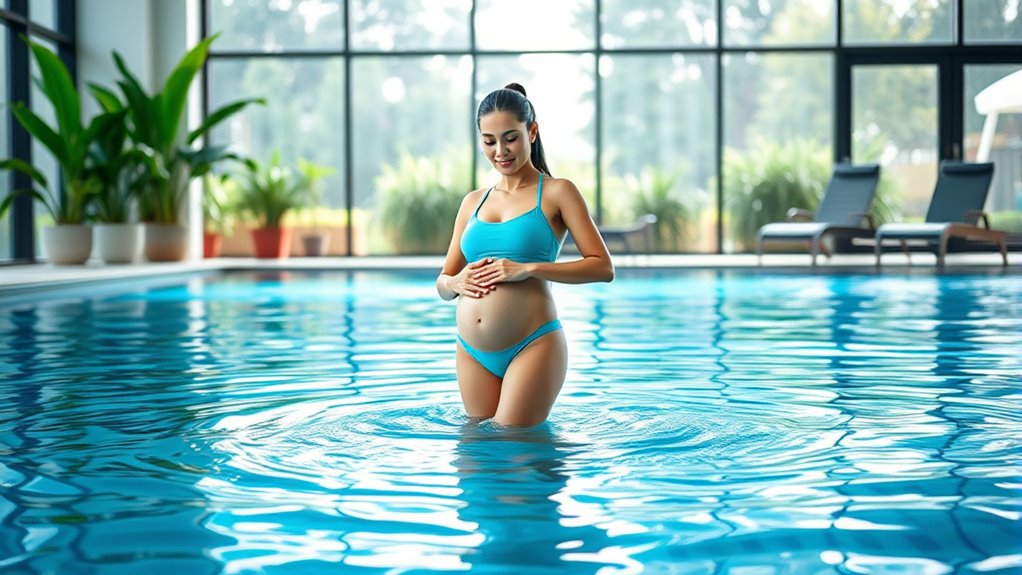
If you’re pregnant and looking for a safe way to stay active, prenatal water workouts offer an excellent option. Water exercise safety is a top priority during pregnancy, and engaging in these workouts can help you maintain fitness while reducing strain on your joints and muscles. One of the main reasons many women choose water workouts is because of the hydrotherapy benefits they provide. Hydrotherapy helps soothe aching muscles, alleviate joint discomfort, and improve circulation, all of which are common concerns during pregnancy. The buoyancy of water supports your growing belly and relaxes your body, making movement easier and more comfortable. Unlike land-based exercises, water workouts minimize the risk of falls or injuries, giving you peace of mind as you stay active.
Prenatal water workouts provide hydrotherapy benefits that soothe muscles, improve circulation, and support your growing belly safely.
When you combine hydrotherapy benefits with proper water exercise safety, you create a supportive environment for your changing body. The water’s resistance gently tones your muscles, helping you build strength without overexerting yourself. This resistance also boosts circulation, which can reduce swelling in your legs and feet—a common pregnancy complaint. Additionally, the cooling effect of water can help regulate your body temperature, preventing overheating during your workout. Because water exercises are low-impact, they’re suitable throughout most pregnancy trimesters, but it’s crucial to listen to your body and avoid pushing beyond your comfort zone.
Ensuring water exercise safety during pregnancy involves some simple precautions. Always check with your healthcare provider before starting any new exercise routine, especially water workouts. Make sure the pool is clean, well-maintained, and has a comfortable temperature—generally around 83 to 86 degrees Fahrenheit—to prevent overheating. Wear supportive, non-slip footwear and avoid diving or jumping into the pool. It’s also best to avoid overly strenuous routines and focus on gentle, controlled movements. Stay hydrated and take breaks as needed, especially if you feel dizzy or overly tired. If you experience any discomfort, contractions, or unusual symptoms, stop your workout and consult your healthcare provider promptly.
Incorporating prenatal water workouts into your routine can be both enjoyable and beneficial. The hydrotherapy benefits and water exercise safety measures work together to create a safe environment for staying active during pregnancy. They help you feel supported, reduce discomfort, and prepare your body for labor and delivery. By listening to your body and following safety guidelines, you can make the most of water workouts, ensuring a healthy, comfortable pregnancy while enjoying the many advantages of exercising in water.
Frequently Asked Questions
Can Water Workouts Replace Prenatal Yoga or Pilates?
Water workouts can complement prenatal yoga or Pilates, but they shouldn’t fully substitute them. Hydrotherapy benefits, like reduced joint strain and improved circulation, make aquatic resistance a great addition. However, yoga and Pilates also focus on flexibility, breathing, and mental relaxation that water workouts might not fully cover. Combining both ensures you get the full range of benefits for your body and mind during pregnancy.
Are There Any Specific Water Exercises to Avoid During Pregnancy?
During pregnancy, you should avoid high risk activities like deep diving or intense water sports that could cause injury. Be cautious with exercises that involve jumping, rapid movements, or sudden twists, as they may strain your joints or cause falls. Always follow diving precautions and consult your healthcare provider before trying new water exercises. Stick to gentle, low-impact movements to stay safe and comfortable throughout your pregnancy.
How Does Water Temperature Affect Safety During Prenatal Workouts?
Water temperature is like a gentle hug—too hot or cold can be unsafe. When you exercise in water that’s too warm, it can raise your core temperature, risking dehydration or overheating. Cold water might cause chills or muscle cramps. For water safety, keep the temperature moderate, around 83-86°F, to stay comfortable and safe. Always listen to your body and consult your healthcare provider for personalized advice.
Is There an Ideal Time of Day to Do Water Workouts?
You should aim to do water workouts when they fit best into your daily routines, but morning or early afternoon often work best. Timing considerations include avoiding the hottest parts of the day to prevent overheating, especially during pregnancy. Choose a time when you feel energized and relaxed, so you can fully enjoy and benefit from the exercise. Consistency is key, so pick a time that becomes part of your daily routine.
Can Water Workouts Help With Specific Pregnancy-Related Discomforts?
Water workouts can definitely help with pregnancy-related discomforts. They provide stretching benefits and joint relief by reducing pressure on your joints and easing stiffness. The gentle resistance and buoyancy of water support your movements, making it easier to stretch and strengthen muscles without strain. Regular water exercise can also alleviate swelling and back pain, helping you feel more comfortable and energized throughout your pregnancy.
Conclusion
Staying active with prenatal water workouts can be safe and beneficial when tailored to your trimester. Remember, nearly 60% of pregnant women find water exercises help reduce discomfort and improve mood. Always listen to your body, stay hydrated, and consult your healthcare provider before starting any new routine. With proper precautions, you can enjoy the soothing benefits of water workouts throughout your pregnancy, supporting both your health and your baby’s development.