
TL;DR
Homes & Gardens has published October guidance for preparing outdoor begonias for winter. The report recommends lifting and storing tuberous begonias, moving wax begonias indoors, removing damaged foliage, checking for pests and adjusting care as plants slow down.
Homes & Gardens has published an October checklist for preparing begonias for winter, advising gardeners to lift and store tuberous varieties and move tender wax begonias indoors before freezing weather. The seasonal guidance also recommends removing damaged leaves, checking for pests and reducing care as plants enter slower growth.
The report distinguishes between tuberous begonias, which can be lifted and stored dormant, and fibrous wax begonias, which are better moved indoors. It says tuberous types often have softer foliage and potato-like tubers, while wax begonias have thin, fibrous roots and rounded, waxy leaves. Gardeners should check the plant’s type before deciding how to overwinter it.
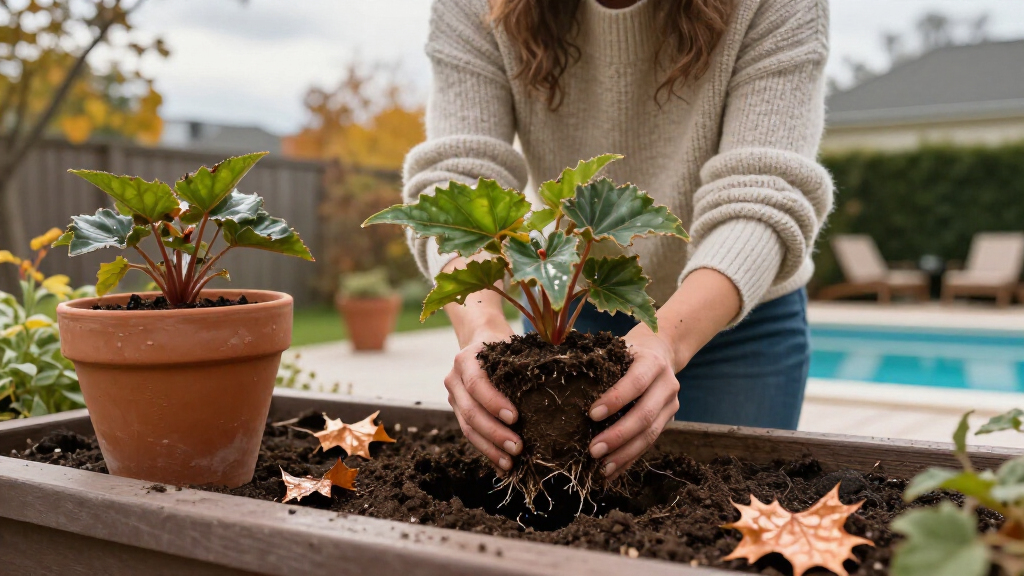
For tuberous begonias, the article advises letting foliage yellow and die back naturally, reducing watering and stopping feeding. Once stems have been cut back a few inches above the tuber, the tubers can be lifted carefully, dried in a frost-free, ventilated place for a couple of weeks, and packed in a box or crate with shredded paper or sawdust. Cool, dark, frost-free storage around 40–50°F is recommended; soft or mushy tubers should be discarded.
Wax begonias should be brought inside to a bright, cool windowsill, according to the report. Before moving plants indoors, remove damaged or rotting leaves, inspect beneath foliage for pests such as mealybugs and spider mites, and clean leaves. The advice cautions against hard pruning because begonias slow down in winter, and says not to remove more than one-third of the plant at a time.
Protecting Begonias From Frost
The timing matters because freezing temperatures can damage tender begonias left outdoors, while plants moved inside with pests or decaying leaves may create problems for other houseplants. October preparation gives gardeners a chance to choose the right approach for each type before colder weather arrives.
The advice is also practical for preserving plants from one growing season to the next. Properly dried and stored tubers can be kept dormant until spring, while wax begonias can continue growing indoors. The report presents these measures as seasonal gardening guidance, not a guarantee that every plant will survive; local conditions, plant health and handling can affect results.
As an affiliate, we earn on qualifying purchases.
Two Begonia Types, Different Winter Care
The report notes that there are more than 2,000 begonia species, with fibrous wax and tuberous types among the popular garden choices. Many tuberous begonias flower from spring into fall, while wax begonias are treated as tender plants for cold-weather purposes. The two groups therefore need different winter routines rather than one shared method.
Homes & Gardens says begonias are generally hardy across USDA zones 9–11, but it urges gardeners to account for their own hardiness zone. That broad range does not mean every begonia can stay outside everywhere within it: frost exposure and local growing conditions matter. The report’s focus is October preparation, ahead of winter cold and the possibility of returning plants outdoors after late frosts in spring.
“Let them die back on their own. Once the leaves start to yellow, cut the watering down and stop feeding.”
— Mirela Bajic, senior garden designer at House Designer, as quoted by Homes & Gardens
Local Frost Dates Still Matter
The report does not provide a single date that will suit every garden. When to lift or move a begonia depends on local weather, the plant’s type and its condition; the article does not specify a frost forecast or regional schedule. Its hardiness-zone guidance is broad, so gardeners should use local conditions when timing the work.
The source material also does not establish a survival rate for the recommended steps or address every begonia species and cultivar. The five-step checklist is presented as general seasonal advice, and individual results may vary. The supplied excerpt ends partway through its final tip, so it does not provide the full wording or detail of the fifth recommendation.
Check Plants Before Cold Arrives
Gardeners can start by identifying whether each plant is tuberous or fibrous, then inspect it for damage and pests before choosing storage or indoor care. Those storing tubers should check them regularly through winter and remove any that become soft, as recommended by Bajic.
Wax begonias can remain indoors until the risk of late spring frost has passed, after which they may be reintroduced to the garden. The report gives no specific dates for that return; gardeners should follow local weather and growing conditions.
Key Questions
What should I do with tuberous begonias in October?
Let the foliage yellow and die back, reduce watering and stop feeding. Then cut the stems back, lift the tubers carefully, dry them for a couple of weeks in a frost-free, ventilated place, and store them in a cool, dark, frost-free spot.
Should wax begonias be brought indoors for winter?
The Homes & Gardens report recommends moving tender wax begonias indoors before freezing weather. It suggests a bright, cool windowsill and bringing the plant back outside only after late frosts have passed.
How can I tell a tuberous begonia from a wax begonia?
The report describes tuberous begonias as having firm, potato-like tubers and softer foliage. Wax begonias generally have thin, stringy roots and rounded, waxy leaves.
What temperature is recommended for storing begonia tubers?
Bajic recommends a cool, dark, frost-free location, with about 40–50°F as an ideal range. The tubers should be checked during storage, and soft ones discarded.
Should I prune begonias heavily before winter?
No. The report advises removing damaged or diseased foliage but avoiding hard pruning as growth slows in winter. It also recommends limiting pruning to no more than one-third of the plant at a time.
Source: rss