TL;DR

Get pool and patio gear delivered free — and shop member deals
- Fast, free delivery on millions of items
- Access to Prime Big Deal Days deals on October 6–7
- Prime Video, Amazon Music and more included
Gardening Know How reports that fall rain may not adequately water trees and shrubs planted within the past 6–12 months, because their root balls can stay dry even when nearby soil looks wet. The report advises checking moisture near the roots and continuing to water as needed until the ground freezes; it does not provide a universal rainfall or watering schedule.
Fall rain may not be enough to keep trees and shrubs planted in the past 6–12 months hydrated, according to a Gardening Know How report on autumn watering. The report says shallow showers can wet mulch and surface soil while leaving a new plant’s root ball dry, making soil checks and watering as needed important until the ground freezes.
The report distinguishes recently planted trees and shrubs from established plants. Older trees and shrubs generally have broader root systems extending into native soil, while a newly transplanted plant may still depend heavily on the original root ball. That root ball can dry faster than the surrounding ground, the report says, particularly when nursery growing medium differs in texture from local clay or loam.
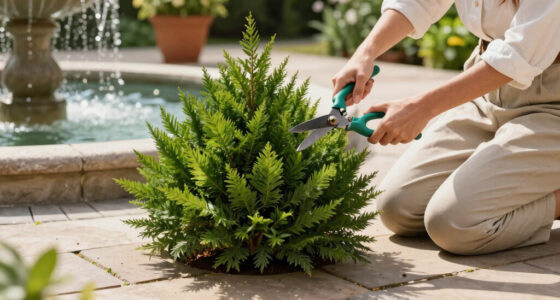
Rainfall that makes a yard look wet does not necessarily show how much water has reached those roots. Light showers may darken mulch or moisten only the top layer of soil, with some water evaporating or running off. The report also notes that dense evergreen foliage can intercept and redirect rain away from the roots beneath it.
Gardening Know How recommends maintaining adequate moisture while roots continue establishing in fall, until soil freezes solid. It does not give a single watering interval or rainfall threshold for every garden. Its practical point is to check the soil around the root ball rather than assume that wet-looking surfaces mean the plant has received enough water.
Why Root-Ball Moisture Matters
The immediate concern is that dry roots can be hard to spot. According to the report, a plant with fall root damage may still leaf out in spring by relying on stored reserves, then struggle or die when warmer weather increases demand for water. That delay can make the original cause less obvious to gardeners.
Insufficient moisture can also leave new plants less prepared for winter. The report links dry conditions to root injury, frost-heaving and winter burn in evergreens, whose foliage continues to lose water during bright or windy winter weather. These are risks described by the source, not outcomes for every newly planted shrub or tree.
As an affiliate, we earn on qualifying purchases.
New Plantings Differ From Established Roots
Autumn’s cooler temperatures can reduce water loss from leaves, and established plants may draw on water through extensive root systems. Those conditions help explain why gardeners may cut back watering as summer ends. The report says that assumption does not transfer reliably to recent transplants, whose roots have not spread as widely into surrounding soil.
Root growth can continue in fall while soil remains warm enough, according to Gardening Know How. The source gives a threshold of above 40°F (4°C) for continued root growth, while noting that timing varies by conditions. It also says that soil moisture and mulch affect how roots experience cold; mulch can help protect soil but is not proof that the root ball is moist.
“The yard may look watered, but the root ball often remains bone dry.”
— Gardening Know How report
Rainfall Needs Vary by Garden
The source does not set a universal watering schedule, amount of water, or rainfall measurement for new plantings. Soil type, weather, plant size, planting date, drainage and exposure can affect how quickly the root ball dries. It also does not report survey data or research quantifying how often fall rain fails to provide enough water.
The report’s guidance is general gardening advice, not a diagnosis for a specific plant. It does not say that every new tree or shrub needs watering after every rain, or that every dry-looking surface means roots are dry. Gardeners need to check moisture at the root ball and consider local conditions; the article gives no location-specific instructions.
Check Soil Before Watering
For gardeners with recent plantings, the next step is to assess moisture where the roots are rather than rely on wet mulch, pavement or the appearance of the surrounding yard. If the root ball is dry, water it as needed and continue monitoring through fall, stopping when the soil freezes solid, in line with the report’s guidance.
Conditions will differ from yard to yard, and the source does not specify a fixed interval for checking or watering. As temperatures fall and weather changes, gardeners should keep judging the moisture at the plant’s roots rather than treating rainfall alone as a reliable measure.
Key Questions
Is fall rain enough for newly planted trees and shrubs?
Not always. Gardening Know How says light rain can wet the surface without adequately moistening a new plant’s root ball. Check the soil around the roots rather than relying on appearances.
How long should I keep watering a new planting in fall?
The report advises maintaining adequate moisture until the ground freezes solid. It does not provide a fixed schedule, so watering depends on rainfall, soil and the plant’s conditions.
Why can a root ball dry when the surrounding soil is damp?
Nursery growing medium may drain differently from native soil, creating a moisture mismatch at the boundary. The report says a root ball can remain dry even when nearby soil feels damp.
Do evergreen shrubs need attention in fall?
The report says evergreens can be vulnerable because their foliage continues losing water during winter weather. If frozen roots cannot replace that water, foliage may suffer winter burn.
Does mulch replace fall watering?
No. The report says mulch can help protect soil moisture, but it does not show that the root ball is adequately watered. Check moisture at the roots and water as needed.
Source: rss
Halloween Picks
halloween
As an affiliate, we earn on qualifying purchases.