
TL;DR
An Ideal Home gardening report sets out five steps for planting shrubs: soak the roots, prepare the soil, dig a wide hole, position the root ball level with the ground, then water and mulch. Horticultural experts quoted in the report say planting depth, drainage and aftercare can affect how well shrubs establish.
Ideal Home has published a five-step guide to planting shrubs, advising gardeners to soak roots, prepare the soil, dig a wide hole, set the root ball level with the surrounding ground, and water and mulch after planting. The report, which cites advice from horticultural experts at J. Parker’s and Thompson & Morgan, says planting depth and soil conditions can affect whether a shrub establishes well.

Get pool and patio gear delivered free with Prime
- Fast, free delivery on millions of items
- Prime Video, Amazon Music and more included
- Member-only deals all year
The report recommends soaking a shrub’s roots thoroughly before planting. Paul Parker of J. Parker’s says this can help reduce stress on the plant. While the roots soak, gardeners should clear perennial weeds and break up compacted ground, according to Annelise Brilli, a horticultural expert at Thompson & Morgan.
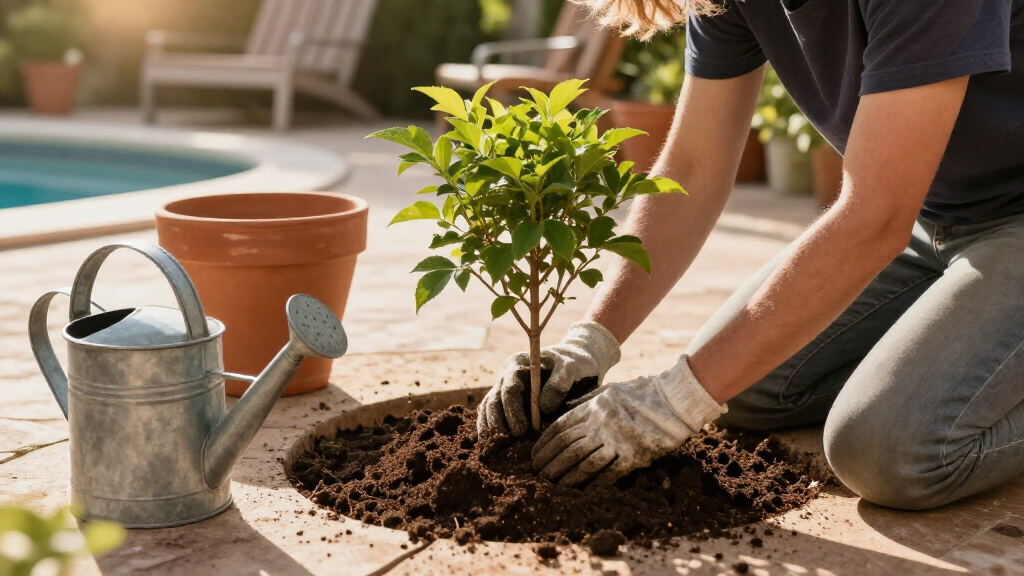
For the planting hole, Parker advises digging a little deeper than the plant’s pot and about three times as wide, while loosening soil underneath and around it. Brilli says the top of the root ball should sit level with the surrounding soil; a cane laid across the hole can help check the height. Backfill with soil and firm it gently without damaging the roots.
After planting, give the shrub a thorough watering, even if the soil is already damp, Brilli advises. She recommends spreading mulch in a wide circle to retain moisture and suppress weeds, while leaving a 10-centimetre gap around the stems. The report also advises deep watering when needed rather than frequent, small amounts.
Why Planting Depth and Drainage Matter
The advice focuses on problems that can affect a shrub after planting, not just the task of getting it into the ground. A root ball set too deep may have limited access to oxygen, while one left too close to the surface can be exposed and dry out, Brilli says. Correct positioning and firm backfilling help the plant remain stable as its roots grow.
Soil preparation and watering also shape early establishment. The report warns that adding organic matter directly to the planting hole may hold excess water in heavy or poorly drained soil. Mulch can help conserve moisture, but piling it against stems can trap dampness and encourage rot, according to Brilli. These steps are particularly relevant to gardeners planting new shrubs in autumn, when the report says soil may retain warmth and moisture.
Products Worth Considering

Philips Hue Bridge Pro Starter Kit with 4 A19 E26 Color Smart Bulbs

eufy Security eufyCam C37 4-Camera Kit with 360° Pan and Tilt, Auto Tracking, 2K Video, and Solar Panels

LG 55-Inch QNED73B Mini LED 4K Smart TV (2026)
As an affiliate, we earn on qualifying purchases.
Autumn as a Planting Window
The Ideal Home report presents autumn as a suitable time to plant shrubs, saying the soil may still be warm from summer and is often moister, giving roots time to establish before spring. This is seasonal guidance in the article, not a guarantee that conditions will suit every site or shrub.
The guide concentrates on five practical actions: soak the roots, prepare the ground, dig the hole, position and backfill the shrub, then water and mulch. It does not name particular shrub varieties or provide different instructions for specific soil types, so gardeners may need to check the needs of the plant they are buying.
“Douse the shrub roots in water until completely soaked.”
— Paul Parker of J. Parker’s, quoted by Ideal Home
Advice Depends on Site Conditions
The report does not specify a publication date, identify the best planting conditions for individual shrub species, or give a single watering schedule for all gardens. Soil drainage, weather, plant size and local conditions can vary, so the guide’s general recommendations may not apply identically in every case.
The source describes autumn as a favourable planting period but does not compare it with other seasons or provide supporting trial data. Its recommendations are attributed gardening advice rather than a report of new research. Readers should check plant-specific instructions, particularly where the soil is very wet, compacted or poorly drained.
Care After the Shrub Goes In
After planting, gardeners should monitor the shrub and water deeply when it needs it, with closer attention during dry spells. Brilli says hot, dry springs can be challenging because new leaf growth needs moisture before the root system has had time to develop.
The report does not set out a formal schedule or a next publication milestone. Its practical next step is continued care: keep mulch away from the stems, watch soil moisture and adjust watering to conditions as the shrub establishes.
Key Questions
How wide should the planting hole be?
Paul Parker advises digging a hole about three times as wide as the pot and a little deeper, then loosening the soil below and around it.
How deep should a shrub be planted?
Set the top of the root ball level with the surrounding soil, says Thompson & Morgan’s Annelise Brilli. A cane placed across the hole can help check the height.
Should I add compost or other organic matter to the hole?
Brilli advises against adding organic matter directly to the planting hole as a general practice. In heavy or poorly drained soil, it may hold excess moisture around the roots and settle as it breaks down.
How should I mulch a newly planted shrub?
Spread mulch in a wide circle to help retain moisture and suppress weeds, but leave about 10 centimetres clear around the base. The report warns that mulch against stems can trap moisture and encourage rot.
How often should I water the shrub after planting?
The report recommends watering thoroughly after planting and then watering deeply when needed, rather than giving small amounts frequently. Check the shrub more closely during dry spells; the source does not provide a fixed schedule for every plant and garden.
Source: rss