TL;DR

Get pool and patio gear delivered free with Prime
- Fast, free delivery on millions of items
- Prime Video, Amazon Music and more included
- Member-only deals all year
An Amateur Gardening report advises improving garden soil with homemade compost, leaf mould, manure and other organic matter rather than relying only on commercial fertiliser. It also suggests reusing old container compost, leaving pea and bean roots in place, and collecting leaves. The report offers gardening guidance, not results from a new trial.
Amateur Gardening has published advice urging gardeners to improve soil with compost, leaf mould and other organic matter, rather than waiting for plants to struggle and then relying on commercial fertiliser. The report says organic material can condition different soil types and support organisms that contribute to soil structure and plant growth.
The article recommends spreading a layer of homemade compost over garden borders and around trees. Its author says the compost is made from kitchen peelings, prunings, clippings and grass cuttings, and identifies well-rotted leaf mould and manure as other useful soil conditioners. These materials break down over time; the report says worms help move them deeper into the soil.
According to the article, organic matter can improve the structure of both thin soils and heavy clay soils. It also feeds soil-dwelling organisms, including mycorrhizal fungi, which the report links with root development and growth. The article presents this approach as a way to nourish plants through the soil, rather than treating plant growth only with a quick application of commercial fertiliser.
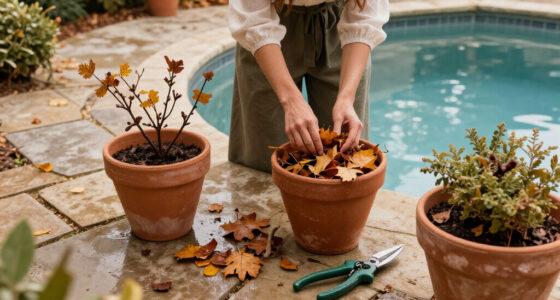
The report lists several additional steps: reuse old container or growbag compost as a soil conditioner; leave pea and bean roots in the ground after harvest or grow green manures; collect fallen leaves for compost or leaf mould; and mow leaves on lawns so they can return to the grass. It also encourages gardeners to support beneficial fungi and microorganisms. These are practical recommendations from the publication, not findings from a comparative experiment described in the supplied material.
Building Soil Health Over Time
The advice shifts attention from individual plants to the condition of the ground they grow in. Adding organic material can make use of garden and kitchen waste while returning it to beds and borders, and may help address differences between soil types. For gardeners, this offers a maintenance approach that can be repeated seasonally rather than relying solely on fertiliser when plants appear unhealthy.
The report also highlights soil life as part of that process. Worms, fungi and other microorganisms are described as contributing to soil structure and root support. The article does not quantify the likely effect or establish that organic matter will remove the need for fertiliser in every garden; soil conditions, plant needs and the materials used will vary.
Products Worth Considering

Levoit Eleva 300X Air Purifier with Sealed HEPA Filtration

Levoit Vital 100S-P Air Purifier with Washable Pre-Filter

Philips Hue Play Screen Sync and 65-Inch Play Gradient Smart TV Light Strip
As an affiliate, we earn on qualifying purchases.
The Report’s Practical Soil Advice
The article is framed around the author’s experience gardening on chalky soil, where different parts of the garden have different needs. The author notes that some areas benefit from leaves falling from deciduous trees each autumn, while other parts require additional care. That observation is personal experience, rather than a claim that the same treatment suits every garden.
Its central recommendation is to feed the soil with decomposed organic matter. The article contrasts this with applying commercial fertiliser as a short-term response when plants fail to thrive. It does not provide a controlled comparison, product recommendations or a detailed schedule for different soil conditions. Readers are advised to treat the listed practices as general gardening guidance and adapt them to their own plots.
“feed the soil, not the plant”
— Amateur Gardening report
What the Advice Does Not Establish
The supplied report does not give a publication date, trial data or measurements showing how much particular amendments improve soil or plant growth. It also does not specify application rates, soil-testing results or how the advice should change for different crops and garden conditions. Its claim that plants may not need commercial fertilisers is presented as the author’s gardening guidance, not as a universal finding.
How much compost, manure or leaf mould a garden needs will depend on its existing soil and the material’s condition. The source does not provide a way to assess those factors or compare homemade amendments with commercial products. Gardeners should not assume that one treatment will work identically across all beds.
Seasonal Steps for Gardeners
The author says they plan to spend the following week spreading homemade compost where it is most needed. The broader recommendations point to recurring seasonal tasks: collect leaves in autumn, add suitable organic matter to beds and borders, and leave pea and bean roots in place after harvesting. The source does not announce a follow-up study or a scheduled update; it directs readers to Amateur Gardening for more gardening advice.
Key Questions
What is the report’s main recommendation?
It recommends improving soil with organic matter, such as homemade compost, well-rotted leaf mould and manure, rather than relying only on commercial fertiliser when plants struggle.
Can old container compost be reused?
The article says old container or growbag compost may have lost some of its growing strength but can still be used as a soil conditioner.
Why leave pea and bean roots in the ground?
The report says pea and bean roots can contribute nitrogen as they break down. It also recommends growing green manures as another way to add organic material to soil.
Does the article prove that fertiliser is never needed?
No. The supplied material describes the author’s advice and experience, but provides no trial data establishing that organic matter can replace fertiliser in every garden or situation.
Source: amateurgardening.com