
TL;DR

Get pool and patio gear delivered free with Prime
- Fast, free delivery on millions of items
- Prime Video, Amazon Music and more included
- Member-only deals all year
A Livingetc report draws on interior designers’ advice that more than one rug can help distinguish areas in an open-plan room without adding walls. The designers recommend linking rugs through color, pattern or texture, and choosing between side-by-side placement and layering based on the room’s size and layout.
Interior-design experts cited by Livingetc say more than one rug can help define living and dining areas in an open-plan room, provided the rugs relate to one another and suit the layout. Their advice addresses a common decorating decision: how to give different activities their own visual zones without blocking the room or making its floor plan feel fragmented.
The report presents rugs as a way to create soft boundaries between areas that share one footprint. A larger rug beneath a sofa and chairs can anchor a seating group, while another under a dining table can make the dining area feel distinct. The report says the rugs do not need to match, but suggests they share a visual connection, such as a color, a comparable level of contrast or a balance between a patterned rug and a quieter one.
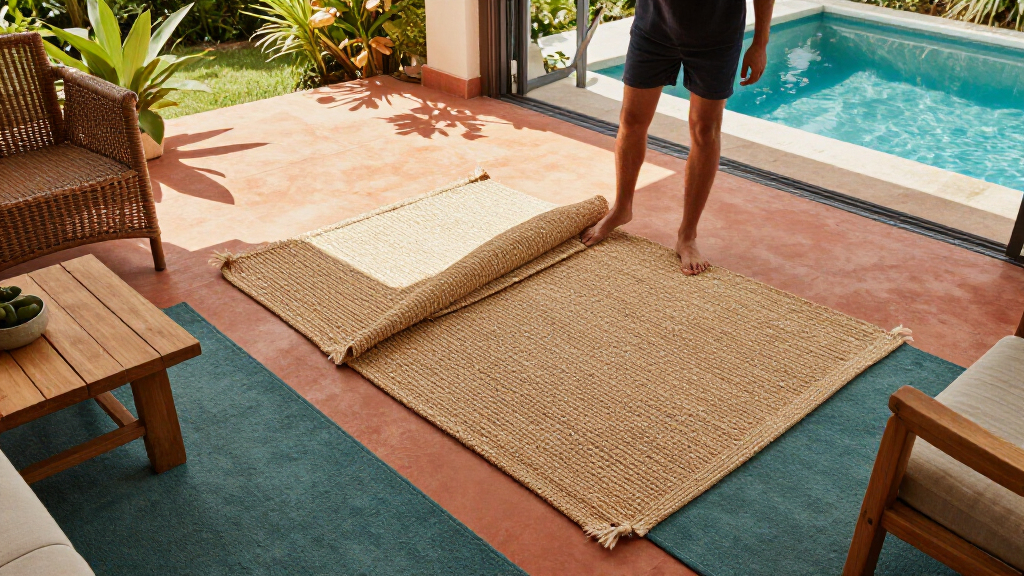
For a single seating area, the report describes layering as an alternative to placing rugs in separate zones. It recommends using a larger, restrained rug as the foundation, then adding a smaller accent rug with a stronger pattern, vintage look or accent color. Designer Marie Flanigan of Marie Flanigan Interiors says, “The next layer is the accent layer, and should be a slightly smaller rug, where you can add personality and introduce more colors.” The article says this approach may also help when a preferred rug is not available in a large enough size or is costly.
Side-by-side rugs may be more practical in a larger room with space for distinct furniture groupings. If two rugs are being used together to cover a broad area, Ann Marie Cousins, founder of AMC Design, advises hiding their join beneath a coffee or dining table where possible. The report cautions that in smaller rooms, separate rugs can leave an awkward gap or make the arrangement feel unintentionally divided.
Rugs Can Mark Zones Without Walls
In open-plan homes, the living, dining and kitchen areas often share a continuous space. Rugs offer a way to signal where one activity ends and another begins while keeping sightlines open. That can help furniture groupings feel deliberate and make a large, undefined room easier to use without installing a permanent divider.
The advice also highlights a trade-off: adding rugs does not automatically improve a room. If their patterns, colors or placement compete, they may make the floor feel busy or the zones disconnected. The practical takeaway is to plan around furniture, room size and visual balance, rather than treating a second rug as a simple decorative addition.
Products Worth Considering

LEVOIT Vital 200S-P Smart Air Purifier for Large Rooms

Shark Navigator Swivel Pro Upright Vacuum NV151

Dyson Ball Animal 3 Upright Vacuum
As an affiliate, we earn on qualifying purchases.
Choosing Between Layers and Separate Zones
The Livingetc report distinguishes between two uses for multiple rugs. Side-by-side placement is intended to mark separate areas, such as a lounge and dining space, with each rug aligned to the furniture it supports. Layering places a smaller rug over a larger one within the same area, creating a base and an accent rather than separate boundaries.
To make different designs work together, the article recommends repeating a color, pairing a bold pattern with a quieter one, or using texture as a link. It also advises considering surrounding flooring, upholstery and artwork. Material and feel can vary by function: the report suggests a flatweave may suit the area beneath a dining table, while a softer pile may make a seating area feel more inviting. It does not provide a fixed sizing formula or claim that one layout suits every room.
““Rugs are a great way to zone a space within your home, working particularly well in open-plan layouts such as a living room.””
— Ann Marie Cousins, founder of AMC Design, as quoted by Livingetc
No One Layout Fits Every Room
The report offers design guidance, not a universal rule. The supplied material does not specify measurements for rug sizes, minimum gaps or how much overlap is appropriate, and it does not establish that two rugs will suit every open-plan layout. The best arrangement will depend on the room’s dimensions, furniture placement and the visual relationship between the rugs.
The source also does not provide independent testing or consumer data comparing these arrangements. Its recommendations are attributed to designers and should be read as professional opinions, not as evidence that a particular combination will work in every home.
Measure and Test the Arrangement
The report does not announce a product launch or a forthcoming design development; it is practical guidance for people planning a room. For readers applying it, the next step is to map the furniture groupings and decide whether the aim is to define separate zones or add an accent within one zone. Checking rug dimensions and testing placement before purchase can help reveal whether side-by-side rugs leave an awkward gap or whether layering better fits the seating area.
Any final choice should account for how the room is used and how the rugs relate to surrounding materials. The report’s central advice is to make the arrangement feel intentional: give each rug a clear role, connect the designs through color or texture, and avoid letting competing patterns overwhelm the shared space.
Key Questions
Can you use two rugs in an open-plan room?
Yes. The Livingetc report says rugs can distinguish areas such as a living room and dining area while preserving an open view. It recommends choosing rugs that connect through color, contrast, pattern or texture.
Is it better to layer rugs or place them side by side?
That depends on the room and the purpose. Use rugs side by side to mark separate furniture zones in a sufficiently large room; layer a smaller accent rug over a larger base within one area.
How can two different rugs look cohesive?
Repeat a color, balance a bold pattern with a calmer design, or link the rugs through texture. The report also recommends considering the flooring, upholstery and artwork around them.
Where should the join go if two rugs sit together?
Ann Marie Cousins advises hiding the join under a coffee table or dining table when possible. The report says this technique is most suited to larger rooms where a single rug may not be available in the needed size.
Source: livingetc.com