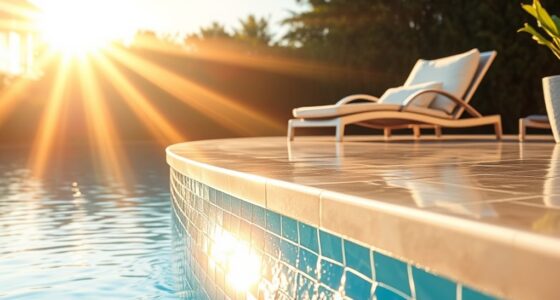
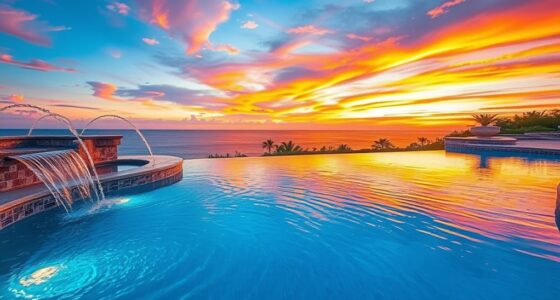
In vanishing-edge projects, your main cost drivers include the specialized water circulation systems and custom edge construction that require skilled craftsmanship and high-quality materials. Designing a seamless visual effect means investing in advanced pumps, waterproofing, and reinforced forms, which can markedly raise expenses. Factors like precise leveling, structural support, and leak prevention are critical. Tracking these elements helps you better understand where your budget goes—continue to explore these unique cost factors for a clearer picture.

Get pool and patio gear delivered free — and shop member deals
- Fast, free delivery on millions of items
- Access to Prime Big Deal Days deals on October 6–7
- Prime Video, Amazon Music and more included
Key Takeaways
- Specialized water circulation systems and equipment significantly increase project costs due to their complexity and precision requirements.
- Custom edge construction with reinforced concrete, waterproofing, and precise formwork adds to material and labor expenses.
- The need for high-quality craftsmanship and skilled labor to ensure seamless finishes and leak prevention elevates costs.
- Incorporating overflow troughs and catch basins for the edge design requires additional materials and installation time.
- Advanced calibration and maintenance of water flow systems are necessary to sustain visual effects, influencing long-term project expenses.

Vanishing-edge projects, also known as infinity pools, create stunning visual effects but come with unique cost challenges. One of the primary factors that influence the overall expense is water circulation. To maintain the illusion of an endless edge, the water must circulate smoothly and quietly, which requires specialized pumps, filtration systems, and plumbing. High-quality equipment guarantees the water stays clear and free of debris, but these systems come at a premium. Proper water circulation also involves precise engineering to prevent splashing and overflow, especially during heavy use or adverse weather. If the circulation system isn’t adequately designed, it can lead to increased maintenance costs and potential damage, making it a critical area where costs can escalate. Additionally, the technology used in water circulation systems often relies on advanced calibration techniques to optimize performance and efficiency.
Effective water circulation with premium equipment is vital but significantly impacts vanishing-edge pool costs.
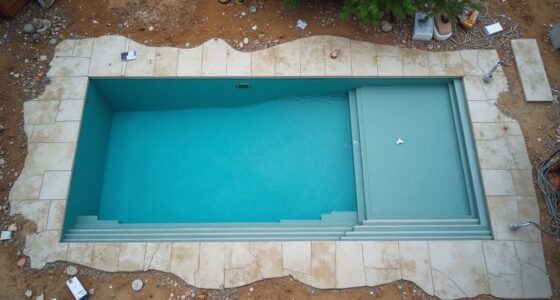
Edge construction is another significant cost driver. Building the edge of a vanishing-edge pool demands meticulous planning and superior craftsmanship. Unlike standard pools, the edge must be seamlessly integrated into the surrounding structure, often requiring custom forms, reinforced concrete, or specialty materials that can withstand constant exposure to water and environmental factors. The construction process involves detailed formwork, precise leveling, and waterproofing to ensure the edge appears to disappear into the horizon. Any flaws in edge construction can compromise the visual effect and may lead to costly repairs later on. Additionally, the edge must be designed to handle the weight of the water and the structural loads imposed by the pool’s design, which often means using thicker concrete or reinforced materials, further increasing costs.
The complexity of edge construction also influences the timeline and labor costs. Skilled labor is essential for ensuring the edge’s smooth finish and proper sealing, which directly affects the pool’s durability and visual appeal. Moreover, the installation of the overflow trough or catch basin, often seen in infinity pools, adds to the expense. These components require precise fitting and waterproofing to prevent leaks and water damage. Overall, the quality of edge construction directly impacts both the aesthetic success and the longevity of your vanishing-edge pool, making it a key cost driver.
In essence, your investment in high-grade water circulation systems and expertly crafted edge construction guarantees the stunning visual effect you desire, but these elements are also the most significant contributors to the project’s cost. Paying attention to these details upfront, with proper planning and quality materials, can save you from costly repairs and adjustments down the line. Ultimately, the unique design features that make vanishing-edge pools so captivating come with their own set of financial considerations—knowing these can help you better manage your budget while achieving your dream pool.
Frequently Asked Questions
How Do Site Conditions Impact Vanishing-Edge Project Costs?
Site conditions critically impact vanishing-edge project costs. If site accessibility is limited, you’ll face higher labor and equipment costs due to difficult terrain or restricted access. Water management also plays an essential role; complex drainage or water control measures increase expenses. You need to carefully evaluate these factors early on, as challenging site conditions can lead to unexpected delays and higher overall costs for your vanishing-edge installation.
What Role Does Design Complexity Play in Cost Variations?
Oh, surely it’s just a simple pool, right? Nope. Design intricacy and aesthetic enhancements dramatically influence costs because the more elaborate and visually stunning your vanishing-edge design, the more you pay. You’ll need specialized materials, detailed craftsmanship, and precise engineering. As your project’s complexity rises, so does your budget. Embrace the challenge, because pushing boundaries always comes with a hefty price tag—yet the breathtaking result makes it worth every penny.
Are There Specific Material Costs Unique to Vanishing-Edge Features?
You’ll find that material costs for vanishing-edge features are higher due to specialized materials like tempered glass and stainless steel. These features also demand unique structural requirements, such as reinforced supports and precise framing, which add to overall costs. You should consider these factors early in your planning to avoid surprises, ensuring your project stays on budget while achieving the sleek, seamless look that vanishing edges provide.
How Do Labor Challenges Influence Overall Project Expenses?
Labor challenges can turn your project into a tightrope walk, impacting costs profoundly. When labor efficiency drops, or you lack a skilled workforce, expect delays and increased expenses. Skilled workers are vital for precise vanishing-edge features, and any shortage can inflate labor costs and extend timelines. You’ll need to invest more time and money, making project management even more essential to keep expenses in check and guarantee quality.
What Are the Unexpected Expenses Often Encountered in These Projects?
In vanishing-edge projects, you often face unexpected expenses like hidden costs and permitting challenges. Hidden costs can include unforeseen structural adjustments or specialized equipment needs, while permitting challenges may cause delays and extra fees. These surprises can strain your budget and extend timelines if you’re not prepared. To avoid this, plan for contingencies and work closely with authorities to streamline permitting processes, ensuring smoother project execution.
Conclusion
Understanding the unique cost drivers of vanishing-edge projects helps you plan effectively and avoid surprises. By paying close attention to factors like materials, site conditions, and design complexity, you can keep your project on track financially. Remember, “A penny saved is a penny earned,” so stay diligent and proactive. With careful management, your vanishing-edge project can be both stunning and budget-friendly, turning your vision into reality without breaking the bank.
Fall Picks
fall essentials
As an affiliate, we earn on qualifying purchases.