Infinity pools create the illusion of water extending endlessly by carefully designing a vanishing edge that lets water flow over seamlessly. Water levels are maintained with precise pumps, sensors, and overflow channels that manage excess water safely. Strong materials like reinforced concrete support the structure, while circulation systems ensure clean, continuous flow. This sophisticated engineering keeps the pool visually stunning and safe. Keep exploring to discover how engineers tackle these hidden tricks to make infinity pools so spectacular.
Key Takeaways
- Precise water level control and recirculation systems maintain the seamless, mirror-like water surface.
- Carefully designed overflow channels direct excess water into recirculation tanks, preventing spills.
- Pumps and filtration systems ensure continuous water movement, clarity, and algae prevention.
- Structural materials like reinforced concrete and steel provide durability and safety for the pool’s edge.
- Regular monitoring and maintenance keep water levels and circulation systems functioning optimally.

EASYTEST 7-Way Pool Test Strips, 150 Strips Water Chemical Testing for Hot tub and Spa, Accurate Test Bromine, Total Alkalinity, pH, Free Chlorine, Total Hardness, Cyanuric Acid, and Total Chlorine
- 150 Test Strips Included: Enough for multiple water tests
- Fast and Accurate Results: Soak for 1 second, read in 15 seconds
- 7-in-1 Water Testing: Tests Bromine, pH, Chlorine, Alkalinity, Hardness, Cyanuric Acid
As an affiliate, we earn on qualifying purchases.
The Concept of the Vanishing Edge

The vanishing edge, often called the infinity edge, creates the illusion that the water extends endlessly into the horizon. This design element is primarily driven by aesthetic considerations, giving pools a sleek and seamless look that blends with the surrounding landscape. When planning an infinity pool, you must consider how the edge’s design impacts the environment; for example, ensuring water is properly recirculated minimizes waste. The engineering behind the vanishing edge also involves careful placement to avoid disrupting local ecosystems or causing erosion. Proper water recirculation is essential to maintain the pool’s appearance and functionality while minimizing environmental impact. While visually stunning, this feature requires attention to environmental impact, such as water use and runoff. Balancing beauty with ecological responsibility is key to creating an infinity pool that’s both mesmerizing and environmentally conscious.
How Water Levels Are Maintained
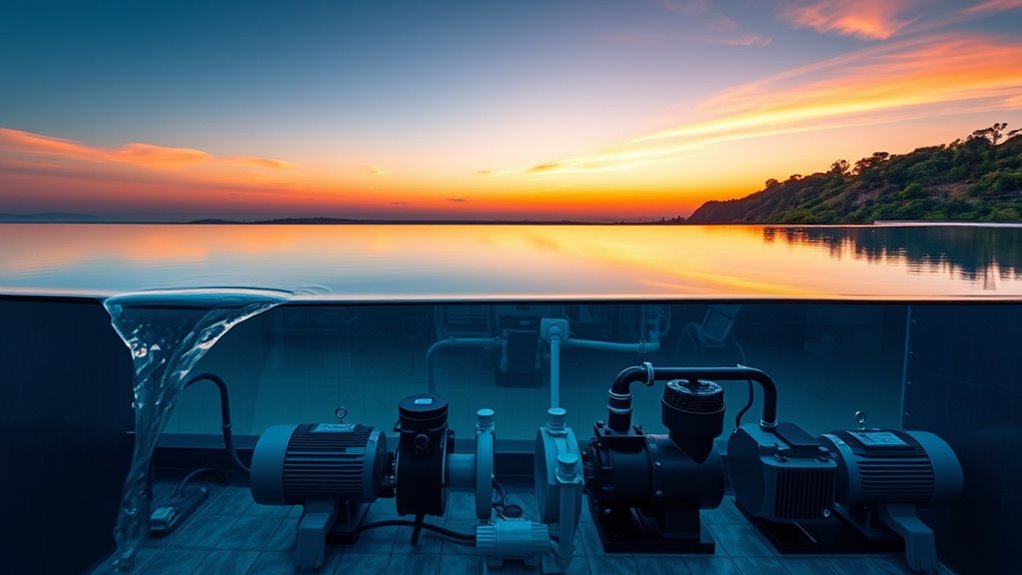
Maintaining consistent water levels in an infinity pool is essential to preserving its seamless appearance and the effectiveness of the vanishing edge. You need to carefully monitor water levels regularly, adjusting as needed to prevent overflows or drops that might disrupt the aesthetic. Proper maintenance procedures involve automatic water level sensors or manual checks to keep the water at the ideal height. This ensures the edge remains visually perfect and the flow of water over the vanishing edge stays smooth. Aesthetic considerations are key, so consistent water levels help maintain the sleek, mirror-like surface that makes infinity pools so mesmerizing. Regular upkeep not only preserves their beauty but also ensures the engineering functions correctly for a stunning, flawless appearance. Additionally, understanding the importance of water level management can help prevent issues like leaks or structural stress over time.
The Role of Water Pumps and Circulation

Water pumps play a crucial role in ensuring the continuous circulation of water in an infinity pool, which is essential for both its visual appeal and structural integrity. They power the filtration systems that keep the water clean and clear by removing debris and contaminants. Proper circulation also promotes effective water treatment, preventing algae growth and maintaining water quality. The pumps draw water from the pool, push it through filters, and return it smoothly back into the pool, creating that seamless infinity edge effect. Regular maintenance of water circulation systems ensures optimal performance and longevity of the pool components. Here’s how different parts work together:
| Part | Function | Importance |
|---|---|---|
| Pump | Circulates water | Maintains flow and clarity |
| Filter | Removes debris and impurities | Ensures clean water |
| Water Treatment | Balances chemicals for safety | Protects swimmers and equipment |
| Pipe System | Channels water efficiently | Supports consistent circulation |
| Return Jets | Distributes water evenly | Keeps the infinity edge flowing smoothly |
Managing Water Overflow Safely

As water continuously circulates through the pump and filtration system, managing overflow becomes a key safety concern. To prevent spills and water loss, infinity pools often include overflow channels or weirs that catch excess water. These systems direct overflow safely into drainage or recirculation tanks. Proper water filtration guarantees the water remains clean and clear, reducing hazards caused by debris or algae buildup. Aesthetic integration is vital; the overflow system should blend seamlessly into the pool’s design, maintaining its sleek, infinity edge look. You should regularly inspect and maintain overflow mechanisms to prevent blockages. By combining effective overflow management with advanced filtration, you create a safe, visually stunning infinity pool that operates smoothly while preserving its elegant appearance.
The Importance of Structural Design and Materials

The structural design and materials of an infinity pool are essential for guaranteeing safety, durability, and aesthetic appeal. Choosing the right materials supports seamless aesthetic integration with the surroundings and minimizes environmental impact. Strong concrete or reinforced steel are common choices for structural integrity, preventing leaks and collapses. The design must also accommodate water flow and weight distribution. To help you understand, here’s a quick comparison:
| Material | Key Benefit |
|---|---|
| Reinforced Concrete | Long-lasting, supports heavy loads |
| Eco-friendly Alternatives | Reduce environmental impact |
| Glass Panels | Enhance aesthetic appeal |
| Steel Framework | Provides strength and flexibility |
Selecting the appropriate combination ensures your infinity pool remains safe, visually stunning, and eco-conscious. Additionally, considering structural design principles can optimize safety and longevity of the pool.
Common Challenges and How Engineers Overcome Them

Building an infinity pool presents unique engineering challenges, especially in guaranteeing structural stability and managing water flow. To preserve the aesthetic appeal, engineers carefully design the overflow edge, preventing splashes and maintaining a seamless look. They also address environmental impact by using eco-friendly materials and efficient filtration systems to minimize water waste. One common challenge is controlling water circulation to prevent erosion or leaks, which can compromise stability. Engineers overcome this with precise calculations and reinforced structures. Additionally, balancing water levels and flow rates ensures safety and visual harmony. By combining innovative design with sustainable practices, engineers create infinity pools that are not only stunning but also environmentally responsible, overcoming challenges while enhancing their iconic, breathtaking appearance. Incorporating AI-driven analytics can further optimize water management and maintenance, ensuring long-term durability and efficiency.
Frequently Asked Questions
How Do Infinity Pools Prevent Water Evaporation Losses?
You can prevent water evaporation losses in infinity pools through evaporation control methods like installing a cover when not in use or using floating barriers. Additionally, maintaining proper water levels and using water conservation techniques, such as recirculating and filtering water efficiently, helps minimize evaporation. These strategies make certain you conserve water and reduce the need for frequent refills, making your infinity pool more sustainable and cost-effective.
What Safety Measures Are in Place for Overflow Situations?
In overflow situations, safety measures like overflow safety barriers and alarms are in place to prevent accidents. You should also follow emergency protocols, such as alerting staff promptly and evacuating if necessary. Regular inspections guarantee these systems work correctly. By adhering to these safety protocols, you minimize risks, ensuring a safe experience. Always stay alert and heed posted safety instructions when enjoying infinity pools.
How Is Algae Growth Managed in These Pools?
You can easily manage algae growth in infinity pools with effective algae control and water treatment. Regularly using chlorine or other sanitizers prevents algae buildup, keeping water clear. UV or ozone systems also boost water treatment by eliminating organic contaminants. While algae might seem inevitable, consistent maintenance guarantees your pool stays pristine, so you can enjoy the stunning view without worrying about algae ruining the experience.
What Are the Energy Requirements for Maintaining an Infinity Pool?
You’ll need a reliable filtration system and consistent water circulation to maintain an infinity pool. These systems keep the water clean and clear, requiring energy to run pumps and filters. The energy needs depend on the pool’s size and the efficiency of your equipment. Expect moderate to high energy use, especially during peak hours or in warmer climates, to make sure the water stays fresh, clean, and visually stunning.
Can Infinity Pools Be Built in Any Climate or Location?
Infinity pools are incredibly versatile, but not every location is perfect. You can build them in many climates, thanks to climate adaptability, but location restrictions like seismic activity or limited space might pose challenges. Extreme weather can affect maintenance and longevity. So, while they seem magical, you’ll need to contemplate local conditions carefully. With proper planning, you can enjoy that endless horizon effect almost anywhere on Earth!
Conclusion
Now that you see how engineers masterfully design infinity pools, it’s clear they blend art with science. Did you know that some of these pools can hold over 10 million gallons of water? That’s enough to fill about 15 Olympic-sized pools! Their clever engineering ensures safety, durability, and stunning aesthetics. So, next time you admire an infinity pool, remember the hidden complexities that make this breathtaking illusion possible.