
To start-up your new infinity pool’s chemistry, begin by thoroughly cleaning the pool and filling it with fresh water from a reliable source. Measure initial pH and alkalinity, then adjust them to ideal levels—pH between 7.4 and 7.6 and alkalinity 80-120 ppm. Shock the pool to eliminate bacteria, maintain proper sanitizer levels, and run your filtration system continuously. Keep close track of water chemistry and make adjustments as needed to guarantee long-lasting clarity and safety—your next steps will make all the difference.

Get pool and patio gear delivered free with Prime
- Fast, free delivery on millions of items
- Prime Video, Amazon Music and more included
- Member-only deals all year
Key Takeaways
- Thoroughly clean the pool and fill with fresh water, then establish baseline pH and alkalinity levels.
- Set a regular testing schedule and adjust water chemistry to keep pH between 7.4-7.6 and alkalinity 80-120 ppm.
- Shock the pool with sanitizer immediately after filling and maintain sanitizer levels within 1-3 ppm.
- Install and run the filtration system continuously during startup to ensure proper chemical distribution.
- Regularly monitor calcium hardness and other water parameters, recording all tests and adjustments for long-term stability.
As an affiliate, we earn on qualifying purchases.
Essential Start-Up Chemistry Steps
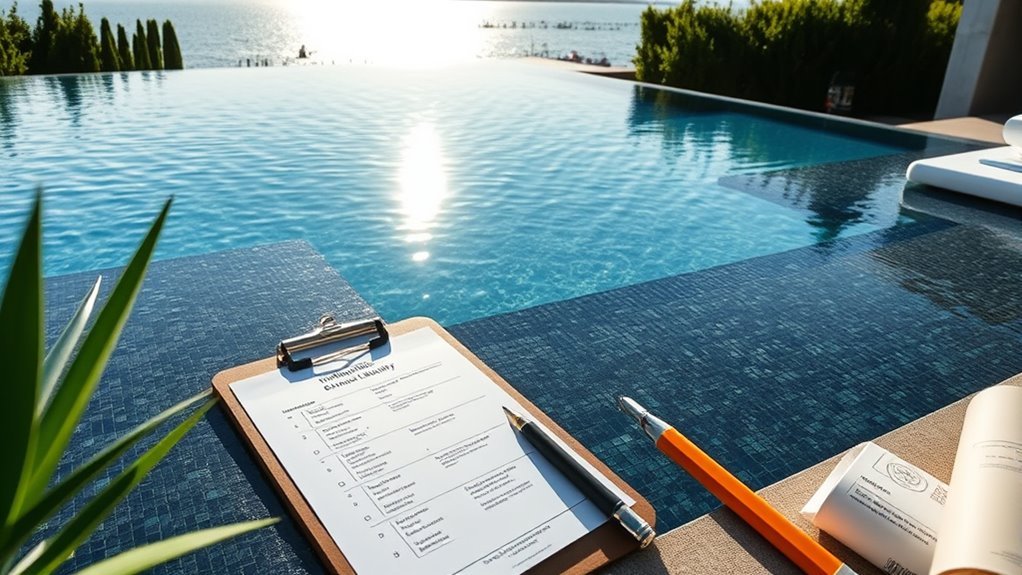
Creating a new infinity pool isn’t just about design and construction; it’s about mastering the start-up chemistry that guarantees your pool stays pristine and functional. The initial phase after installation is vital because proper chemical balance ensures water clarity, prevents algae growth, and protects your investment from long-term damage. As the builder or pool owner, you need to follow a precise checklist to set the foundation for ongoing maintenance. First, you’ll want to thoroughly clean the pool before adding any chemicals. Remove debris, dirt, and construction residues that could interfere with water chemistry. Once the pool is clean, fill it with fresh water, ideally from a clean source. It’s best to measure the water’s pH and alkalinity levels before adding chemicals, so you understand the baseline.
Proper start-up chemistry is essential for a pristine, long-lasting infinity pool.
The next step is to establish proper pH levels, which should be between 7.4 and 7.6. This range ensures chemicals work effectively and water remains comfortable for swimmers. To adjust pH, use pH increasers or decreasers as needed, carefully following manufacturer instructions. Once the pH stabilizes, you’ll need to address alkalinity, maintaining it between 80 and 120 parts per million (ppm). Proper alkalinity acts as a buffer, preventing pH fluctuations that could harm your pool equipment or cause cloudy water. After balancing pH and alkalinity, it’s essential to shock the pool with a high dose of sanitizer—usually chlorine or a non-chlorine alternative—to eliminate any bacteria or algae introduced during construction or fill-up.
Following shock treatment, test the water again to confirm that sanitizer levels are within the recommended range, typically 1 to 3 ppm for chlorine. Maintaining consistent sanitizer levels is vital for ongoing water safety. Additionally, you should install a reliable filtration and circulation system right from the start, ensuring it runs continuously during the initial days. This helps distribute chemicals evenly and removes contaminants. As the pool stabilizes, set a regular testing schedule—at least twice a week—to monitor pH, alkalinity, sanitizer levels, and calcium hardness. Adjust chemicals accordingly, and keep detailed records to track changes over time.
Finally, pay close attention to calcium hardness, aiming for 200-400 ppm, especially if you have a plaster or concrete finish, to prevent scaling or etching. Remember, the start-up phase isn’t a one-time task—it’s an ongoing process that lays the groundwork for trouble-free operation. By diligently following your start-up chemistry checklist, you’ll ensure your infinity pool remains a stunning, safe oasis that’s easy to maintain for years to come.
Frequently Asked Questions
How Often Should I Test My Pool Water Chemistry?
You should test your pool water chemistry at least twice a week, especially during the first few months of use. If you notice heavy use, rain, or temperature changes, test more often to maintain proper chemical balance. Regular testing helps you keep pH, chlorine, and alkalinity levels in check, ensuring your infinity pool stays clean, safe, and inviting. Consistent testing makes pool maintenance easier and more effective.
What Are Common Signs of Imbalanced Pool Water?
You’ll notice cloudy or murky water, which signals imbalance. If your water’s green or has algae, it’s a clear sign too. Frequent foaming or skin irritation after swimming indicates chemical issues. You might also see pH or chlorine levels outside the ideal range, causing corrosion or scaling. Keep an eye on these signs, and test your water regularly to maintain proper chemistry and keep your infinity pool pristine and inviting.
Can I Use Household Chemicals for Pool Start-Up?
Think of your pool as a delicate garden, needing the right balance to thrive. You shouldn’t use household chemicals for start-up because they’re not formulated for pool water and can cause imbalance or damage. Instead, use specialized pool chemicals, like chlorine and pH adjusters, to nurture your pool’s health. This guarantees crystal-clear water and a safe, inviting oasis, much like tending a vibrant, flourishing garden.
How Long Should I Wait Before Swimming After Start-Up?
You should wait at least 24 to 48 hours after starting up your pool before swimming. During this time, the chemicals will stabilize, and the water will clear up. Make sure to test the water’s chemical levels, especially chlorine and pH, and adjust if necessary. Once the levels are balanced and the water looks clean, it’s safe to plunge in and enjoy your new infinity pool.
What Safety Precautions Are Necessary During Start-Up?
You should prioritize safety during start-up by wearing protective gear, keeping chemicals out of reach, and ensuring proper ventilation. You need to handle chemicals carefully, follow manufacturer instructions precisely, and avoid mixing incompatible substances. Regularly monitor water chemistry, stay alert to potential hazards, and educate everyone involved on safety procedures. By staying vigilant, wearing appropriate gear, and maintaining clear communication, you create a safe environment for everyone around your new infinity pool.
Conclusion
Now that you understand the start-up chemistry, you’re ready to immerse yourself. Think of it as mixing a perfect cocktail: precision matters, but so does the creative spark. Just like an infinity pool’s seamless edge, your careful preparation creates a flawless finish. With the right steps, you’ll turn your vision into a stunning reality—fluid, inviting, and endlessly enchanting. Embrace the process, and watch your dream pool flow effortlessly from concept to completion.
Halloween Picks
halloween
As an affiliate, we earn on qualifying purchases.