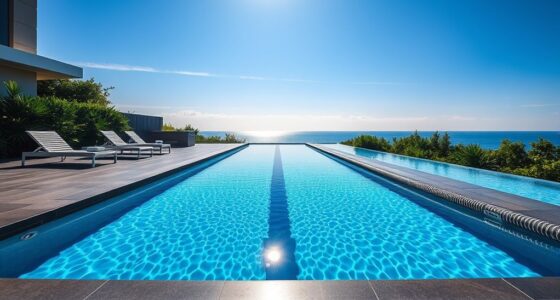
To find the perfect lap pool dimensions and design, consider your space and workout needs. Typical lengths range from 40 to 75 feet, with widths of 6 to 10 feet for comfortable swimming. Bigger pools support more rigorous routines, while smaller ones suit limited areas. Focus on integrating efficient hydraulic systems, safety features, and accessibility elements to enhance usability. Keep these factors in mind, and you’ll discover how to create a tailored, functional pool that fits seamlessly into your space.

Get pool and patio gear delivered free — and shop member deals
- Fast, free delivery on millions of items
- Access to Prime Big Deal Days deals on October 6–7
- Prime Video, Amazon Music and more included
Key Takeaways
- Consider pool length between 40 to 75 feet to balance workout needs and space constraints.
- Opt for a width of 6 to 10 feet for comfortable swimming and ease of movement.
- Incorporate proper hydraulic systems for effective water circulation and maintenance.
- Include accessible features like steps or benches for user convenience.
- Ensure safety standards and equipment placement align with regulations for year-round use.
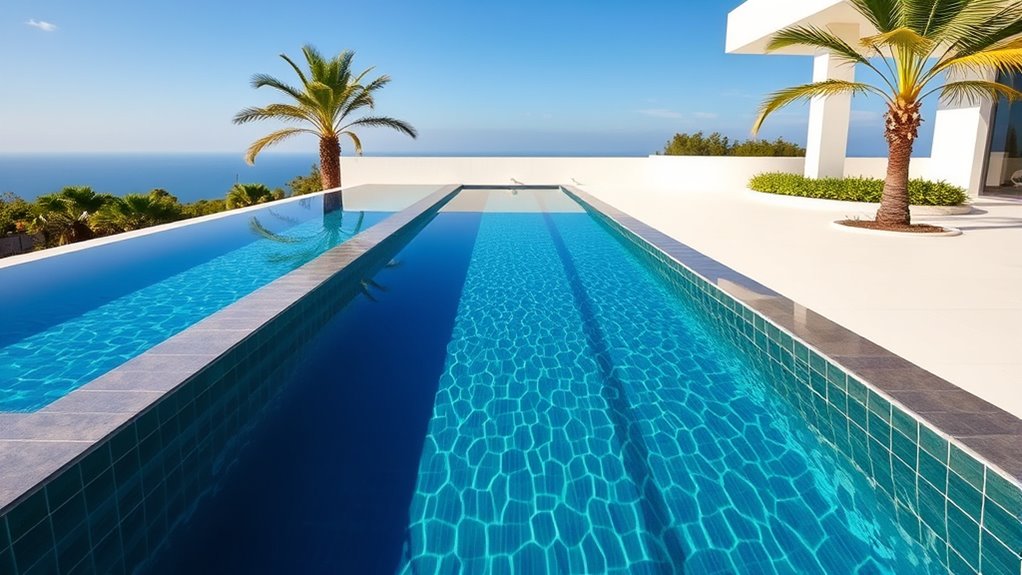
Are you wondering how to choose the right dimensions and design for your lap pool? Finding the perfect fit involves considering both functionality and space constraints. First, think about the length and width that suit your workout needs. Standard lap pools typically measure 40 to 75 feet long, with widths of 6 to 10 feet, providing enough space for a comfortable swim without feeling cramped. If your primary goal is fitness, sticking to these dimensions ensures you can perform continuous laps comfortably. However, if space is limited, you might opt for a shorter length, but keep in mind that shorter pools can interrupt your rhythm and reduce the effectiveness of your workout.
Once you’ve settled on size, focus on the design details that enhance your swimming experience. One vital aspect is integrating efficient hydraulic systems. These systems are essential for maintaining proper water circulation, which keeps the water clean and minimizes the use of chemicals. A well-designed hydraulic setup ensures even flow throughout the pool, preventing stagnation and algae build-up. Additionally, thoughtful design can incorporate features like built-in steps or benches, making the pool more accessible and comfortable. When planning your pool’s layout, consider how the hydraulic systems will interact with other elements, making sure they’re easy to service and durable over time.
Furthermore, considering compliance with safety standards during your design process can help ensure your pool remains safe for all users while meeting local regulations. Pool heating options are another important factor that impacts your pool’s usability year-round. Your choice here depends on your climate, budget, and how often you plan to swim. Electric heat pumps, gas heaters, and solar heating are common options. Solar heating is eco-friendly and cost-effective but depends on sunlight, making it less reliable in cloudy climates. Gas heaters warm the water quickly and are ideal for immediate use, but they can be costly to operate. Electric heat pumps are energy-efficient and suitable for moderate climates, providing consistent warmth without soaring energy bills. When designing your lap pool, think about how these heating options will be integrated into the overall layout. Proper placement of equipment ensures easy access for maintenance and optimizes performance, helping you enjoy your pool comfortably regardless of the season.
Frequently Asked Questions
What Are the Best Materials for Lap Pool Construction?
When choosing materials for your lap pool, consider options that boost energy efficiency and simplify pool cleaning. Concrete is durable and customizable, making it a popular choice. Fiberglass offers smooth surfaces that inhibit algae growth and reduce cleaning time. Vinyl liners are budget-friendly and easy to maintain. Prioritize materials that resist wear and algae buildup, ensuring your pool stays clean and energy-efficient with less effort over time.
How Does Pool Depth Affect Swimming Performance?
Imagine diving into your pool, enthusiastic to improve your swim. The pool depth plays a vital role in your swimming performance—you might struggle with shallow areas that limit your stroke or deeper sections that enhance your technique. A well-designed depth keeps you safe and boosts your progress. So, pay attention to pool depth; it’s the key to opening your full potential in the water.
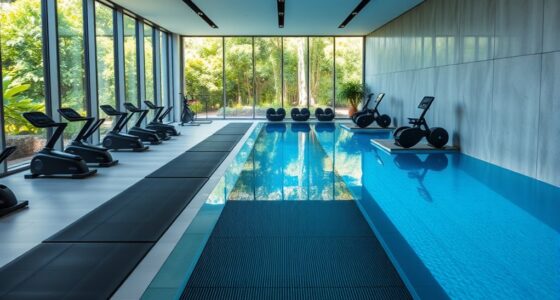
Can Lap Pools Be Integrated With Home Gyms?
Yes, you can integrate lap pools with your home gym for added convenience. To maximize functionality, consider pool cover options to keep debris out and maintain water cleanliness. Water temperature control is essential for comfort and performance, especially if you use the pool regularly. Combining these features allows you to enjoy a seamless workout environment, making your home gym and lap pool a perfect fitness retreat.
What Safety Features Are Recommended for Outdoor Lap Pools?
When considering safety features for your outdoor lap pool, you should look into pool cover options to prevent accidents when it’s not in use. An emergency shutoff system is also essential, allowing you to quickly cut power if needed. These measures help keep everyone safe, especially children or pets. Regularly check and maintain these features to guarantee they function properly, giving you peace of mind while enjoying your outdoor swim.
How Do Local Building Codes Influence Lap Pool Design?
Local building codes substantially influence your lap pool design. You need to take into account zoning restrictions that dictate pool placement and size, ensuring your project complies with local regulations. Permit requirements are essential, as obtaining the necessary approvals helps avoid legal issues. By understanding these rules early, you can plan your pool’s dimensions and features accordingly, making the construction process smoother and ensuring your outdoor lap pool meets all safety and legal standards.
Conclusion
When designing your lap pool, it’s natural to worry about space limitations. But even a modest 40-foot by 8-foot pool can offer ample room for effective lap swimming and movement. Visualize yourself gliding smoothly from end to end, feeling energized and refreshed. With smart planning, you can create a functional, enjoyable swimming space that fits your yard and lifestyle perfectly. Don’t let size hold you back—think creatively, and you’ll find the ideal solution.
Halloween Picks
halloween
As an affiliate, we earn on qualifying purchases.