To stop overcleaning your cartridge filter, develop a smarter schedule by inspecting it regularly for signs like cloudy water or reduced flow, rather than cleaning on a strict timetable. Use gentle rinsing techniques and avoid harsh chemicals to prevent damage. Keep track of your filter’s condition and adjust cleaning frequency as needed based on water clarity and flow. Staying mindful of these tips helps extend your filter’s life—continue exploring for more effective strategies.
Key Takeaways
- Regularly inspect your filter for signs like murky water or reduced flow to determine if cleaning is truly needed.
- Clean your cartridge filter only when water clarity or flow rate decline significantly, not on a fixed schedule.
- Use gentle rinsing with soft brushes and avoid harsh chemicals to prevent damage from overcleaning.
- Track filter condition and water quality to adjust cleaning frequency based on actual needs, not routine timing.
- Replace the filter when it shows tears, persistent dirt, or after 2-3 years to maintain optimal performance.
Why Overcleaning Your Cartridge Filter Can Damage It

While regular cleaning is essential to keep your cartridge filter functioning properly, overcleaning can actually cause damage. When you clean too often, you risk stripping away the delicate filter material that traps debris and maintains water clarity. This can create small tears or weaken the filter, reducing its effectiveness and lifespan. Additionally, overcleaning can disrupt the chemical balance in your pool, as cleaning agents or excessive scrubbing may introduce unwanted chemicals or remove beneficial ones. Maintaining the proper chemical balance is critical for filter performance and water quality. Proper maintenance is key to maximizing your filter’s lifespan and effectiveness. To avoid unnecessary wear, follow a balanced cleaning schedule tailored to your pool’s usage and conditions, which helps preserve the filter’s integrity over time. Proper cleaning techniques also help prevent filter damage, ensuring your system continues to operate efficiently. Regularly monitoring chemical levels can further support your efforts to maintain a healthy, balanced pool environment.
Signs Your Cartridge Filter Needs Cleaning
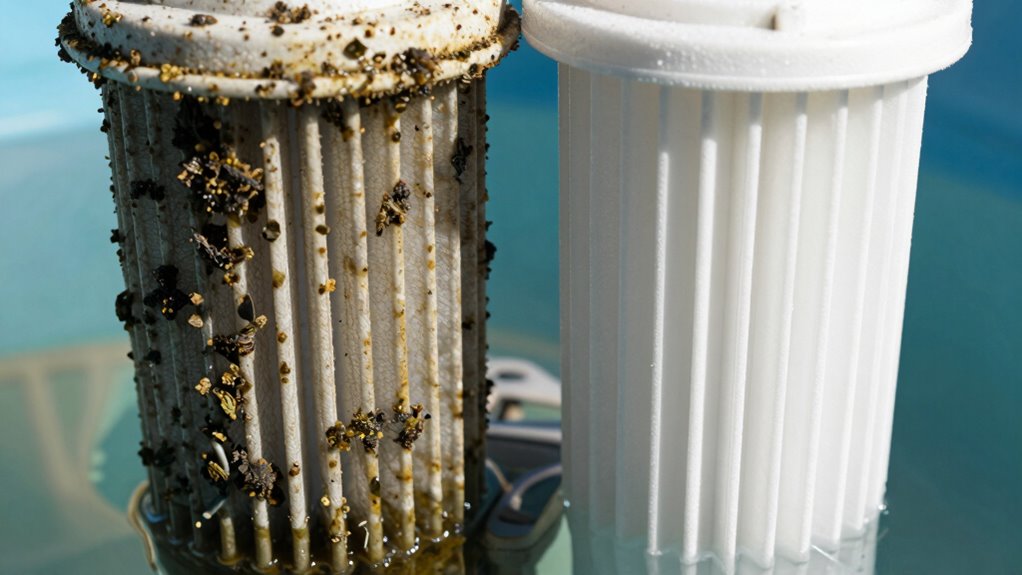
Your cartridge filter will start showing clear signs when it’s time for a cleaning. If you notice your pool water becoming cloudy or struggling to maintain proper chemical balance, it’s a warning sign. Algae growth can also indicate your filter isn’t working effectively. Additionally, a noticeable decrease in water flow suggests buildup inside the cartridge. Use this table to recognize other signs:
| Sign | Effect on Pool |
|---|---|
| Cloudy or murky water | Poor filtration |
| Foul odor or algae growth | Chemical imbalance, algae |
| Reduced water flow | Cartridge clogging |
Pay attention to these signs to avoid overcleaning or risking damage. Regular checks and understanding how your filtration system functions can help identify potential blockages early. Developing a routine inspection process further enhances your ability to maintain optimal filtration efficiency. Familiarity with your filter maintenance schedule can prevent unnecessary cleaning and extend the lifespan of your equipment. Proper navigation and mapping of your filtration system can help identify potential blockages early, especially when combined with an understanding of how filter maintenance impacts overall performance.
How Often Should You Clean Your Pool Filter?

Knowing how often to clean your pool filter depends on several factors, including pool usage, environment, and filter type. Typically, you should inspect your filter every 4 to 6 weeks. If your pool sees heavy use or if surrounding trees shed debris, cleaning may be needed more frequently. Proper chemical balancing helps reduce the buildup of oils and contaminants, minimizing filter clogging. Additionally, consider equipment upgrades that improve filtration efficiency or simplify maintenance, allowing you to extend cleaning intervals. Regular inspections ensure you’re not overcleaning, which can damage the filter and reduce its lifespan. Keep an eye on pressure gauges; a rise of 8-10 psi indicates it’s time for a cleaning. Using the right portable power sources can also help facilitate easier maintenance tasks around your pool area. Implementing scheduled maintenance routines can help prevent neglect and ensure consistent filter performance. Incorporating natural pool filtration methods, such as native plants, can also reduce reliance on traditional filters and extend cleaning cycles. Staying aware of filter pressure readings and environmental conditions can further optimize your cleaning schedule, ensuring your pool remains clean and efficient without unnecessary maintenance. By adjusting cleaning schedules based on these factors, you’ll keep your filter functioning at its best without unnecessary maintenance.
Proper Steps for Cartridge Filter Maintenance
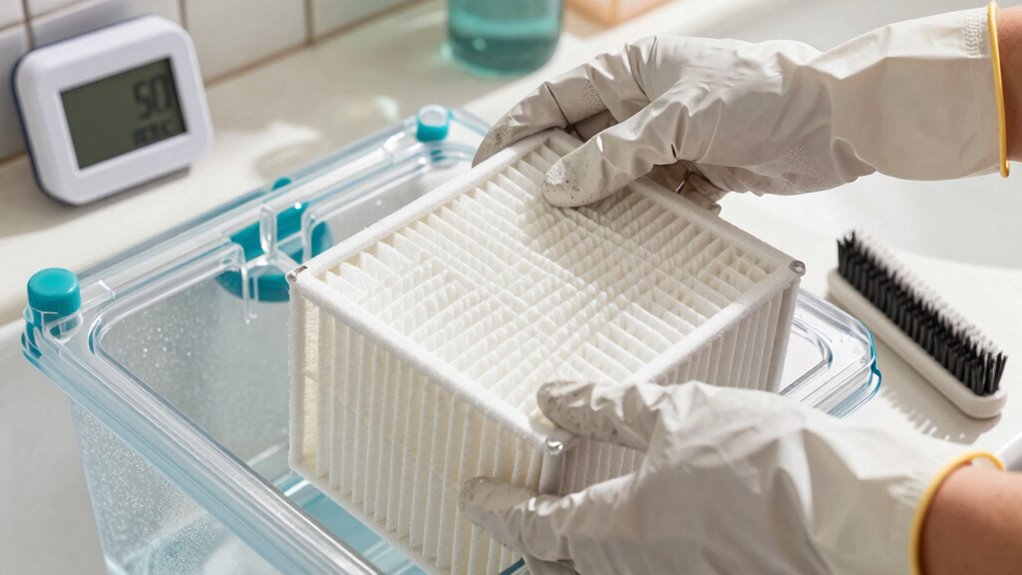
To keep your cartridge filter working efficiently, you should establish regular inspection routines to catch issues early. Use proper cleaning techniques, like gentle rinsing and avoiding harsh chemicals, to prevent damage. Also, know when it’s time to replace the cartridge to make sure your system stays effective. Incorporating connected equipment can help monitor filter performance and alert you when maintenance is needed. Additionally, understanding the fundamentals of maintenance ensures you’re taking effective steps and avoiding unnecessary overcleaning. Regularly assessing the filter’s flow rate can help identify potential clogs before they impact overall system efficiency. Being familiar with filter lifespan helps you plan timely replacements to maintain optimal operation. Staying informed about system safety practices can further protect your equipment and ensure reliable operation.
Regular Inspection Routines
Regular inspection is essential to keep your cartridge filter functioning efficiently and prevent unnecessary cleaning. By routinely checking your filter, you can spot issues early, extending its lifespan and maintaining optimal chemical balance in your pool. Once a week, inspect for debris, tears, or clogs. Keep a maintenance log to track changes and avoid overcleaning. Incorporating innovative public art practices can also inspire new ways to assess equipment visually and creatively, enhancing your maintenance routine. Additionally, developing a scheduled maintenance plan can help ensure consistent care and early detection of potential problems. Utilizing visual inspection techniques can further improve your ability to identify problems before they escalate, such as using color-coded tools to quickly assess filter condition. Establishing a routine assessment helps promote proactive maintenance and reduces the risk of costly repairs.
Proper Cleaning Techniques
Proper cleaning techniques are essential to guarantee your cartridge filter functions effectively and lasts longer. Start by turning off your pump and releasing pressure before removing the filter. Gently take out the filter media, avoiding harsh scrubbing that could damage the material. Use a soft brush or a hose with a gentle spray to rinse away debris and dirt. When cleaning the filter media, avoid harsh cleaning agents; instead, opt for a mild, pH-neutral cleaner if necessary. Ascertain all dirt is washed away without over-agitating the media, which can reduce its effectiveness. Finally, let the filter dry completely before reinstalling. Properly maintaining your filter media with gentle cleaning methods helps extend its lifespan and keeps your pool water clear and healthy.
When to Replace Cartridge
Knowing when to replace your cartridge is key to maintaining peak filter performance. Over time, the filter’s lifespan diminishes, and delayed replacements can reduce water clarity and strain your system. You should consider replacing your cartridge when:
- Water flow slows considerably despite cleaning
- Visible tears, holes, or excessive dirt
- The filter remains dirty after thorough cleaning
- The filter is more than 2-3 years old
- You notice persistent cloudiness or algae buildup
Proper replacement timing guarantees your filter operates efficiently without overcleaning or causing damage. Don’t wait until the filter is completely clogged or damaged; timely replacement preserves water quality and system longevity. Regularly monitor these signs to maintain ideal filtration and avoid unnecessary strain on your pool or spa system.
Common Mistakes That Lead to Overcleaning
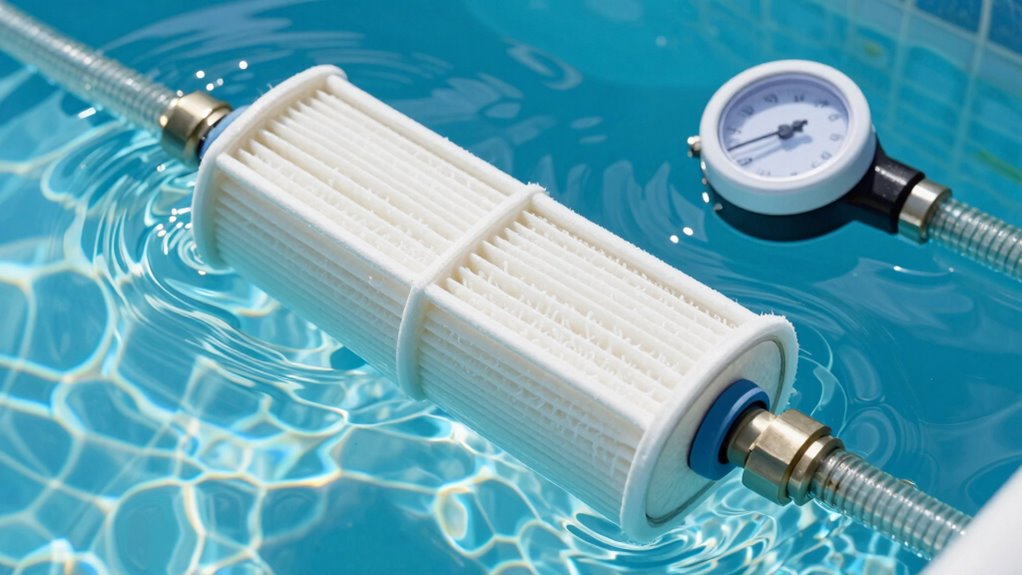
Many pool owners overlook the signals their filter gives, like bubbles, which can lead to unnecessary cleaning. Cleaning on a strict schedule without checking for actual dirt can cause overcleaning, wasting time and effort. Assuming your filter is dirty just because of some buildup often results in cleaning more often than needed.
Ignoring Filter Bubbles
Ignoring filter bubbles can lead to unnecessary cleaning because it causes you to overlook when your filter is still working effectively. When you focus solely on the filter’s appearance or time since last cleaning, you risk increasing the cleaning frequency unnecessarily. Recognizing the presence of a filter bubble—areas where debris accumulates but still allows water flow—helps you determine whether cleaning is truly needed.
You might ignore these bubbles and clean too often, wasting energy and reducing filter lifespan. To avoid this mistake:
- Misjudge filter performance based on visual cues only
- Overlook pressure gauge readings
- Neglect to monitor flow rate changes
- Assume all debris requires immediate removal
- Disregard manufacturer recommendations for cleaning intervals
Understanding filter bubbles ensures smarter cleaning, not just more frequent cleaning.
Cleaning on Schedule
Cleaning on a strict schedule without considering your filter’s actual condition can lead to unnecessary overcleaning. If you clean too often, you risk disrupting the chemical balance in your pool, which can cause issues like algae growth. Overcleaning can also strip away beneficial bacteria and natural oils that help prevent algae buildup. Instead, monitor your filter’s pressure gauge and flow rate to determine when cleaning is truly needed. Regular, but not excessive, maintenance helps maintain proper chemical levels and prevents algae by keeping the filter functioning efficiently. This smarter approach reduces the chances of overcleaning, saving you time and effort while keeping your pool crystal clear and balanced. Remember, a tailored schedule based on actual conditions is always more effective than a rigid one.
Assuming Dirt Accumulation
Assuming dirt and debris are always accumulating rapidly can lead you to clean your filter more often than necessary. This mindset can shorten your filter’s lifespan and waste time. In reality, dirt accumulation varies based on pool usage, weather, and water chemistry. Relying solely on visual cues or assumptions often results in overcleaning.
Consider these common misconceptions:
- Believing heavy debris always means a dirty filter
- Ignoring water clarity as a sign of filter health
- Overestimating the speed of dirt buildup
- Thinking frequent cleaning improves filter longevity
- Failing to monitor water flow rates for clues
Creating a Cleaning Schedule That Prevents Overdoing It
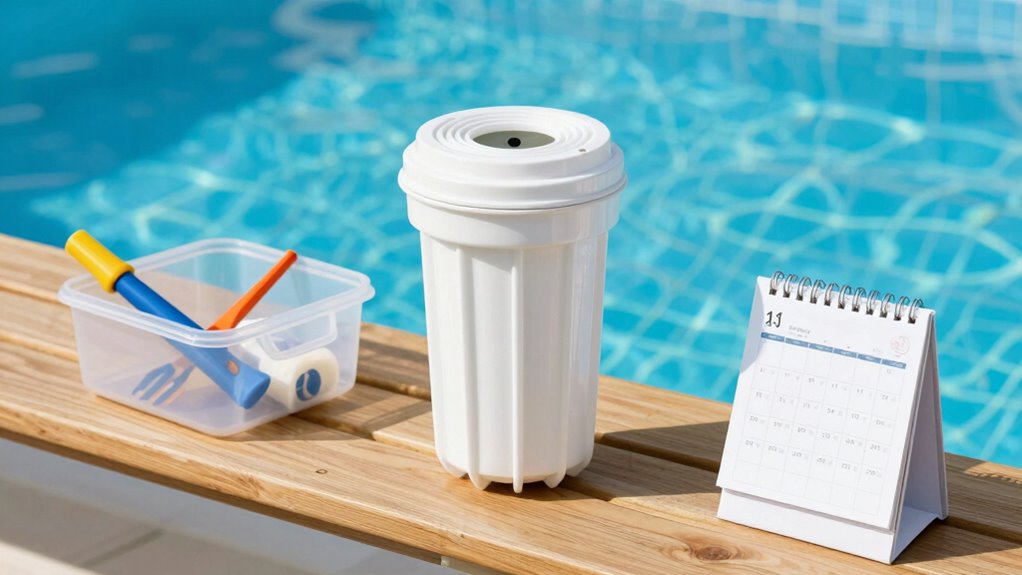
To prevent overcleaning your cartridge filter, it’s essential to establish a practical cleaning schedule based on your pool’s usage and environmental factors. Regularly check your water chemistry to maintain proper chemical balance, which helps minimize debris buildup and prevents issues like pool algae. If your pool sees frequent use or heavy debris from trees or wind, you might need to clean the filter more often. Conversely, if your pool remains relatively clean, extend the time between cleanings. Avoid cleaning prematurely, as overdoing it can disrupt beneficial bacteria and strain your equipment. Keep an eye on signs like cloudy water or increased algae growth, which indicate when cleaning is truly necessary. A well-planned schedule keeps your filter functioning efficiently without unnecessary wear.
Benefits of Proper Filter Maintenance for Your Pool

Proper filter maintenance guarantees your pool stays clear and inviting by optimizing the equipment’s performance. When you maintain your filter correctly, you prolong its lifespan and ensure consistent water clarity. Well-maintained filters prevent debris buildup that can clog the system, reducing strain on the pump. This means fewer repairs and lower energy costs. Additionally, a clean filter improves water circulation, making your pool safer and more enjoyable. By establishing an appropriate cleaning schedule, you avoid overcleaning, which can damage the filter. Proper care keeps your filtration system running efficiently over time.
- Enhances water clarity for a sparkling pool
- Extends filter lifespan, saving money
- Reduces energy consumption and repairs
- Maintains consistent water quality
- Prevents algae and bacteria growth
Frequently Asked Questions
Can Overcleaning Your Filter Void Its Warranty?
Yes, overcleaning your filter can void its warranty. Manufacturers often specify a recommended cleaning frequency to maintain the filter’s integrity and performance. Cleaning your filter too often or improperly might damage it, making warranty claims invalid. To protect your warranty, follow the manufacturer’s guidelines on cleaning frequency and methods. This way, you ensure your filter stays in good condition without risking coverage issues.
What Tools Are Best for Cleaning a Cartridge Filter?
Did you know that using the right tools can extend your filter’s lifespan by up to 30%? For effective cleaning, opt for gentle filter cleaning tools like soft brushes or a garden hose with a spray nozzle. Pair them with eco-friendly cleaning solutions to avoid harsh chemicals. These tools help remove debris without damage, ensuring your cartridge filter stays efficient longer and stays eco-conscious.
How Does Weather Affect Cleaning Frequency?
Weather considerably impacts your cleaning frequency. During seasonal changes, you might need to clean your cartridge filter more often as debris and algae increase. High humidity levels can cause mold and dirt buildup, prompting more frequent cleanings. Conversely, in dry, cooler weather, you can extend the time between cleanings. Pay attention to these weather shifts to avoid overcleaning and maintain ideal filter performance.
Are There Eco-Friendly Cleaning Options Available?
Yes, eco-friendly cleaning options are readily available. You can choose biodegradable cleaners that break down naturally, minimizing environmental impact. Solar-powered tools offer sustainable solutions by reducing energy consumption. Combining these eco-conscious choices helps you clean effectively without harming the planet. By switching to biodegradable cleaners and solar-powered equipment, you create a cleaner, greener routine that’s safe for you and the environment.
What’s the Average Lifespan of a Cartridge Filter?
The average lifespan of a cartridge filter is about 1 to 3 years with proper maintenance. To maximize its filter lifespan, follow maintenance tips like regularly inspecting, gently cleaning when needed, and avoiding overcleaning. Using eco-friendly cleaning options can also help prolong its life. Remember, consistent care ensures your filter performs efficiently and lasts longer, saving you money and reducing waste over time.
Conclusion
Think of your cartridge filter as a delicate brush – too much scrubbing wears it down, while gentle care keeps it thriving. Overcleaning is like overwatering a plant; it drowns the filter’s delicate fibers. By finding the right balance, you protect your filter’s health and enjoy crystal-clear water. Remember, less is often more—think of your filter as a prized tool, not a stubborn chore. Proper care keeps your pool pristine and your maintenance simple.