
Switching to energy-efficient pool pumps and filters helps you cut down on utility bills by using less power while maintaining excellent water quality. Opt for models with variable speed settings and guarantee they run during off-peak hours with timers. Proper maintenance, like cleaning filters and removing debris, keeps your system running smoothly. Position solar panels effectively to harness free energy, making your pool greener and more cost-effective—exploring these tips further can maximize your savings.

Get pool and patio gear delivered free — and shop member deals
- Fast, free delivery on millions of items
- Access to Prime Big Deal Days deals on October 6–7
- Prime Video, Amazon Music and more included
Key Takeaways
- Choose energy-efficient pumps with variable speed settings to optimize performance and reduce energy consumption.
- Regularly clean and replace filters to improve water flow and lessen pump workload.
- Position solar panels for maximum sunlight exposure to harness renewable energy for pumping needs.
- Schedule pump operation during off-peak hours using timers to lower electricity costs.
- Perform routine maintenance and inspections to prevent system strain, leaks, and damage, extending equipment lifespan.

Are you wondering how to keep your pool clean and inviting? If so, investing in energy-efficient pool pumps and filters can make a big difference in both your pool’s maintenance and your energy bills. These systems are designed to do their job effectively while consuming less power, which benefits your wallet and the environment. To maximize their efficiency, it’s essential to understand how solar energy can complement your pool’s filtration system and implement some simple maintenance tips to keep everything running smoothly.
Using solar energy to power your pool pumps is an excellent way to cut down on electricity costs. Solar-powered pool pumps harness the sun’s free energy, reducing your reliance on traditional power sources. Installing solar panels dedicated to your pool system can noticeably lower your energy bills over time. When considering solar energy, make sure your pool’s location gets ample sunlight and that the panels are positioned correctly to maximize exposure. This setup not only saves money but also minimizes your carbon footprint, making your pool operation more sustainable.
Harness the sun’s energy with solar-powered pool pumps to lower bills and reduce your carbon footprint.
Maintenance tips play an essential role in keeping your energy-efficient pool pump and filter performing at their best. Regularly cleaning or replacing your filter ensures that water flows freely, reducing strain on the pump and conserving energy. Keeping debris out of the skimmer and pump basket prevents blockages that can force the system to work harder. It’s also wise to check for leaks or unusual noises, which might indicate issues that waste energy or damage your equipment. Scheduling routine inspections and maintenance can extend the lifespan of your pool’s filtration system, saving you money on costly repairs down the line. Additionally, choosing Kia Tuning upgrades such as more efficient engines or performance parts can serve as an analogy for selecting high-quality components that improve overall system efficiency.
Adjusting the runtime of your pump based on your pool usage can also boost efficiency. Running the pump during off-peak hours or setting it on a timer helps avoid unnecessary energy consumption. Many modern pumps come with variable speed options, which allow you to lower the speed when full power isn’t needed, further reducing energy use. Combining these tips with solar energy solutions creates a more eco-friendly and cost-effective pool maintenance routine.
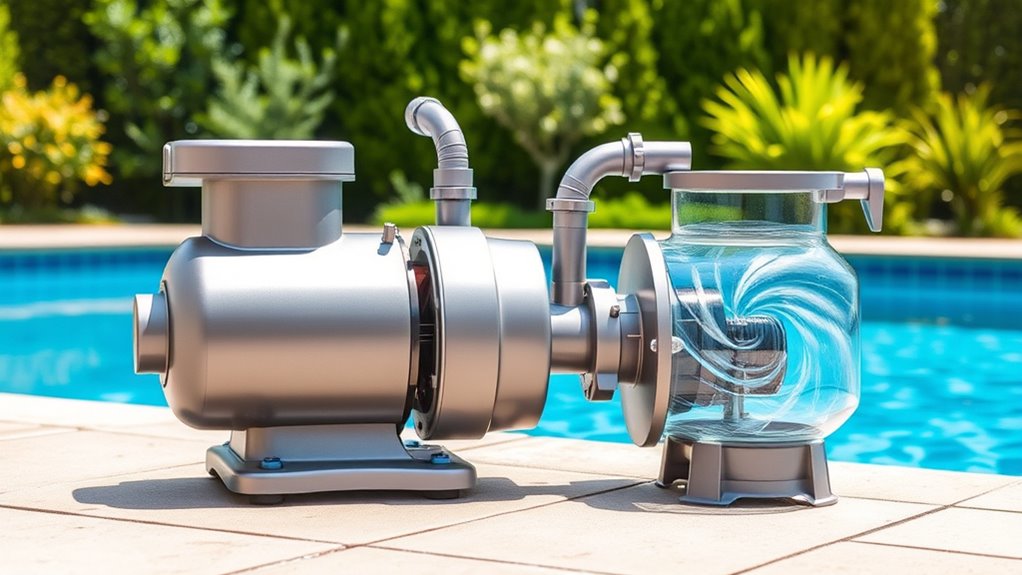
energy-efficient pool pump with variable speed
As an affiliate, we earn on qualifying purchases.
As an affiliate, we earn on qualifying purchases.
Frequently Asked Questions
What Are the Best Energy-Efficient Pool Pump Brands?
When choosing the best energy-efficient pool pump brands, consider their pool pump warranties and the filter cartridge types they support. Brands like Hayward, Pentair, and Jandy are known for reliable warranties and versatile filter options. These brands help you save money on bills by using less energy while maintaining great filtration. Look for models with good warranty coverage and compatible filter cartridge types to guarantee long-term efficiency and peace of mind.
How Often Should I Replace My Pool Filter?
Proper pool maintenance prevents problems, so you should replace your pool filter approximately every 1-2 years. Regularly check the filter’s condition, ensuring it’s clean and functioning well. When replacing, make sure your pool chemical balance stays balanced, and consider using pool safety covers for added protection. Staying proactive helps maintain clear water, reduces energy use, and prolongs filter life, keeping your pool safe, sparkling, and swimmer-ready.
Do Variable Speed Pumps Save More Energy?
Yes, variable speed pumps save more energy because of their advanced variable speed technology. This technology allows you to adjust the pump’s flow rate, reducing energy consumption when full power isn’t needed. You’ll notice lower electricity bills and more efficient operation. By using variable speed technology, you optimize your pool’s circulation while minimizing energy use, making it a smart choice for saving money and reducing your environmental impact.
Can Solar-Powered Pool Pumps Be Cost-Effective?
Think of solar-powered pool pumps as the phoenix rising from traditional models, offering a brighter, eco-friendly future. They can be cost-effective if your location offers ample sunlight, boosting solar savings. While the initial investment might seem steep, a favorable cost comparison over time makes them worthwhile. You’ll enjoy lower energy bills and a greener pool, turning your backyard into a sustainable oasis.
What Maintenance Reduces Energy Consumption in Pool Systems?
To reduce energy consumption in your pool system, focus on maintaining proper chemical balancing to prevent equipment strain. Regularly clean and replace filters to guarantee efficient operation. Using a pool cover boosts cover efficiency, retaining heat and reducing pump workload. Additionally, schedule routine inspections for leaks or malfunctions, which can waste energy. These steps help your system run smoothly, saving you money and extending the life of your equipment.
Conclusion
Switching to energy-efficient pool pumps and filters isn’t just about saving money; it’s about proving that even in the pursuit of leisure, we can outsmart inefficiency. You might think splurging on higher-tech equipment is costly, but in reality, it’s a clever investment that pays for itself—while your old, wasteful system continues to drain your wallet. Who knew that saving energy could be so rewarding? Now, relax, knowing your pool’s efficiency is truly on point.
Fall Picks
fall essentials
As an affiliate, we earn on qualifying purchases.