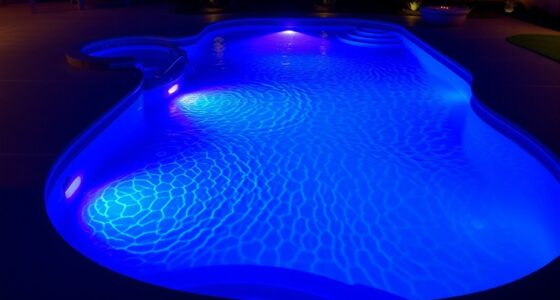
When installing fire features near pools, it’s essential to follow local codes and maintain proper clearances from water, structures, and combustible materials to guarantee safety. Use approved materials resistant to outdoor conditions and include shutoff valves for easy control. Incorporate safety barriers or screens to prevent accidental contact, and ensure your gas lines are correctly installed with proper ventilation. Staying compliant and attentive to safety details helps prevent hazards—continue to discover tips for a safe, beautiful landscape.
Play games included with Prime
Start a Prime free trial and play with Amazon Luna on your devices.
As an affiliate, we earn on qualifying purchases.
Key Takeaways
- Maintain minimum clearance distances between fire features and pools, structures, or combustible materials per local codes.
- Ensure proper ventilation and gas line components are installed correctly to prevent gas buildup and fire hazards.
- Use materials resistant to outdoor conditions and incorporate built-in safety features like shutoff valves.
- Follow all local regulations for fire feature placement, including setbacks and barrier requirements for safety.
- Schedule regular inspections, leak tests, and maintenance to ensure ongoing safe operation near pool areas.

Adding fire features near pools can create a stunning focal point and extend your outdoor living space into the evening hours. But before you start designing your fire feature, it’s essential to prioritize safety, especially when dealing with gas lines. Gas line safety is a critical consideration because improper installation or maintenance can lead to leaks, fires, or explosions. Always hire a licensed professional to install your gas line, ensuring it complies with local codes and standards. Regular inspections and leak tests are crucial to prevent hazards, giving you peace of mind while enjoying your outdoor setup. When it comes to fire feature design, you want to balance aesthetics with safety. Consider materials that withstand outdoor conditions and won’t crack or degrade over time. Built-in features, like stone or concrete fire pits, not only look attractive but also help contain the flames, reducing the risk of accidents. If you’re opting for a gas-powered fire feature, make sure the design allows for easy access to shut off valves and controls. Clearances around your fire feature are just as important as the design itself. Local codes generally specify minimum distances between your fire feature and the pool, structures, trees, or other combustible materials. These clearances prevent heat transfer, reduce fire risk, and give you enough space for safe operation and maintenance. Ignoring clearance requirements can lead to code violations and safety hazards, so double-check your local regulations before installation. Another key aspect is ensuring your fire feature is well-ventilated. Proper airflow prevents the buildup of gases and ensures safe combustion. If you’re using a gas line, make sure it’s installed with appropriate fittings, shutoff valves, and pressure regulators. These components not only enhance safety but also make maintenance easier. When designing your fire feature, think about how it integrates with your overall landscape. It should complement your pool’s design and be placed in a way that maximizes visual appeal without compromising safety. You might want to incorporate protective barriers or screens around the fire feature, especially if children or pets are around. This adds an extra layer of safety and peace of mind. Remember that adherence to fire safety codes isn’t just about avoiding fines; it’s about protecting your loved ones and property. Always check with local building authorities before installation, and follow their guidelines precisely. Proper planning, professional installation, and ongoing maintenance will ensure your fire feature enhances your outdoor space beautifully and safely for years to come. Additionally, using proper installation techniques can significantly reduce the risk of safety issues and ensure compliance with all relevant codes.
outdoor fire pit with safety barrier
As an affiliate, we earn on qualifying purchases.
As an affiliate, we earn on qualifying purchases.
Frequently Asked Questions
Are There Specific Fire Feature Materials Approved for Poolside Installation?
You should choose fire-resistant materials for poolside fire features to guarantee safety and compliance with flame safety regulations. Materials like stone, concrete, or fireproof metals are approved because they resist heat and prevent accidental fires. Always verify that your fire feature materials meet local codes and manufacturer guidelines, and consult with professionals to confirm they’re suitable for outdoor, poolside installation. This will help you enjoy a safe, beautiful fire feature.
How Often Should Fire Features Near Pools Be Inspected for Safety Compliance?
You should schedule regular maintenance and safety inspections for your fire features near pools at least once every six months. This guarantees they remain compliant with safety standards, prevent hazards, and function properly. During these inspections, check for any damage, leaks, or corrosion, and confirm all safety devices are operational. Staying proactive with your maintenance schedule helps protect everyone and keeps your poolside fire features safe and enjoyable.
Can Fire Features Be Used During Pool Parties or Events?
Think of a fire feature as the star performer at your pool party, but it needs careful planning. You can use fire feature entertainment during events if you follow safety precautions, such as ensuring proper clearance and supervision. Always double-check local codes and manufacturer’s instructions to keep everyone safe. When managed responsibly, fire features can add excitement without turning your celebration into a safety hazard.
What Are the Environmental Considerations for Outdoor Fire Features?
You should consider wildfire risk and air quality when installing outdoor fire features. Make sure your fire feature is placed away from dry vegetation and structures to reduce wildfire danger. Use clean-burning fuels to minimize smoke and improve air quality for you and your neighbors. Regularly maintain your fire feature, keeping it clear of debris, and stay updated on local air quality alerts to enjoy it safely without harming the environment.
How Do Local Building Codes Differ for Residential Versus Commercial Pool Fire Features?
You’ll find that local building codes differ mainly in zoning regulations and licensing requirements for residential versus commercial pool fire features. For residential settings, codes are typically less strict, focusing on safety clearances and fire-resistant materials. In commercial areas, you may need special permits, stricter fire safety standards, and licensing to guarantee public safety. Always check local ordinances to stay compliant and avoid legal issues.
Conclusion
By following the proper codes, clearances, and safety measures, you can enjoy your poolside fire features without a hitch. Remember, safety isn’t just a good idea—it’s the foundation of peace of mind. When you play it safe, you keep hazards at bay and turn your outdoor space into a relaxing haven. So, don’t let safety fall through the cracks—stay vigilant, and your backyard will be a safe, inviting retreat for everyone.
Fall yard work Picks
leaf blowers
As an affiliate, we earn on qualifying purchases.