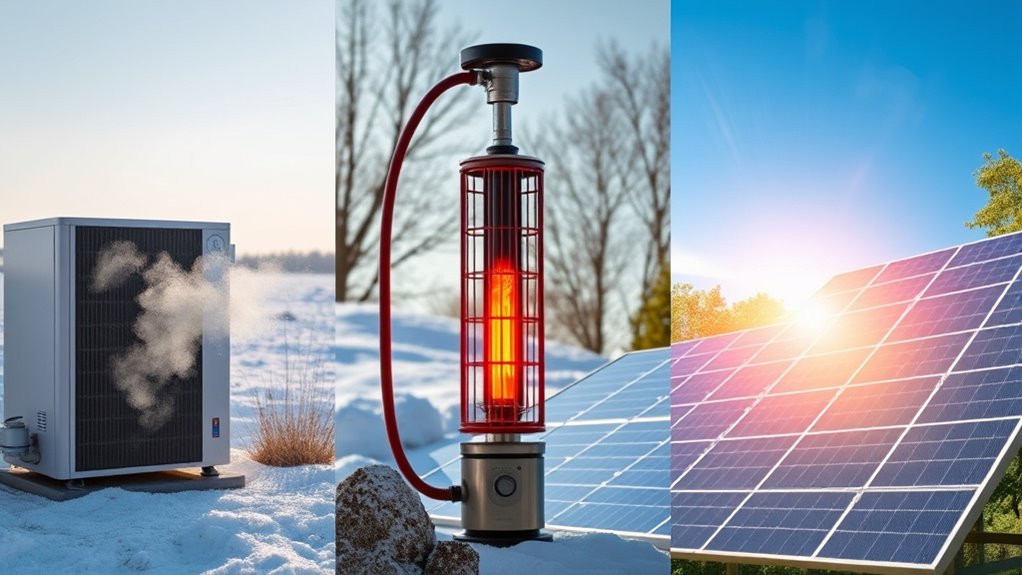

Choosing between a heat pump, gas heater, or solar system depends on your climate. If you live in a mild or moderate area, a heat pump offers high efficiency and lower running costs. In colder regions, a gas heater provides reliable warmth, while sunny, warm locations benefit most from solar energy. Your decision should consider local weather, costs, and environmental impact—continue to explore to discover which option suits your specific climate best.
Key Takeaways
- Heat pumps are most effective in mild, moderate climates due to their efficiency decrease in cold weather.
- Gas heaters perform reliably in colder regions with harsh winters, regardless of efficiency concerns.
- Solar heating systems thrive in sunny, warm, or moderate climates but may need supplementary heating in colder areas.
- Installation costs and energy savings vary, with heat pumps and solar systems generally more cost-effective long-term in suitable climates.
- Environmental impact and incentives influence the best choice, favoring solar in eco-conscious regions and gas in colder, less sunny areas.
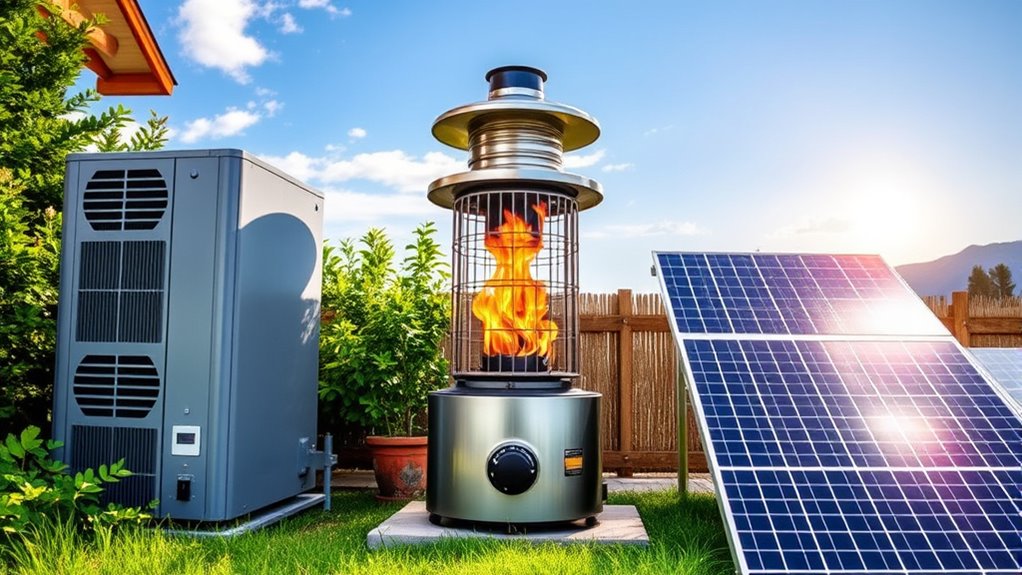
When choosing a heating system for your home, understanding the differences between heat pumps, gas heaters, and solar options is essential. Your decision will depend heavily on your climate, budget, and long-term goals. Each option offers distinct advantages and challenges, particularly when it comes to energy efficiency and installation costs.
Heat pumps are often praised for their high energy efficiency, especially in moderate climates. They work by extracting heat from the outside air and transferring it indoors, which means they use less electricity compared to traditional electric heaters. Because they operate efficiently in mild temperatures, they can appreciably reduce your energy bills over time. However, their energy efficiency drops in colder weather, making them less effective in regions with harsh winters. Regarding installation costs, heat pumps tend to have a higher initial price due to the complexity of the system and the need for proper sizing and installation. Still, their lower operational costs can offset that upfront expense over the long run, especially if you reside in a climate where they perform well.
Heat pumps excel in moderate climates, offering high efficiency but less effectiveness in harsh winters.
Gas heaters, on the other hand, are often more affordable to install upfront, especially if your home already has a gas line. They tend to heat spaces quickly and reliably in colder climates, making them a popular choice where winter temperatures drop considerably. However, their energy efficiency generally isn’t as high as heat pumps, and they rely on natural gas or propane, which can lead to higher ongoing fuel costs. Additionally, gas heaters produce emissions, so if you’re environmentally conscious, this might be a concern. The installation costs for gas heaters are usually lower than heat pumps, but remember that ongoing fuel expenses will add up, and there might be environmental or regulatory considerations in your area.
Solar heating systems harness the sun’s energy, making them the most environmentally friendly option. They can appreciably cut your energy bills and reduce your carbon footprint. The initial installation costs for solar systems are typically high, mainly because of equipment and setup, but many regions offer incentives or rebates that can help offset these expenses. Solar systems work best in sunny climates and during seasons with ample sunlight, which makes their energy efficiency highly dependent on your local weather. In colder or less sunny regions, solar might need to be supplemented with other heating methods, affecting overall efficiency and costs.
Ultimately, your choice hinges on your climate, budget, and values. If you want a highly energy-efficient system and are willing to invest upfront, a heat pump could be ideal in milder climates. For colder regions with budget constraints, gas heaters might be more practical. If you’re committed to sustainability and live in a sunny area, solar heating could be the best long-term investment, despite higher initial costs.
Frequently Asked Questions
Which Heating Option Is Most Cost-Effective Long-Term?
A heat pump is typically the most cost-effective long-term option due to its lower operating costs and efficient energy use. When considering a cost comparison, it’s essential to look at installation considerations, as heat pumps often have higher upfront costs but save money over time. Gas heaters may be cheaper initially but can be more expensive to run. Solar options offer long-term savings but depend on your climate and sunlight availability.
How Does Each System Impact Indoor Air Quality?
Worried about indoor air quality? Each system affects indoor allergens and air circulation differently. Heat pumps typically improve air quality by filtering allergens and promoting consistent air flow. Gas heaters can release pollutants, increasing indoor allergens if ventilation isn’t adequate. Solar systems have minimal impact, but proper ventilation remains essential. You’ll want to evaluate how each option influences air circulation and allergen levels to maintain a healthy indoor environment.
Are There Environmental Benefits to Solar Over Other Options?
Solar offers significant environmental benefits, including reducing greenhouse gas emissions and reliance on fossil fuels. Its clean energy production minimizes your carbon footprint and promotes sustainability. Unlike gas heaters, solar power doesn’t emit pollutants during operation, making it a greener choice. The environmental impact of solar is particularly positive, helping combat climate change and supporting renewable energy efforts. Overall, solar benefits contribute to a cleaner, healthier environment for everyone.
What Maintenance Is Required for Each Heating System?
You’ll need to regularly service your heat pump to check refrigerant levels and clean filters, ensuring peak energy consumption and low noise levels. Gas heaters require annual inspections for leaks and venting, with periodic parts replacement. Solar systems need minimal maintenance—just occasional cleaning of panels and inverter checks. Overall, heat pumps and solar systems tend to be quieter and more energy-efficient, but each needs specific upkeep to keep running smoothly.
How Do Climate Variations Affect System Efficiency?
Climate variations substantially impact your system’s efficiency fluctuations. If you live in a cold climate, heat pumps may struggle to provide warmth efficiently, while gas heaters perform reliably. In warmer, sunnier areas, solar systems excel by maximizing solar energy, maintaining climate adaptability. Understanding these effects helps you choose a system that maintains peak efficiency year-round, ensuring comfort and cost savings regardless of seasonal changes.
Conclusion
Ultimately, choosing between a heat pump, gas heater, or solar depends on your climate’s unique rhythm. Think of your home as a garden—what thrives in one season might wither in another. By matching your heating choice to your environment, you’re planting the seeds for comfort and savings. So, listen to your climate’s song and pick the option that will keep your home warm and welcoming through every season’s dance.