Pool automation measures your water’s chemical balance with sensors that track pH and ORP levels. pH sensors monitor acidity to keep water comfortable and prevent corrosion, while ORP sensors assess sanitizer effectiveness by measuring oxidation potential. Together, they provide real-time data on water safety, clarity, and cleanliness. Proper maintenance and calibration guarantee accurate results. Keep exploring to learn more about how these sensors keep your pool safe and sparkling.
Key Takeaways
- ORP sensors measure the oxidation-reduction potential, indicating the sanitizer’s effectiveness in destroying contaminants.
- pH sensors monitor water acidity, ensuring proper chemical balance for safe, clear, and comfortable pool water.
- Together, these sensors provide real-time data on water quality, enabling precise chemical adjustments and optimal sanitation.
- Accurate readings depend on regular calibration and maintenance to prevent fouling and ensure reliable performance.
- Pool automation systems use ORP and pH data to automatically control chemical dosing, maintaining safe, balanced water conditions.
Why Is Maintaining Proper pH and Water Balance Important for Your Pool?
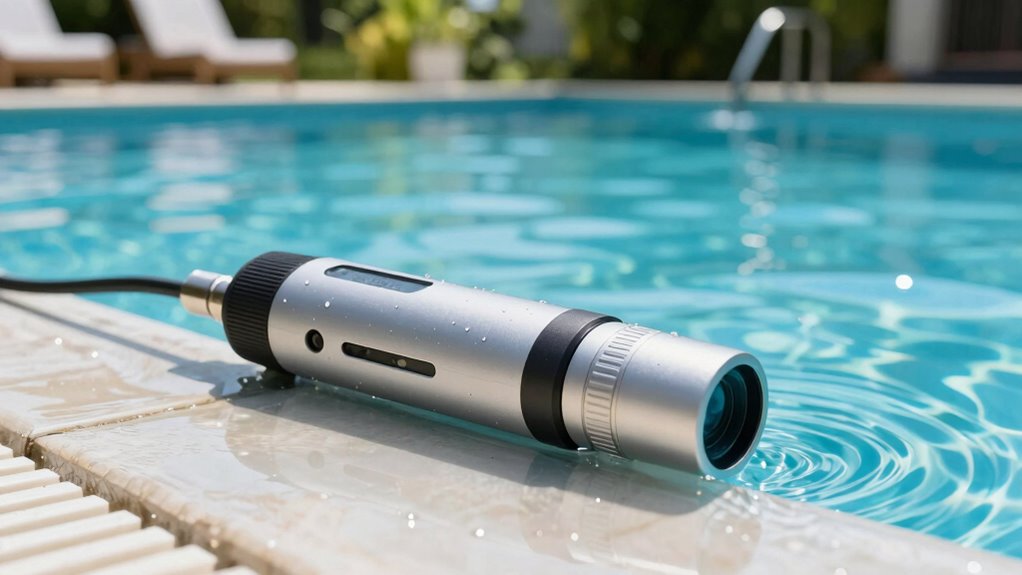
Maintaining proper pH and water balance is essential because it directly affects your pool’s cleanliness, safety, and comfort. When your pH levels are off, algae control becomes more difficult, leading to cloudy water and unsightly growths. Proper pH ensures that sanitizers work effectively, reducing bacteria and algae. Water chemistry also benefits from consistent monitoring, making it easier to maintain the desired balance. Consistent water balance also keeps water clarity high, making it easier to see the bottom and enjoy your pool. If pH is too low or too high, it can cause skin and eye irritation and damage pool equipment. By monitoring and adjusting pH regularly, you prevent issues that compromise your pool’s hygiene and appearance. Advanced monitoring systems can help maintain optimal water chemistry more precisely. Additionally, understanding test accuracy is crucial for ensuring your readings are correct, allowing for effective adjustments. Proper calibration of testing equipment ensures your measurements are reliable. Implementing risk management strategies can further protect your pool from imbalances caused by environmental factors or equipment malfunctions. Ultimately, balancing your water helps create a safe, inviting environment for everyone who swims.
What Are Pool ORP and pH Sensors, and How Do They Work?

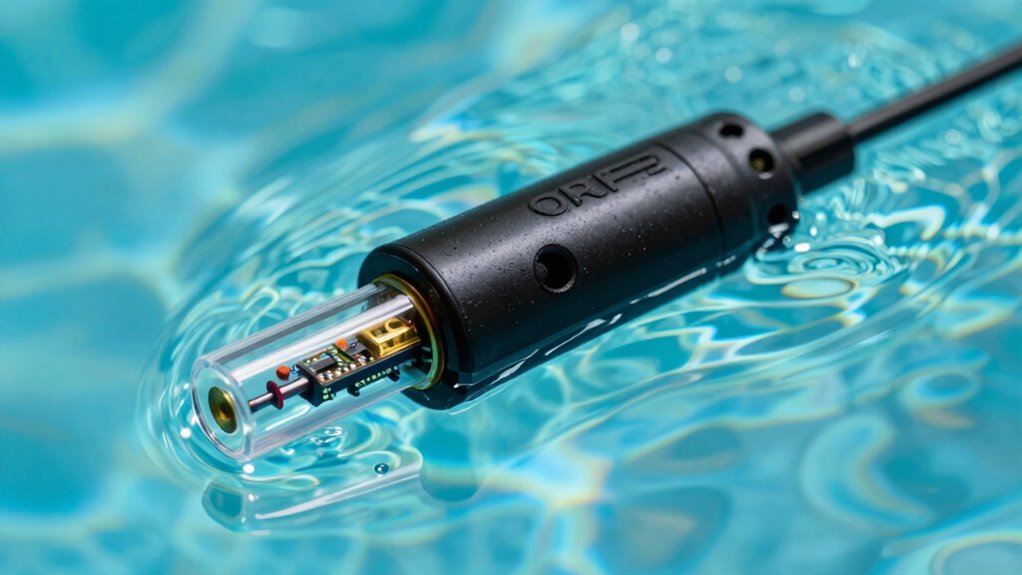
To keep your pool water balanced and safe, you need reliable tools to measure its chemical properties. Pool ORP and pH sensors do this by detecting the water’s oxidation-reduction potential and acidity levels. ORP sensors measure the sanitizing power, helping maintain water clarity and prevent algae growth. pH sensors monitor acidity, ensuring ideal chemical balance. Here’s a simple view of how they work:
| Sensor Type | What It Measures | How It Helps |
|---|---|---|
| ORP Sensor | Oxidation-reduction potential | Keeps sanitizers effective and water clear |
| pH Sensor | Water acidity | Prevents algae and maintains comfort |
Together, these sensors provide real-time data, so you can keep your pool safe and inviting. Reliable measurement tools are essential for maintaining optimal water quality and ensuring a safe swimming environment.
How Do ORP Sensors Measure Your Pool’s Sanitizing Power?
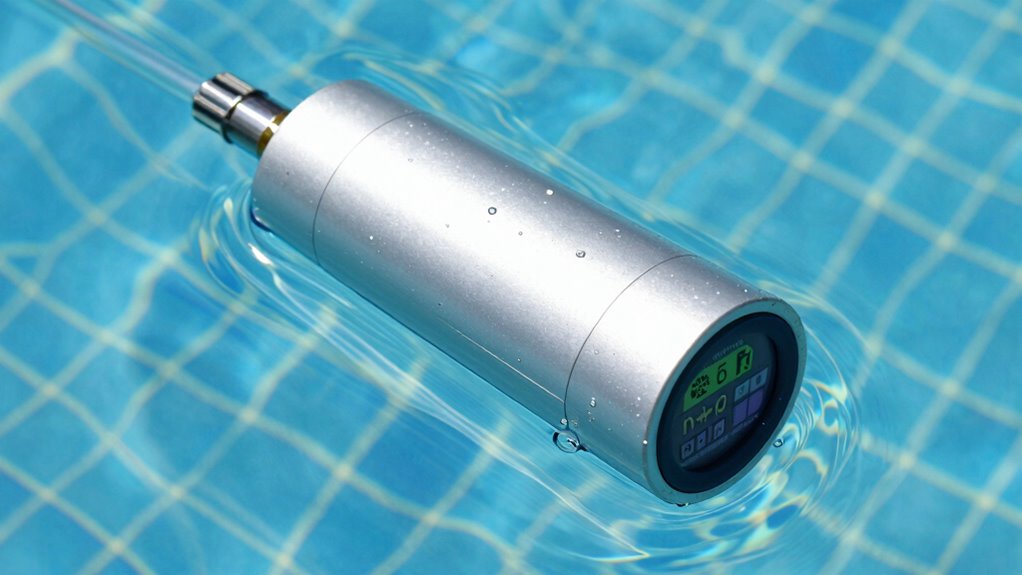
ORP sensors measure your pool’s sanitizing power by detecting the water’s oxidation-reduction potential, which reflects how effectively disinfectants like chlorine are working. When chlorine interacts with contaminants, it produces an electrical signal, and the ORP sensor gauges this activity. A higher ORP reading indicates stronger oxidation, meaning your pool is safer and disinfected properly. This measurement helps maintain pool safety by ensuring enough sanitizer is present to prevent bacteria and algae growth. Additionally, consistent ORP levels contribute to water clarity, making your pool inviting and healthy. By monitoring ORP, you get a real-time indicator of how well your pool’s sanitization system is performing, allowing you to adjust chlorine levels as needed for ideal safety and water quality. Understanding ORP provides valuable insight into your pool’s overall water chemistry, ensuring optimal sanitation and clarity. Maintaining proper water chemistry is essential for consistent ORP readings and overall pool health, which can be supported by understanding how different sensor types function in various conditions.
How Does ORP Relate to Chlorine Effectiveness?
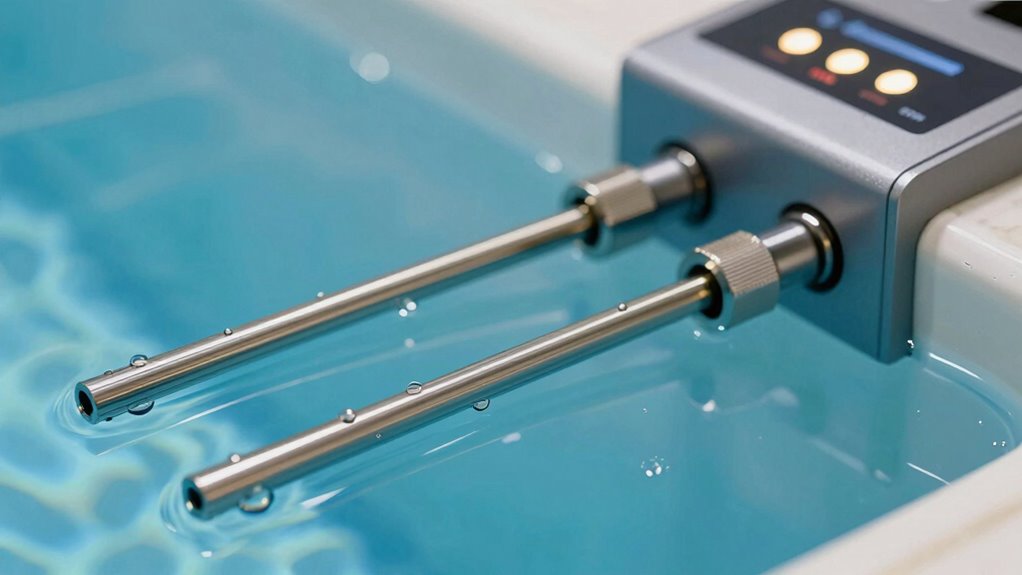
Your pool’s ORP level indicates how effectively chlorine is oxidizing contaminants. When ORP rises, it shows that chlorine is actively disinfecting your water. Understanding this connection helps you maintain ideal sanitation and water quality. Additionally, monitoring free floating chlorine levels can provide further insight into your pool’s disinfectant status. Proper calibration of ORP sensors, as explained in sensor calibration, ensures accurate readings and optimal pool maintenance. Regularly checking sensor accuracy helps prevent inaccuracies that could lead to over- or under-chlorination. Maintaining proper water chemistry is essential for consistent and reliable ORP measurements, and being aware of the Rhythm Failure phenomenon can help prevent false readings caused by electrical interference or sensor malfunction.
Chlorine Oxidation Process
The chlorine oxidation process is essential for disinfecting water and maintaining safe conditions. When chlorine reacts with contaminants, it oxidizes them, which increases ORP levels. This process directly relates to how effectively your sanitizer works. To guarantee accurate readings, you need proper sensor calibration and a balanced chemical environment. Disruptions in chemical balance can skew ORP measurements, making it seem like chlorine is more or less effective than it truly is. Monitoring ORP helps you gauge whether chlorine is actively disinfecting or needs adjustment. Remember, consistent sensor calibration and maintaining proper chemical balance are key to reliable ORP readings. This way, you confidently maximize your pool’s sanitation, knowing the oxidation process is functioning as intended.
| Chemical Balance | Sensor Calibration | Effectiveness |
|---|---|---|
| Stable | Accurate | Ideal |
| Imbalanced | Off | Reduced |
| Over-alkalinity | Inaccurate | Ineffective |
| pH Fluctuations | Calibration Needed | Uncertain |
| Contaminants | Regular Checks | Reliable |
ORP and Disinfection Efficiency
Monitoring ORP levels provides direct insight into how effectively your chlorine disinfects water. A higher ORP indicates strong oxidation, meaning your chlorine is actively killing bacteria and viruses. Salt levels influence ORP because increased salt can boost chlorine production, enhancing disinfection. However, if salt levels are too high, it may cause sensor inaccuracies or corrosion. ORP also plays a crucial role in algae control; consistently high ORP values help prevent algae growth by maintaining a robust disinfectant environment. Keep in mind, ORP alone doesn’t measure chlorine concentration but reflects its overall oxidative power. By monitoring ORP, you can optimize chlorination, ensuring your pool stays clean, safe, and algae-free while maintaining proper salt balance for efficient disinfection. Understanding sensor limitations is essential to maintaining accurate readings and avoiding potential issues.
How Do pH and ORP Sensors Work Together to Keep Water Safe?

pH and ORP sensors work together to maintain water safety by providing real-time data on chemical balance and oxidation-reduction levels. Accurate pH readings ensure your water remains clear and comfortable, preventing issues like skin irritation and cloudy water. Meanwhile, ORP sensors measure the water’s oxidation-reduction potential, indicating if the sanitizer level is effective. Together, they help prevent algae growth and improve water clarity by optimizing chemical dosing. Proper calibration of these sensors is essential for accurate readings, which sensor maintenance supports to ensure consistent performance. If pH is too high or low, sanitizer efficiency drops, risking algae blooms and cloudy water. By monitoring both parameters constantly, your pool automation system adjusts chemical levels promptly, keeping water safe, clear, and algae-free. This synergy guarantees balanced, healthy water without manual testing or guesswork. Modern sensor technology enhances the accuracy and responsiveness of these measurements, ensuring optimal water quality management.
Why Do Sensors Sometimes Give Inaccurate Readings, and How Can You Fix It?

Sensors can sometimes give inaccurate readings because of fouling, debris, or chemical buildup on their surfaces, which interferes with their ability to detect water parameters accurately. This issue shortens the sensor’s lifespan and affects performance. Regular cleaning helps maintain accuracy, but calibration techniques are essential for reliable results. You should calibrate your sensors periodically to compensate for drift over time. Additionally, understanding sensor maintenance best practices can help prolong the lifespan and ensure consistent performance. Properly maintaining sensors is especially important in environments like Floating on Water where water quality can fluctuate rapidly. Incorporating holistic wellness approaches can also support overall pool system health, ensuring optimal sensor operation. Employing proper water chemistry management can further reduce the risk of buildup and sensor fouling, leading to more accurate and dependable readings.
How to Choose the Right Pool Sensors for Your Budget and Needs

Choosing the right pool sensors depends on understanding your specific needs and budget constraints. Focus on sensor durability to ensure long-lasting performance, especially if your pool experiences harsh conditions or frequent use. For budget-conscious options, look for reliable sensors that balance affordability with accuracy. When selecting sensors, consider installation tips that simplify setup and maintenance; proper placement can extend sensor life and improve readings. Durable sensors with corrosion-resistant materials are ideal for outdoor pools exposed to chemicals and weather. Evaluate whether you need basic sensors or advanced models with features like automatic calibration. By aligning your choices with your pool’s size, usage, and environmental factors, you can find sensors that provide accurate data without overspending. Additionally, understanding sensor calibration and maintenance routines can help sustain optimal performance over time.
How Does Real-Time Sensor Data Make Pool Maintenance Easier?
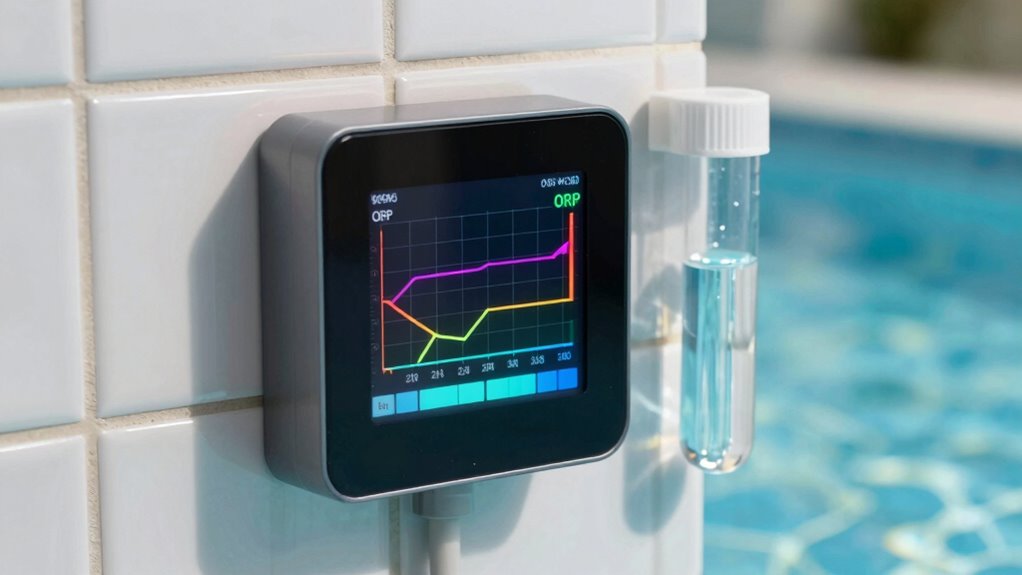
Real-time sensor data gives you instant water chemistry readings, so you can see exactly what’s happening in your pool at any moment. This allows you to make precise chemical adjustments quickly, keeping your water balanced and safe. As a result, maintenance becomes simpler and less time-consuming.
Instant Water Chemistry Reads
Instant water chemistry reads allow you to see your pool’s pH and ORP levels instantly, making maintenance more straightforward. With real-time data, you can quickly identify fluctuations that threaten chemical stability and address them promptly. This immediate feedback helps prevent issues like algae growth or corrosion, saving you time and effort. Regular sensor calibration guarantees accuracy, so your readings remain reliable and consistent. Imagine checking your pool and instantly knowing whether to add pH adjusters or sanitizer, rather than waiting for lab results or guessing. You gain confidence in your maintenance routine and reduce the chances of overcorrection. These sensors keep you informed, allowing for smarter decisions that keep your pool safe, clean, and balanced effortlessly.
Precise Chemical Adjustments
By having access to continuous, accurate water chemistry data, you can make precise adjustments to your pool’s pH and sanitizer levels without guesswork. This real-time information ensures you maintain ideal chemical balance, preventing issues like algae growth or skin irritation. Regular sensor calibration keeps your readings accurate, so you don’t rely on outdated or false data. With precise measurements, you can add chemicals in exact amounts, avoiding over- or under-treatment. This streamlines your maintenance routine and reduces chemical waste. Accurate sensor data helps you respond quickly to water changes, ensuring your pool stays safe and inviting. Overall, real-time insights simplify chemical adjustments, making pool care more effective and less stressful.
Reduced Maintenance Effort
Having continuous water chemistry data simplifies pool maintenance by reducing the need for manual testing and guesswork. With real-time sensor readings, you can quickly identify issues affecting water clarity and algae growth before they become serious. This proactive approach means fewer chemical adjustments and less frequent testing. You’ll notice:
- Improved water clarity, making your pool look inviting and clean
- Better algae prevention, reducing slimy surfaces and cloudiness
- More efficient chemical balancing, saving time and effort
Sensors alert you instantly if pH or ORP levels drift out of range, so you can address problems early. This reduces maintenance time and prevents costly chemical overuse, keeping your pool sparkling and healthy with less effort.
Why Is Regular Calibration and Maintenance Key to Sensor Accuracy?
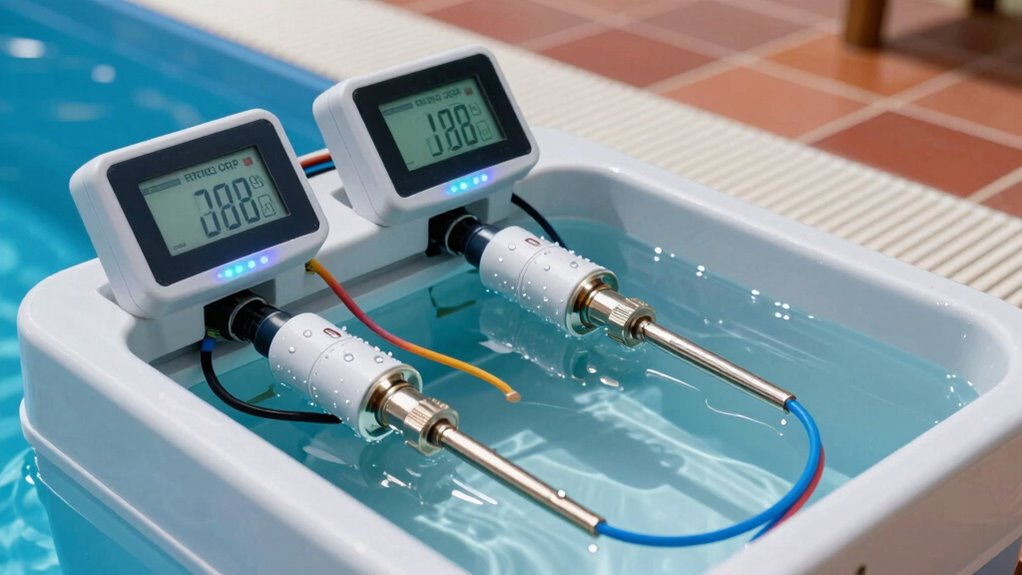
Regular calibration and maintenance are essential to guarantee your ORP and pH sensors provide accurate readings over time. Without proper care, sensor accuracy drops, reducing your ability to maintain ideal water quality. Regular calibration extends sensor lifespan and ensures reliable data. Think of your sensors like this:
| Sensor Condition | Effect on Accuracy |
|---|---|
| Properly Calibrated | Precise readings, long lifespan |
| Ignored Maintenance | Drift, inaccurate results |
| Frequent Calibration | Consistent performance |
| Infrequent Calibration | Reduced accuracy, shorter lifespan |
| Cleaned Regularly | Perfect functioning |
Sticking to a proper calibration frequency helps you catch issues early, prolongs sensor life, and keeps your pool water perfectly balanced.
Frequently Asked Questions
Can Pool Sensors Detect Other Contaminants Besides Chlorine?
Yes, pool sensors can detect other contaminants besides chlorine, aiding in thorough contaminant detection. These sensors often measure parameters like turbidity, dissolved solids, or specific chemicals, providing a clearer water quality picture. Regular sensor calibration is essential to guarantee accurate readings. By maintaining proper calibration, you can trust your sensors to identify various contaminants, helping you keep your pool safe and clean efficiently.
How Often Should Sensors Be Replaced for Optimal Accuracy?
You should replace your pool sensors according to the recommended replacement schedule, typically every 1 to 2 years, to maintain peak accuracy. Regular sensor calibration is essential between replacements to ensure precise readings. Keep an eye on sensor performance; if you notice inconsistent data or slow response times, it might be time to replace them sooner. Following these guidelines helps keep your pool water balanced and safe.
Are There Wireless Options for Pool Sensor Data Transmission?
Wireless connectivity options for pool sensor data transmission are like having a reliable conversation without wires tangling. You can choose from Bluetooth, Wi-Fi, or Zigbee-enabled sensors, making it easy to monitor water quality remotely. These wireless options guarantee real-time data transmission to your pool automation system, giving you instant insights and control. With these technologies, you stay connected effortlessly, keeping your pool pristine without the hassle of wired setups.
What Are Common Signs of Sensor Malfunction?
If your sensors are malfunctioning, you’ll notice inconsistent readings or sudden fluctuations. Regularly calibrate your sensors and monitor their lifespan to prevent issues. Signs of malfunction include slow response times, drifting measurements, or no readings at all. Address these early by recalibrating or replacing sensors, ensuring your pool automation system functions accurately and efficiently. Proper maintenance helps extend sensor lifespan and keeps your pool water quality in check.
Do Sensors Work Effectively in Saltwater Pools?
Think of your saltwater pool as a delicate orchestra, where sensors act as the skilled conductors. They work effectively in saltwater because they’re designed for saltwater compatibility, ensuring accurate readings. With proper maintenance, their durability shines through despite the corrosive environment. As long as you choose sensors built for saltwater, they’ll perform reliably, keeping your pool balanced and harmonious for many seasons.
Conclusion
By understanding how pH and ORP sensors work, you gain control over your pool’s health. While these sensors provide real-time data, neglecting calibration or ignoring inaccurate readings risks cloudy water and unsafe conditions. Embrace regular maintenance, but don’t rely solely on technology. Balancing your pool’s chemistry isn’t just about gadgets; it’s about keeping swim time safe and enjoyable. With the right tools and care, you hold the power to perfect your pool’s water quality.