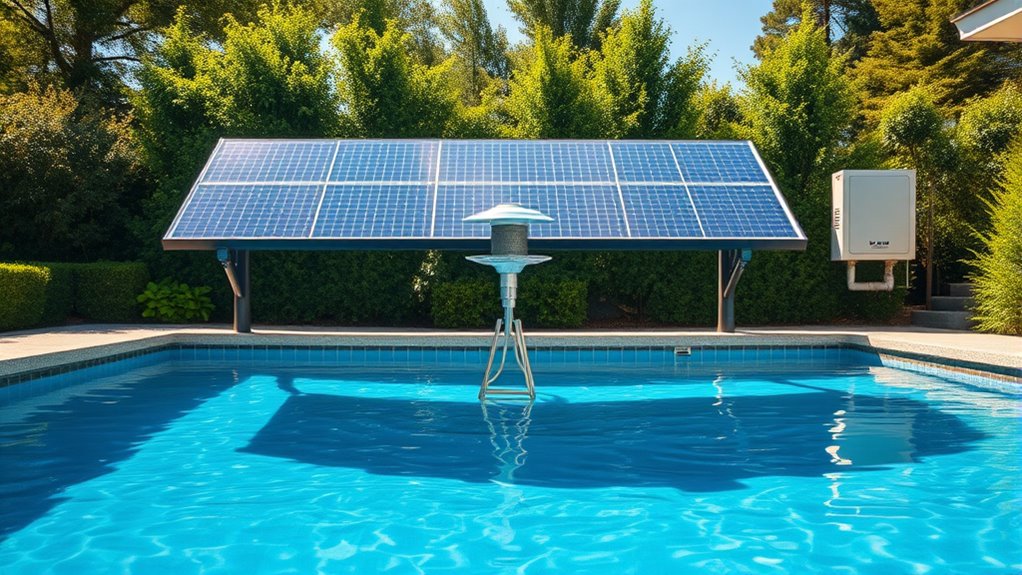

Choosing the best pool heater depends on your climate, budget, and how often you use your pool. Solar heaters save money long-term but work best in sunny areas and require higher upfront costs. Gas heaters heat quickly and reliably, perfect for cooler weather or year-round use, though they cost more to operate. Electric heaters are affordable and simple but suit smaller pools or limited use. For detailed guidance tailored to your needs, keep exploring your options.
Key Takeaways
- Solar heaters are most cost-effective long-term in sunny, warm climates due to free solar energy.
- Gas heaters offer rapid, reliable heating suitable for year-round use regardless of weather.
- Electric heaters are ideal for small pools or limited budgets, with lower upfront costs and simple maintenance.
- Initial installation costs are higher for solar and gas heaters, but operational expenses vary based on efficiency.
- Climate, usage frequency, and budget are key factors in choosing the most suitable pool heater type.

If you want to extend your swimming season or enjoy your pool year-round, investing in a pool heater is a smart choice. When choosing between solar, gas, and electric heaters, one of the most important factors to think about is energy efficiency. Solar heaters excel in this area, harnessing the sun’s free energy to warm your pool. They can substantially reduce your ongoing energy costs, making them a budget-friendly option over time. However, their efficiency depends heavily on your location and weather conditions. If you live in a sunny climate, solar heaters can keep your pool warm with minimal operating costs. But if your area experiences frequent cloudy days or shorter summers, their performance might decline, requiring supplementary heating methods or backup systems.
Gas heaters, on the other hand, are known for their quick and powerful heating capabilities. They can raise water temperatures rapidly, making them ideal if you want to use your pool during cooler months or on short notice. While gas heaters tend to have higher energy costs compared to solar and electric options, they provide reliable and consistent heating regardless of weather conditions. Installation costs for gas heaters can be higher upfront due to the need for proper venting and gas line connections, but their efficiency in delivering immediate warmth makes them appealing for those who prioritize performance. Electric heaters are generally less expensive to install and maintain, making them a good choice for smaller pools or those with limited budgets. They are easy to operate, and their energy efficiency is decent for shorter heating cycles. However, over the long term, electric heaters might lead to higher energy bills if used frequently, especially in colder climates.
Ultimately, your decision should weigh the initial installation costs against ongoing energy expenses and how often you plan to use your pool. Solar heaters may have higher upfront costs for equipment and installation, but they save money over time through lower energy bills. Gas heaters often have lower installation costs but can be costly to operate, which can add up quickly if you’re using your pool regularly. Electric heaters are typically the cheapest to install but could become expensive to run if used extensively. Think about your climate, usage patterns, and budget when evaluating these options, and you’ll find a heater that balances energy efficiency with installation costs, helping you enjoy your pool comfortably all year long.

Intex 28685E 47 Inch x 47 Inch Solar Pool Water Heater Mat for 8,000 Gallon Above Ground Swimming Pool with Hose Attachment and Adaptors, Black
Solar heater mat uses solar technology to increase the temperature of the pool water by approximately 5 to…
As an affiliate, we earn on qualifying purchases.
As an affiliate, we earn on qualifying purchases.
Frequently Asked Questions
What Is the Typical Lifespan of Each Pool Heater Type?
You want to know about heater durability and lifespan comparison for different pool heaters. Typically, gas heaters last around 8-15 years, electric models have a lifespan of about 10-20 years, and solar heaters can last 15-20 years with proper maintenance. Your choice depends on durability needs and budget, but electric and solar options often offer longer lifespans, making them more cost-effective over time.
How Do Installation Costs Compare Among Solar, Gas, and Electric Heaters?
When comparing installation costs among pool heater types, you’ll find solar heaters typically have higher upfront expenses due to equipment and installation complexity. Gas heaters often come with moderate installation expenses, mainly for gas line setup. Electric heaters usually have the lowest installation costs, as they’re simpler to install. Overall, the cost comparison shows solar heaters demand a larger initial investment, but may save you money long-term through energy efficiency.
Are There Any Safety Concerns With Gas or Electric Pool Heaters?
Think of pool heaters as double-edged swords—you need to handle them carefully. Gas heaters pose gas safety risks like leaks or carbon monoxide buildup if not maintained properly. Electric heaters can cause electric hazards such as shocks or short circuits if wiring isn’t up to code. Always make certain professional installation and regular inspections to keep your pool area safe, making your swim worry-free instead of a trip to the danger zone.
Which Heater Type Is Most Environmentally Friendly?
You want to know which heater type is most environmentally friendly. Solar heaters use renewable energy, producing no emissions and markedly reducing your carbon footprint. Gas heaters burn fossil fuels, emitting greenhouse gases, while electric heaters can rely on grid power, which may include fossil fuels. If minimizing your environmental impact matters, solar is the best choice. It harnesses renewable energy, helping you lower your carbon footprint and support sustainability.
How Much Maintenance Does Each Pool Heater Require Annually?
You might worry about maintenance, but each heater type has manageable upkeep. Solar heaters need minimal annual maintenance, mainly cleaning panels and inspecting connections. Gas models require more frequent checks, with annual maintenance to prevent corrosion and ensure safety, possibly leading to higher repair costs. Electric heaters are straightforward, needing occasional inspections and cleaning, making their maintenance frequency relatively low. Overall, your choice depends on balancing upkeep with efficiency and costs.

Raypak 206,000 BTU Digital Electronic Ignition Natural Gas Pool Heater
Built to withstand various weather conditions, perfect solution for environments requiring efficiency, convenience and versatility.
As an affiliate, we earn on qualifying purchases.
As an affiliate, we earn on qualifying purchases.
Conclusion
Choosing the right pool heater depends on your needs, but imagine yourself stepping into warm, inviting water on a sunny afternoon or a cozy evening, feeling perfectly comfortable. Whether it’s the sun’s gentle warmth, the efficiency of gas, or the convenience of electric, each option offers a unique experience. It’s like finding that perfect fit—just like the way sunlight dances on the water’s surface, making every swim feel effortless and perfect for you.

AQUASTRONG Swimming Pool Heat Pump,Electric Pool Heater for Above Ground and Inground Pool,Heating and Cooling Pool Heater Pools Up to, 6500 Gallons
All-Season Pool Comfort:Featuring innovative dual-mode temperature control, this heat pump precisely heats water between 59–104°F or cools it…
As an affiliate, we earn on qualifying purchases.
As an affiliate, we earn on qualifying purchases.

BSEED Immersion Water Heater Electric, 2000W Fast Heating Portable Water Heater with 304 Stainless Steel Guard & Digital LCD Thermometer, Heats 5 Gallons in Minutes for Camping, Bath & Small Pool
Safety Design: This instant water heater is UL-certified, featuring a high-quality stainless steel protective guard with anti-scald functionality….
As an affiliate, we earn on qualifying purchases.
As an affiliate, we earn on qualifying purchases.