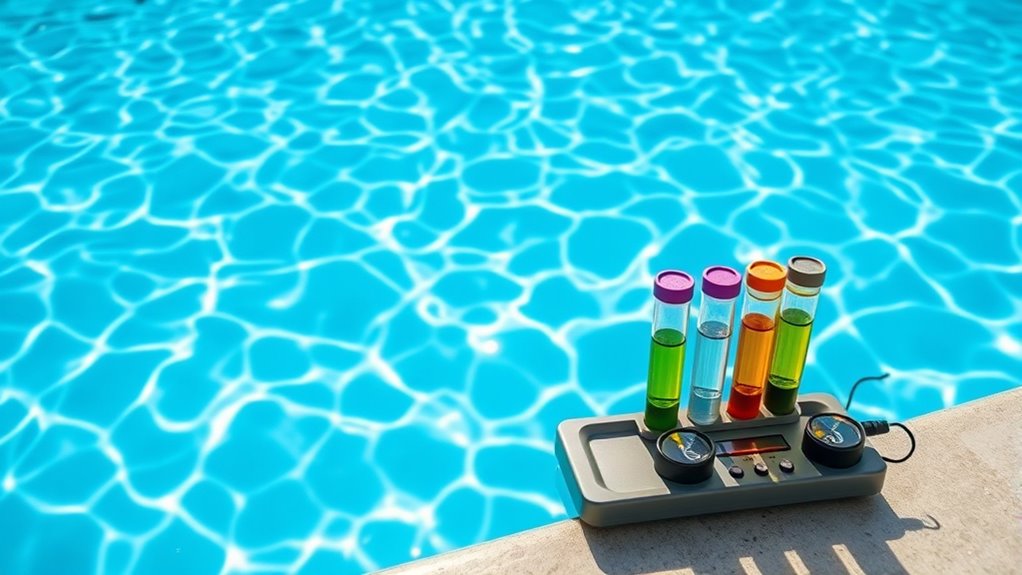

To keep your pool crystal clear, you need to balance your water’s chemistry. Test regularly for chlorine and pH levels using reliable kits or strips. Maintain chlorine levels between 1.0-3.0 ppm to ensure proper sanitation, and keep pH between 7.2-7.8 for comfort and equipment safety. Adjust chemicals as needed to prevent cloudy water, irritation, or algae growth. If you keep an eye on these basics, you’ll enjoy safe, inviting water—there’s plenty more to discover on this topic.
Key Takeaways
- Maintain chlorine levels between 1.0 and 3.0 ppm for effective disinfection and safe swimming.
- Keep pH balanced between 7.2 and 7.8 to prevent water cloudiness and equipment damage.
- Regularly test water chemistry using reliable kits or test strips to detect imbalances early.
- Adjust pH and chlorine levels promptly with appropriate chemicals to ensure water clarity and safety.
- Consistent water maintenance and monitoring promote a sparkling, healthy pool environment for swimmers.

Have you ever wondered why maintaining proper pool water chemistry is vital for a safe and enjoyable swimming experience? The truth is, balancing your pool’s water isn’t just about aesthetics; it’s about ensuring safety, comfort, and the longevity of your equipment. Two essential factors in this balance are chlorine levels and pH balance. If either of these gets out of whack, your pool can quickly turn into a source of discomfort or even health risks.
Chlorine is your primary defense against bacteria, algae, and other contaminants. Maintaining the right chlorine levels is vital because too little chlorine allows germs to thrive, making your pool unsafe. Conversely, too much chlorine can cause skin and eye irritation, and it might give off an unpleasant chemical smell. The ideal chlorine range for most pools is between 1.0 and 3.0 parts per million (ppm). Regular testing helps you keep track of these levels, especially after heavy use or rain, which can dilute chlorine. Using test strips or a reliable testing kit, you can quickly check if your chlorine levels need adjusting. When they’re low, adding chlorine tablets or liquid chlorine boosts the disinfection power. If levels are too high, you might just wait for the chlorine to naturally dissipate or use a chlorine neutralizer to bring levels down.
Equally important is pH balance, which measures how acidic or alkaline your water is. The ideal pH range for pool water is between 7.2 and 7.8. When the pH is too low (acidic), it can cause corrosion of pool equipment, irritation to your skin and eyes, and reduce the effectiveness of chlorine. If it’s too high (alkaline), water can become cloudy, scale can form on surfaces, and chlorine’s ability to disinfect diminishes. Maintaining proper pH balance guarantees your pool remains clear, safe, and comfortable. Adjusting pH is straightforward: if water is too acidic, you add a pH increaser (like baking soda); if it’s too alkaline, you add a pH decreaser (like muriatic acid). Regular testing, at least once a week, helps you stay ahead of fluctuations caused by weather, usage, or chemical additions. For consistent water quality, some pools benefit from automatic chemical feeders, which help maintain proper levels with minimal manual testing.
Frequently Asked Questions
How Often Should I Test My Pool Water?
You should test your pool water at least twice a week to maintain proper chemical balance. Regular water testing helps you catch imbalances early, ensuring safe and clear swimming conditions. If your pool gets heavy use or has weather changes, test more frequently. Keeping an eye on pH, chlorine, and alkalinity levels through consistent water testing helps prevent problems and keeps your pool inviting and healthy.
What Causes Cloudy Pool Water?
Ever wonder why your pool looks like a cloudy mystery? Surprisingly, it’s often your filtration system struggling to keep up or mineral content getting out of hand. When filters aren’t working properly or minerals like calcium build up, they trap particles that cloud the water. Regular maintenance and balancing chemical levels help, but neglecting these details turns your sparkling oasis into a murky pond. Irony at its finest!
Can I Swim With Low Free Chlorine?
You shouldn’t swim with low free chlorine because it compromises chlorine safety and pool sanitization. Low chlorine levels can allow bacteria and algae to thrive, making the water unsafe. Always test your pool regularly, and add chlorine promptly if levels drop. Maintaining proper free chlorine guarantees effective sanitization, keeping your pool clean and safe for swimming. Never ignore low chlorine readings, as they pose health risks and undermine your pool’s cleanliness.
How Do I Balance Ph Levels Quickly?
To quickly balance pH levels, first test your water to identify pH fluctuation. If it’s too high, add a pH reducer, like muriatic acid, to lower it. If it’s too low, use a pH increaser. Keep in mind your pool’s acid demand, which affects how much chemical you need. Always add chemicals gradually and re-test to make certain the pH is balanced, preventing future fluctuations.
What’S the Best Way to Prevent Algae Growth?
Think of your pool as a delicate garden that needs constant tending. To prevent algae growth, you need to be proactive with algae prevention and chemical control. Regularly shock your pool, maintain proper sanitizer levels, and keep filtration running smoothly. Using algaecides as a safeguard adds extra armor. Consistent water testing and balancing pH help create an environment where algae can’t thrive. Stay vigilant, and your pool remains a crystal-clear oasis.
Conclusion
Now, as you immerse yourself in mastering pool water chemistry, it’s funny how the tiniest adjustments can make your pool sparkle. Sometimes, it’s those small, unexpected tweaks—like balancing pH or adding a bit of chlorine—that turn cloudy water into crystal-clear perfection. Just like life, maintaining your pool is a little bit of science and a lot of patience. So, enjoy the journey, and soon you’ll find that your pool stays pristine just when you least expect it.