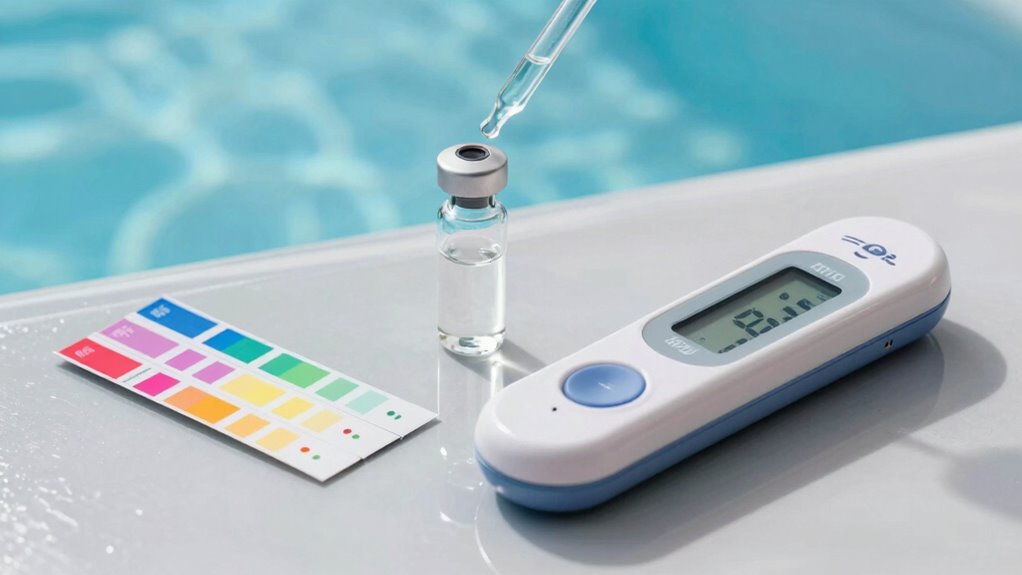

For accuracy, digital testers are your best bet because they provide instant, reliable results with minimal human error, especially for critical parameters. Test drops offer higher precision than strips and are preferred by professionals for detailed analysis. Test strips are convenient and quick but may be less accurate, suitable for basic checks. To guarantee the most reliable results, it’s important to follow proper procedures—discover more tips and details that can improve your testing accuracy.
Key Takeaways
- Digital testers offer the highest accuracy and instant results, reducing human error compared to strips and drops.
- Test drops provide more precise readings than strips, making them preferred for professional or detailed water analysis.
- Test strips are quick, easy, and cost-effective, suitable for basic pool checks but less accurate than drops and digital devices.
- Proper storage, handling, and timing are crucial for all methods to ensure reliable and accurate results.
- Choosing the most accurate method depends on pool size, testing frequency, and the level of precision required.
What Are the Different Pool Water Testing Methods?
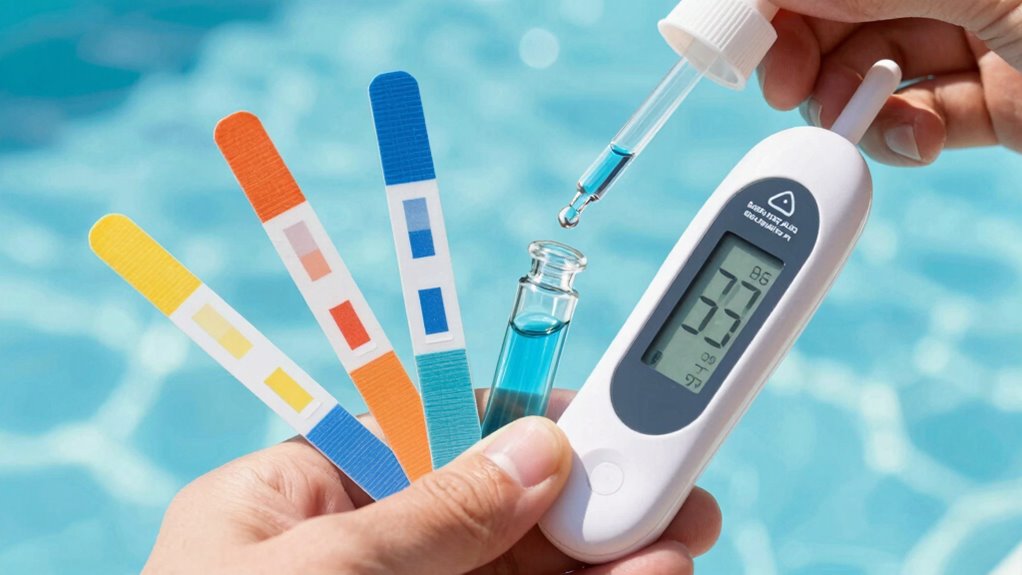
There are several common methods to test your pool water, each offering different levels of accuracy and convenience. The most straightforward way is using test strips, which quickly gauge chlorine levels and pH balance. You dip a strip into the water, then compare the color change to a chart. Test drops, on the other hand, involve adding a few drops of reagent to a water sample and observing the color shift, often providing more precise readings. Digital testers are the most advanced, offering instant, digital readouts of chlorine levels and pH balance with high accuracy. Each method has its benefits: strips are quick and easy, drops offer better precision, and digital testers provide the most reliable results. Utilizing Free Floating pool water testing methods can simplify maintenance and ensure water quality. This approach allows for more consistent and reliable monitoring without the need for complex procedures. Incorporating simple testing techniques can also help you identify issues early, preventing costly repairs or health concerns. Additionally, understanding how testing accuracy impacts your water quality can help you choose the most suitable method for your needs. Choosing a method that balances accuracy and convenience will ensure your pool water remains safe and clear throughout the season.
How Do Test Strips Work, and Are They Reliable?
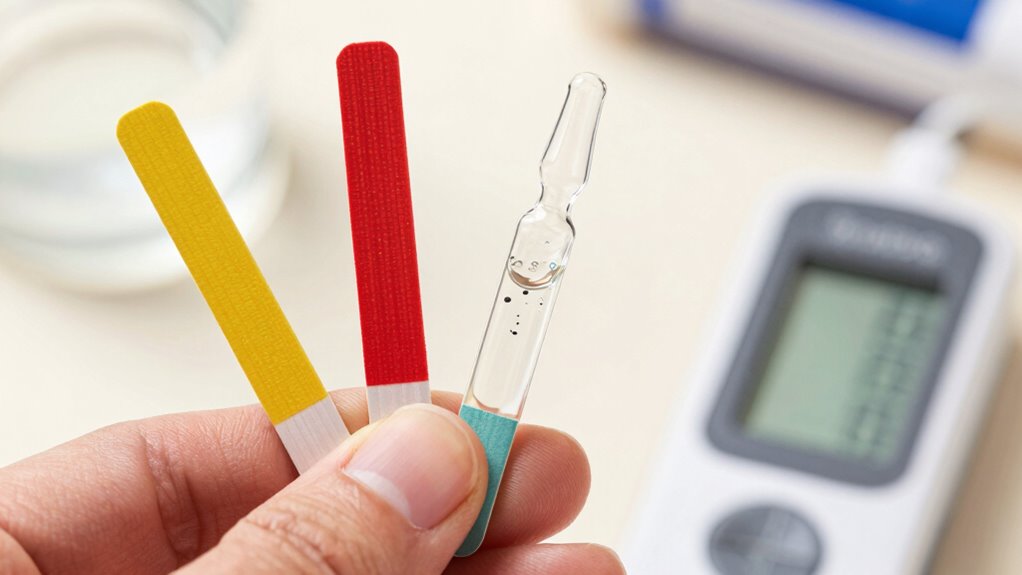
Test strips work by reacting with pool water chemicals, changing color based on the levels present. Their accuracy depends on proper storage and handling, ensuring the chemicals remain effective. Understanding the chemical reaction process helps you trust their reliability for maintaining safe pool conditions. Additionally, being aware of chemical stability can help you ensure the test reagents stay effective over time. Proper storage conditions are crucial because exposure to heat or moisture can impact test accuracy and lead to misleading results. Recognizing the importance of calibration can further enhance the reliability of your test results over repeated use. Incorporating knowledge about herbal plant parts and their properties can also contribute to better understanding how different testing methods may perform under various conditions.
Chemical Reaction Process
Chemical reaction process lies at the core of how pool water test strips work. When you dip a strip into water, chemical indicators on the strip react with specific substances, causing a color change. This reaction depends on reaction kinetics, which determine how quickly and accurately the strip responds. Here’s what happens:
- The strip’s chemicals interact with target compounds like pH or chlorine.
- A reaction occurs, producing a visible color change.
- The intensity of the color correlates with the concentration of the chemical.
- You compare the color to a chart for a reading.
This process makes test strips simple but relies on proper timing and interpretation. Their accuracy depends on consistent reaction kinetics and the quality of the chemical indicators used.
Test Strip Accuracy
Understanding how accurate pool water test strips are depends on several factors, including the quality of the strips themselves and how carefully you follow testing procedures. High-quality strips have better reagent sensitivity, which improves their ability to detect subtle changes in water chemistry. This sensitivity is essential for maintaining chlorine stability, ensuring your sanitizer remains effective. If you don’t follow the instructions properly, you might get inaccurate readings, leading to improper chemical adjustments. Test strips can reliably measure pH, alkalinity, and chlorine levels when used correctly, but their accuracy can vary between brands. Keep in mind that expired or damaged strips may produce false results. Additionally, proper storage of test strips is crucial to maintaining their accuracy over time. Using calibrated testing methods, such as digital testers, can also help verify the accuracy of your test strips. Ensuring consistent testing procedures is vital for reliable results. Overall, when used properly, test strips provide a quick and reasonably reliable way to monitor your pool’s chemical balance.
Storage and Handling
Proper storage and handling of pool water test strips are essential to guarantee their reliability. Poor storage conditions can compromise their chemical stability, leading to inaccurate results. To assure optimal performance, keep strips in a cool, dry place away from sunlight. Avoid exposure to humidity, which can degrade the chemicals. Here are key tips:
- Store in airtight containers to prevent moisture ingress.
- Keep away from heat sources and direct sunlight.
- Do not use expired test strips; check expiration dates regularly.
- Handle strips with dry hands to avoid contamination.
- Proper storage also preserves the chemical stability, ensuring accurate water testing results. Maintaining a consistent environment helps prevent chemical degradation, which can affect test accuracy. Additionally, understanding how test strip storage conditions influence their lifespan can help extend their usability and maintain testing accuracy. Proper storage practices are vital for maintaining the accuracy of test results, ensuring reliable water quality assessments. Regularly inspecting storage containers for any signs of moisture or damage can further help preserve the integrity of test strips.
How to Use Liquid Drop Test Kits Correctly

Using liquid drop test kits correctly is essential for accurate pool water analysis. Start by filling the test cylinder to the recommended level with pool water. Add the specified number of drops of reagent, counting carefully to ensure precision. Gently swirl the cylinder to mix the solution thoroughly. Observe the color change, comparing it to the color chart for chlorine stabilization or pH balancing. To maintain accuracy, always use fresh reagents and perform tests in consistent lighting. Consistent technique guarantees reliable results every time, helping you understand food chemistry in your pool maintenance routine. Here’s a quick reference:
| Step | Action | Tip |
|---|---|---|
| Prepare sample | Fill to correct level | Use clear, steady water |
| Add reagent | Drop-by-drop, count drops | Avoid over or under-dosing |
| Read results | Match color to chart | Use natural light |
What Are Digital Pool Testers, and How Do They Compare?
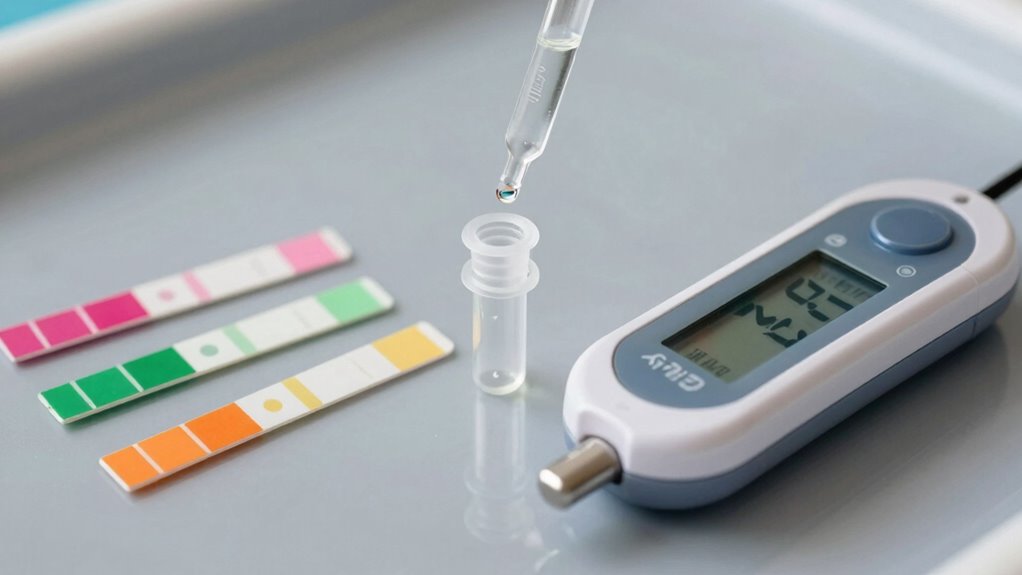
Digital pool testers offer a modern alternative to traditional liquid drop kits, providing quick and straightforward readings with minimal effort. They use electronic meters to measure water parameters accurately. Here’s what makes them stand out:
- Fast results, often within seconds
- Easy-to-read digital displays
- Reduced human error compared to visual color matching
- Ability to store and track multiple test results
- Many models include automatic calibration to maintain measurement precision over time.
With digital testing, you simply immerse the tester in water or add a sample, then read the precise measurements on the device. Electronic measurement ensures consistent, accurate data while eliminating guesswork. They often incorporate advanced sensor technology to enhance measurement accuracy and reliability. Electronic meters eliminate guesswork and provide consistent, reliable data. They’re especially useful for maintaining ideal water chemistry without the hassle of color comparisons or chemical handling. Additionally, many digital testers include calibration features to ensure ongoing accuracy. Overall, digital pool testers deliver accuracy and convenience, making water testing simpler and more precise.
What Factors Can Impact Your Pool Water Test Accuracy?

Several factors can influence the accuracy of your pool water tests, potentially leading to misleading results if you’re not careful. Chemical interference is a common issue, where substances like chlorine, pH adjusters, or stabilizers can skew readings if tested too soon after adding chemicals or if tests aren’t performed correctly. User error also plays a significant role; improper sampling technique, inaccurate timing, or misreading color changes can cause mistakes. For example, not mixing the sample thoroughly or using expired test reagents can compromise results. To get reliable readings, follow instructions carefully, wait the recommended time before testing, and avoid testing immediately after chemical treatments. Being mindful of these factors helps ensure your tests reflect your pool’s true water quality. Additionally, understanding the composition of Suprem fabric can help in selecting eco-friendly and durable materials for pool covers or related accessories. Proper testing techniques are essential for maintaining optimal water balance and preventing issues like algae growth or equipment damage.
Which Testing Method Is Most Cost-Effective and Reliable?
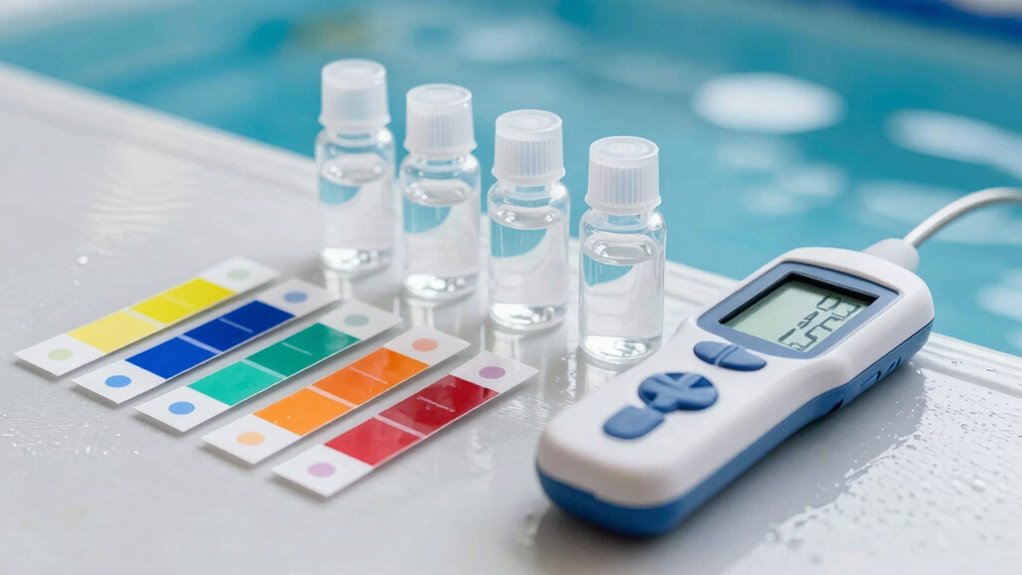
When choosing a pool water testing method, affordability and reliability are key considerations. You want a solution that accurately measures chlorine levels and pH balancing without breaking the bank. Here’s what to contemplate:
- Strips are budget-friendly and quick but may lack precision.
- Drop tests offer more accuracy for chlorine and pH but cost slightly more.
- Digital testers provide the highest reliability and consistency, though they come with a higher upfront price.
- Balance your needs: if you test frequently, investing in digital testers might save money long-term. If occasional testing suffices, strips or drops could be enough. Ultimately, drops and digital methods tend to be more reliable for ensuring proper chlorine levels and pH balancing, making them a better investment for consistent, accurate results.
Which Testing Method Is Best for Your Pool Size and Type?
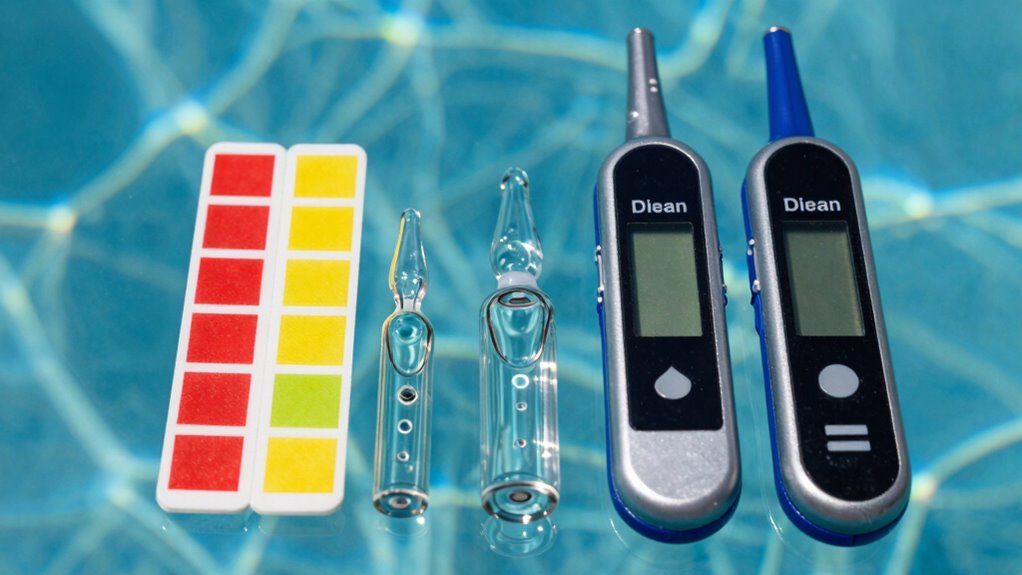
Choosing the right testing method depends largely on your pool’s size and type. If you have a small, residential pool, test strips are convenient and quick for checking chlorine levels and pH balance. They’re affordable and easy to use, making them suitable for regular maintenance. For larger pools or commercial settings, drop tests or digital testers offer more precision, especially when monitoring subtle changes in chlorine levels and pH. Digital testers are ideal if you want quick, accurate readings without mess. Consider your pool’s volume and how often you test. For frequent testing, a digital device might save time, while strips work well for occasional checks. Matching your testing method to your pool size and type guarantees reliable results and helps maintain ideal water quality.
Common Mistakes That Skew Pool Water Test Results: and How to Avoid Them
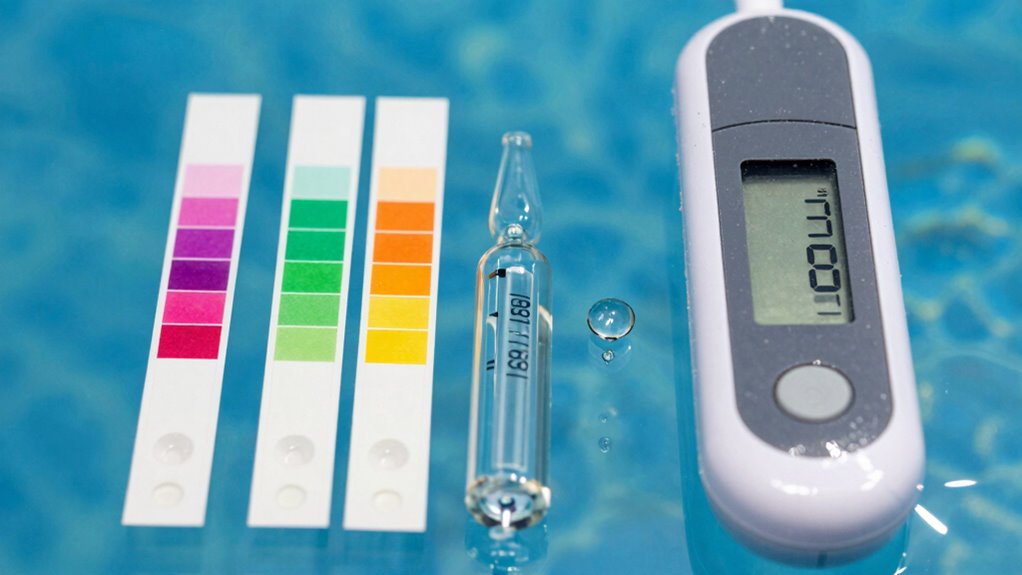
Incorrect testing techniques and waiting too long to read your results can lead to inaccurate water assessments. These mistakes cause you to miss crucial adjustments needed for balanced water. To keep your pool safe and clean, it’s vital to follow proper testing procedures and check results promptly.
Incorrect Testing Techniques
Many common testing mistakes can lead to inaccurate pool water readings, causing you to make poor decisions about water chemistry. To avoid this, watch out for these errors:
- Not following test instructions carefully, which can skew results.
- Testing immediately after adding chemicals, leading to false readings.
- Using expired or contaminated test reagents, compromising accuracy.
- Ignoring proper sample collection, such as testing at the right depth or avoiding debris.
Incorrect testing techniques can hinder proper chlorine stabilization and algae prevention. For example, overestimating chlorine levels might cause you to skip necessary chlorination steps, risking algae growth. Conversely, underestimating can lead to over-application of chemicals, upsetting balance. Always follow the recommended procedures precisely to guarantee your tests reflect the true water chemistry, helping you maintain a safe, clear pool.
Delayed Test Results
Waiting too long to read your pool water test results can lead to inaccurate data, which hampers proper chemical adjustments. If you delay testing beyond the recommended testing frequency, your results may no longer reflect the current water conditions. Additionally, reagent shelf life is vital; expired reagents can produce false readings, making your water chemistry seem safer or more dangerous than it truly is. Always check expiration dates and follow the manufacturer’s guidelines for testing intervals. Promptly reading test results ensures you act on accurate information, maintaining balanced water. Ignoring these timing tips can result in over- or under-treating your pool, leading to cloudy water, algae, or equipment damage. Stay vigilant about timely testing and reagent freshness to keep your pool safe and clean.
Tips for Ensuring Consistent and Accurate Pool Water Tests
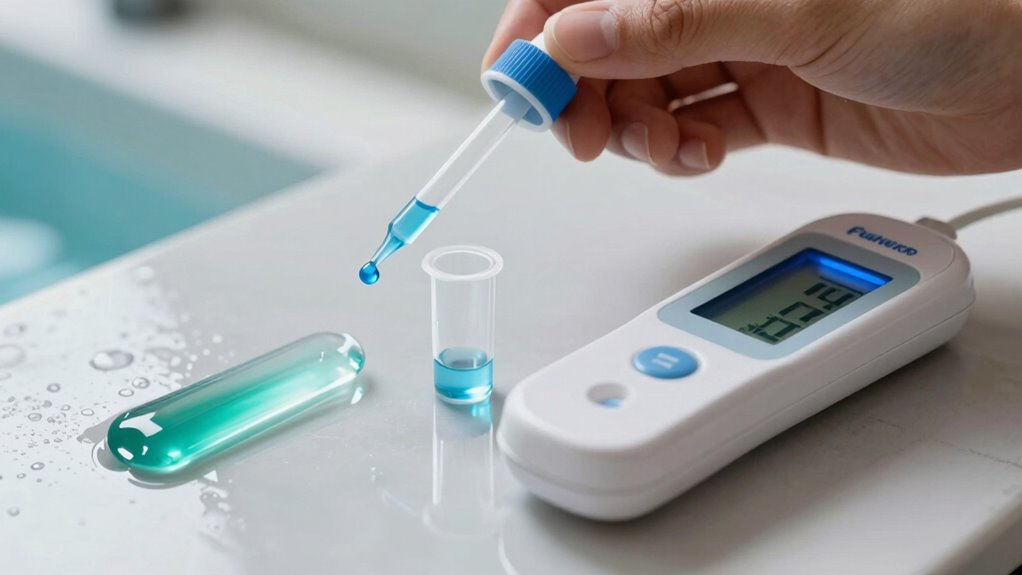
To guarantee your pool water tests are consistent and accurate, it’s essential to follow proper testing procedures every time. First, always collect water samples from the same depth and location to avoid discrepancies. Second, ensure your testing tools are clean and calibrated regularly. Third, test at consistent times of day, preferably when the pool isn’t in use, for reliable readings. Fourth, record and compare results over time to spot trends and maintain proper chlorine balance and pH maintenance. Accurate testing helps you adjust chemicals correctly, preventing imbalances that can harm swimmers or damage your pool. By sticking to these tips, you’ll keep your pool water properly balanced and ensure your tests are both consistent and precise.
How to Choose the Most Accurate Pool Water Testing Method for Your Needs
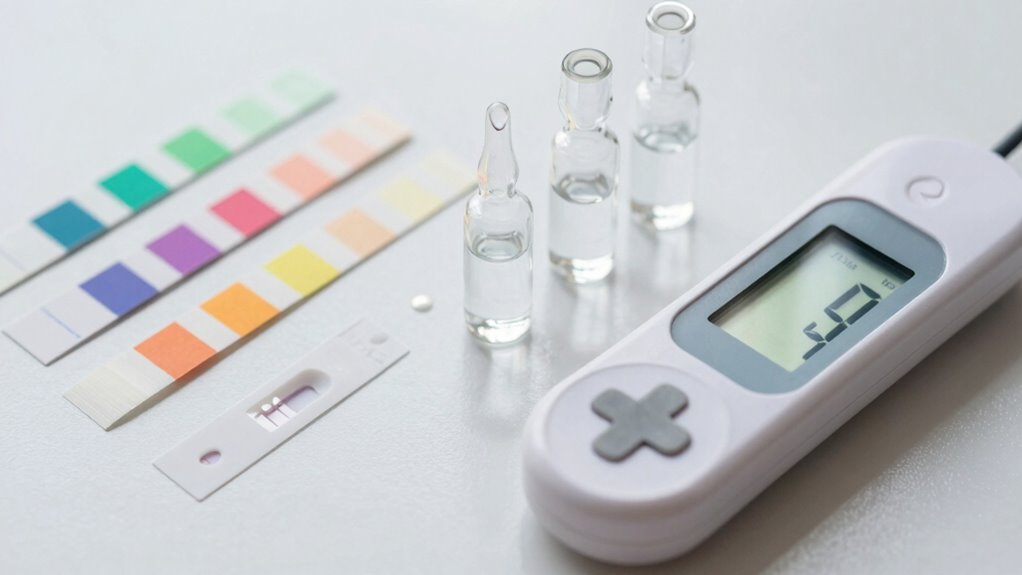
Choosing the right pool water testing method guarantees you get accurate, reliable results that help maintain proper chemical balance. If you’re focused on chlorine levels and pH balance, consider what suits your routine and skill level. Test strips are quick and easy but may be less precise, ideal for regular checks. Drops offer more accuracy and are good if you want detailed readings, especially for critical adjustments. Digital testers provide the highest precision and convenience, making them ideal for those needing consistent, exact measurements. Think about your budget, how often you test, and the level of accuracy you require. By selecting a method that matches your needs, you ensure safe, clean water and avoid over- or under-chemicating your pool.
Frequently Asked Questions
How Often Should I Test My Pool Water?
You should test your pool water at least twice a week to maintain proper chemical balance. Regular testing helps you catch imbalances early and keeps your water safe and clear. If you notice heavy use or after a storm, increase test frequency to ensure your chemicals stay balanced. Using reliable testers, whether strips, drops, or digital, makes it easier to monitor and adjust your pool’s chemical levels accurately.
Can Environmental Factors Affect Test Accuracy?
Environmental factors can definitely disrupt testing accuracy. You should watch out for chemical interference from sunlight, wind, or debris, which can skew results. Testing conditions matter too—testing in extreme heat or cold, or when the pool is dirty or windy, can lead to misleading measurements. To get precise results, perform tests in stable, shaded conditions, and avoid external influences that could interfere with your readings.
Are Professional Lab Tests More Accurate Than Home Kits?
Yes, professional lab tests are generally more accurate than home kits because they follow strict testing procedures and offer higher lab accuracy. When you send a water sample to a lab, specialized equipment and trained technicians ensure precise results, minimizing errors caused by environmental factors. While home kits are convenient, they often lack the same level of accuracy, making lab testing the better choice for critical measurements like pH and chemical levels.
How Do Temperature Changes Impact Test Results?
Temperature fluctuations can subtly influence your test results, making them less reliable during calibration challenges. When water warms or cools unexpectedly, it can cause testing strips, drops, or digital devices to read inaccurately, leading to potential misjudgments. To guarantee accuracy, always test in stable conditions and follow manufacturer instructions carefully. By doing so, you safeguard your pool’s chemistry, creating a more inviting and safe swimming environment for everyone.
What Maintenance Is Required for Digital Testers?
You need to regularly calibrate your digital tester, ideally every few months, to guarantee accurate readings. Keep an eye on battery life and replace the batteries promptly when they start to weaken, usually every 6-12 months. Also, clean the sensor as recommended by the manufacturer to prevent buildup that can interfere with measurements. Proper maintenance keeps your digital tester reliable and ensures your pool water stays balanced.
Conclusion
Choosing the right pool water tester is like finding the perfect compass for your aquatic adventure. Whether you prefer strips, drops, or digital devices, keep in mind that accuracy depends on proper use and understanding your pool’s needs. With the right tool in hand and a keen eye, you’ll navigate clear, balanced waters like a seasoned captain steering through calm seas. plunge in confidently—your perfect pool experience awaits just beneath the surface.