Choosing a salt chlorine generator that’s “just enough” can lead to issues like frequent system strain, poor water quality, and shorter equipment lifespan. Oversizing slightly guarantees your pool gets consistent chlorination, even during peak times or weather changes. It also reduces wear on the system and lowers maintenance costs. If you want reliable, long-lasting performance, it’s best to select a unit a bit larger than your pool’s size—more details about how to do this properly are coming up.

Get pool and patio gear delivered free — and shop member deals
- Fast, free delivery on millions of items
- Access to Prime Big Deal Days deals on October 6–7
- Prime Video, Amazon Music and more included
Key Takeaways
- Oversizing ensures consistent chlorine production during peak usage and weather fluctuations, preventing under-chlorination.
- Properly sized systems reduce strain, wear, and maintenance costs, extending equipment lifespan.
- Selecting a generator slightly above your pool’s capacity offers a buffer for water chemistry changes.
- Under-sized units may overwork, leading to quicker failure and less reliable water sanitation.
- Oversizing provides stable water quality, enhanced safety, and peace of mind with fewer operational issues.
salt chlorine generator size for pool
As an affiliate, we earn on qualifying purchases.
As an affiliate, we earn on qualifying purchases.
What Is a Salt Chlorine Generator and How Does It Work?

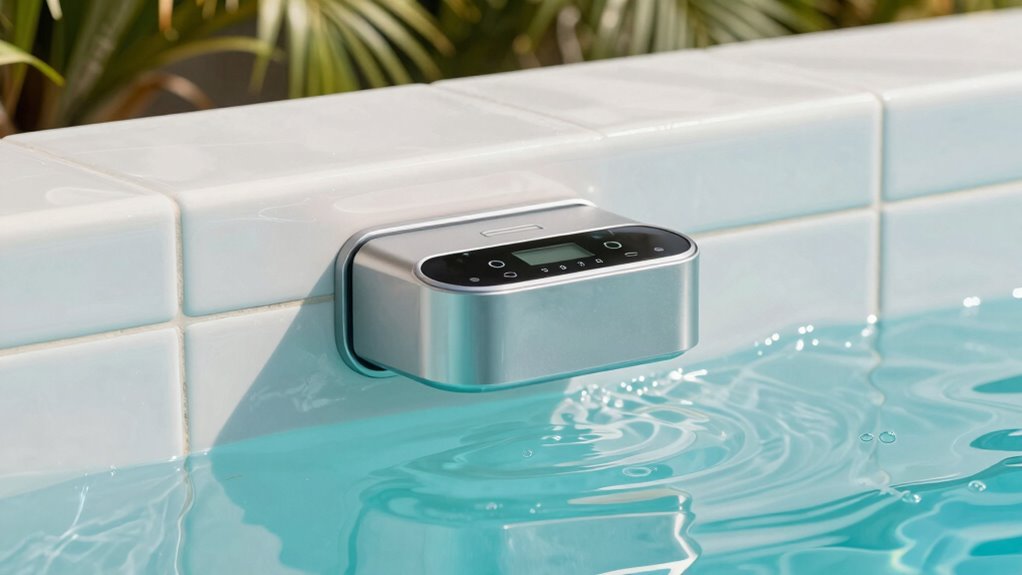
A salt chlorine generator is a device that produces chlorine for your pool by converting salt into sanitizer through electrolysis. This process simplifies pool chemistry, reducing the need for manual chemical addition. As water flows through the generator’s cell, an electric current splits salt molecules into chlorine and other byproducts, maintaining the proper sanitizer level automatically. To keep the system working efficiently, salt maintenance is essential; you need to regularly monitor salt levels and ensure they stay within the manufacturer’s recommended range. Proper temperature control is also important, as it can affect the efficiency of the electrolysis process. Additionally, understanding the salt levels required for optimal operation can help prevent system damage and ensure consistent sanitation. Maintaining correct water chemistry is crucial for system longevity and effective sanitation. This not only keeps the generator functioning at its best but also helps keep your pool water clean, clear, and safe. Regular system monitoring can help identify potential issues early and prolong the lifespan of your equipment. Being aware of the electrolysis process can help you troubleshoot and optimize your generator’s performance. By understanding how your salt chlorine generator operates, you can better manage your pool’s chemistry and enjoy hassle-free maintenance.
Why Oversizing Your Salt Chlorinator Boosts Pool Safety and Longevity

Oversizing your salt chlorinator helps keep your pool properly sanitized, even during peak usage or unexpected weather changes. It also reduces strain on the equipment, which can extend its lifespan and save you money on repairs. Ultimately, a larger unit provides more consistent water quality and enhances your pool’s safety. Additionally, choosing a unit with a higher capacity ensures better handling of fluctuating demands for proper color accuracy, leading to a more enjoyable swimming experience.
Ensures Adequate Chlorination Levels
Since salt chlorinators can sometimes underperform during heavy pool use or fluctuating conditions, sizing your unit larger than the minimum requirements guarantees you consistently maintain proper chlorine levels. When you have a pool cover on, it can trap heat, raising water temperature and increasing chlorine demand. An undersized generator may struggle to keep up, risking inadequate sanitation. Oversizing ensures your chlorinator can produce enough chlorine, even during peak times or in warmer water, protecting your pool and swimmers. This extra capacity acts as a buffer, giving you peace of mind that your water remains safe and properly sanitized. Proper sizing also helps extend the lifespan of your equipment by reducing the strain on your chlorinator, leading to more reliable and longer-lasting performance. Additionally, considering warranty coverage when selecting a larger unit can provide further reassurance of its durability and longevity.
Extends Equipment Lifespan
Choosing a larger salt chlorinator than your pool requires doesn’t just guarantee consistent chlorine levels; it also helps extend the equipment’s lifespan. When your system operates below its capacity, it experiences less wear and tear, reducing the risk of premature failure. Saltwater benefits include gentler chemical exposure, which minimizes corrosion and prolongs component life. An oversized chlorinator maintains ideal chlorine efficiency, ensuring your pool stays sanitized without overworking the system. This means fewer cycles, less strain, and reduced maintenance costs over time. By investing in a slightly larger unit, you promote more reliable operation and longevity, saving you money and hassle in the long run. Ultimately, oversizing your salt chlorinator enhances both pool safety and equipment durability.
How to Calculate the Right Salt Chlorinator Size for Your Pool
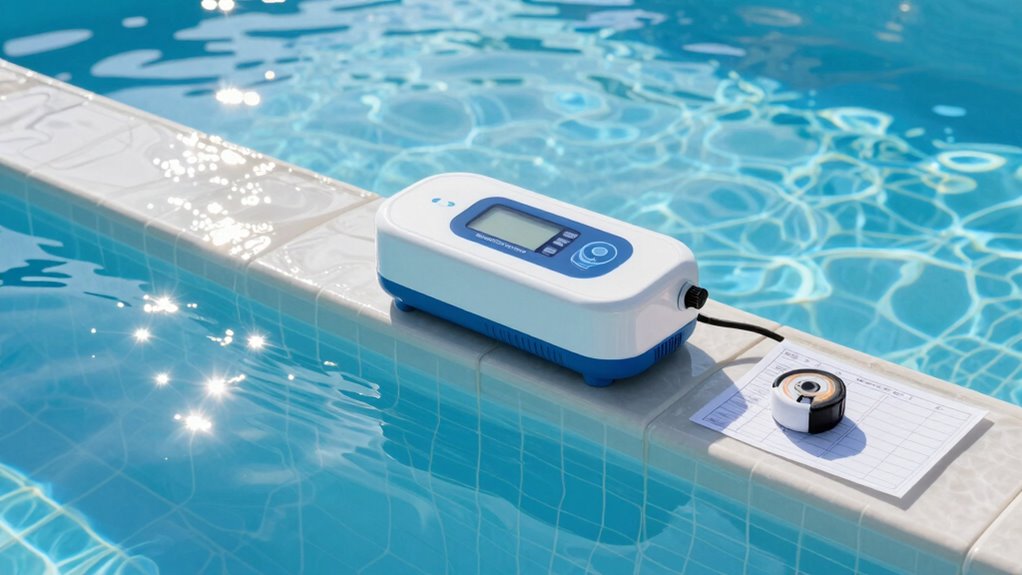
To determine the correct salt chlorinator size for your pool, you need to understand your pool’s volume and how much chlorine it requires to stay sanitized. Start by calculating the total gallons of water, as this directly influences the chlorinator’s output needs. Consider your goals for pool aesthetics, ensuring clean water that looks inviting. Proper chemical balancing is essential; a unit too small won’t produce enough chlorine, leading to issues like cloudy water or algae. Conversely, a correctly sized chlorinator will maintain consistent chlorine levels, supporting clear water and balanced chemicals. Use manufacturer guidelines to match your pool’s size with the chlorinator’s capacity. Remember, sizing up slightly can help manage fluctuations and avoid problems from under- or over-chlorination.
What Are the Risks of Installing a Too-Small or Just-Enough Salt Chlorinator?
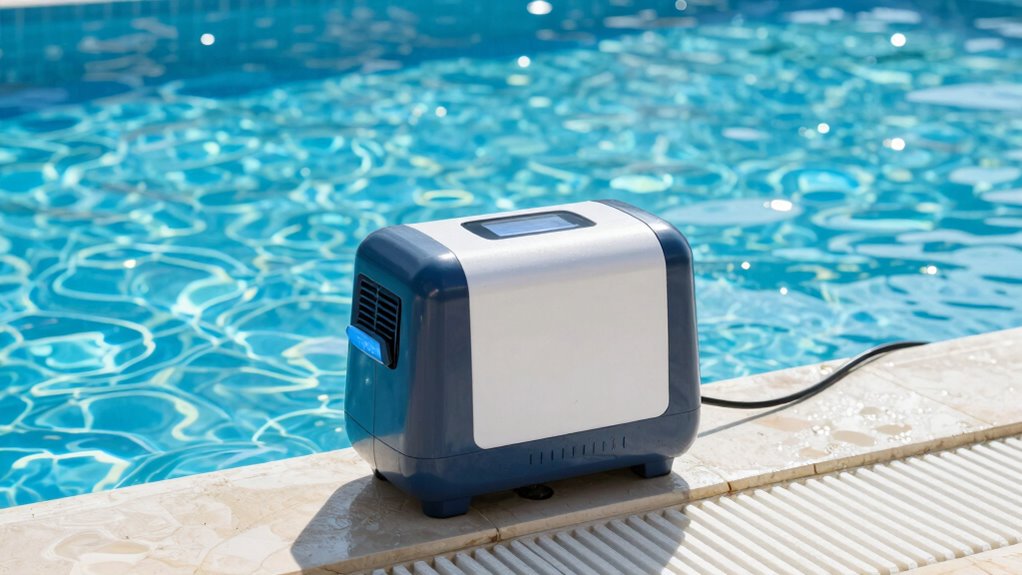
Installing a salt chlorinator that’s too small or just enough can lead to increased equipment wear and damage over time. It may also fail to produce enough sanitizer, leaving your pool less clean and safe. Understanding these risks helps you choose the right size for reliable, efficient operation. Additionally, selecting the proper size ensures the system operates within its optimal electrical load, preventing potential overloads or inefficiencies. Choosing an appropriately sized unit also minimizes the risk of equipment failure, which can be costly and disruptive to your pool maintenance routine. Ensuring the system is correctly sized for your pool helps maintain consistent sanitation levels and prolongs the lifespan of your equipment. Proper sizing also considers factors like pool volume and usage patterns, which are critical for optimal performance. Moreover, correct sizing accounts for system efficiency, ensuring energy consumption is optimized and operational costs are minimized.
Increased Equipment Wear
A salt chlorinator that’s too small or just barely adequate can cause significant wear on your equipment over time. When it’s undersized, it works harder to produce enough sanitizer, often running continuously, which strains components and accelerates wear. This increased workload can lead to corrosion, especially if corrosion prevention measures aren’t properly maintained. Additionally, operating at maximum capacity reduces electrical efficiency, causing the system to consume more power and generate excess heat. Over time, this stress can weaken the cell and other parts, leading to costly repairs or replacements. To avoid these issues, selecting a properly sized chlorinator ensures it runs efficiently without unnecessary strain, extending the lifespan of your equipment while maintaining consistent sanitation.
Insufficient Sanitization Levels
Have you considered what happens if your salt chlorinator isn’t powerful enough to keep your pool properly sanitized? An undersized unit can lead to insufficient sanitization levels, risking chemical imbalance and algae growth. Without enough chlorine production, bacteria and algae thrive, turning your clear water cloudy and green. Proper sizing is essential to maintain art care and living, ensuring your pool remains safe, clear, and inviting.
Benefits of Choosing a Slightly Larger Salt Chlorinator for Better Performance
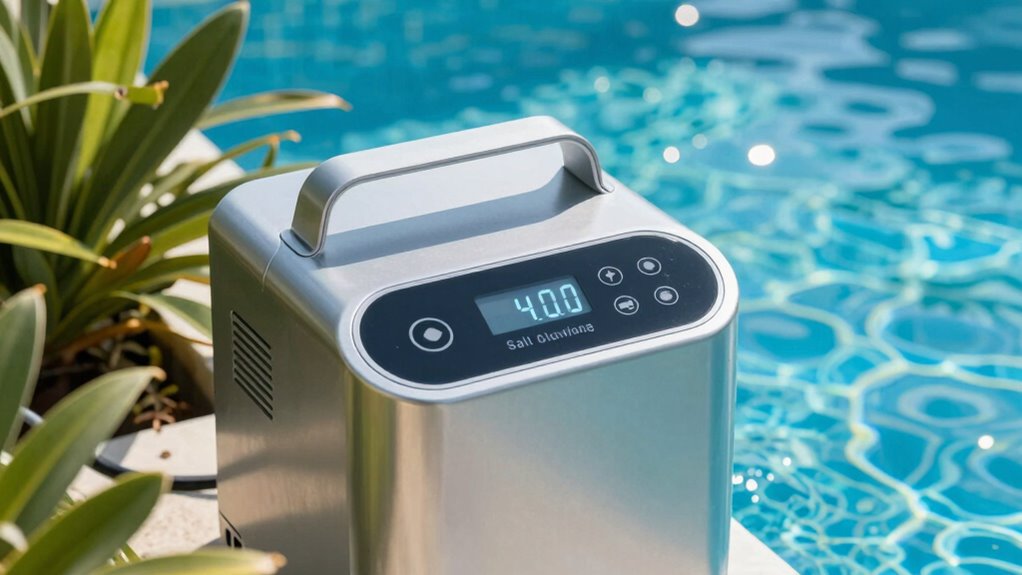
Choosing a slightly larger salt chlorinator can considerably enhance your pool’s overall performance. A bigger unit provides more consistent chlorine production, reducing the need for frequent system calibration. This stability leads to better water quality and less maintenance. Reliable performance ensures your pool remains cleaner and healthier with less effort, maintaining clearer water and healthier conditions. Additionally, a slightly larger chlorinator offers greater margin for unexpected changes in water chemistry or increased usage, ensuring ideal operation without constantly adjusting settings. From a user safety perspective, a larger unit minimizes the risk of under- or over-chlorination, creating a safer environment for swimmers. It also helps prevent system strain or failure, prolonging the life of your equipment. Incorporating smart technology can further optimize performance by allowing remote monitoring and control, making maintenance even more straightforward. Selecting a unit with adequate capacity can prevent premature system wear and ensure consistent operation over time. Understanding Free Floating systems can help you make more informed decisions about equipment compatibility and setup. Moreover, being aware of system sizing considerations ensures you choose a unit that meets your pool’s specific needs, avoiding inefficiencies. Overall, investing in a slightly larger salt chlorinator ensures reliable performance and peace of mind, making pool maintenance easier and more effective.
Tips for Installing and Maintaining Your Salt Chlorine Generator Properly
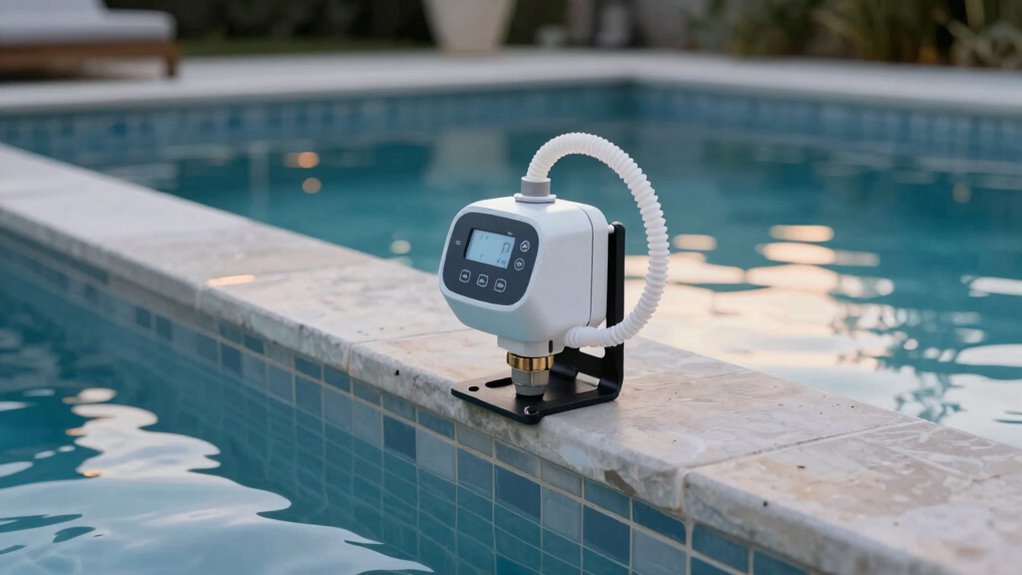
To guarantee your salt chlorine generator operates efficiently and lasts longer, proper installation and maintenance are essential. Start by making certain the unit is installed in a dry, ventilated area away from direct sunlight and moisture. Follow the manufacturer’s instructions carefully, especially regarding electrical connections. Regular pool cleaning helps prevent debris from interfering with the generator’s function. Keep the salt levels within the recommended range to maintain steady chlorine production. Check and adjust your pool’s chemical balance frequently, especially pH and alkalinity, to optimize chlorine effectiveness and prevent scale buildup on the cell. Routine inspections of the cell for buildup or corrosion are also crucial. Proper maintenance not only extends the lifespan of your generator but also ensures your pool remains safe, clean, and properly sanitized. Water chemistry plays a critical role in maintaining the overall health and efficiency of your pool system. Additionally, understanding pool sizing ensures your salt generator is appropriately matched to your pool’s volume, preventing issues related to under or over-chlorination. Ensuring the correct cell cleaning schedule can prevent calcium buildup, which can impair generator performance. Regularly monitoring salt levels is vital because fluctuations can lead to inconsistent chlorine production and potential damage to the cell.
Frequently Asked Questions
How Often Should I Replace Parts of My Salt Chlorinator?
You should replace parts of your salt chlorinator based on its chlorinator lifespan and a regular replacement schedule. Typically, electrodes last about 3 to 5 years, but you might need to replace them sooner if you notice reduced chlorine production or scaling. Check manufacturer guidelines for specific parts like cell plates or sensors, and inspect your unit quarterly to guarantee peak performance and extend its lifespan.
Can a Larger Chlorinator Increase My Energy Costs?
A larger chlorinator can increase your energy costs because it consumes more energy during operation. Studies show that oversized equipment often runs inefficiently, leading to higher energy consumption and reduced equipment lifespan. By choosing a properly sized unit, you optimize energy use and extend the lifespan of your equipment, saving you money in the long run. Always select a generator that matches your pool’s size to avoid unnecessary energy expenses.
What Maintenance Is Needed for Oversized Salt Chlorinators?
With an oversized salt chlorinator, you’ll need regular maintenance like system calibration to ensure proper chlorine levels. Corrosion prevention becomes vital, so check for signs of wear, especially on metal components, and clean the cell regularly to prevent buildup. You might also need to adjust settings more often to match your pool’s needs, guaranteeing efficiency and longevity of the equipment while avoiding unnecessary damage or costly repairs.
How Does Ambient Temperature Affect Chlorinator Efficiency?
Ambient temperature acts like a thermostat for your chlorinator efficiency, either boosting or slowing its performance. When temperatures rise, your chlorinator works harder, producing more disinfectant, but cold weather can make it sluggish. You need to be mindful of how ambient temperature impacts your system’s effectiveness, adjusting settings or maintenance routines accordingly. Keeping an eye on temperature helps guarantee your chlorinator functions at its best, preventing surprises when you need clean, safe water the most.
Is There a Warranty Difference Between Standard and Oversized Units?
You’ll find that warranty policies often differ between standard and oversized salt chlorine generators. Oversized units typically come with better product coverage, offering longer or more thorough warranties to justify their larger capacity. Standard models might have limited coverage, so check the warranty details carefully. Choosing a generator with a solid warranty ensures you’re protected against potential issues, especially if you decide to upgrade or if the unit experiences early problems.
Conclusion
Choosing a salt chlorinator that’s just enough might seem tempting, but it could leave your pool vulnerable when you need it most. Oversizing offers not only peace of mind but also enhanced safety and durability. Don’t settle for the minimum—consider the unexpected challenges ahead. With a slightly larger unit, you’re better prepared for any surprises lurking beneath the surface. Are you ready to make a smarter, safer choice that keeps your pool pristine year-round?
Fall Picks
fall essentials
As an affiliate, we earn on qualifying purchases.