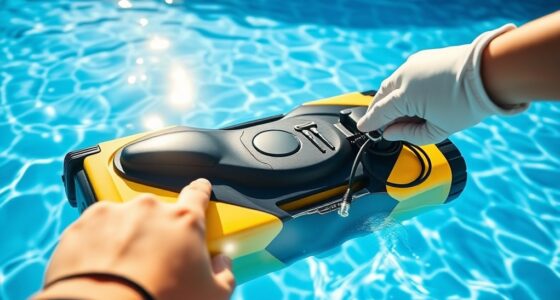
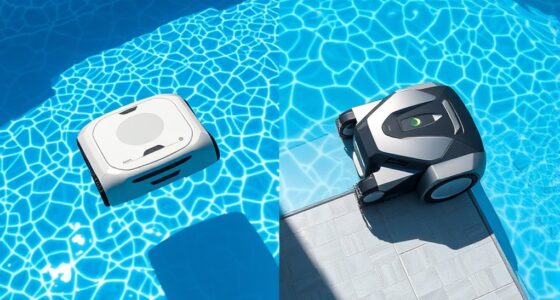
Saltwater chlorination works by passing an electric current through salt dissolved in your pool water, producing chlorine on-site to sanitize the water continuously. It eliminates the need for manual chemical addition, making your pool softer and easier on your skin, eyes, and hair. It’s ideal if you want a simplified maintenance routine and eco-friendly option. To learn more about how it can benefit your pool and when to use it, keep exploring the details behind this innovative system.

Get pool and patio gear delivered free — and shop member deals
- Fast, free delivery on millions of items
- Access to Prime Big Deal Days deals on October 6–7
- Prime Video, Amazon Music and more included
Key Takeaways
- Saltwater chlorination produces chlorine on-site through electrolysis, keeping water sanitized automatically.
- It creates softer, more pleasant water that is gentler on skin, eyes, and hair.
- Ideal for those seeking low-maintenance, consistent water quality with eco-friendly benefits.
- Suitable for pools of various sizes when system capacity matches pool volume.
- Best used when reducing chemical use and enhancing water comfort are priorities.

Saltwater chlorination offers an alternative way to keep your pool clean and safe without the harsh chemicals typically used in traditional methods. Instead of constantly adding chlorine manually or relying on chemical tablets, a saltwater system generates chlorine naturally through electrolysis. This process involves passing an electric current through salt dissolved in your pool water, producing chlorine on-site. As a result, your pool remains sanitized, reducing the need for frequent chemical additions. When it comes to pool maintenance, saltwater systems simplify the process by providing a steady, low level of chlorine, helping you maintain consistent water quality without the constant balancing act often required with traditional chlorine methods.
One of the key advantages of saltwater chlorination is its positive impact on the environment. Conventional chlorination often involves transportation, packaging, and chemical manufacturing, all of which contribute to a larger carbon footprint. In contrast, a saltwater system minimizes chemical use, reducing the potential for chemical runoff and pollution. Since the system continuously produces chlorine from salt, there’s less packaging waste, and you’re using fewer synthetic chemicals overall. Plus, salt is a naturally occurring mineral, making the process more eco-friendly and sustainable over time. If you’re concerned about the environmental impact of your pool, switching to saltwater chlorination can be a responsible choice that aligns with eco-conscious values. Additionally, many modern systems incorporate automatic controls to help maintain optimal salt and chlorine levels with minimal effort.
When deciding whether to use a saltwater chlorination system, consider your pool’s size and your maintenance preferences. These systems are often more cost-effective in the long run because they reduce the need for buying and handling large quantities of chemicals. They also tend to create softer, more pleasant water that’s gentler on your skin, eyes, and hair. However, it’s worth noting that salt systems require an initial investment in equipment and some ongoing maintenance, such as monitoring salt levels and cleaning the cell to prevent buildup. Nevertheless, many pool owners find that the benefits—simpler maintenance, healthier water, and a smaller environmental footprint—outweigh these costs.
As an affiliate, we earn on qualifying purchases.
Frequently Asked Questions
How Long Does a Saltwater Chlorinator Typically Last?
A saltwater chlorinator typically lasts between 3 to 7 years, depending on usage and maintenance. You can expect good chlorinator longevity if you clean it regularly and follow the manufacturer’s guidelines. Replacement intervals vary, but most units need replacing after about 5 years. Keep an eye on the chlorine production and salt levels to make certain your system functions efficiently and extends its lifespan.
Can Saltwater Chlorination Be Used in All Pool Types?
Yes, you can use saltwater chlorination in most pool types, but consider your pool size and water temperature. Larger pools may need a more powerful system, while high water temperatures can impact salt cell efficiency. Always check the manufacturer’s guidelines to guarantee compatibility. If you have a vinyl or plaster pool, saltwater systems work well, but for certain materials, you might need adjustments or specific equipment.
What Maintenance Is Required for Saltwater Systems?
You need to perform regular salt maintenance to keep your saltwater system running smoothly. This includes checking salt levels and adding salt when needed. Keep an eye out for saltwater corrosion, which can damage components over time. Cleaning the cell plates and inspecting for buildup or corrosion helps prevent issues. Proper maintenance guarantees your system stays efficient, extends its lifespan, and keeps your pool water clean and balanced.
Is Saltwater Chlorination Safe for Children and Pets?
Imagine your kids splashing happily in a pool with gentle, shimmering water. Saltwater chlorination is generally safe for children and pets because it minimizes harsh chemical exposure, reducing irritation and odor. This system produces natural chlorine, making the water healthier and more comfortable. While routine maintenance is essential, it’s a safe choice that promotes health safety, allowing your loved ones to enjoy the pool worry-free.
How Does Saltwater Affect Pool Equipment Over Time?
Saltwater can increase the corrosion risk on your pool equipment over time, especially if the salt levels aren’t properly maintained. You might notice mineral buildup on metal parts, which can cause damage or reduce efficiency. Regular maintenance, including cleaning and monitoring salt levels, can help prevent these issues. Using corrosion-resistant equipment and applying protective coatings also minimizes long-term damage, ensuring your pool stays in good condition.
Conclusion
So, next time you consider your pool options, remember that saltwater chlorination isn’t just a trendy choice—it actually produces gentler, more natural sanitization. Some say it’s just a fancy way to sell salt, but the science shows it’s effective and less harsh on your skin and eyes. Whether you’re convinced or still skeptical, trying it out might just change how you enjoy your pool, making every swim a little more invigorating.
Halloween Picks
halloween
As an affiliate, we earn on qualifying purchases.