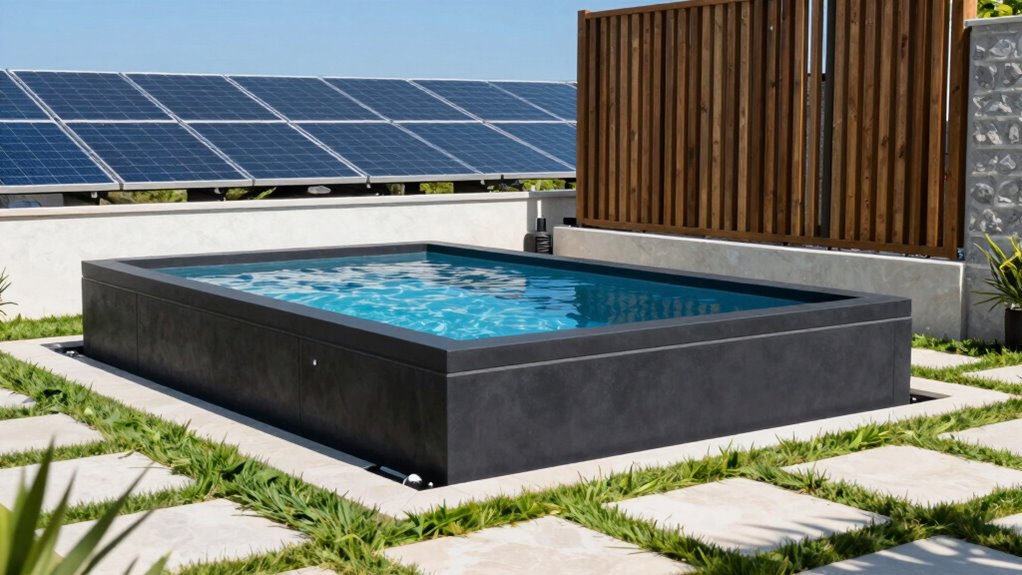
The truth about “energy efficient pools” is that significant savings come from smarter equipment, like variable speed pumps, solar heaters, and efficient covers that reduce energy waste. Proper maintenance and strategic upgrades—such as LED lighting and automation systems—also cut costs. These improvements optimize water circulation, heating, and lighting without sacrificing looks or function. Keep exploring to discover how these solutions can make your pool both eco-friendly and budget-friendly.
Key Takeaways
- Savings primarily come from using energy-efficient equipment like variable speed pumps and LED lighting, reducing power consumption.
- Solar heating and covers retain heat effectively, lowering energy costs for pool temperature maintenance.
- Smart automation systems optimize filtration and heating schedules, minimizing unnecessary energy use.
- Proper water chemistry and regular maintenance prevent equipment strain, enhancing efficiency and reducing long-term costs.
- Additional strategies like landscaping, fountains, and solar lighting contribute to overall energy savings and aesthetic appeal.
What Does an Energy-Efficient Pool Really Mean?

What does it truly mean for a pool to be energy-efficient? It means more than just saving on electricity bills; it’s about optimizing how your pool functions while maintaining its beauty. An energy-efficient pool enhances pool aesthetics by ensuring cleaner, clearer water with less chemical use and lower energy for filtration and circulation. Proper water chemistry is vital here; when balanced, it reduces the need for excessive chemicals and minimizes equipment strain. This energy-efficient infrastructure also contributes to lower environmental impact and long-term savings. Maintaining proper water chemistry is essential for efficiency, as it helps prevent issues that can lead to increased energy use. When water chemistry is properly managed, it can significantly reduce chemical waste and promote healthier swimming conditions. This balance ensures your pool looks inviting and stays healthier longer. By focusing on energy-efficient systems, you’re not only cutting costs but also creating a more sustainable, visually appealing environment. In essence, an energy-efficient pool harmonizes beauty, safety, and efficiency, making your backyard oasis both stunning and eco-friendly.
How Much Can You Save by Upgrading Your Pool’s Energy Efficiency?
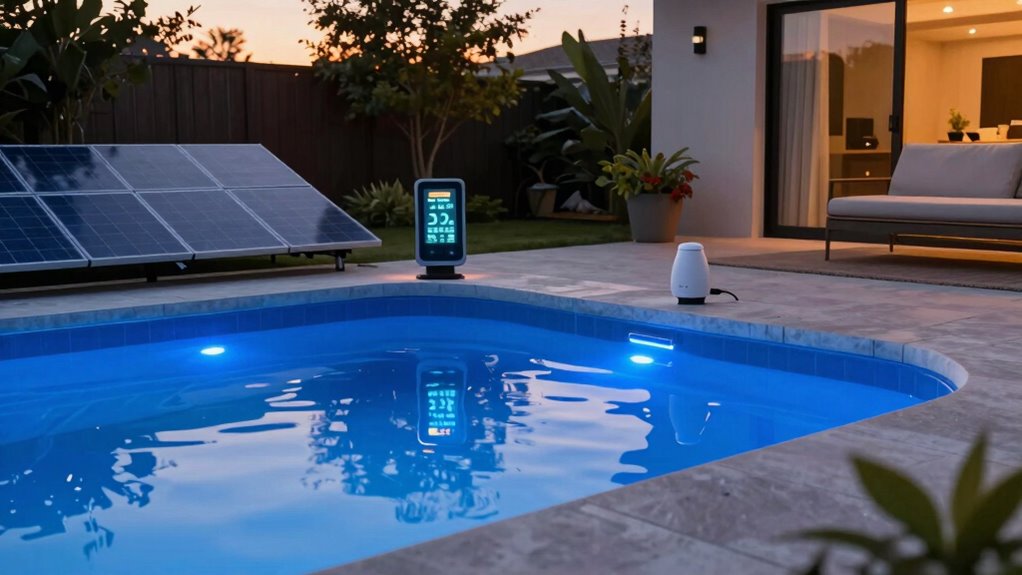
Upgrading your pool’s energy efficiency can substantially lower your monthly energy bills. Over time, these savings add up, making the investment worthwhile. You’ll enjoy long-term cost benefits while keeping your pool running smoothly, especially by optimizing thermal behavior to maintain consistent temperature control and reduce unnecessary energy usage. Additionally, implementing smart energy management systems can further enhance efficiency by adjusting pool equipment based on real-time usage patterns. Proper ventilation can also improve heat retention and reduce energy consumption related to climate control. Investing in reliable backup power solutions can ensure your pool remains operational during outages, preventing energy waste and maintaining consistent operation. Incorporating automation technology allows for precise control over pool functions, maximizing energy savings and convenience.
Lower Energy Bills
By making your pool more energy-efficient, you can substantially cut down on your monthly utility bills. Upgrading to solar heating reduces reliance on traditional energy sources, leading to significant savings, especially during sunny months. Switching to LED lighting lowers electricity use for nighttime illumination, which can cut lighting costs by up to 75%. The table below highlights potential savings based on common upgrades:
| Upgrade | Estimated Monthly Savings | Long-term Benefits |
|---|---|---|
| Solar heating | $30 – $50 | Reduced energy costs |
| LED lighting | $10 – $20 | Longer-lasting bulbs |
| Improved pool pump | $15 – $25 | Faster circulation, less energy |
| Insulation & covers | $10 – $15 | Less heat loss, lower bills |
Additionally, choosing energy-efficient equipment can further optimize your pool’s performance and savings. Incorporating smart pool technology can also help monitor and adjust energy use for maximum efficiency. Moreover, selecting high-quality insulation and covers can maintain water temperature more effectively, resulting in additional savings.
Long-Term Cost Savings
Investing in energy-efficient pool upgrades can lead to substantial long-term savings that far outweigh the initial costs. Over time, you’ll notice savings through reduced energy bills and lower maintenance expenses. These upgrades also help maintain proper pool water chemistry, reducing chemical waste and ensuring safer, clearer water. Additionally, improved energy efficiency supports pool safety by stabilizing water temperature and filtration. Specifically:
- Lower energy costs save hundreds annually.
- Consistent water chemistry minimizes chemical use and enhances safety.
- Efficient filtration reduces equipment wear and prolongs lifespan.
- Proper backup power systems can prevent outages from disrupting your pool’s operation and maintenance routines.
- Understanding energy efficiency standards is crucial for selecting appropriate upgrades that align with long-term savings goals.
- Staying informed about technological advancements in energy-efficient pool equipment can help maximize your investment and savings.
- Learning about energy-efficient pool design can further optimize your system for maximum savings and environmental benefits.
How Pool Pumps, Heaters, and Covers Help You Save Energy
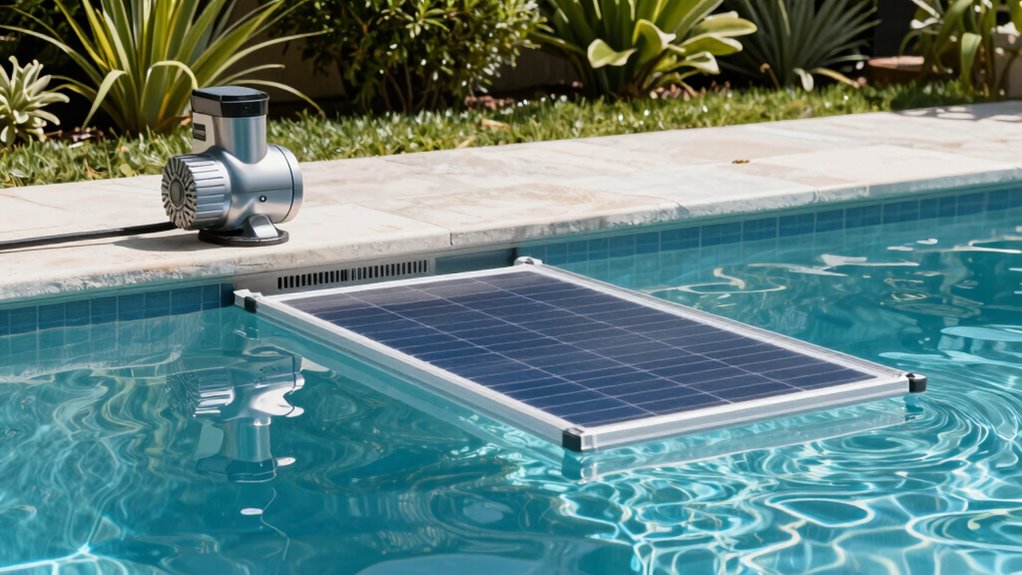
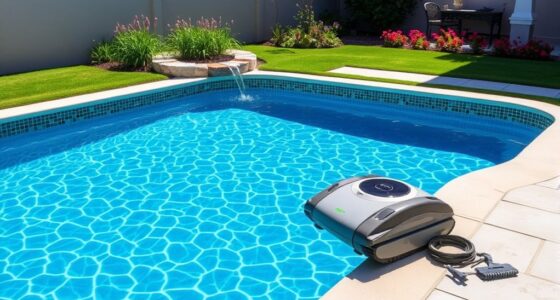
Using efficient pump technologies can considerably reduce your energy use while keeping your pool running smoothly. Variable speed pumps can adjust their operation to meet your pool’s needs, avoiding unnecessary energy consumption. Smart heating options allow you to warm your water only when needed, cutting down on waste. Additionally, protective covers help retain heat and keep debris out, saving you both energy and cleaning time. Incorporating smart-home integrations can further optimize your pool system by allowing remote monitoring and control for maximum efficiency. Understanding energy-efficient equipment can help you select the most effective upgrades for long-term savings. Moreover, choosing proper maintenance practices ensures your equipment operates at peak efficiency, extending its lifespan and enhancing energy savings. Regularly monitoring your system’s performance through home automation platforms can also assist in maintaining optimal efficiency and detecting issues early.
Efficient Pump Technologies
Efficient pump technologies play a crucial role in reducing energy consumption for your pool. Upgrading to variable-speed pumps can cut energy use by adjusting flow rates based on your needs. This not only saves power but also extends equipment life. Additionally, consider integrating solar heating systems, which harness sunlight to warm your water naturally, reducing reliance on traditional heaters. Proper water filtration supported by efficient pumps ensures your pool stays clean without overworking the system. Here are three ways to maximize savings:
- Use variable-speed pumps to optimize flow and energy use
- Incorporate solar heating for cost-effective warmth
- Maintain water filtration with appropriate pump settings to avoid unnecessary energy waste
Efficient pump technologies are a key component of sustainable pool operation, helping you save money and reduce environmental impact. These strategies keep your pool running efficiently and sustainably.
Smart Heating Options
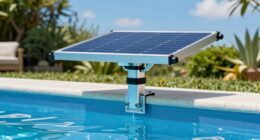
Smart heating options, including advanced pool pumps, energy-efficient heaters, and automatic covers, can considerably cut your pool’s energy costs. Solar pool heaters use sunlight to warm your water, reducing reliance on traditional energy sources and lowering bills. Pairing this with variable speed pumps allows you to adjust flow rates for ideal efficiency, using less power during off-peak times. Automatic covers help retain heat overnight and during off-use periods, minimizing heat loss and reducing the workload on your heater. Additionally, energy management systems enable you to monitor and optimize your pool’s energy consumption in real-time, further enhancing savings. These smart solutions work together to maximize energy use, ensuring your pool stays warm without excessive energy consumption. Energy-efficient technology continues to evolve, offering even smarter ways to reduce your pool’s energy footprint. By investing in these technologies, you make smarter choices that save money and promote a more eco-friendly pool operation. Incorporating smart pool automation can streamline these processes and improve overall efficiency.
Protective Cover Benefits
Have you ever wondered how a well-designed pool cover can substantially cut your energy costs? Using a cover provides multiple benefits that boost efficiency:
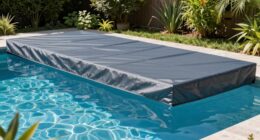
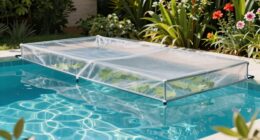
- Retains heat, reducing the need for frequent heater use and lowering energy consumption.
- Minimizes evaporation, keeping your pool water warmer naturally and saving on heating costs.
- Protects poolside furniture from debris and UV damage, extending their lifespan and reducing replacement needs.
Additionally, a cover helps keep your pool ready for use, allowing for easier installation of solar lighting and quick enjoyment. When combined with energy-efficient pool pumps and heaters, it creates a extensive system that maximizes savings. A well-maintained cover also keeps your pool cleaner, reducing filtration and chemical use, all while making your backyard more inviting.
Simple Maintenance Tips to Keep Your Pool Running Efficiently
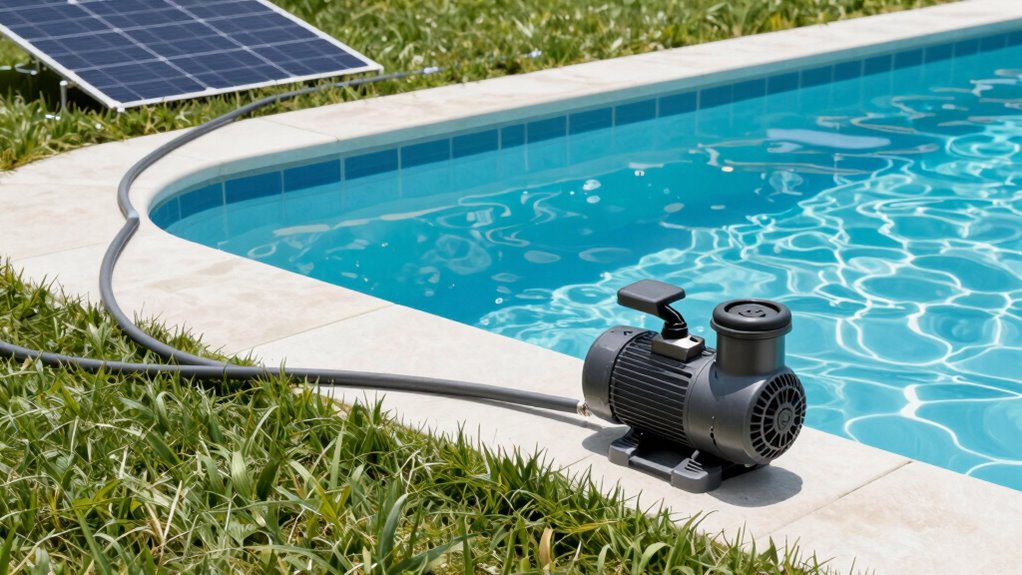
Regularly checking and balancing your pool’s chemical levels is one of the simplest ways to keep it running smoothly. Properly maintaining pool chemicals ensures water stays clean and clear, reducing strain on your water filtration system. Test your water frequently and adjust pH, alkalinity, and sanitizer levels as needed to prevent algae growth and bacteria buildup. Keep your water filtration system working efficiently by cleaning or replacing filters regularly. A well-maintained filter reduces energy use by optimizing water circulation, which minimizes the workload on your pump. Additionally, removing debris and skimming the surface helps prevent clogging and keeps the water flowing freely. Consistent maintenance not only preserves water quality but also lowers energy consumption, making your pool more energy-efficient overall.
Common Myths About Saving Energy in Your Pool
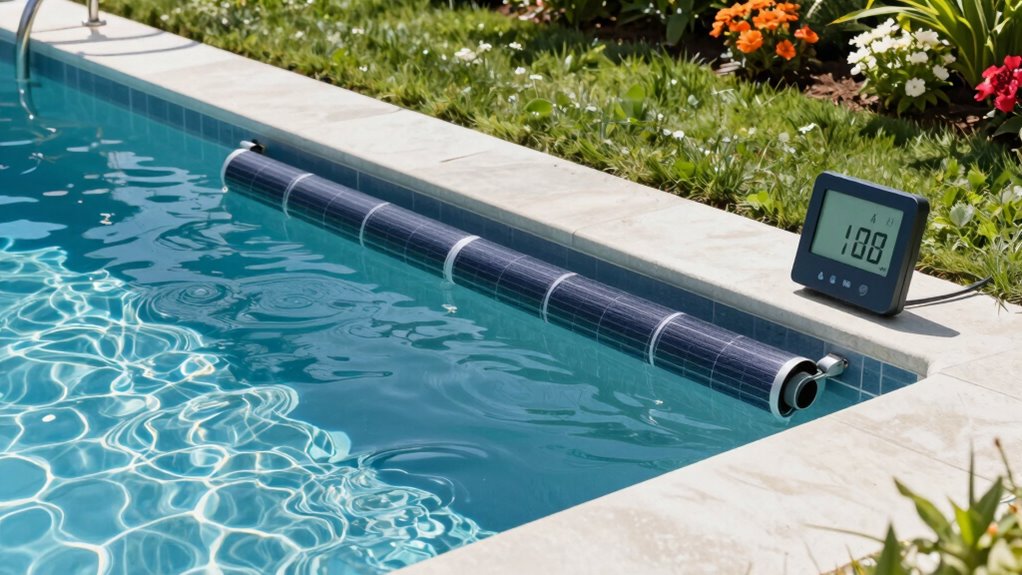
Many homeowners believe that small changes, like turning off the pool pump overnight or lowering the temperature, will considerably cut energy costs, but these myths can do more harm than good. For example, 1) turning off water filtration can cause debris buildup, leading to costly repairs, 2) reducing the heater temperature may seem saving, but it can encourage algae growth, and 3) relying solely on solar heating won’t maintain consistent water temperatures year-round. While solar heating is eco-friendly, it’s not a magic fix for all seasons. Instead, focus on optimizing your water filtration system and proper pool insulation. These strategies ensure your pool stays clean and warm efficiently, saving energy without risking damage or increased long-term costs.
Affordable Strategies to Improve Your Pool’s Energy Efficiency
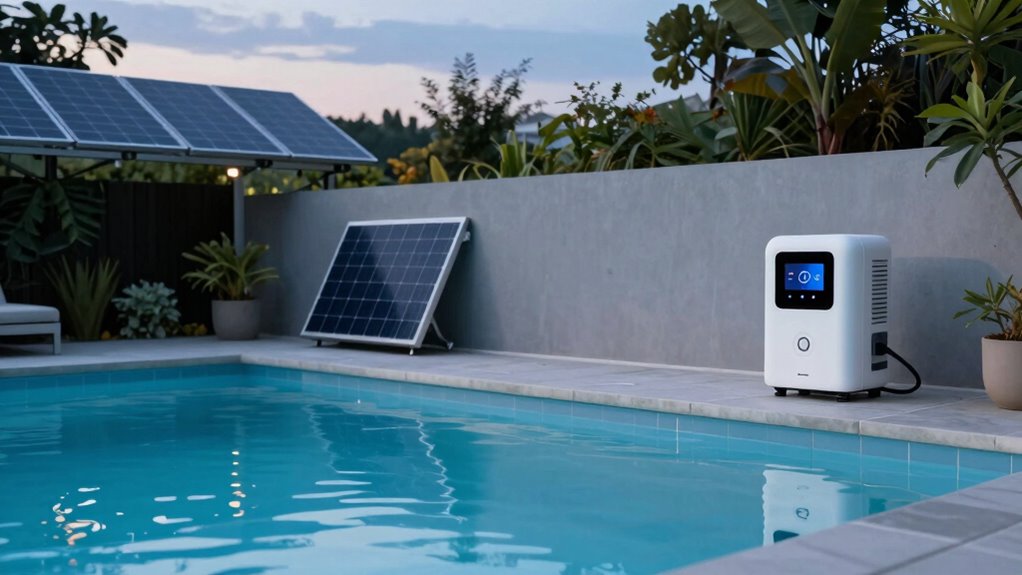
Improving your pool’s energy efficiency doesn’t have to involve costly upgrades or complex equipment. Simple, affordable changes can make a big difference. For example, installing solar lighting around your pool not only brightens the area but also reduces electricity use. Additionally, adding decorative fountains can help circulate water more efficiently, lowering the load on your pump. Consider these options:
| Strategy | Benefit |
|---|---|
| Solar lighting | Saves energy, enhances ambiance |
| Decorative fountains | Improves water circulation, reduces pump workload |
These small upgrades can create a more energy-efficient pool environment without breaking the bank, helping you save on energy costs while enhancing pool aesthetics.
Choosing the Right Equipment for Better Energy Savings
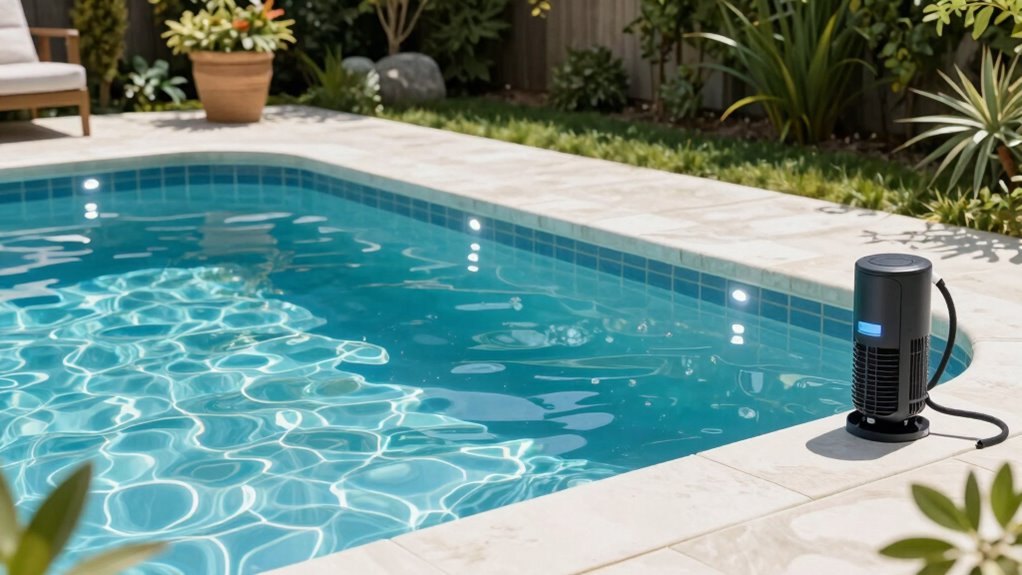
Choosing the right equipment is essential for maximizing your pool’s energy savings. You can boost efficiency by selecting equipment tailored to your needs. First, pick energy-efficient pool pumps that use less power while maintaining performance. Second, consider smart pool timers to optimize operation schedules and reduce unnecessary run times. Third, enhance your landscape with drought-tolerant plants and strategic landscaping, which can lower cooling costs and improve your pool’s environment. Incorporate energy-efficient pool accessories like LED lighting and solar covers to further reduce energy use. Landscaping enhancements not only save energy but also create a more inviting outdoor space. By making informed equipment choices, you’ll enjoy lower utility bills and a more eco-friendly pool.
What Energy Efficiency Won’t Do for Your Pool
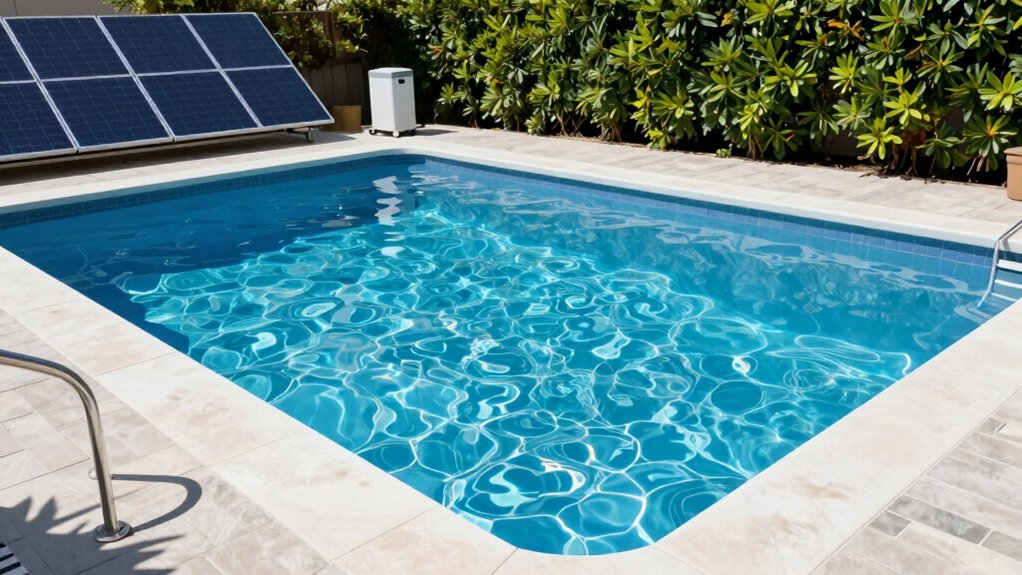
While selecting energy-efficient equipment can considerably reduce your pool’s power consumption, it doesn’t solve every issue related to energy use. For instance, it won’t improve your pool’s aesthetics if the water remains cloudy or unattractive. Poor water chemistry can still cause algae growth, scaling, and discoloration, regardless of how efficient your pump or heater is. Additionally, energy efficiency doesn’t address issues like heat loss through evaporation or splashing, which can still waste energy. Maintaining the right balance of chemicals is essential for a healthy, inviting pool, but it’s unrelated to the efficiency of your equipment. So, while upgrades help cut costs, you’ll still need to pay attention to water chemistry and visual appeal to truly enjoy a beautiful, well-maintained pool.
What You Can Expect From Improving Your Pool’s Energy Efficiency
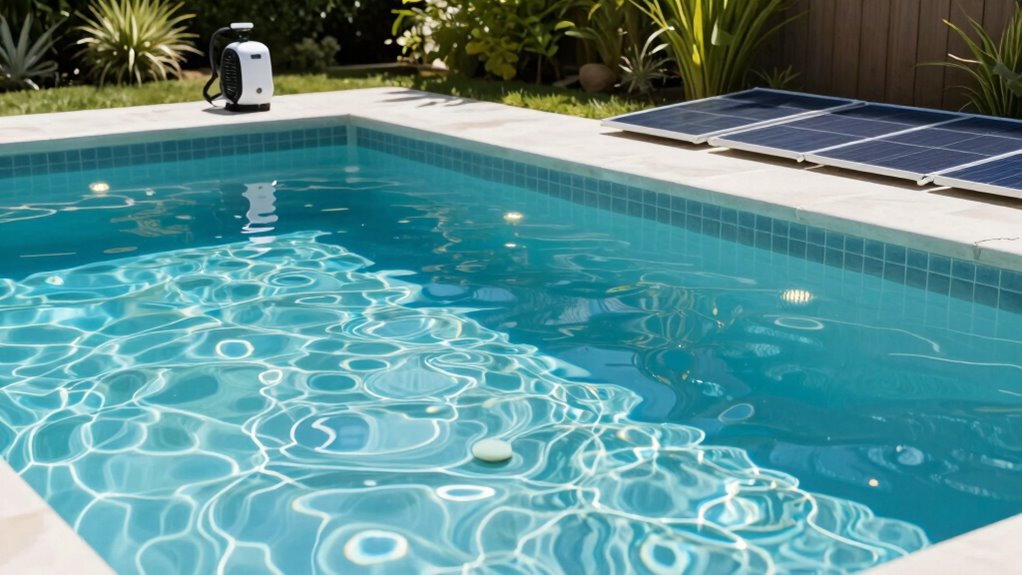
Enhancing your pool’s energy efficiency can lead to noticeable savings on your electricity bills and reduce your environmental impact. Expect benefits like:
Boost your pool’s efficiency to save money and protect the environment.
- Lower energy costs through improved equipment and smarter operation.
- Better water chemistry, reducing chemical use and maintenance time.
- An aesthetically pleasing landscape design that complements energy-saving features.
Frequently Asked Questions
Are There Any Hidden Costs to Upgrading Pool Equipment?
Upgrading pool equipment can come with hidden fees, like installation costs or maintenance expenses that aren’t immediately obvious. While energy-efficient gear often lasts longer, you should consider its equipment lifespan to guarantee you’re making a worthwhile investment. Sometimes, the initial savings are offset by unforeseen costs down the line. Be sure to research thoroughly and ask about any potential hidden fees before upgrading to avoid surprises.
How Long Does It Take to See Energy Savings After Upgrades?
You’ll typically see energy savings within a few weeks to a couple of months after upgrading your pool equipment. The timing expectations depend on factors like usage patterns and climate, but generally, you’ll notice lower energy bills fairly quickly. Keep in mind, the savings timeline varies, so tracking your energy consumption can help you gauge exactly when your upgrades start paying off.
Can Energy-Efficient Pools Increase Property Value?
Yes, energy-efficient pools can boost your property value. When you combine smart pool design with landscaping improvements, your home becomes more attractive and eco-friendly. Potential buyers appreciate lower energy costs and modern features, making your property stand out. Investing in these upgrades not only enhances your outdoor space but also signals a commitment to sustainability, which can translate into higher resale value and greater curb appeal.
What Are the Environmental Benefits of Energy-Efficient Pools?
Energy-efficient pools offer notable environmental benefits by reducing your carbon footprint. You can harness renewable energy sources like solar panels for heating, considerably decreasing reliance on fossil fuels. Additionally, these pools promote water conservation through better filtration and cover systems that minimize evaporation. By choosing energy-efficient options, you help protect natural resources, lower energy consumption, and contribute to a healthier environment while enjoying your pool.
Do Energy-Efficient Pool Solutions Require Special Maintenance Skills?
Energy-efficient pool solutions don’t demand superhero-level skills, but they do need some specialized pool maintenance knowledge. You might find it easier to keep everything running smoothly if you understand how these systems work, including their filtration and automation features. While you don’t need advanced expertise, a basic grasp of pool maintenance guarantees you maximize savings and efficiency, preventing small issues from snowballing into costly repairs.
Conclusion
By upgrading your pool with energy-efficient equipment, you could save up to 50% on energy costs, making a noticeable difference in your bills. Remember, simple maintenance and smart choices are key—like using a pool cover to reduce evaporation and heat loss. While energy efficiency won’t fix all issues, it can markedly cut expenses and extend your pool’s lifespan. Start small, stay consistent, and watch those savings add up faster than you might expect.