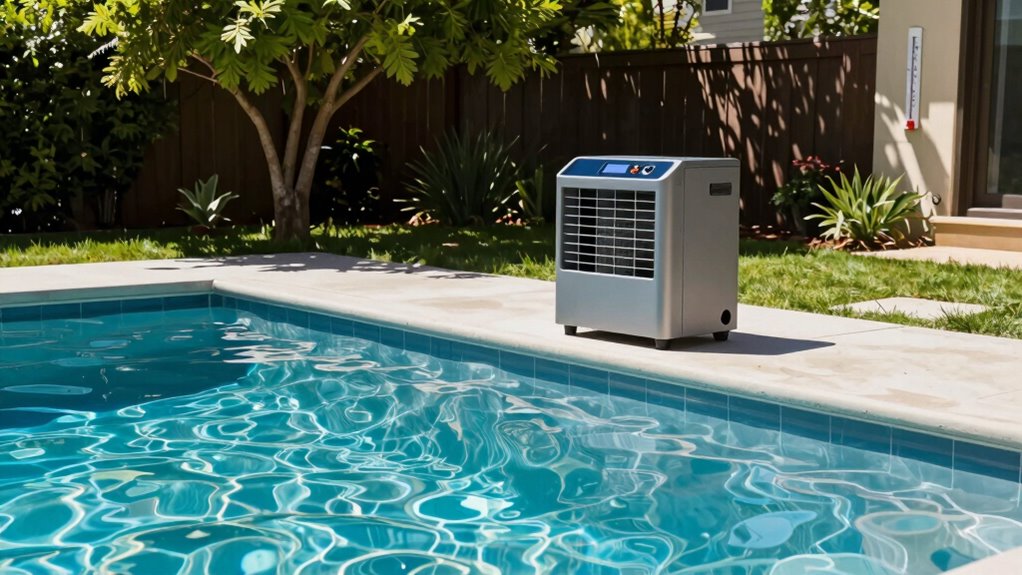

A pool chiller is worth it if your climate regularly pushes water temperatures above comfortable or safe levels, especially during heatwaves or hot summers. If you notice algae growth, increased chemical use, or water feels uncomfortably warm, cooling can boost safety and enjoyment. Installation costs vary, but energy efficiency and pool usage influence value. If you want to extend your swim season and stay cool during extreme heat, a chiller might be your best bet; learn more to decide.
Key Takeaways
- Pool chillers are worthwhile in regions with high summer temperatures and frequent heatwaves, preventing water from becoming uncomfortably warm.
- Consider a chiller if water temperatures regularly exceed 82°F, causing discomfort, algae growth, or increased chemical use.
- Installation costs vary ($3,000–$8,000), but energy-efficient models can reduce operational expenses over time.
- Proper water circulation and maintenance maximize chiller efficiency and prolong system lifespan.
- In mild climates or with infrequent pool use, the cost may outweigh the benefits, making chillers less justifiable.
Do You Need a Pool Chiller? Signs Your Climate and Pool Conditions Say Yes

If you live in a hot climate or experience heatwaves, you might find that your pool quickly becomes uncomfortable or even unsafe to swim in. High temperatures can make water unsafe, encouraging algae growth and increasing chemical consumption. A pool chiller can help maintain ideal water temperatures, reducing the strain on your pool’s filtration system and making pool maintenance easier. Plus, modern chillers are designed for energy efficiency, helping you save on energy costs while keeping your pool comfortable. If you notice your pool water feels excessively warm during summer or your energy bills spike with increased cooling efforts, it’s a sign that a pool chiller could be a worthwhile investment. It keeps your water cool, safe, and easier to maintain in extreme heat. Additionally, understanding the contrast ratio of your pool’s filtration system can help optimize clarity and cleanliness, ensuring a more enjoyable swimming experience. Investing in a climate-aware cooling solution can make a significant difference in maintaining your pool’s health and your comfort during peak heat periods. Proper water circulation also plays a vital role in ensuring the effectiveness of your cooling system and overall pool hygiene. Monitoring energy efficiency can further help you reduce operational costs and minimize environmental impact, especially when paired with precise temperature control technologies.
How Hot Is Too Hot? Setting Temperatures for Comfort and Safety
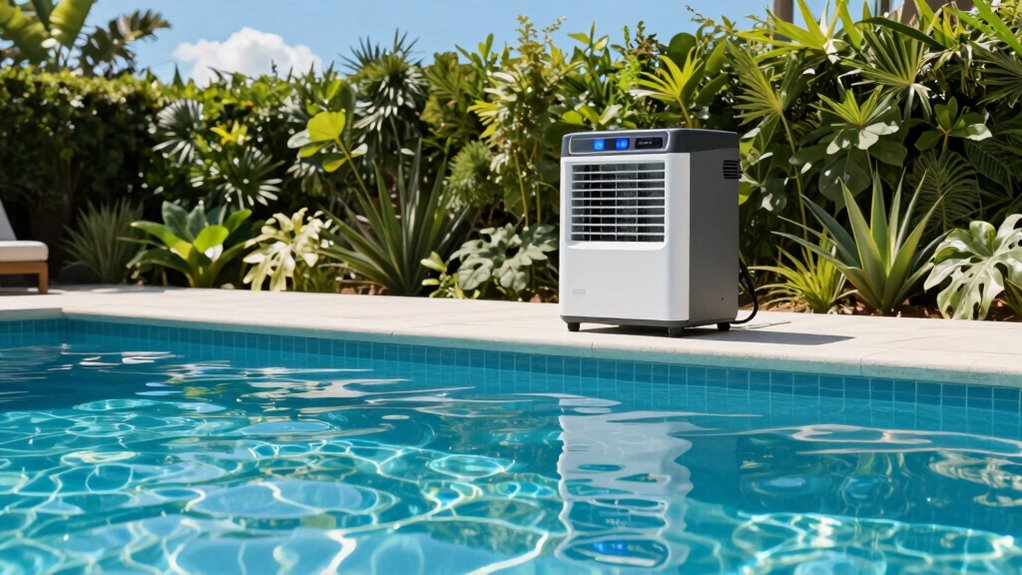
Determining the right pool temperature is essential for both comfort and safety, especially during hot weather. Keeping your pool at a comfortable temperature helps prevent overheating and reduces strain on your body, making swimming more enjoyable. Typically, 78–82°F (25–28°C) strikes a good balance for most swimmers. Maintaining this range also supports proper pool maintenance by minimizing algae growth and preventing equipment stress. When setting your pool temperature, consider energy efficiency; lowering the temperature slightly can save on energy costs without sacrificing comfort. Avoid making the water too hot, as excessive heat can lead to health risks like dehydration or heat exhaustion. Regularly monitoring and adjusting your pool’s temperature ensures a safe, enjoyable swimming experience while optimizing energy use. Using Proper temperature control is also important for maintaining the longevity of your pool equipment and ensuring consistent water quality. Additionally, using smart thermostats can help automate temperature adjustments and improve energy savings.
Are Heatwaves Making Your Pool Too Warm? Evaluate Your Local Climate
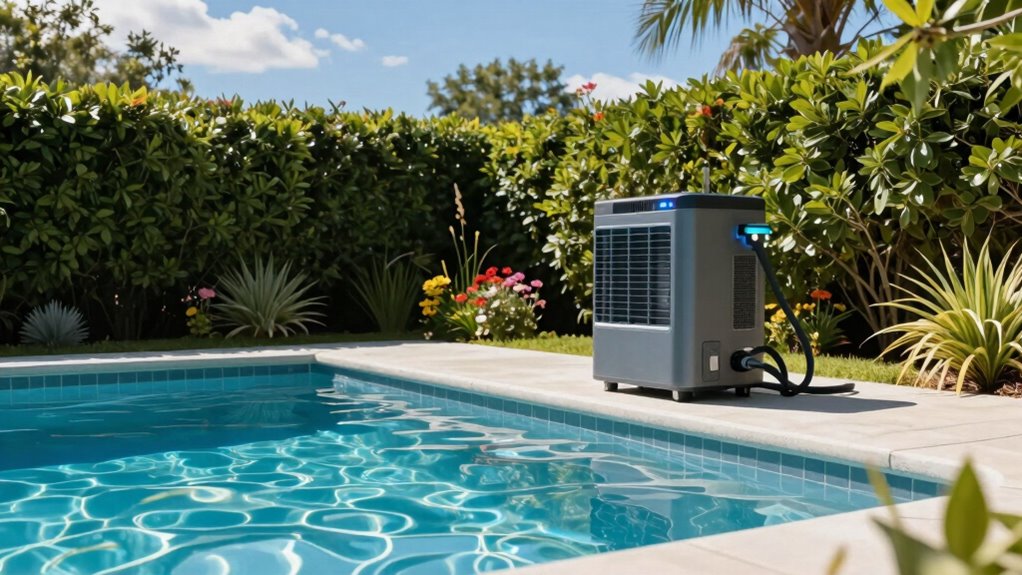
Are your local temperatures trending higher or staying steady? Seasonal heatwaves can quickly raise your pool’s temperature, making it uncomfortable or unsafe. Knowing your climate helps determine if a pool chiller is a smart investment. Additionally, understanding climate factors can guide you in choosing the most effective cooling solutions. Monitoring temperature fluctuations throughout the season can also provide insight into when a chiller might be most needed. Being aware of local climate trends can help you anticipate future heat patterns and plan accordingly. Recognizing climate variability can further assist in making informed decisions about pool cooling options. Moreover, tracking seasonal weather patterns can help you better prepare for unexpected temperature shifts that impact pool comfort.
Local Temperature Trends
As heatwaves become more frequent, your pool’s temperature can soar well beyond comfortable levels, making it harder to enjoy during the hottest days. Tracking local temperature trends helps you understand if your climate is pushing your pool’s temperature into uncomfortable territory. If your area experiences consistent high heat, a pool chiller might be a worthwhile investment. Installing solar panels can complement this by harnessing renewable energy, leading to significant energy savings. With solar-powered pool chillers, you reduce your reliance on traditional electricity, lowering costs and environmental impact. Knowing your local climate patterns allows you to make informed decisions about cooling solutions, ensuring your pool stays enjoyable without excessive energy bills. Staying informed about climate change effects can help you anticipate future temperature fluctuations and adapt accordingly. Being aware of energy-efficient technologies can further enhance your ability to keep your pool comfortable while minimizing costs. Utilizing climate data analysis can help you better predict heatwave occurrences and plan your cooling strategies more effectively. Stay aware of temperature trends to optimize comfort and efficiency, and creative storytelling can be used to share these insights with your community or inspire eco-friendly practices.
Seasonal Heatwaves Impact
Seasonal heatwaves can considerably raise your pool’s temperature, often turning it uncomfortably warm during peak summer months. This rise challenges your pool maintenance routine, as higher temperatures can disrupt chemical balance and promote algae growth. If heatwaves are frequent in your area, a pool chiller might be a worthwhile investment to keep your water comfortable and safe. Additionally, understanding climate impacts can help you better plan for temperature fluctuations and decide if a chiller is a practical solution.
What Does a Pool Chiller Cost to Install and Operate? Budgeting for Cooling
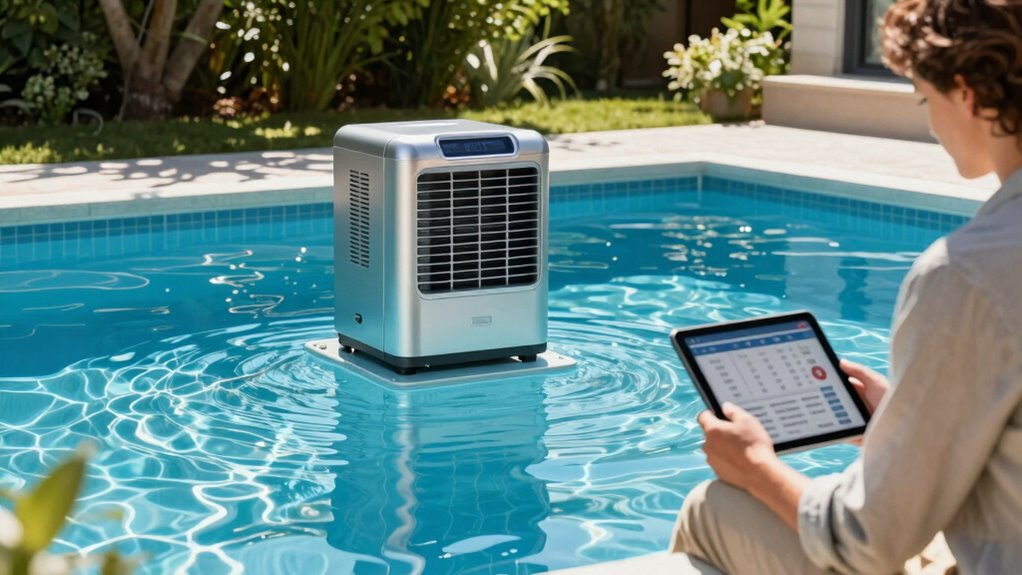
Installing a pool chiller involves upfront costs that vary based on the system’s size and complexity, and understanding these expenses helps you plan your budget effectively. The initial price typically ranges from $3,000 to $8,000, depending on the capacity and features. Keep in mind that professional installation adds to this cost, but it ensures proper setup and efficiency. Ongoing expenses include energy consumption, which impacts your utility bills, so selecting an energy-efficient model can save you money over time. Regular pool maintenance is also essential to keep your system running smoothly and prolong its lifespan. Additionally, understanding cybersecurity measures related to pool equipment can help protect your system from hacking attempts. While the upfront investment may seem significant, a well-chosen pool chiller can enhance your swimming experience and reduce long-term costs by maintaining consistent, ideal water temperatures. Proper system monitoring and remote access security are crucial for safeguarding your investment.
How a Pool Chiller Can Extend Your Swimming Season and Boost Enjoyment
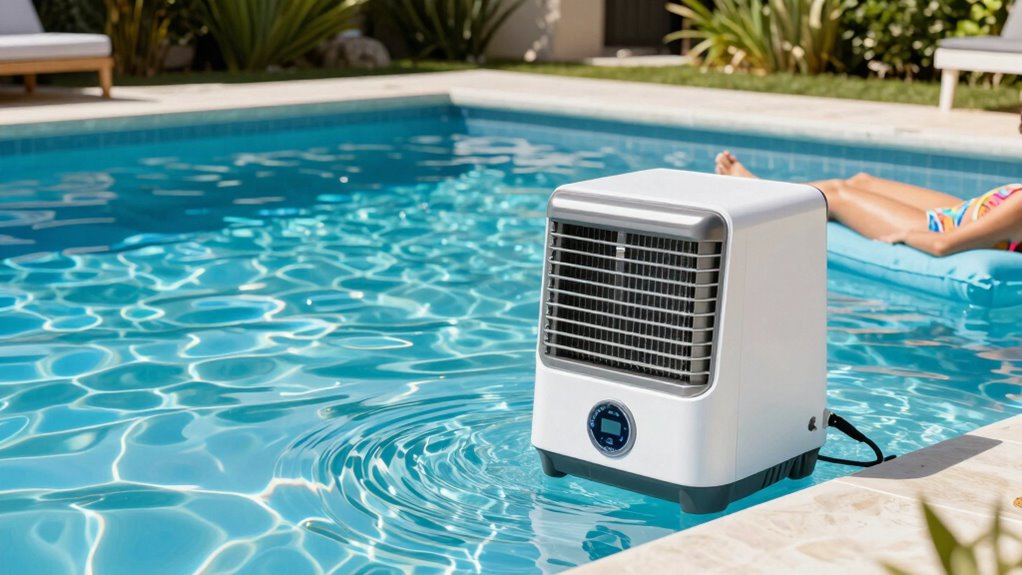
A pool chiller can keep your water comfortably cool for longer periods, even as outdoor temperatures rise. This extended comfort means you can enjoy swimming earlier in the season and later into the fall. With better temperature control, your overall swimming experience becomes more enjoyable and inviting.
Cooling Effectiveness Extends Seasons
Even as outdoor temperatures drop, a pool chiller keeps your water comfortably warm, allowing you to extend your swimming season beyond the peak summer months. This cooling effectiveness means you can enjoy your pool earlier in spring and later into fall, making the most of your investment. To maintain ideal performance, proper pool maintenance and chemical balancing are essential, ensuring the chiller operates efficiently without issues like algae growth or water imbalance. By regulating water temperature consistently, a pool chiller reduces the need for frequent adjustments and helps sustain a stable environment. Additionally, understanding connected equipment can optimize water clarity and overall pool health. As a result, you gain more flexibility in your swimming schedule, making your pool a year-round retreat rather than a seasonal luxury.
Comfort and Enjoyment Gains
When you invest in a pool chiller, you unlock the ability to enjoy your pool longer into the year, regardless of changing temperatures. Cooler water enhances comfort, making swimming more enjoyable even on warm days. This extended season promotes better pool safety, reducing the risk of overheating or dehydration. Additionally, a well-maintained, chilled pool boosts aesthetic appeal, creating an inviting oasis your friends and family will love. Here’s how a pool chiller can amplify your enjoyment:
| Benefit | Explanation | Impact |
|---|---|---|
| Longer Swimming | Extends usability into cooler months | More time for relaxation |
| Comfort | Maintains superior water temperature | Less discomfort, more fun |
| Safety | Prevents overheating and dehydration | Safer swimming environment |
| Aesthetic Appeal | Clear, invigorating water looks inviting | Enhanced pool ambiance |
| Social Fun | Encourages more frequent gatherings | Better overall enjoyment |
Implementing a pool chiller can also help maximize energy efficiency and reduce operational costs over time.
Is Investing in a Pool Chiller Worth It for Your Climate and Budget?
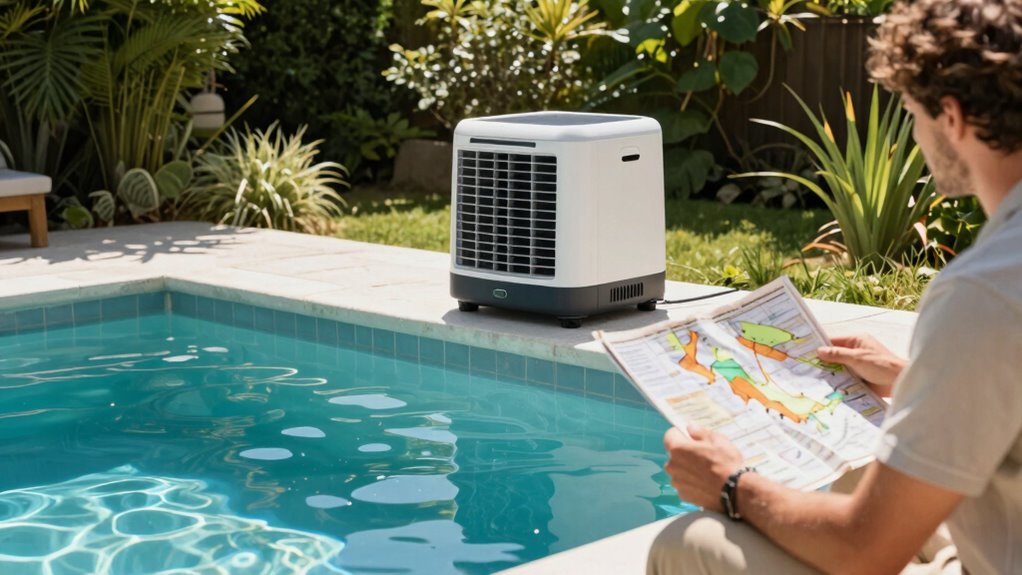
Determining whether a pool chiller is a worthwhile investment depends largely on your climate and budget. If you live in a warm region where summer temperatures soar, a chiller can keep your pool comfortable without constantly running your pump or relying heavily on a pool cover. Good water circulation is essential to maximize efficiency and prevent uneven cooling. However, if your climate has mild summers, the cost of installing and operating a chiller may outweigh the benefits. Consider your energy bills and how often you’ll use your pool; if you’re budget-conscious, maintaining a proper pool cover can help reduce cooling needs naturally. Ultimately, assess your local weather patterns and financial situation to decide if a pool chiller makes sense for your backyard oasis.
Frequently Asked Questions
How Energy-Efficient Are Pool Chillers Compared to Traditional Cooling Methods?
Pool chillers are highly energy-efficient compared to traditional cooling methods because they use advanced cooling technology designed specifically for pools. You’ll notice significant energy savings, as chillers target only the pool water, reducing overall power consumption. Unlike general air conditioning, these chillers optimize cooling with less energy, making them a smart choice for maintaining a comfortable pool temperature while keeping your energy bills lower.
Can a Pool Chiller Help Prevent Algae Growth and Water Quality Issues?
A pool chiller acts like a guardian, shielding your water from algae and murkiness. It helps prevent algae growth by maintaining a cooler, more stable temperature, which discourages algae spores from thriving. Additionally, it promotes water clarity by controlling temperature fluctuations that foster bacteria. With a chiller, you protect your pool’s health, ensuring cleaner water and fewer chemical treatments, making your swimming experience safer and more enjoyable.
What Maintenance Is Required to Keep a Pool Chiller Running Effectively?
To keep your pool chiller running effectively, you should regularly clean your pool filter to prevent debris buildup that can strain the system. Additionally, maintain proper chemical balancing to protect the chiller from corrosion and algae growth. Check and replace any worn parts promptly, and schedule annual professional inspections. Consistent maintenance guarantees your chiller operates efficiently, extends its lifespan, and keeps your pool water comfortable and clean.
Are There Eco-Friendly or Solar-Powered Pool Chiller Options Available?
Yes, eco-friendly options and solar-powered solutions are available for pool chillers. You can choose solar-powered chillers that harness renewable energy, reducing your carbon footprint and energy costs. Eco-friendly options include chillers with high energy efficiency and environmentally safe refrigerants. Investing in these solutions not only helps protect the environment but also saves you money in the long run, making your pool cooling system more sustainable and cost-effective.
How Does Humidity Impact a Pool Chiller’s Performance and Efficiency?
Humidity effects your pool chiller’s performance because high humidity makes it harder for the chiller to cool the water efficiently. Excess moisture in the air reduces heat transfer, causing the system to work harder and use more energy. Climate considerations, like humid environments, can increase operational costs and decrease efficiency, so you’ll want to factor in local humidity levels when deciding if a pool chiller makes sense for your setup.
Conclusion
A pool chiller can be a game-changer if your climate regularly pushes your pool’s temperature beyond comfort or safety limits. While it requires an upfront investment, it can extend your swimming season and improve your enjoyment. Before jumping in, consider whether your local temperatures and budget justify the cost. Ultimately, investing in a chiller might just prove that staying cool isn’t just about the weather—it’s about making smart, invigorating choices.